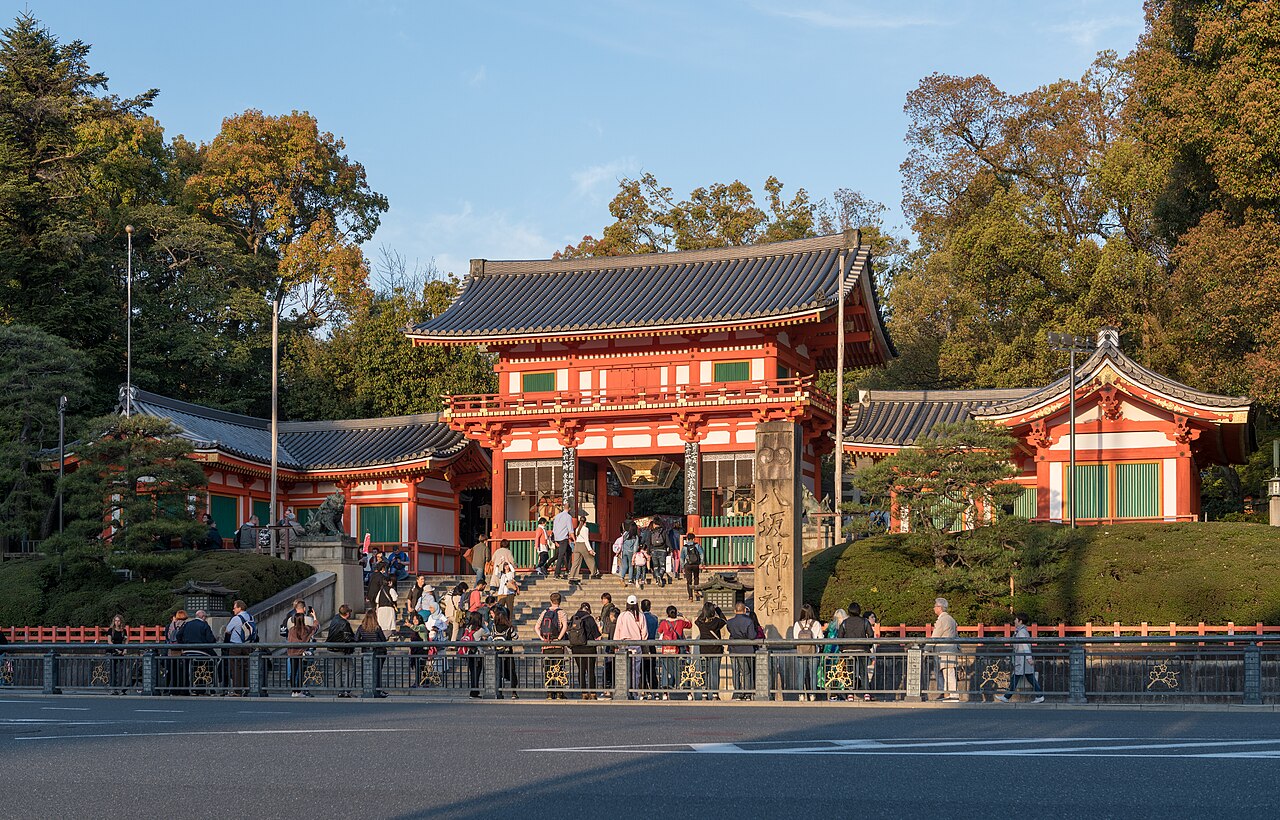
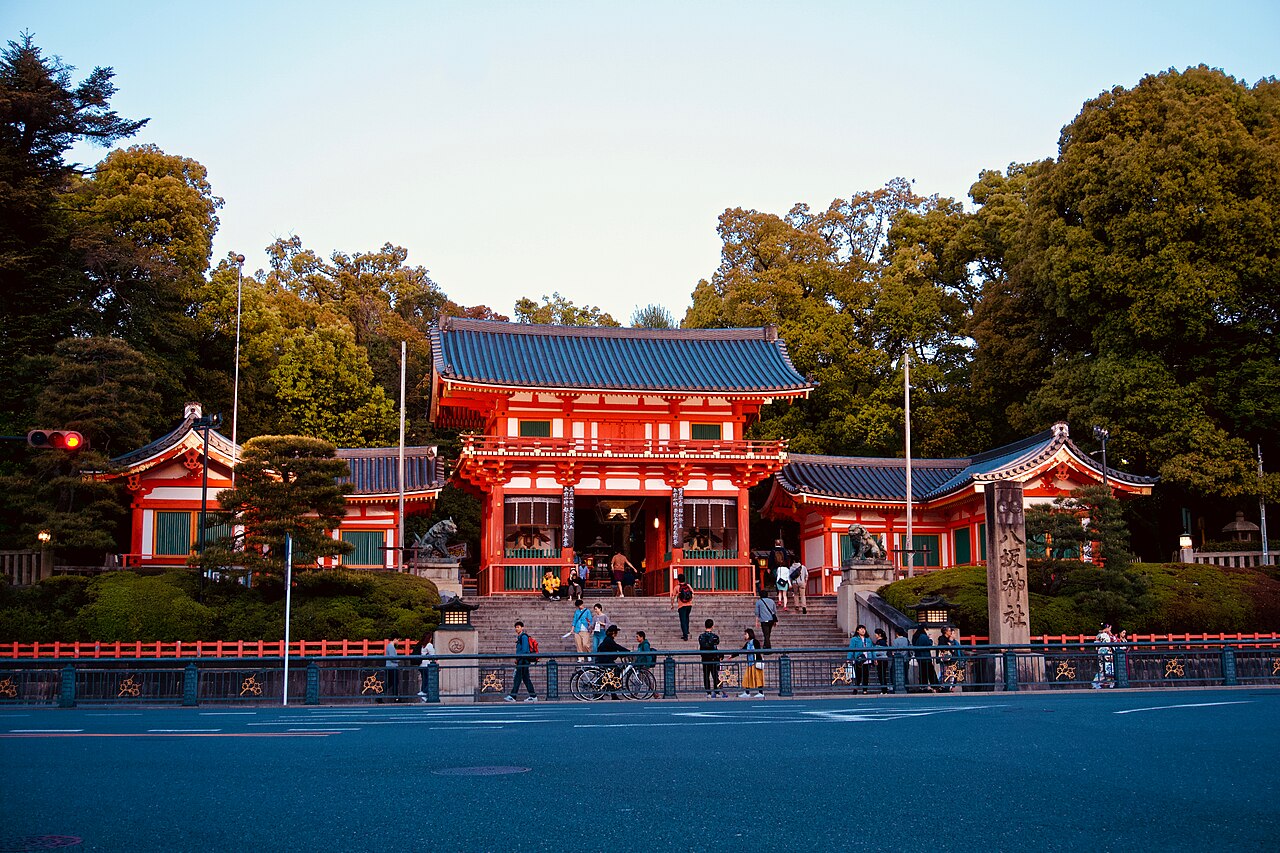
Yasaka Shrine, affectionately called "Gion-san," stands at the eastern end of Shijo Street in Kyoto's Gion district and is one of the city's most historic Shinto shrines. Enshrining Susanoo-no-Mikoto and tracing its founding to around the year 656, it is the home shrine of the Gion Festival, which began as a ritual to ward off an epidemic in 869. The grounds are free to enter and open around the clock, making it a natural gateway for travelers passing between Gion and the Higashiyama district.
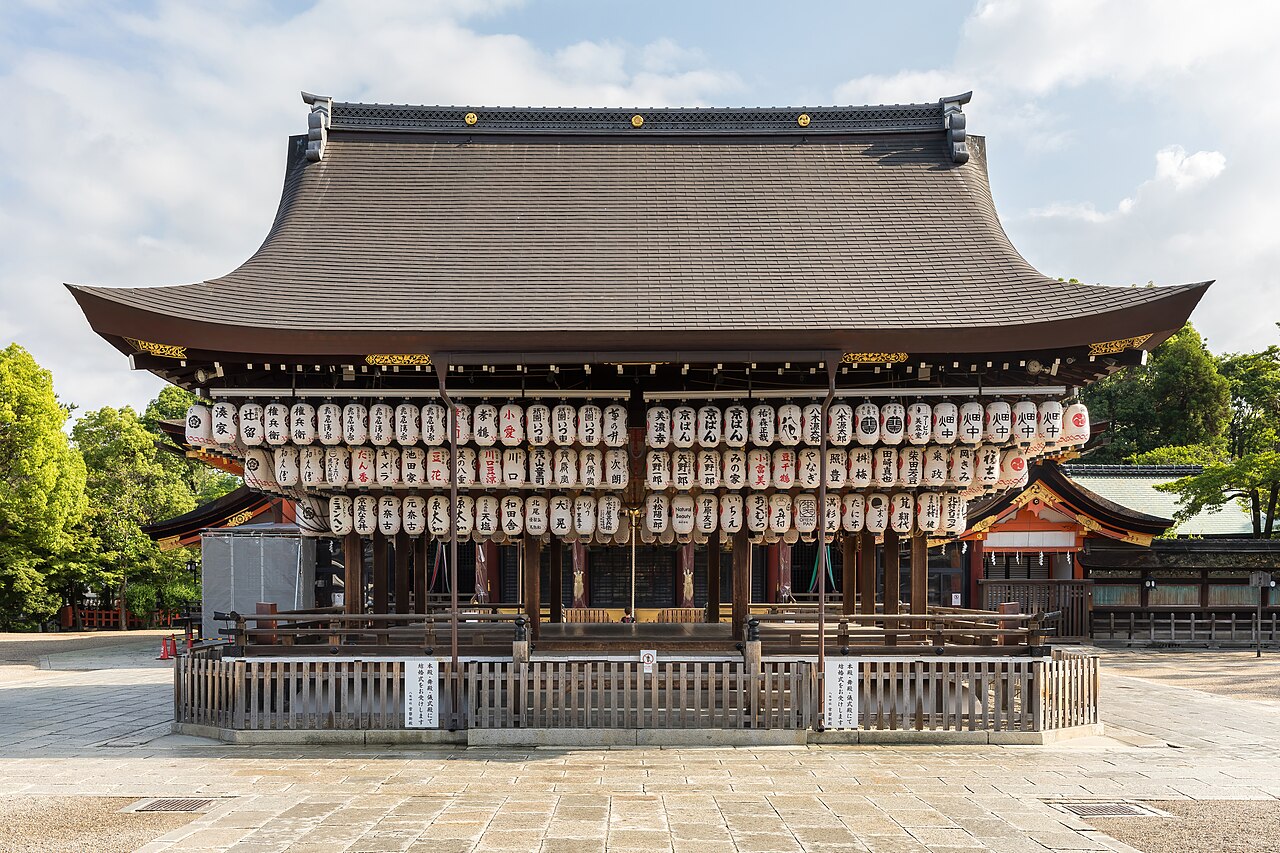
Main Hall (Honden): built in the distinctive "Gion-zukuri" style, in which one large roof covers both the front worship hall and the main sanctuary; designated a National Treasure in 2020.
West Gate (Nishiromon): a vivid vermilion gate facing Shijo Street that serves as the shrine's icon; an Important Cultural Property, beautifully lit up at night.
Gion Festival (Gion Matsuri): one of Japan's three great festivals, held throughout July as Yasaka Shrine's grand annual festival, with the Yamahoko float processions of the earlier (around July 17) and later (around July 24) festivals as its highlight.
Maruyama Park and the Gion weeping cherry: the park just behind the shrine is one of Kyoto's top hanami spots, famous for its floodlit "yozakura" (night cherry blossoms).
Okuninushi Shrine and the beauty deity: within the grounds you can also pray at a sub-shrine for good relationships and at a spot popular for beauty and matchmaking blessings.
Good to know
MannersPurify your hands and mouth at the temizuya before praying, and follow the standard worship etiquette of two bows, two claps, and one final bow. The grounds are a sacred place of worship, so keep quiet and respectful.
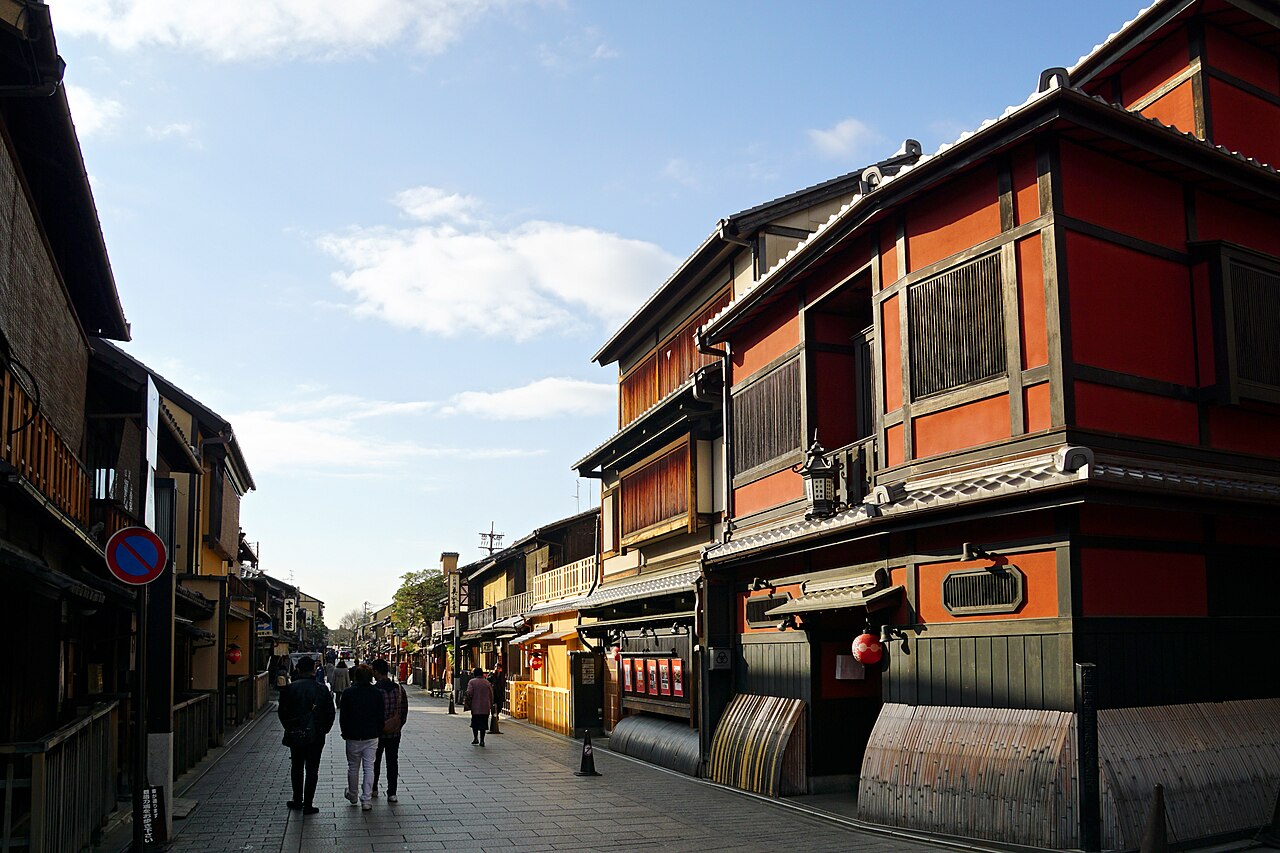
RulesOn some private streets around the shrine in Gion (parts of Hanamikoji, etc.), chasing or photographing geiko and maiko without consent carries a 10,000-yen fine. Multilingual warning signs have been posted since 2024, so avoid entering or photographing on private lanes.
SeasonThe shrine is extremely crowded during the July Gion Festival, the early-April cherry-blossom season at Maruyama Park, and the January 1-3 New Year (hatsumode). During these periods, aim for an early-morning visit or a weekday afternoon.
SafetyDuring the Okera-mairi fire ritual on New Year's Eve, visitors carry sacred flame home on braided straw ropes. With large crowds and open flame together, take care to avoid burns to clothing or hair.
CautionOmikuji (fortune slips) are meant to be drawn for a small fee at the official amulet office. Do not pay inflated fees to street vendors along the approach or anyone posing as an unofficial guide; use the shrine's official office instead.
Practical info
Free entry, grounds open 24 hours (prayer/amulet offices roughly 9:00-17:00; confirm the latest times). From Kyoto Station, take city bus route 206 (about 20 min) to the "Gion" stop; alternatively about a 5-min walk from Keihan Gion-Shijo Station or a 10-min walk from Hankyu Kyoto-Kawaramachi Station. Hours and any fees can shift during cherry-blossom, autumn-leaf, and festival seasons, so check the official website before visiting.
On-site reviews📍 Verified on-site
No reviews yet. If you are here, be the first to leave one.