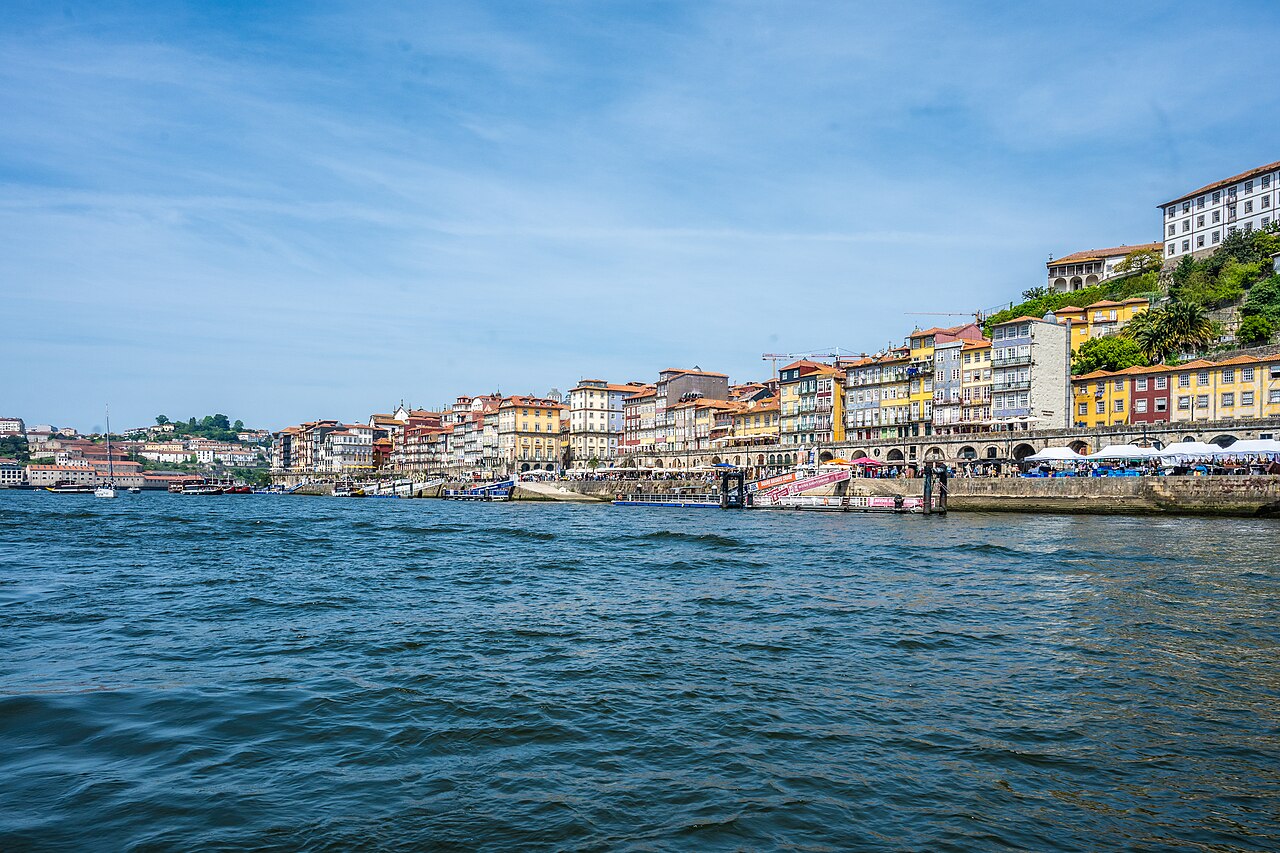
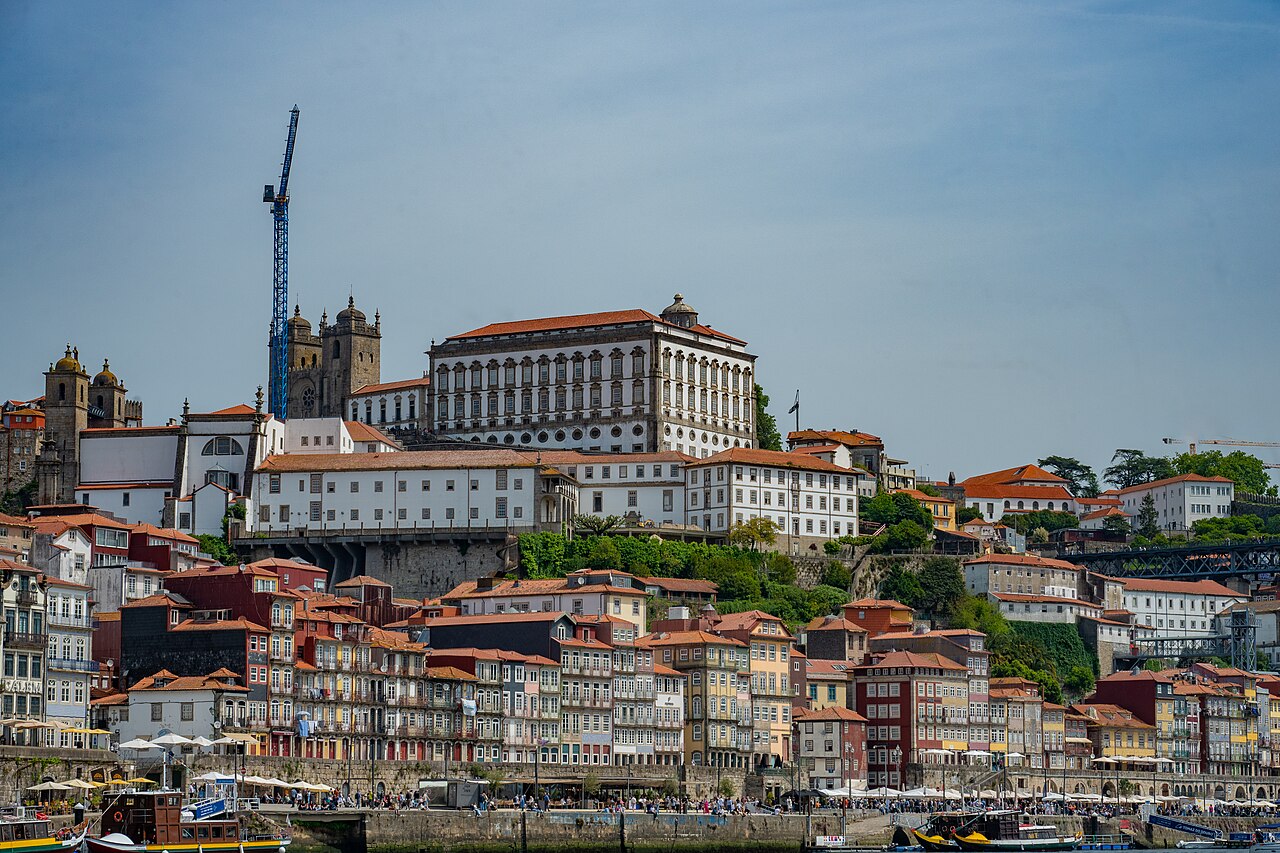
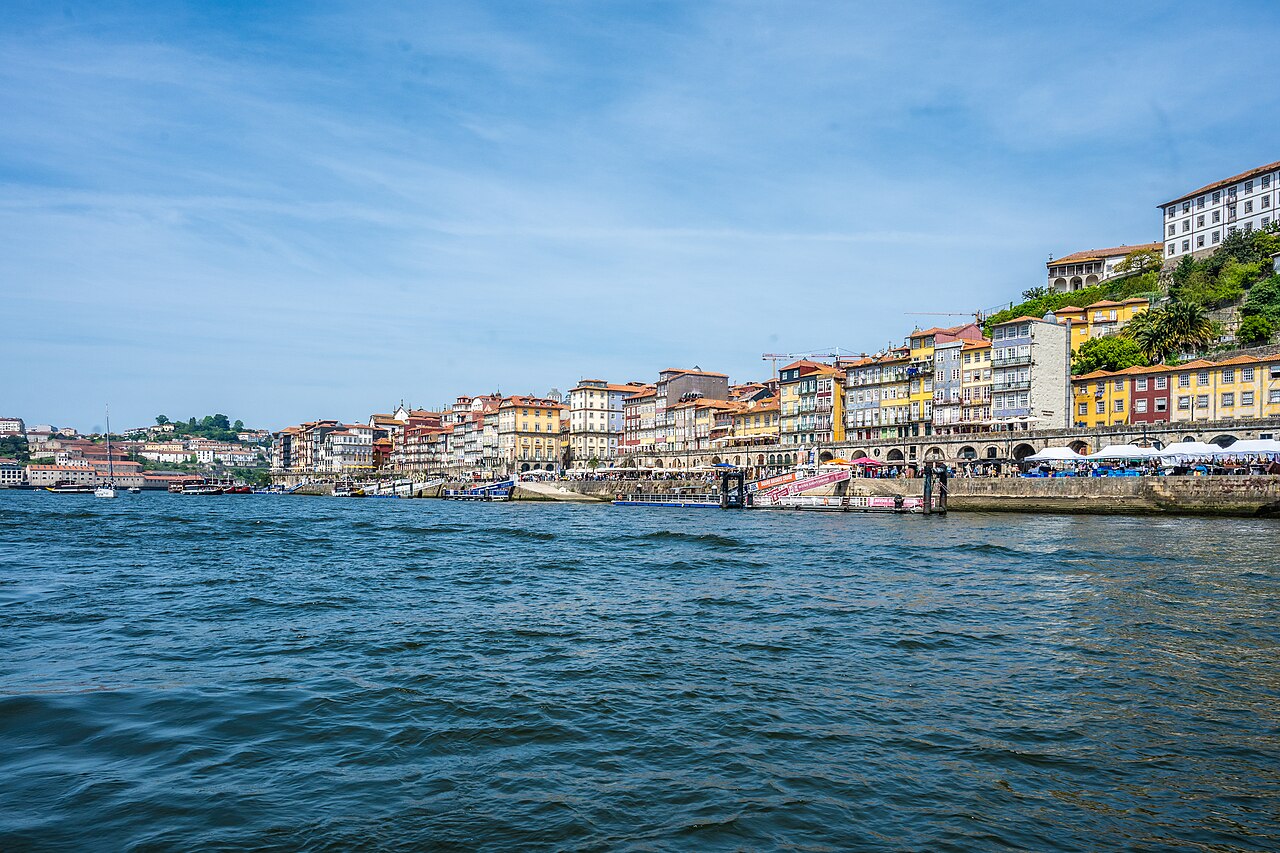
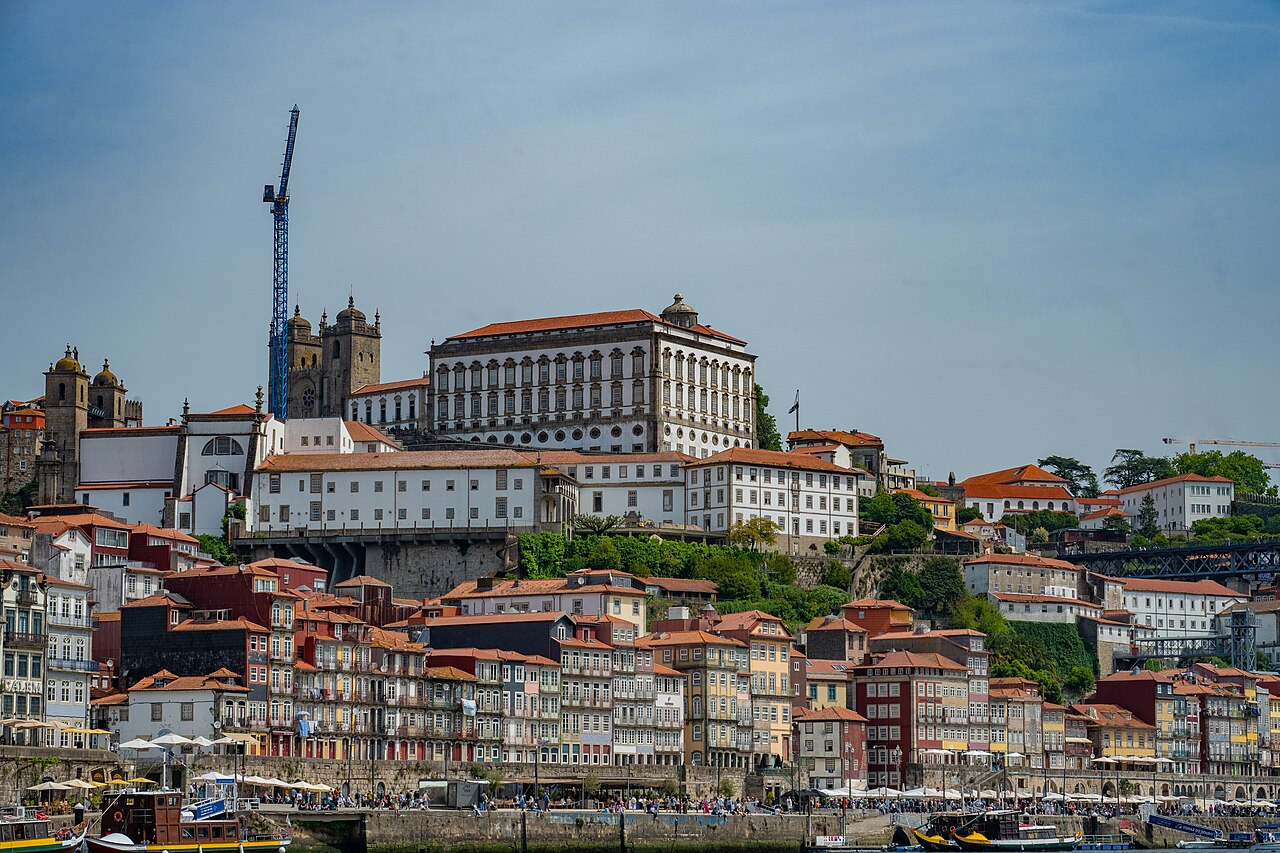
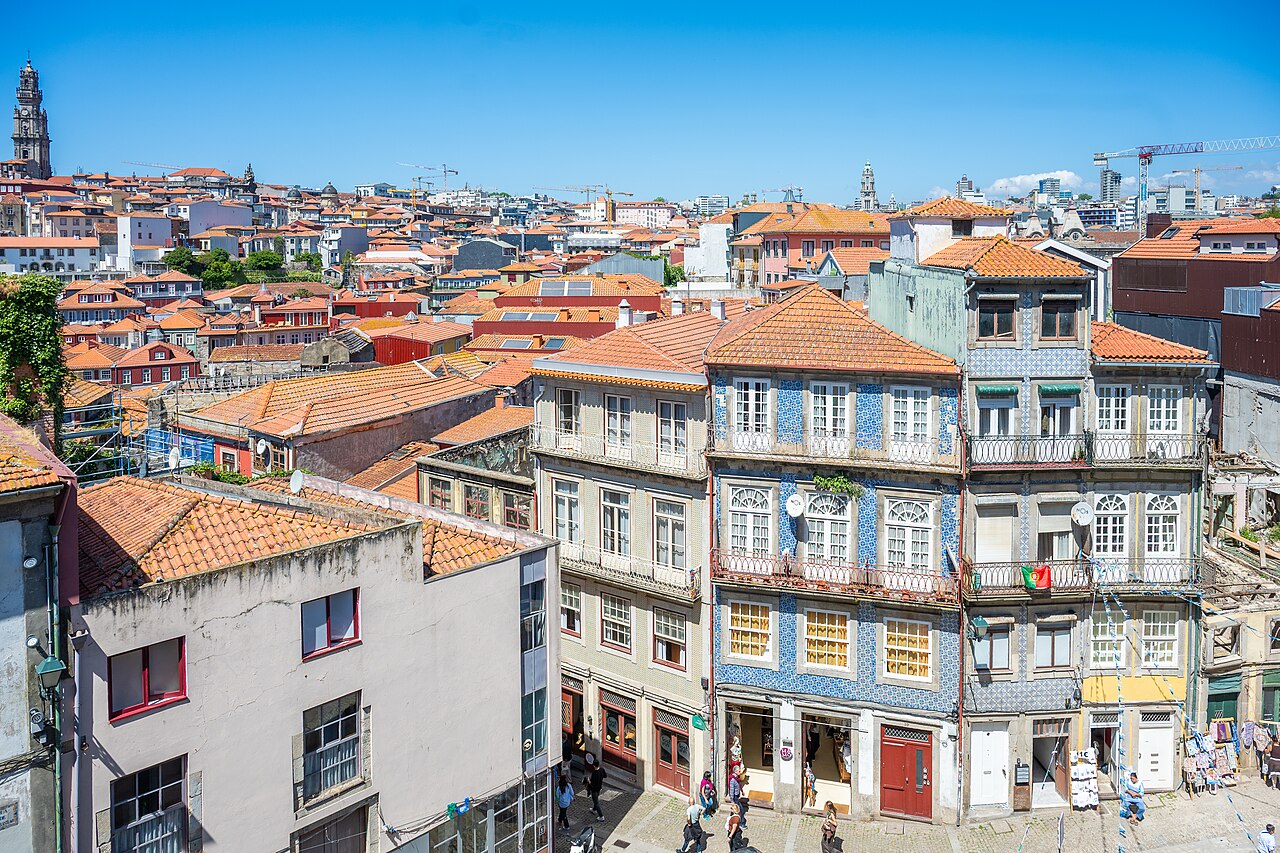
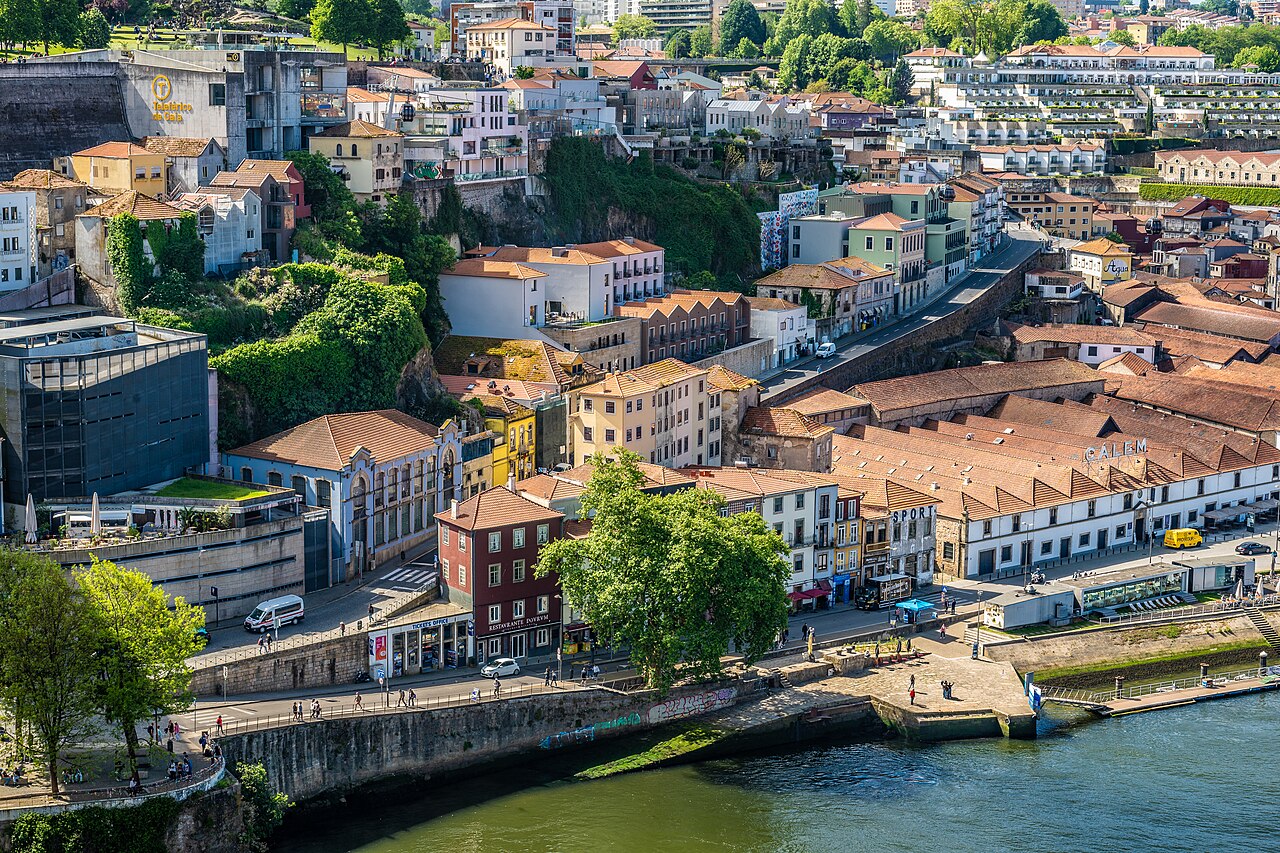
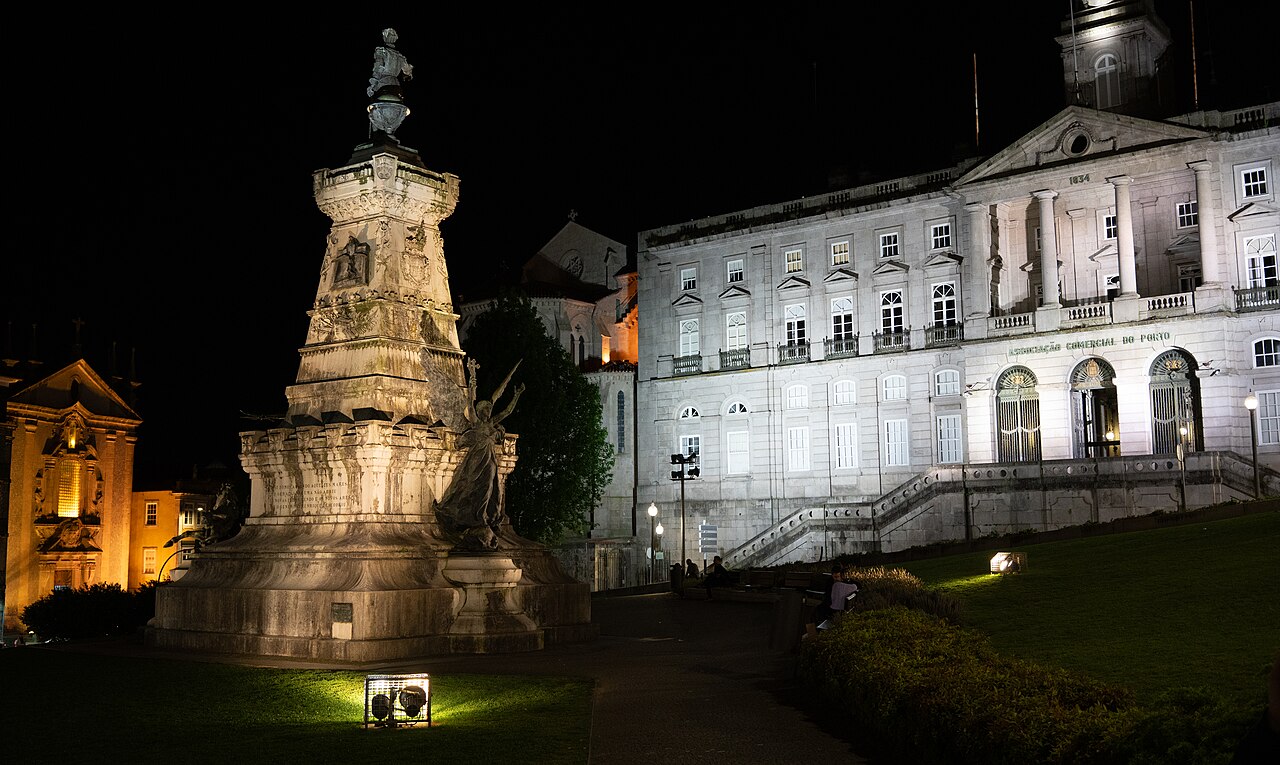
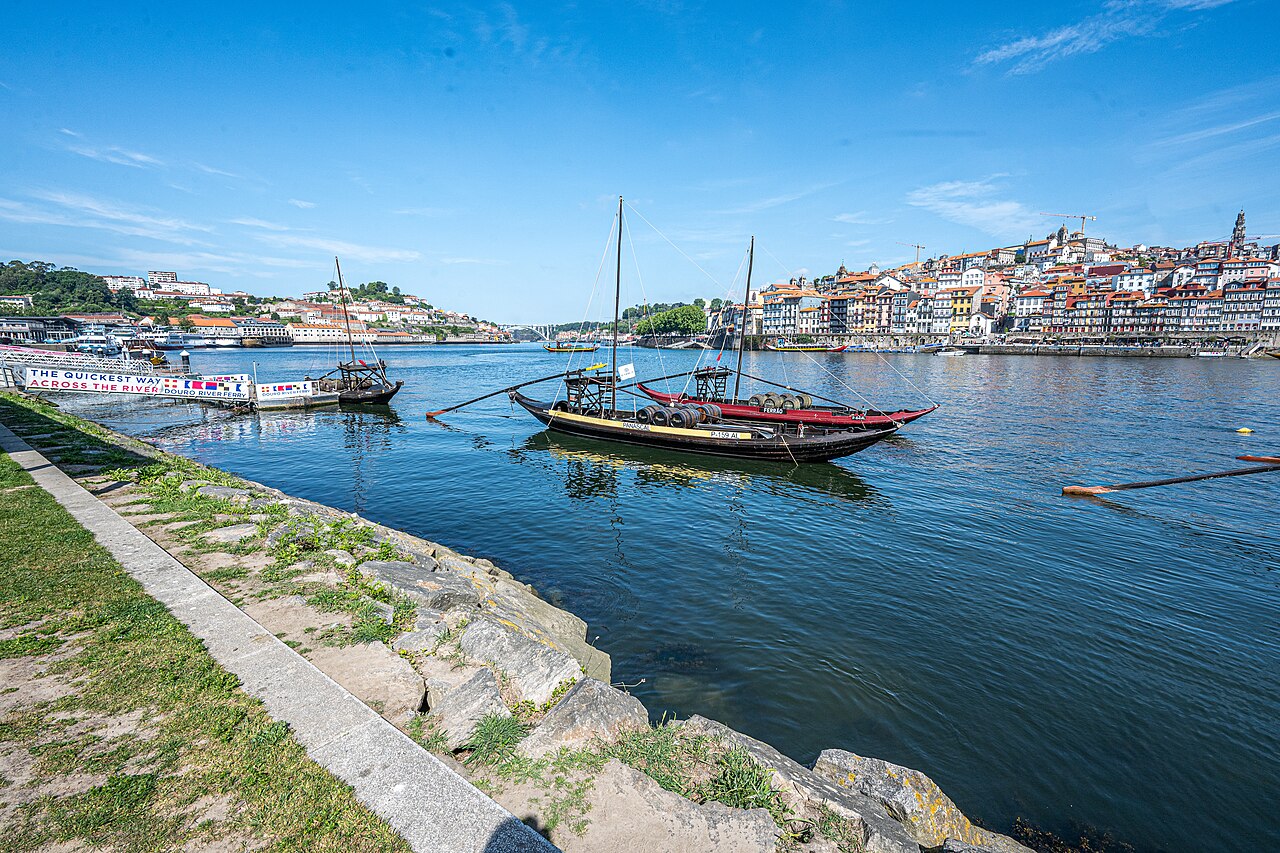
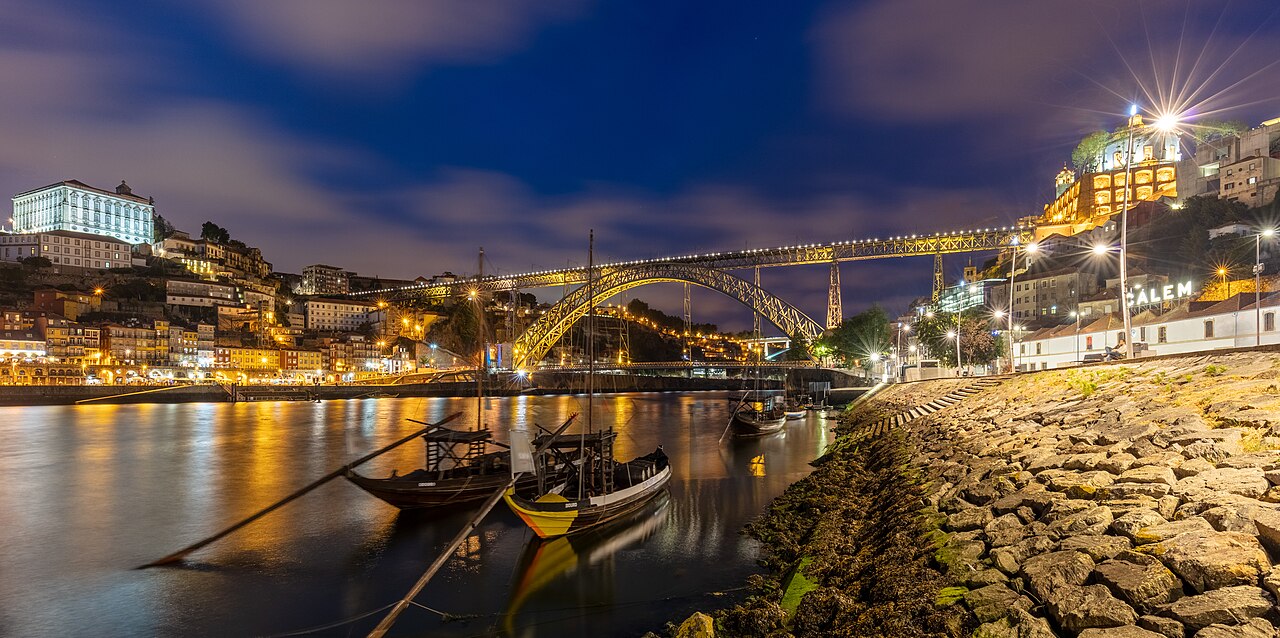
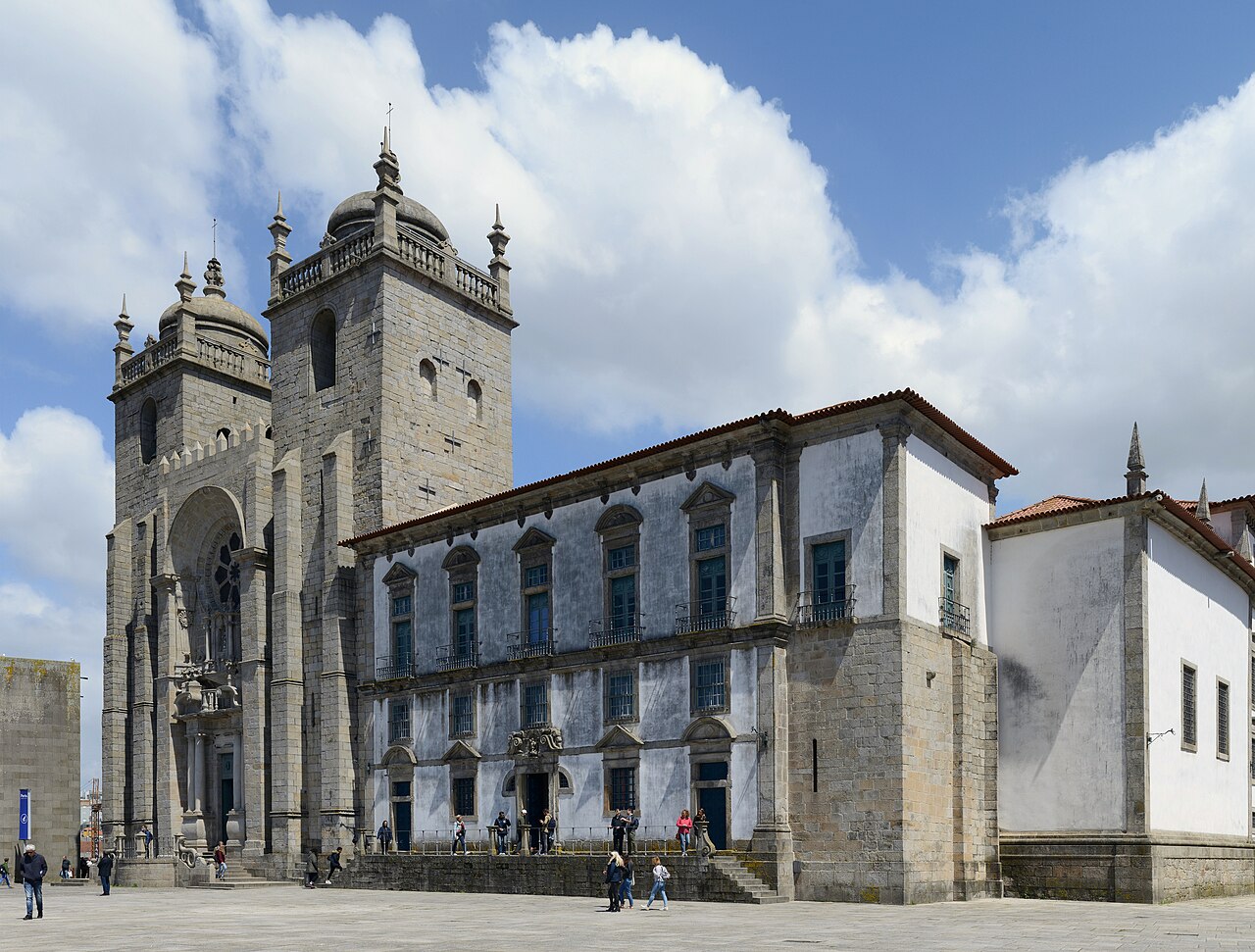
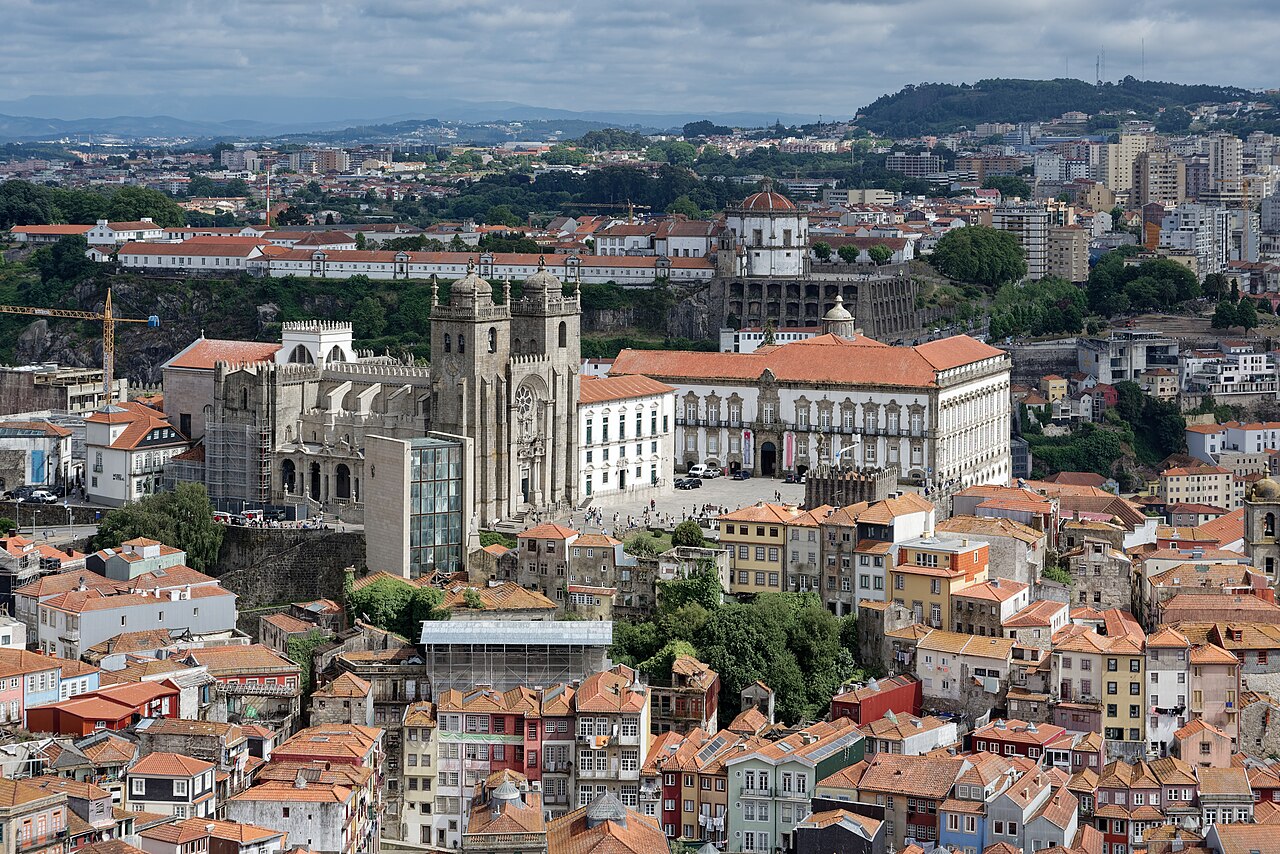
The Ribeira district is Porto's old riverside quarter on the north bank of the Douro, and the heart of the historic center inscribed as a UNESCO World Heritage Site in 1996. Brightly painted granite houses stack up the steep hillside above the Cais da Ribeira promenade, which looks across to the Dom Luís I Bridge and the port-wine lodges of Vila Nova de Gaia on the far bank. It preserves the atmosphere of the medieval port town from which merchants once shipped port wine down the Douro.
The colorful tiered granite houses along the waterfront, and the maze of narrow lanes lined with cafés and tapas (petiscos) bars
Panoramic Douro, Ribeira and Gaia views from the upper deck of the Dom Luís I Bridge, especially at sunset
The Church of São Francisco, whose plain Gothic shell hides a lavish Baroque interior clad in roughly 300 kg of gold leaf
A roughly 50-minute Douro cruise past the city's six bridges, often aboard a traditional rabelo boat
Easy walking access across the river to the port-wine cellars, tours and tastings in Gaia
Riverfront terraces at golden hour with local dishes such as francesinha and lively street performers
Good to know
CautionThe restaurants right on the promenade with photo menus and touts are what locals call a tourist trap: pricey and often mediocre. For a real meal, head to places in the back lanes (verify recent reviews).
CautionPortuguese restaurants automatically bring couvert (bread, olives, butter) you didn't order; touching it means paying, usually 2–3 euros. If you don't want it, say 'Não, obrigado' and ask them to take it away before you touch anything.
CautionYoung men on the lower rail of the Dom Luís I Bridge offer to dive for 1–2 euros; the distraction is cover for pickpockets. A petition/survey-and-ID ploy is also used to spot where you keep your wallet.
SafetyRibeira feels safe but is Porto's most crowded spot, so pickpockets operate here. Wear your bag zipped and in front, and never leave a phone or wallet on the edge of an outdoor café table.
MannersAt religious sites such as the Church of São Francisco, interior photography is prohibited in parts and modest dress is expected (photos are allowed in the catacombs and exhibition rooms).
SeasonJuly–August is peak season, with the biggest crowds, highest prices and daytime highs near 30°C. Spring (Apr–Jun) or early autumn (Sep–Oct) is calmer, and the steep cobblestones make comfortable shoes essential.
Practical info
Always confirm current prices, hours and rules with official sources before visiting. The Church of São Francisco typically charges about €8 for a combined church/museum/catacombs ticket, open roughly 09:00–19:00 (Mar–Oct) and 09:00–17:30 (Nov–Feb), with last entry 30 minutes before closing. The waterfront is an easy walk from São Bento station and the metro.
On-site reviews📍 Verified on-site
No reviews yet. If you are here, be the first to leave one.