The Temple of Olympian Zeus (Olympieion) was the largest temple in ancient Greece, begun in the 6th century BC and finally completed some 638 years later, in AD 132, under the Roman emperor Hadrian. Of its original 104 colossal Corinthian columns only 15 still stand, but at about 17 m tall and 1.7 m across they convey the staggering ambition of the original sanctuary. Right beside it, Hadrian's Arch marked the symbolic boundary between the old city of Athens and Hadrian's new quarter, and is famous for the inscriptions carved on each face. In 2026 the temple is open as a ticketed archaeological site, while the arch can be admired for free from the street, making the pair an easy add-on to an Acropolis visit.
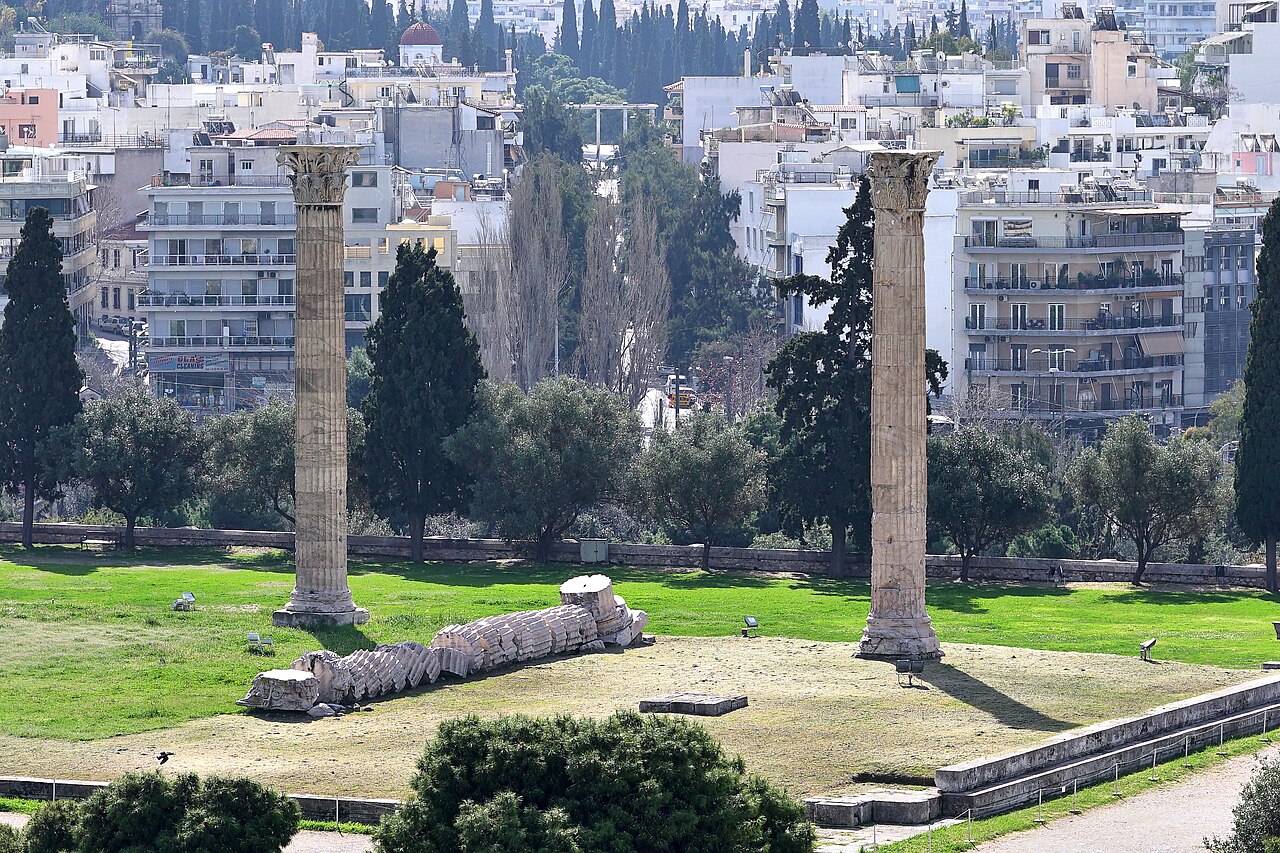
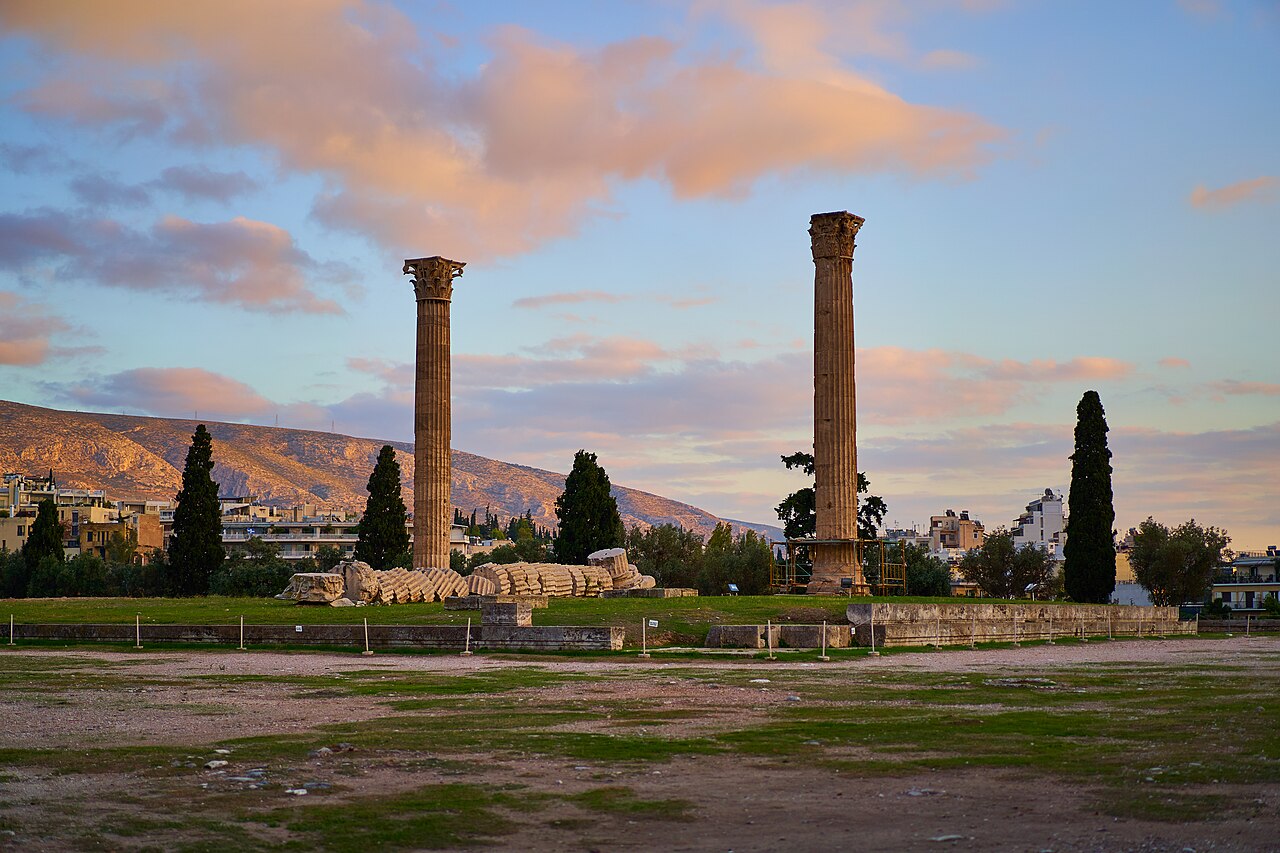
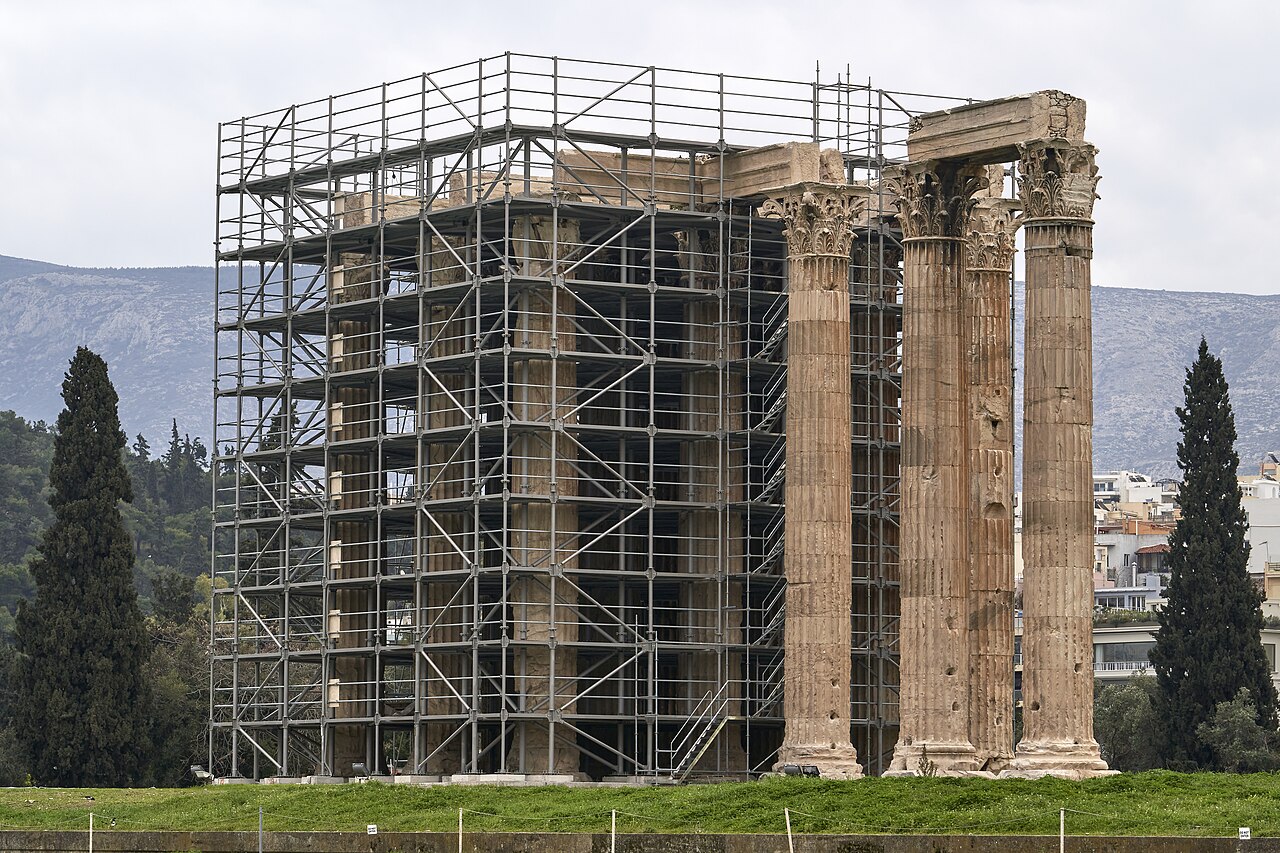
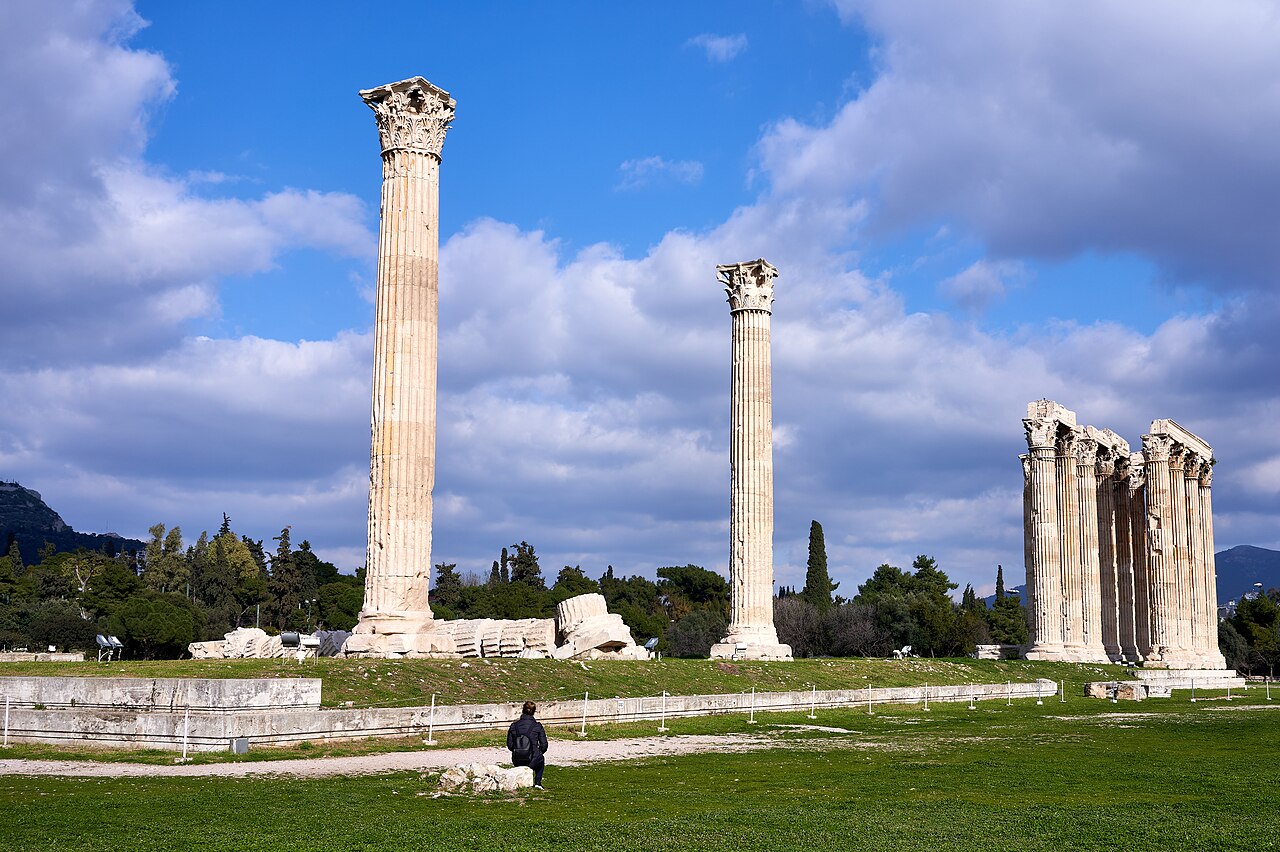
The 15 surviving 17 m Corinthian columns, and the single column toppled by an 1852 storm that still lies where it fell
The Greek inscriptions on Hadrian's Arch — facing the Acropolis, 'This is Athens, the ancient city of Theseus'; facing the temple, 'This is the city of Hadrian, not of Theseus'
The framed view of the Acropolis from inside the temple grounds (a prime photo spot)
The scale of a 638-year building history, from Peisistratos's start to Hadrian's completion
The sheer monumental presence of the ruins seen from the level gravel path around the site
Good to know
CautionPickpocketing is common on the metro red line and around Syntagma and busy tourist spots. Wear your bag in front and keep wallet, passport and phone in an inner pocket. Be wary of strangers pressing a bracelet or rose into your hand and then demanding payment.
SeasonIn summer (June–August) the site has almost no shade and midday heat is intense. Visit early morning or near sunset and bring water, a hat, sunscreen and ideally a sun umbrella.
RulesA combined ticket (about €30) covering the Acropolis and several other sites can be better value than single entry, and online booking cuts queues in peak season. Last admission is roughly 30 minutes before closing, and hours and prices change by season — always check the official site for the latest.
SafetyThe ancient ground is uneven with loose gravel, so watch your footing. Hadrian's Arch sits beside a busy avenue, so mind the traffic when taking photos.
MannersDo not climb on or touch the columns and ruins, and respect roped-off areas. Drone photography is generally prohibited, and as a world-famous monument the site should be kept litter-free.
Practical info
The site is about a 5-minute walk from Akropoli station on the metro red line (M2), with the entrance on Vasilissis Olgas Avenue. Summer hours (April–October) are broadly 08:00–20:00 and winter (November–March) is shorter; standard admission runs around €8 in summer and €4 in winter, with a combined ticket and free-admission days also available — confirm current hours, prices and closures on the official site before you go.
On-site reviews📍 Verified on-site
No reviews yet. If you are here, be the first to leave one.