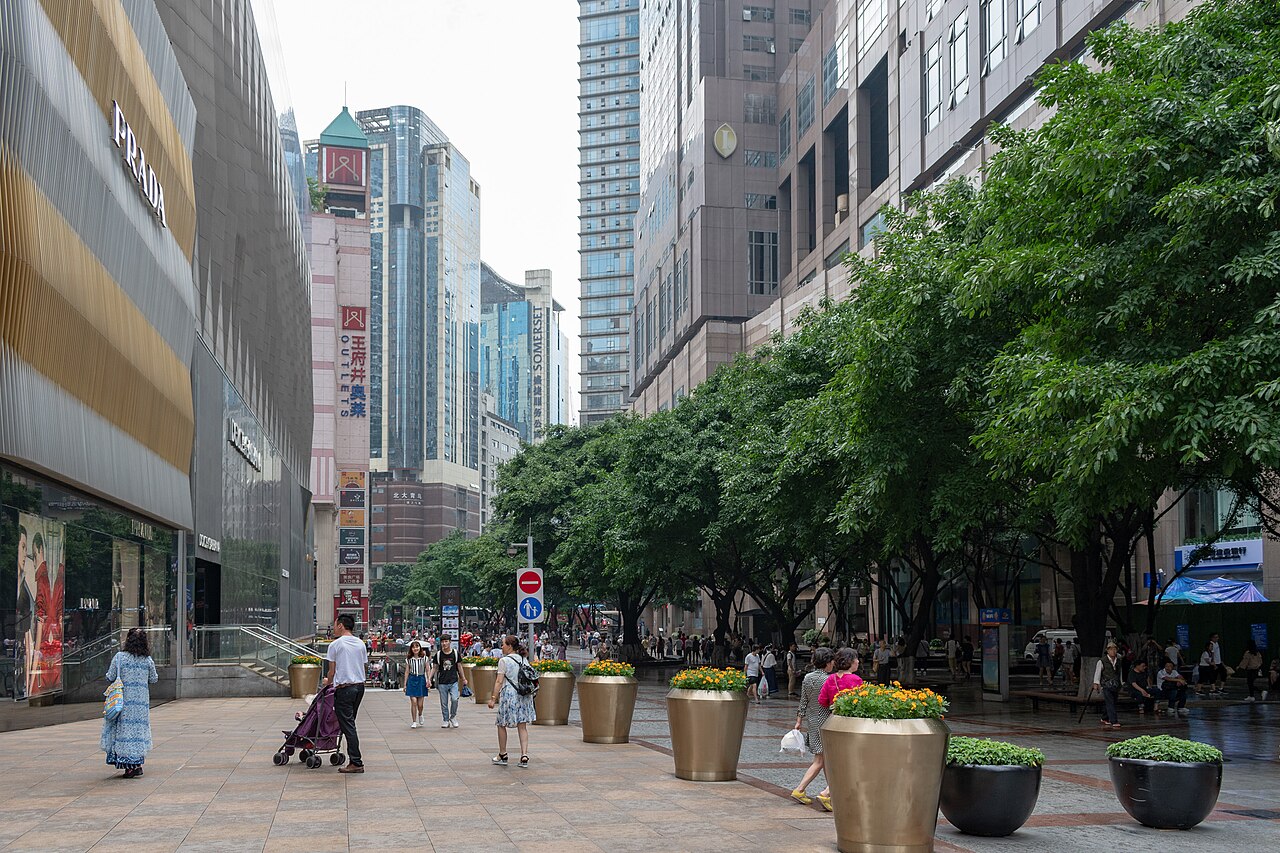
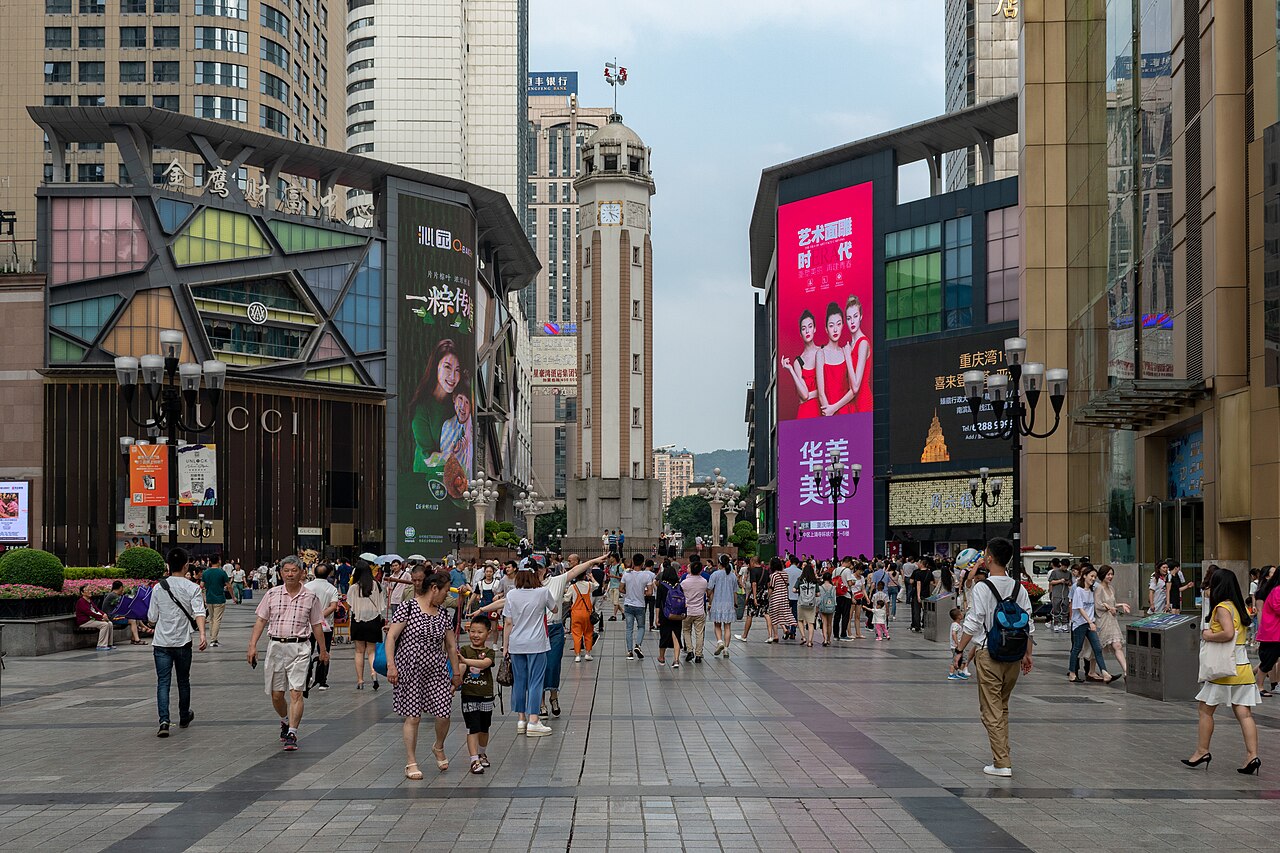
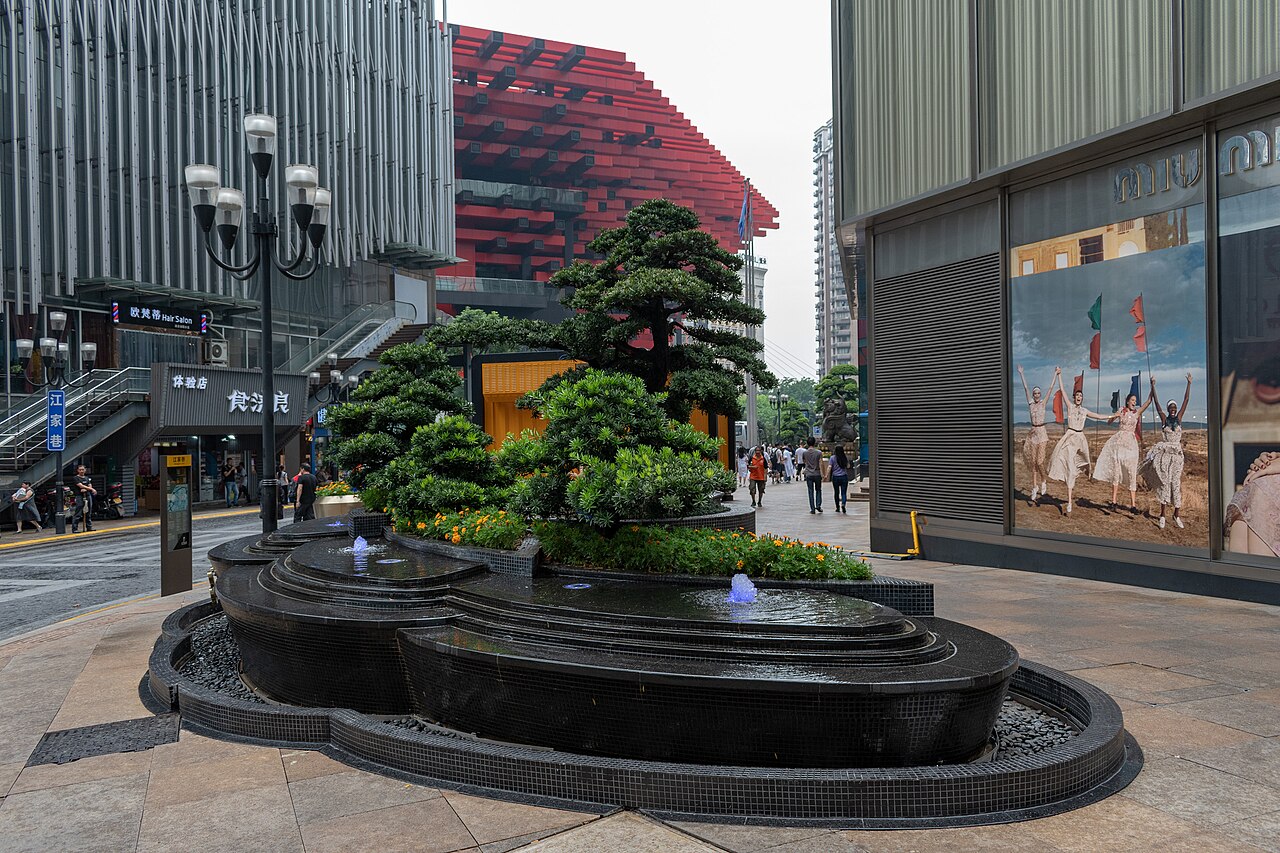
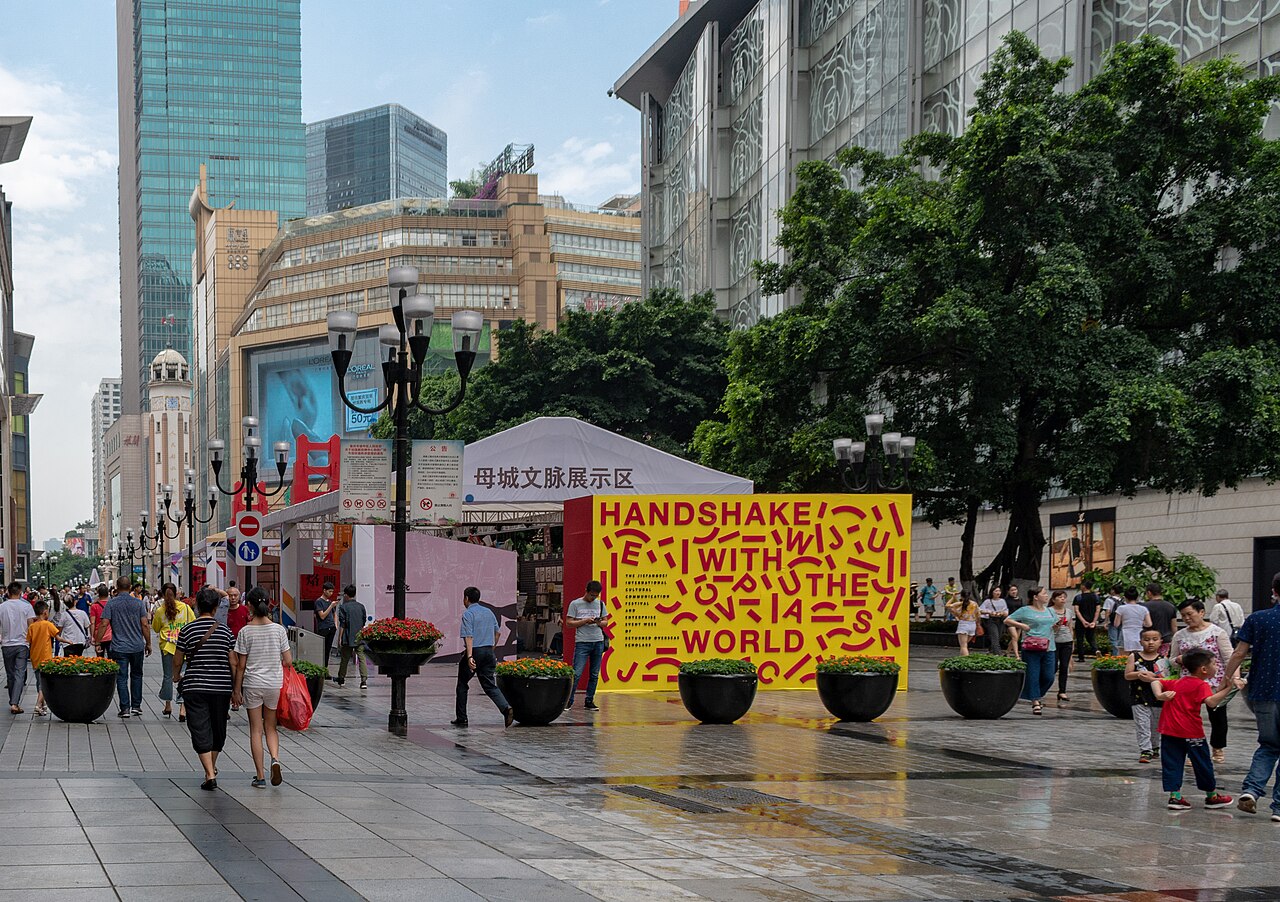
Jiefangbei Pedestrian Street radiates from the 24-metre People's Liberation Monument that still stands at the crossing of Minquan, Minzu and Zourong roads in the middle of Chongqing's Yuzhong District. Completed in 1947 as a monument to victory in the war against Japan and renamed in 1950, the column was listed as a national key cultural relic in 2013, while the street around it opened in 1997 as western China's first commercial pedestrian street and has expanded repeatedly into the face of the city's largest CBD. It remains free and open around the clock in 2026, and as one of the Ministry of Commerce's first national model pedestrian streets and a designated night-time culture and tourism consumption district, it is weighted heavily toward the evening. Rather than a daytime sight to tick off, treat it as a night walk that continues on foot into the adjoining Hongyadong, Shibati and Daijiaxiang districts.
The monument itself — a 24-metre octagonal column, four metres across with an internal spiral stair, left standing at a high-rise intersection; the contrast is the defining image of the street.
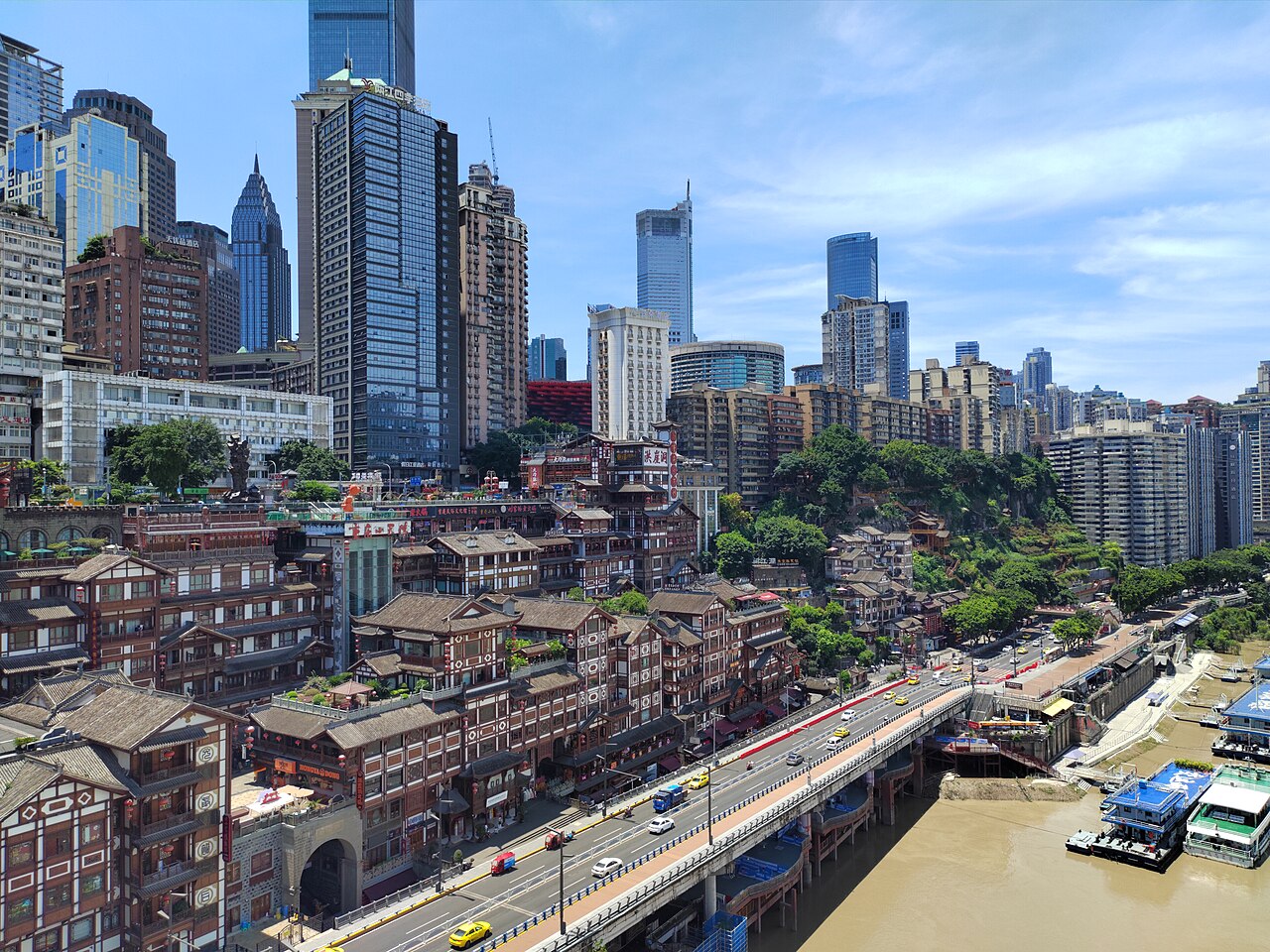
Night lighting and skyline — the media facades of the surrounding commercial towers are the real show, and the place reads completely differently after dark than it does at midday.
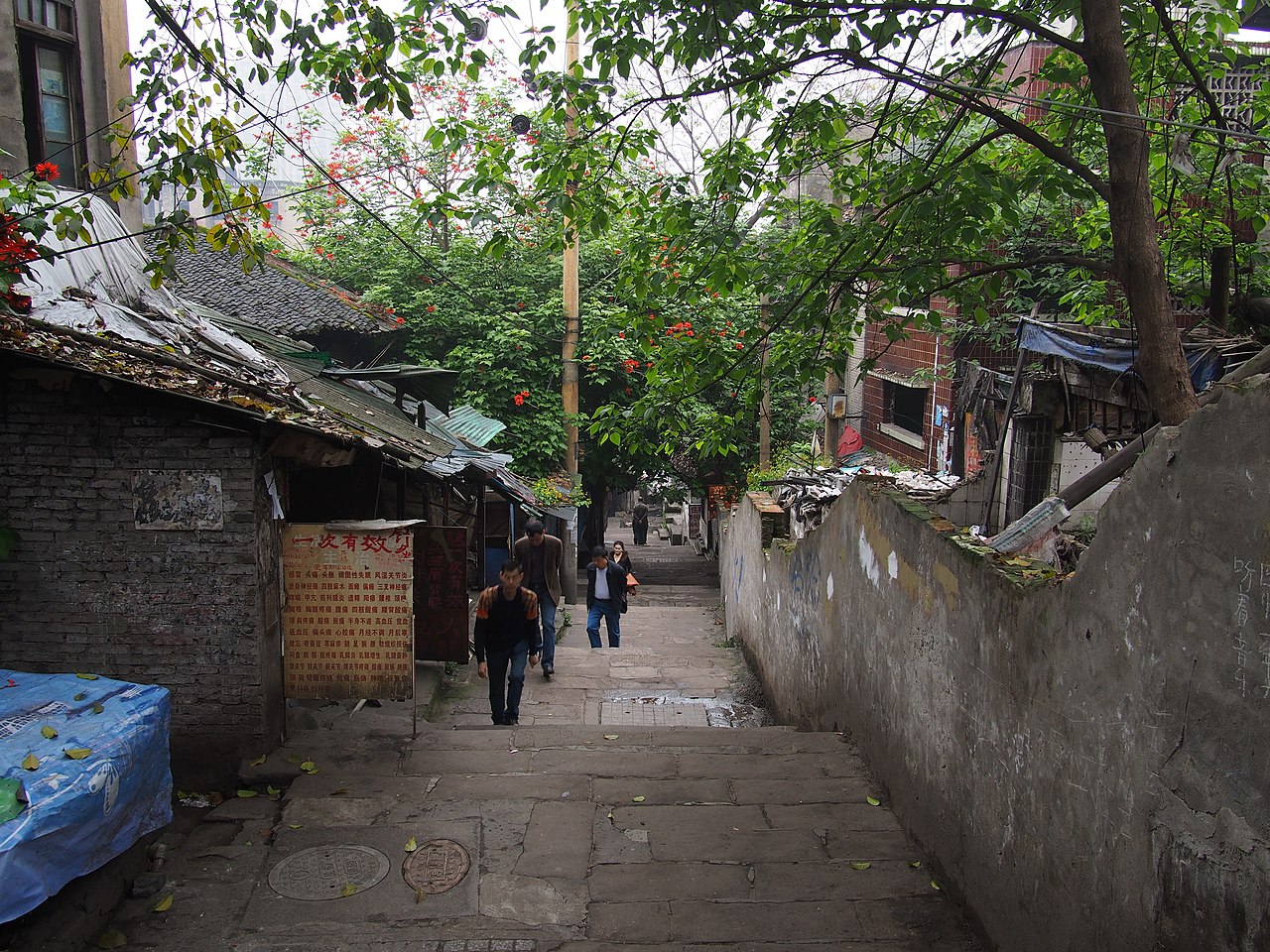
The cliff-side walk to Hongyadong — heading toward Cangbai Road brings you to the stilted riverside complex famous for its night lighting, while the opposite direction leads on foot to the restored Shibati and Daijiaxiang old-street quarters.
Vertical-city texture — a 7.5 km underground circulation network linking 28 buildings, plus rooftop gardens perched on eighth floors, make ground-level floor numbers meaningless here.
Bayi Road food street and the hotpot lanes — the densest concentration of Chongqing mala hotpot, xiaomian noodles and street snacks sits directly against the pedestrian zone.
Elevated viewpoints — the 250-metre crystal skybridge observation deck over toward Chaotianmen is within walking distance, letting you compare street level and skyline in one outing (paid, timed real-name booking).
Good to know
SeasonJuly in Chongqing is genuinely extreme; the city is one of China's traditional 'three furnaces'. For 2026 the municipal climate centre forecast roughly 25 days above 37°C and about 6 days above 40°C in the central urban area (versus 15 and 3 in a normal year), with peaks of 40–42°C, easing to about 30–36°C with rain after mid-July. Shift walking to late afternoon and evening, and use malls and the underground passages as cooling stops.
RulesSettle the entry and stay formalities in advance. Ordinary passport holders from 45 countries, including South Korea and Japan, may enter China visa-free for up to 30 days for tourism, business, visiting relatives, exchanges or transit, a policy extended through 31 December 2026 — but terms can change, so confirm eligibility with your nearest Chinese embassy before departure. Accommodation registration is also a legal requirement: hotels file your passport with the local public security bureau automatically at check-in, while apartment rentals or stays with friends must be registered at the local police station within 24 hours, with fines up to CNY 2,000 for failure. Confirm before booking that the property is licensed to host foreign guests.
RulesPayment is effectively QR-only via Alipay and WeChat Pay. Both now accept foreign cards (Visa, Mastercard, JCB and others) after passport-based identity verification, but approval can take time or fail outright, so set them up before you fly and carry some cash as backup. Chongqing's metro accepts the same ride QR codes, as well as the local Yutongxing app. Fee tiers and transaction limits change often — verify the current terms.
SafetyGoogle, YouTube, Instagram, LINE and many other overseas services are blocked on local networks. International roaming from your home carrier routes traffic through your home network and generally keeps them usable, which can be simpler than a local SIM. Either way, install Amap or Baidu Maps, a translation app and offline maps before you arrive.
SafetyOn weekend and holiday evenings the crowds are dense enough to make walking difficult, raising the risk of pickpocketing and getting separated. Wear bags to the front and agree a meeting point in advance. The terrain is also severely stepped and sloped, so map apps routinely understate walking times by ignoring vertical movement — check the exit number and which ground level it opens onto before you set off.
CautionTouting is common in this kind of downtown zone. Watch for strangers who strike up conversation and steer you to a teahouse or bar that then over-charges, flyer-carrying touts leading you to restaurants, and unlicensed cars negotiating fares without a meter. Use licensed taxis or DiDi, and for market-price items such as hotpot or seafood confirm the menu price and the unit before ordering.
MannersThe monument is a protected national-level cultural relic: do not climb the base, mark it, or attach anything to it. Keep to queues, and note that drone flying is restricted across the dense Yuzhong CBD. Avoid close-up filming of police or military facilities and of individuals, and steer clear of sensitive political topics.
Practical info
Take Metro Line 2 to Linjiangmen, Line 1 or 6 to Xiaoshizi, or Line 1 to Jiaochangkou — all are a three-to-seven-minute walk away — and the street and monument themselves are open 24 hours year-round with no ticket or booking required. Nearby Hongyadong is free but requires an advance reservation and applies crowd limits at peak times, and paid attractions such as the Raffles City observation deck use timed real-name booking with separate fees, so check opening hours, prices and booking rules on official channels immediately before your visit.
On-site reviews📍 Verified on-site
No reviews yet. If you are here, be the first to leave one.