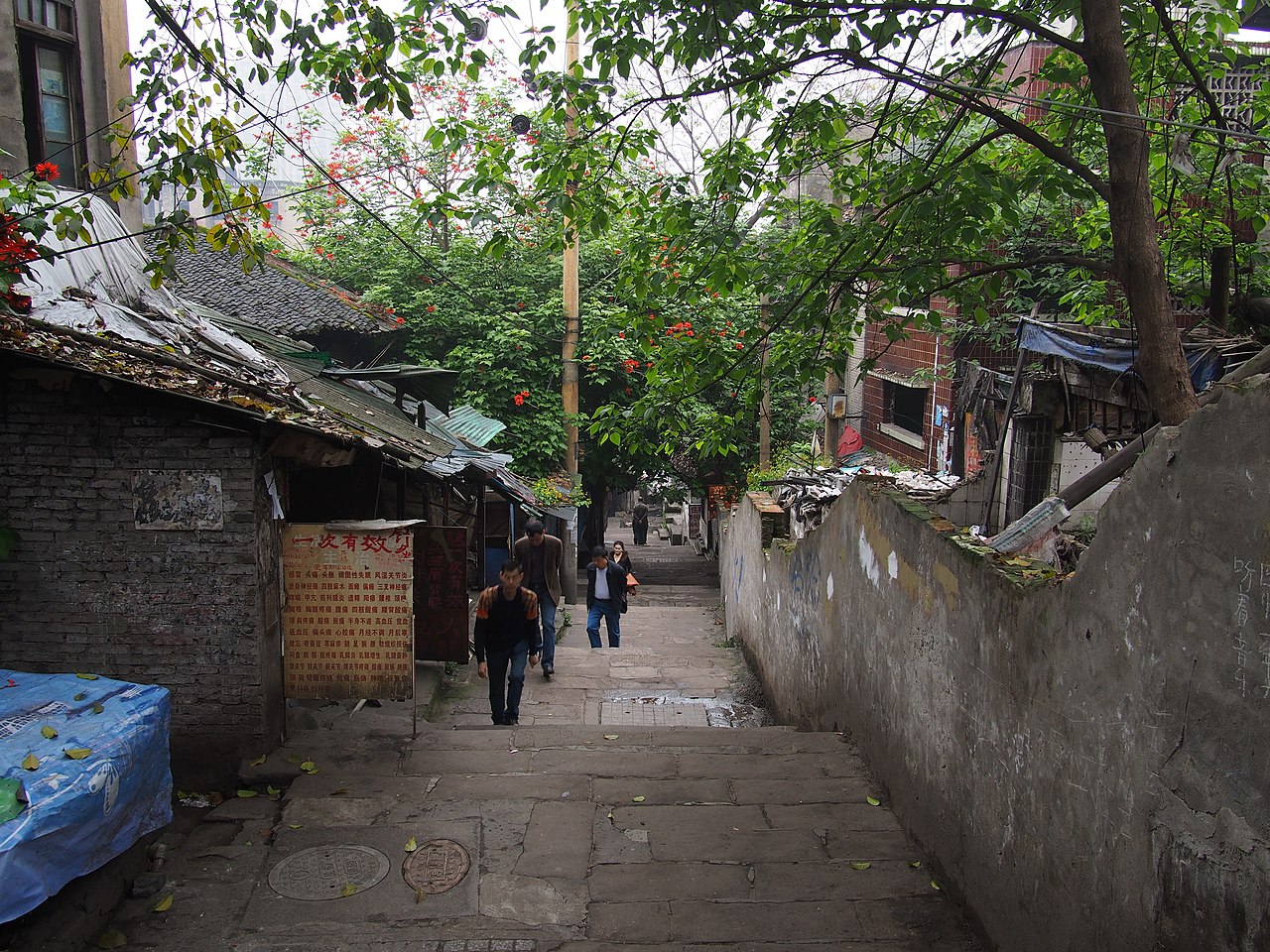
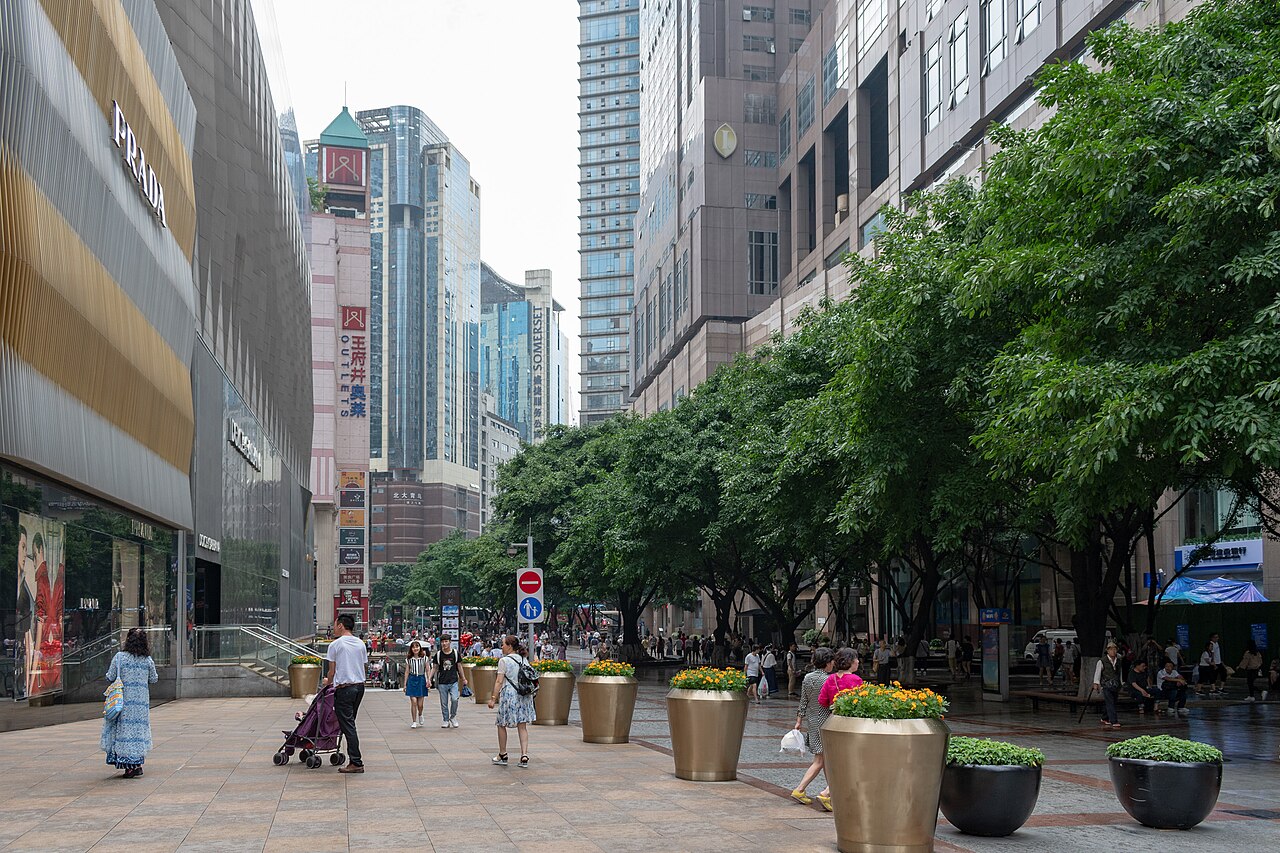
Shibati, literally "Eighteen Steps," is a roughly 400-metre stone stairway in Chongqing's Yuzhong District that historically linked the "upper city" on the ridge to the "lower city" by the river, and for generations it was the archetypal working-class lane of this vertical mountain city. After redevelopment began in 2017, zones A–C opened on 30 September 2021 and the final zone E followed in September 2024, turning the site into a pedestrian district where the original stairs and terrain survive alongside shops, teahouses and museums. In March 2025 China's Ministry of Culture and Tourism designated it a fourth-batch National Tourism and Leisure Block, so as of 2026 it is a finished, curated destination rather than the raw ruined slum some older photos suggest. Come for a walk that reads Chongqing's modern history through topography and exhibitions, not for urban decay.
The staircase itself — walking downhill from the Jiaochangkou end is the easier direction and gives the best sense of Chongqing's stacked, layered terrain of roofs and steps.
Shibati Great Tunnel Ruins Memorial — built on the site where thousands of civilians asphyxiated in an air-raid tunnel during the Japanese bombing of 5 June 1941; about 600 sq m of exhibits on shelter construction and wartime life underground.
Mountain City Memory Museum and Shibati Memory Museum — free exhibition halls holding photographs, books and everyday objects that document the neighbourhood before redevelopment.
The old well square around Gujing Chunfeng — tied to one traditional explanation of the name (eighteen steps between the houses and the well) and one of the physical traces deliberately retained.
Intangible cultural heritage lane — working ateliers for bamboo weaving, dough figurines and shadow puppetry, where you can watch craftspeople rather than just buy souvenirs.
Lanterns after dark — the whole staircase is lit in the evening and the atmosphere changes completely, which is why the district is classed as a national night-time culture and tourism consumption cluster.
Good to know
SeasonChongqing is one of China's notorious "furnace cities." July and August bring humid heat that can feel close to 40°C, and Shibati is a climb-and-descend route with limited shade. Visit early morning or after sunset in summer and carry water.
SafetyThe stone steps are long, steep and genuinely slippery after Chongqing's frequent fog and drizzle. Wear shoes with grip, and if you have knee problems or are pushing a stroller, walk top-to-bottom only rather than attempting the climb.
RulesMainland China runs on mobile payment. Link an international Visa or Mastercard to Alipay or WeChat Pay before you fly. Small stalls and older shops still decline foreign-linked cards, so keep some cash RMB as a backup.
RulesGoogle, Instagram and many messaging apps are blocked or unreliable on local networks. Install and pay for a VPN before arrival, or use international roaming or a travel eSIM, which routes around the restriction without extra software.
RulesForeign visitors must present a passport at check-in and be registered with local police; budget guesthouses are not always licensed to accept foreigners, so confirm when booking. Visa rules differ by nationality and change often — verify your own entry requirements shortly before departure.
CautionCostume-rental and photo-shoot packages along the street often advertise a low base price, with retouching, extra shots and props charged separately. Agree the total and what it covers before shooting, and ask the price of unlabelled street snacks before ordering.
MannersThe Great Tunnel memorial commemorates a mass civilian death. Keep your voice down inside and avoid posed selfies. Residents and working shopkeepers are still present in parts of the district, so ask before photographing people or shop interiors.
Practical info
Take Metro Line 1 or 2 to Jiaochangkou Station; Exit 11 connects to the upper-city main entrance, and Exits 3–4 or nearby Qixinggang Station give alternative approaches. The street is a free, open-access district, but the museums and individual shops each keep their own hours and some exhibitions may require booking, so check official channels for current opening times and any fees shortly before you go.
On-site reviews📍 Verified on-site
No reviews yet. If you are here, be the first to leave one.