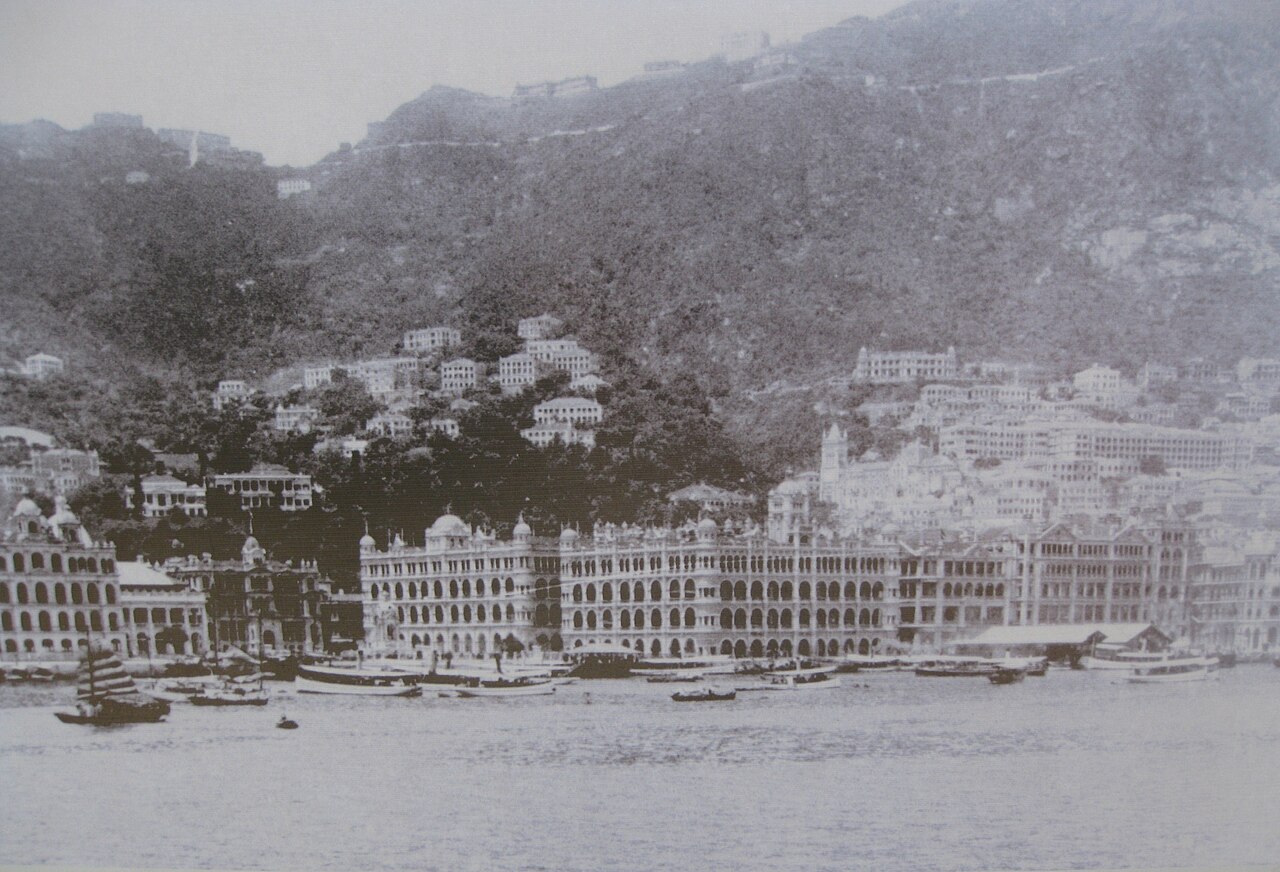
Statue Square is Hong Kong's first purpose-built urban public square, laid out on land reclaimed in the 1880s and named for the British royal statues that once lined it. Almost all of those statues were removed during the Japanese occupation, so the only freestanding figure left today is that of HSBC banker Sir Thomas Jackson — and the real interest of the place is the contrast between that near-empty ceremonial space and the ring of finance-district towers around it, from Foster's HSBC headquarters to I. M. Pei's Bank of China Tower. As of 2026 the square is partly under works: the southern plaza is partially closed until 31 August for resurfacing and signage renewal, while roughly 28 percent (1,765 sq m) of the northern gardens is hoarded off until the second quarter of 2031 for a pedestrian tunnel linking Central MTR Station to the new harbourfront. Treat it as a 30-minute stop stitched into a Central walk with the HSBC lions, the Cenotaph, the tram and the Star Ferry rather than a destination in itself.
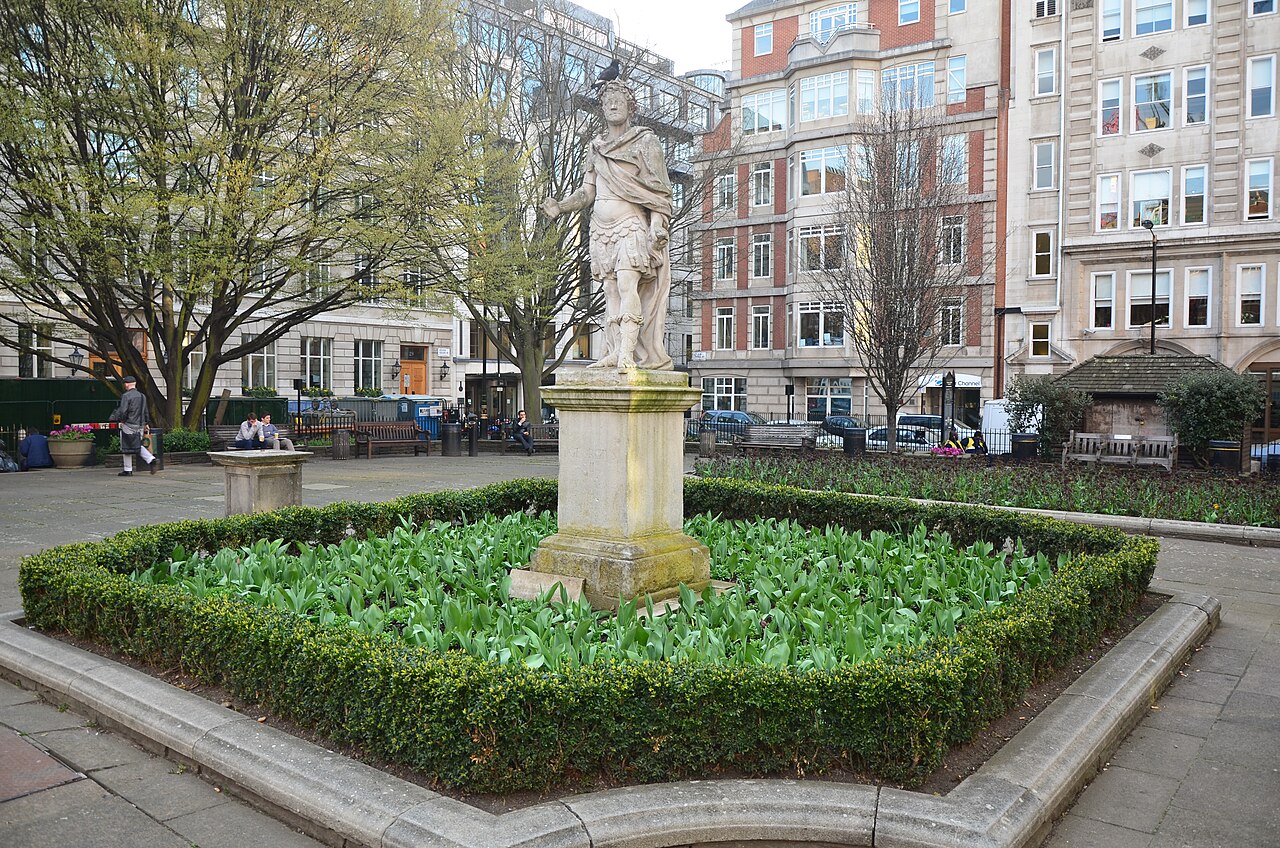
The statue of Sir Thomas Jackson (1906), the only freestanding statue remaining. The Queen Victoria statue unveiled here in 1896 was carried off during the Japanese occupation and re-erected in Victoria Park in 1957 — the gap between the square's name and its present emptiness is itself the story.
The Cenotaph (unveiled 1923), an almost exact replica of Lutyens' Whitehall Cenotaph in London, commemorating the dead of both world wars and declared a monument in November 2013. It stands in the northern section across Chater Road.
The Court of Final Appeal Building, the 1912 neoclassical former Legislative Council Building whose exterior was declared a monument in 1984, crowned by a blindfolded 2.7-metre statue of Themis, goddess of justice, looking over the square.
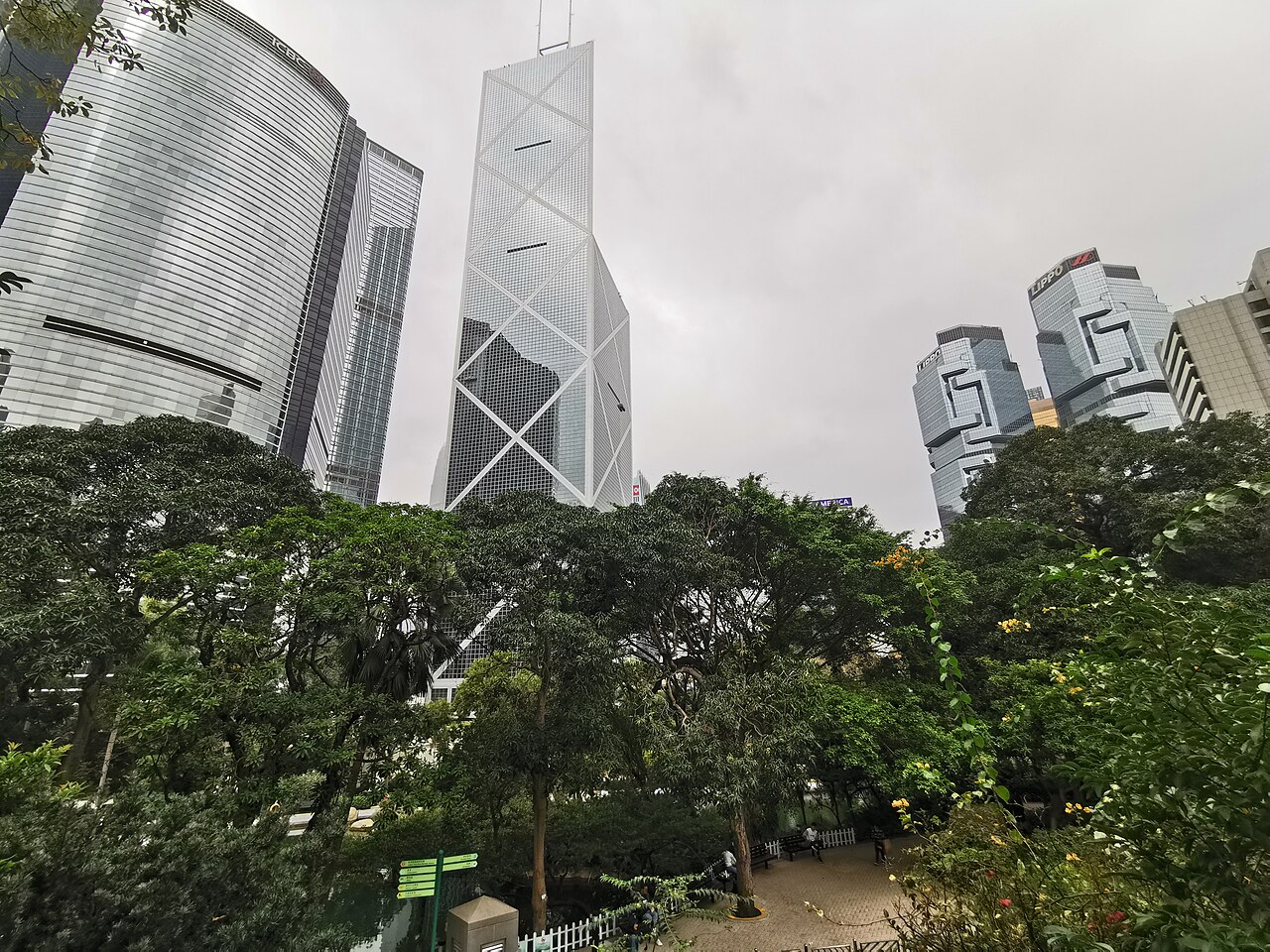
The surrounding skyline as a single sightline of competing eras — Norman Foster's HSBC headquarters with its bronze lions Stephen and Stitt, I. M. Pei's Bank of China Tower, the Standard Chartered Bank Building and the Hong Kong Club Building.
The square on Sundays and public holidays, when Filipino and Indonesian domestic workers have gathered since the 1980s and turn the square and the pedestrianised stretch of Chater Road into a living social space. In December the square hosts the large outdoor Christmas tree of Hong Kong's winter festival, an annual fixture since 2003.
Good to know
SeasonJuly to September is both peak typhoon season and the hottest part of the year, with highs around 32C and frequent Very Hot Weather Warnings. The square is open ground with little shade. When Typhoon Signal No. 8 or above is hoisted, MTR and bus services are reduced or suspended and most businesses close, so check the Hong Kong Observatory warnings the morning of your visit and aim for early morning or dusk.
RulesAccess is reduced by two separate works in 2026. The southern plaza is partially closed from 4 May to 31 August for renewal of walls, floor tiles, tactile guide paths and signage, targeted for completion in the third quarter. Separately, about 28 percent (1,765 sq m) of Statue Square Gardens north of Chater Road — including the square fountain, benches and shelters — is fenced as a works site from the third quarter of 2026 until the second quarter of 2031 for a pedestrian tunnel to the new Central harbourfront. Over 70 percent of the open space stays accessible, but confirm the current layout before you go.
RulesHong Kong is a separate jurisdiction from mainland China for immigration, currency and internet access. No mainland-style pre-registration or VPN is needed and Google and common messaging apps work normally; the currency is the Hong Kong dollar, not the renminbi. AlipayHK and WeChat Pay HK are accepted but optional — the default for transport and convenience stores is the Octopus card, sold with a refundable HK$50 deposit (check current pricing and top-up terms).
MannersThe Cenotaph is a war memorial and a declared monument, not a photo prop. Do not sit or lean on its base or pose playfully against it, and keep your distance if a wreath-laying or commemoration is under way.
MannersOn Sundays and public holidays this area is the main rest space for domestic workers, and Chater Road between Pedder Street and Jackson Road becomes a pedestrian precinct from 7am to midnight. These gatherings are private social life, not a tourist attraction: avoid close-up or head-on photography of individuals without consent, and do not walk through the middle of seated groups.
SafetyCentral is generally safe, but keep bags in front of you in Sunday crowds and in MTR interchange passages. Eating and drinking inside the MTR paid area is prohibited and fineable, and standing on the right of escalators is the local norm. The square is open ground with no closing time, though lighting near the hoarded works areas can be poor late at night.
CautionAggressive tourist scams are not common here, but watch for taxis that refuse the meter or take long detours, and for city-centre exchange counters advertising 'no commission' while quoting a poor rate. On Hong Kong Island the licensed taxis are red and must run on the meter; compare the actual amount handed over at two or three exchange counters, or withdraw from an ATM. Decline street approaches offering tailoring, jewellery or donations.
Practical info
Exit K of MTR Central Station opens directly onto the square, and Hong Kong Station, the Bank Street tram stop and the Star Ferry pier are all within walking distance. It is an unenclosed public square with no admission charge and no fixed opening hours, but because the 2026 works change which parts are usable, check the Hong Kong Tourism Board listing for the current accessible area and event schedule before visiting.
On-site reviews📍 Verified on-site
No reviews yet. If you are here, be the first to leave one.