Hong Kong Park opened in May 1991 on the site of the former Victoria Barracks, packing an artificial lake, a waterfall, a tropical aviary, a conservatory and several 19th-century military buildings into roughly eight hectares in the middle of Admiralty's skyscraper district. Its terrain-following landscape design won an American Institute of Architects urban design honour award in 1998, and because there is no admission charge anywhere in the park it remains one of the easiest major sights in Hong Kong to drop into. As of 2026 the park is operating normally, including the Edward Youde Aviary, which reopened in 2024 after a multi-year refurbishment. Sitting between the Peak Tram's Garden Road terminus and Pacific Place, it works best as a 30-to-60-minute breather slotted into a Central or Peak itinerary rather than a destination in its own right.
Edward Youde Aviary — a roughly 3,000 sq m walk-through aviary formed by stainless steel mesh suspended across an entire valley, with an elevated walkway that puts you at canopy height among more than 530 birds of over 60 Southeast Asian rainforest species.
Flagstaff House Museum of Tea Ware — a free museum devoted to Chinese tea vessels, housed in an 1846 building that is the oldest surviving Western-style structure in Hong Kong, with the adjacent K. S. Lo Gallery included.
Forsgate Conservatory — about 1,400 sq m of glasshouse divided into climate zones such as arid and tropical displays, with rotating seasonal shows including orchid exhibitions.
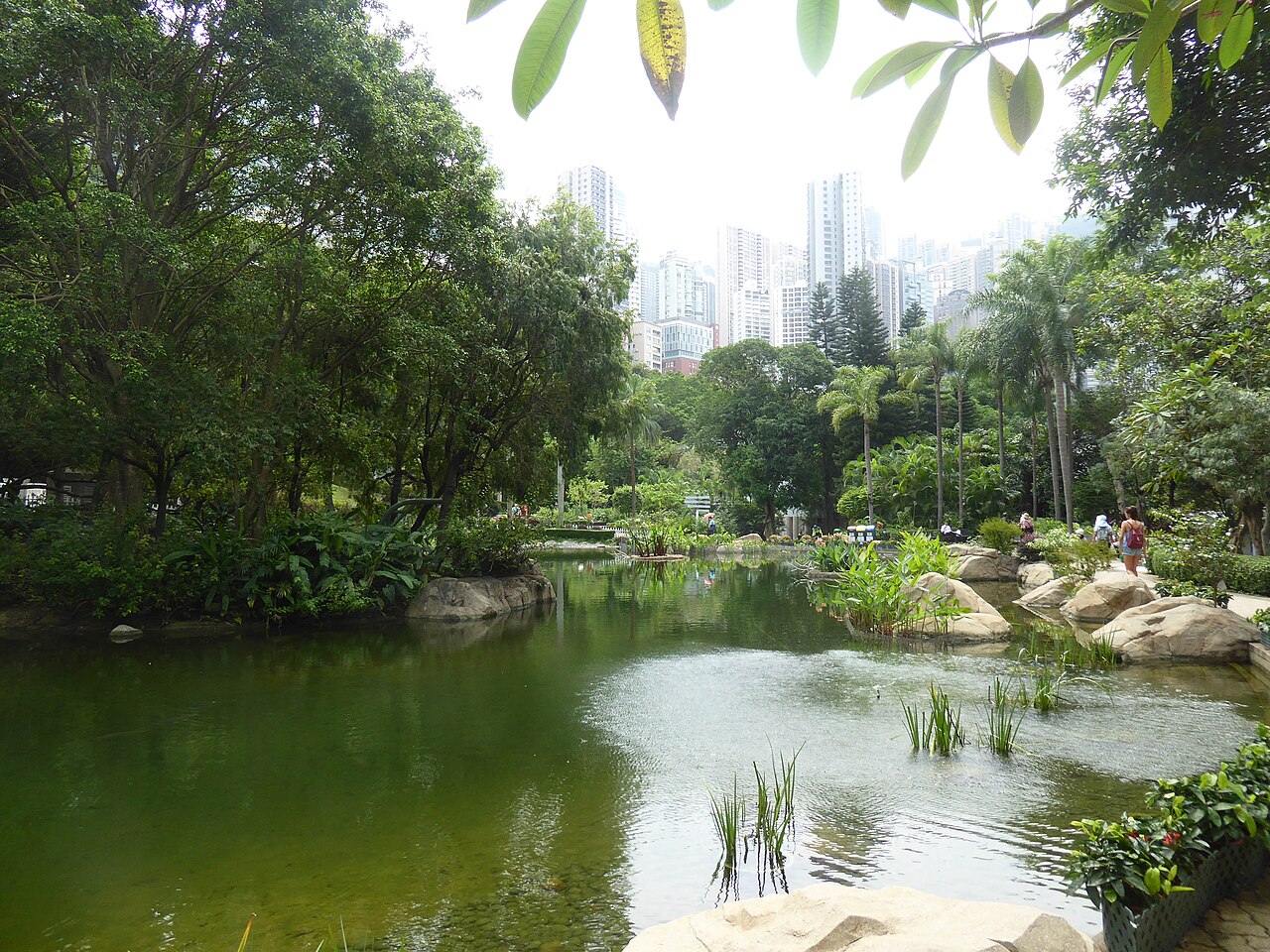
The artificial lake, waterfall, Tai Chi Garden and Olympic Square — water features laid out over the old barracks tennis courts, and an early-morning gathering point for local tai chi practitioners.
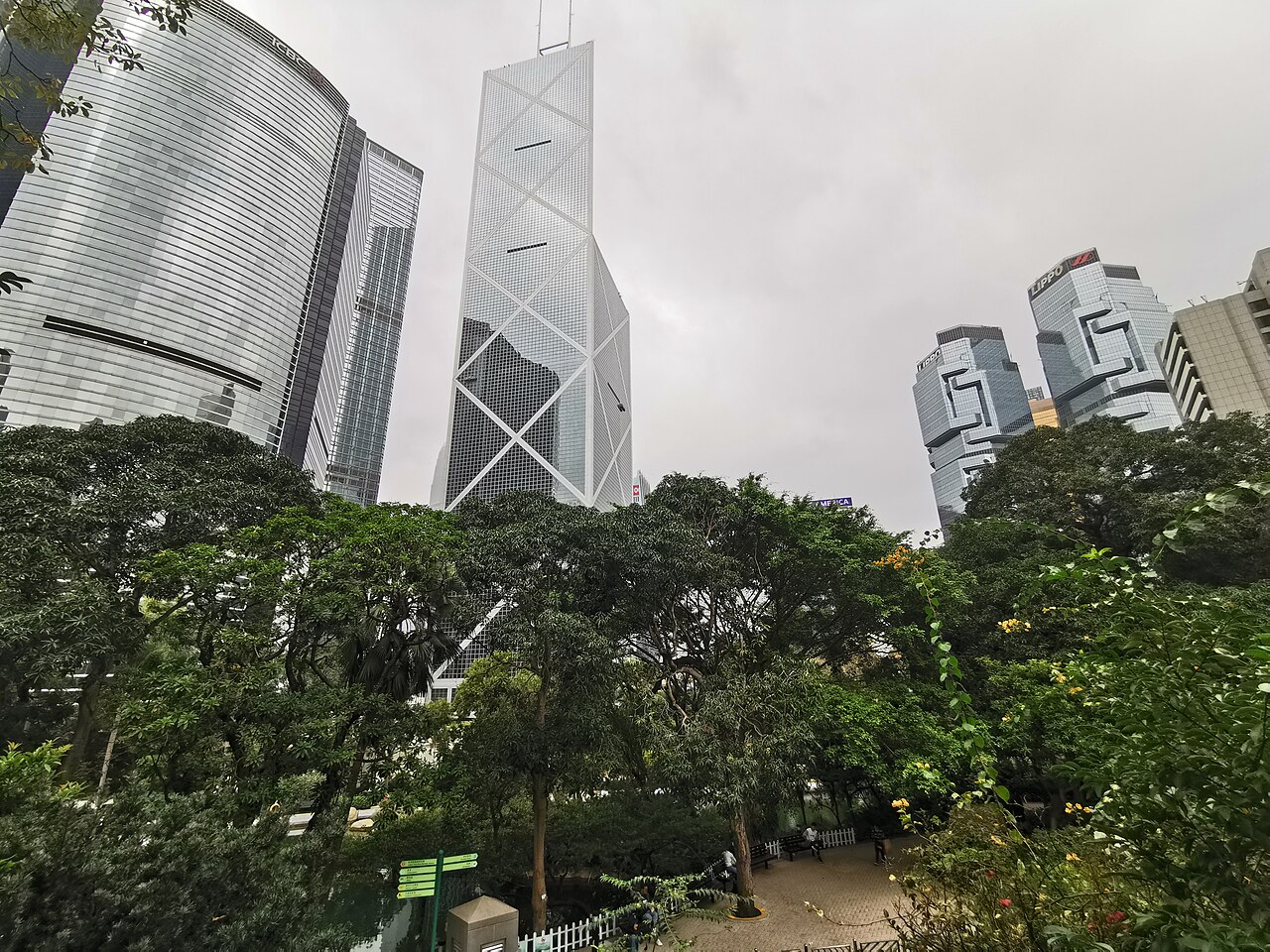
Vantage Point and the surviving barracks buildings — a spiral observation tower framing the park against the surrounding towers, plus Grade-listed structures such as Cassels Block (now the Hong Kong Visual Arts Centre) and Rawlinson House (now the Marriage Registry).
Good to know
SeasonJuly through September is the peak of Hong Kong's typhoon and rainstorm season. When Tropical Cyclone Warning Signal No. 8 or a red or black rainstorm warning is in force, the aviary and conservatory close immediately and park facilities suspend operations. Check the Hong Kong Observatory the morning of your visit and keep an indoor fallback.
SeasonSummer temperatures regularly exceed 30 C with very high humidity, and the park is built across a hillside with many stairs and ramps. Carry water, and prefer an early-morning or late-afternoon visit over the middle of the day.
RulesHong Kong operates its own immigration, telecoms and payment systems separate from mainland China. No VPN is required and Google, Instagram and messaging apps work normally; there is no mainland-style passport registration, and mainland Alipay or WeChat Pay accounts are not the local standard. An Octopus stored-value card is the practical default for MTR, buses, trams and convenience stores. If your trip continues into Shenzhen or elsewhere on the mainland, separate visa rules and payment apps apply.
RulesVisitors should confirm their own entry requirements before departure, as visa-free periods differ by nationality and policies change. Hong Kong does not stamp passports; arriving visitors receive a landing slip or electronic arrival record showing the permitted limit of stay, which should be checked on arrival and retained until departure.
MannersInside the aviary, feeding the birds and flash photography are prohibited, and visitors must stay on the designated walkway and keep noise down. Smoking, littering and drone flying are prohibited throughout the park under Leisure and Cultural Services Department rules, with penalties enforced; check on-site signage.
SafetyThe hillside layout means steps, slopes and timber decking throughout, and stone paving and the aviary walkway become genuinely slippery after rain. Step-free routes exist but are limited, so approach from the Admiralty side if using a stroller or wheelchair, and wear shoes with grip rather than sandals.
CautionHong Kong Park, the aviary, the conservatory and the tea ware museum are all free of charge, so anyone selling admission tickets or paid entry tours at the gates is not an official vendor. For taxis, confirm the meter is running (Hong Kong Island taxis are red) and check change and any tunnel surcharge before leaving the vehicle.
Practical info
The park is a five-to-ten-minute walk from MTR Admiralty station exits B and C1 via Pacific Place, or from Central station exits J2 and K; buses 12, 12A, 12M, 13, 23, 40, 40M and 103 also stop nearby, and there is no public parking inside the park. Outdoor areas are open free of charge from 06:00 to 23:00, the aviary and conservatory from 09:00 to 17:00, and the Flagstaff House Museum of Tea Ware from 10:00 to 18:00 with Tuesday closures except public holidays; all are free, but hours, closure days and weather-related suspensions change, so check the official LCSD website for the latest information before visiting.
On-site reviews📍 Verified on-site
No reviews yet. If you are here, be the first to leave one.