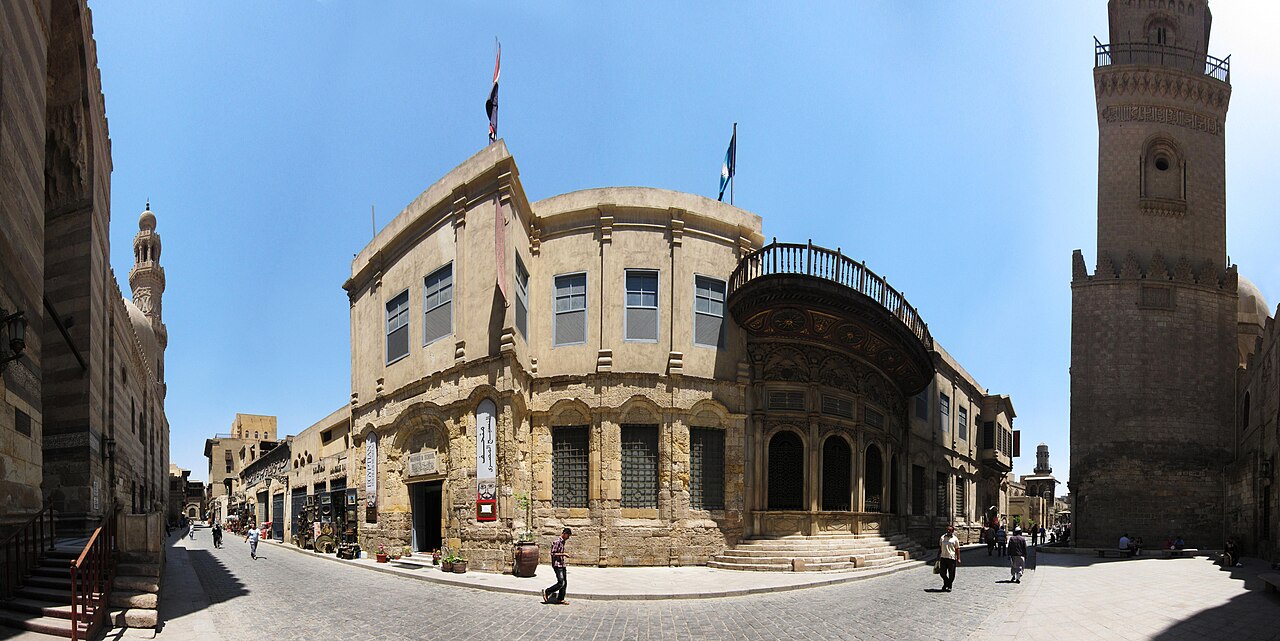
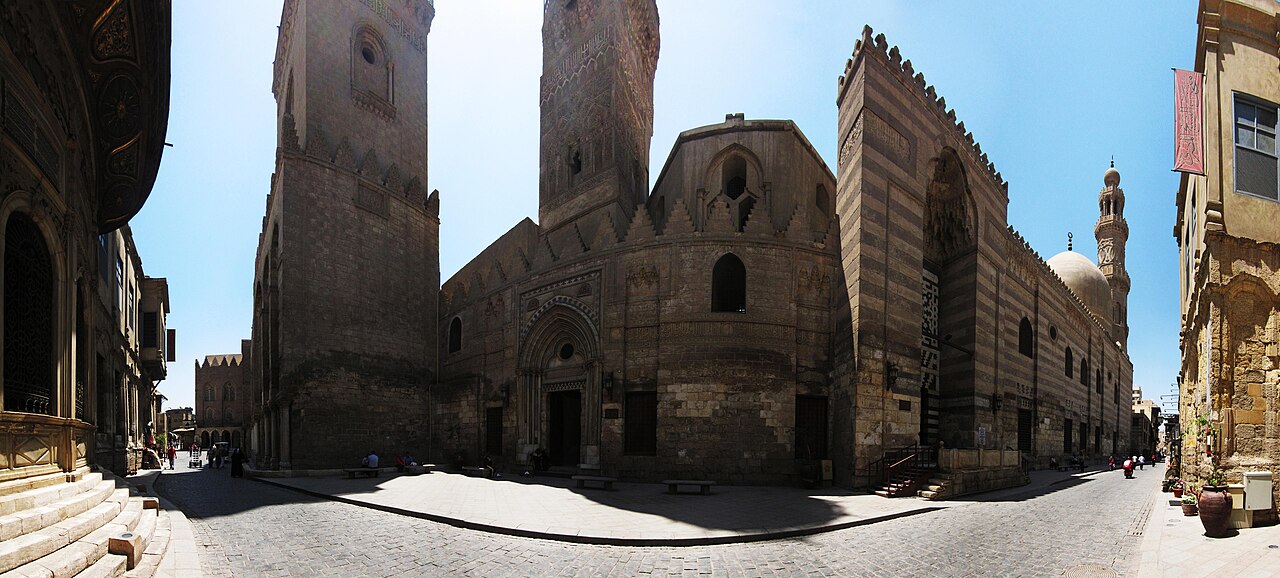
Al-Muizz Street (formally Sharia al-Mu'izz li-Din Allah) is the roughly one-kilometre spine that General Jawhar laid out when the Fatimids founded Cairo in 969, running from the northern gate of Bab al-Futuh to the southern gate of Bab Zuweila. Lined with 29 Islamic monuments—mosques, madrasas, merchant houses and city gates spanning the 10th to 19th centuries—it is often called the world's largest open-air museum of Islamic architecture and forms part of UNESCO-listed 'Historic Cairo' (1979). Since a major restoration begun in 1997 the northern stretch has been pedestrianised by day, and in 2026 it remains one of the city's most atmospheric walks, especially after dark when the facades are floodlit.
The Qalawun Complex (1285), a Mamluk masterpiece combining mosque, madrasa and mausoleum
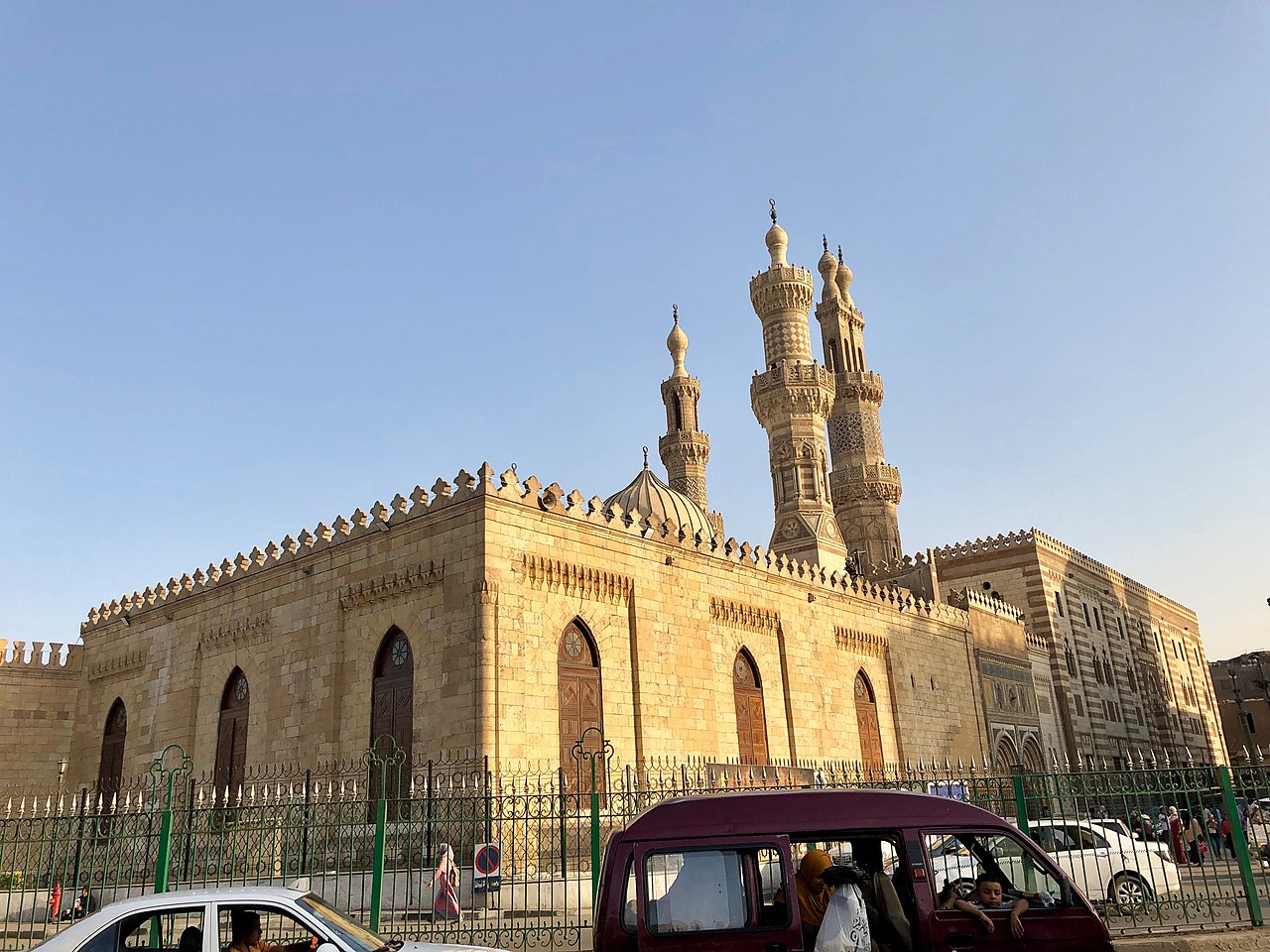
The Fatimid-era Mosque of al-Hakim (1013) beside the massive Bab al-Futuh gate
The Mosque-Madrasa of Sultan Barquq (1386) and the finely carved al-Aqmar Mosque (1125)
Bab Zuweila at the southern end—climb its minarets for rooftop views over Islamic Cairo (access varies, check on site)
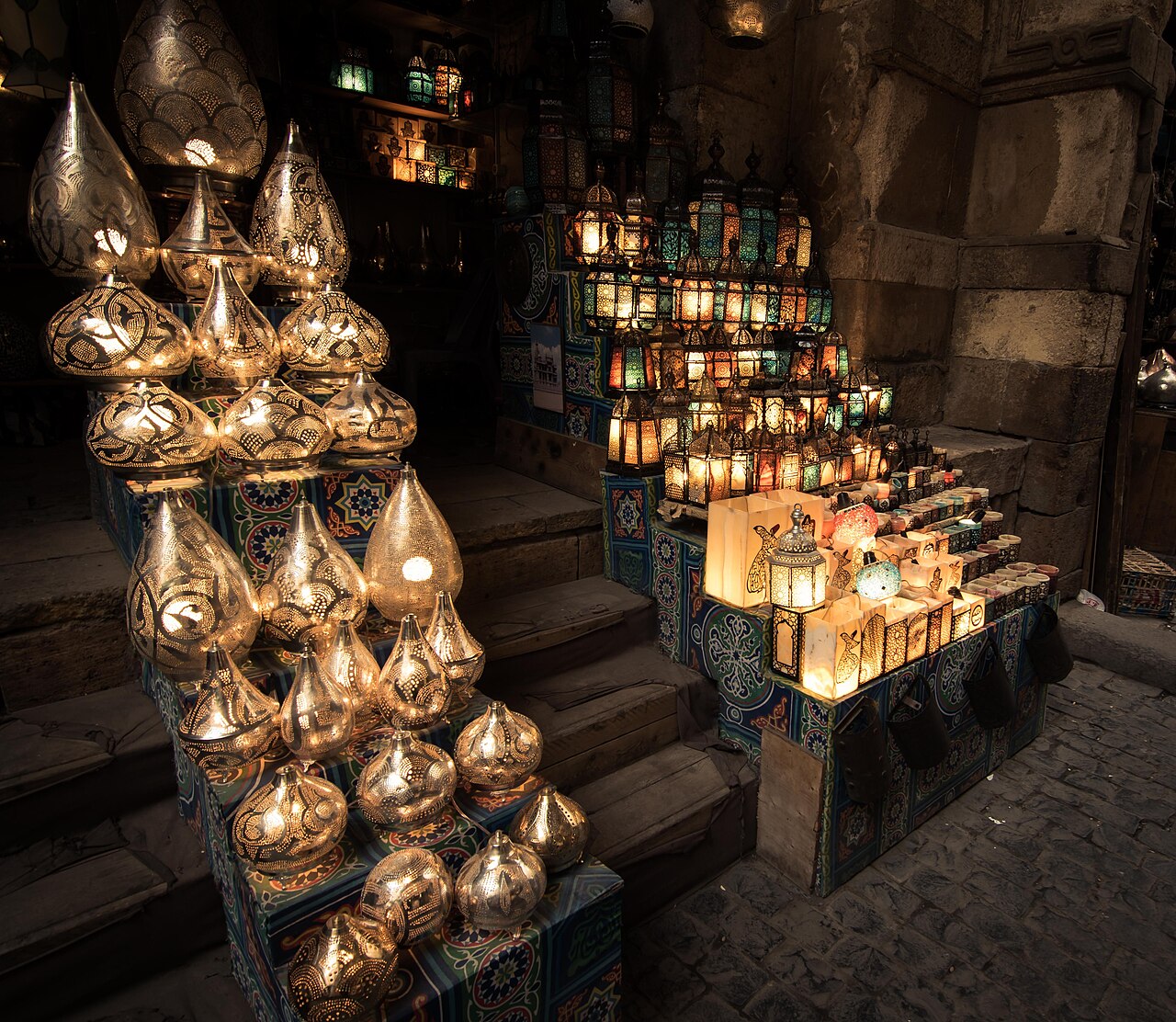
Evening illuminations, with the Khan el-Khalili bazaar and al-Ghuri complex right alongside
Good to know
SafetyThe southern section is not fully pedestrianised, so motorbikes and tuk-tuks share the lane; watch for pickpockets in the crowds and for uneven paving underfoot.
SeasonJuly is fiercely hot (35–40°C by midday). Come in the early morning or from dusk onward when it is cooler and lit, and carry water and a hat.
RulesThe street itself is free, but the interiors of the ticketed monuments (roughly 9am–5pm) require a combined ticket; foreigner prices and hours change often, so confirm the latest before you go.
MannersRemove your shoes and cover shoulders and knees inside mosques; women should bring a scarf for their hair, and expect access limits during the five daily prayers.
CautionKhan el-Khalili vendors are very pushy—start bargaining at half the asking price or less, and check café or restaurant bills for unordered items (water, mezze, a 'service' line).
MannersCaretakers who unlock tombs or point the way will expect baksheesh (a small tip); keep small notes handy and give only when you choose to.
Practical info
No metro station sits directly on the street, so the easiest approach is an Uber or taxi to Bab al-Futuh in the north or to Al-Azhar Mosque, then walk in (the nearest metro stops are Ataba and Bab el-Shaaria). Walking the street is free and monument interiors open roughly 9am–5pm, but combined-ticket prices and hours change frequently—check the latest before visiting.
On-site reviews📍 Verified on-site
No reviews yet. If you are here, be the first to leave one.