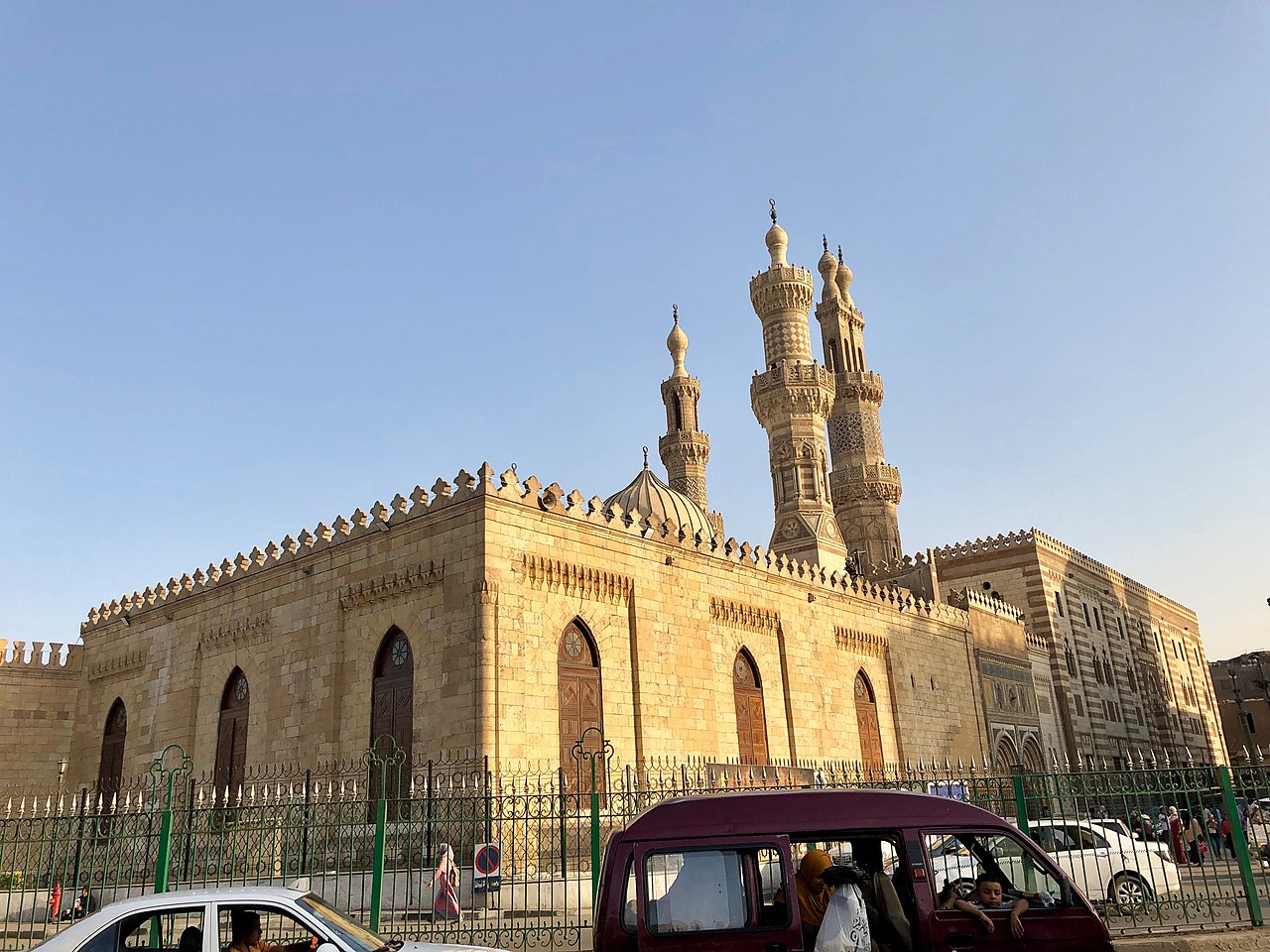
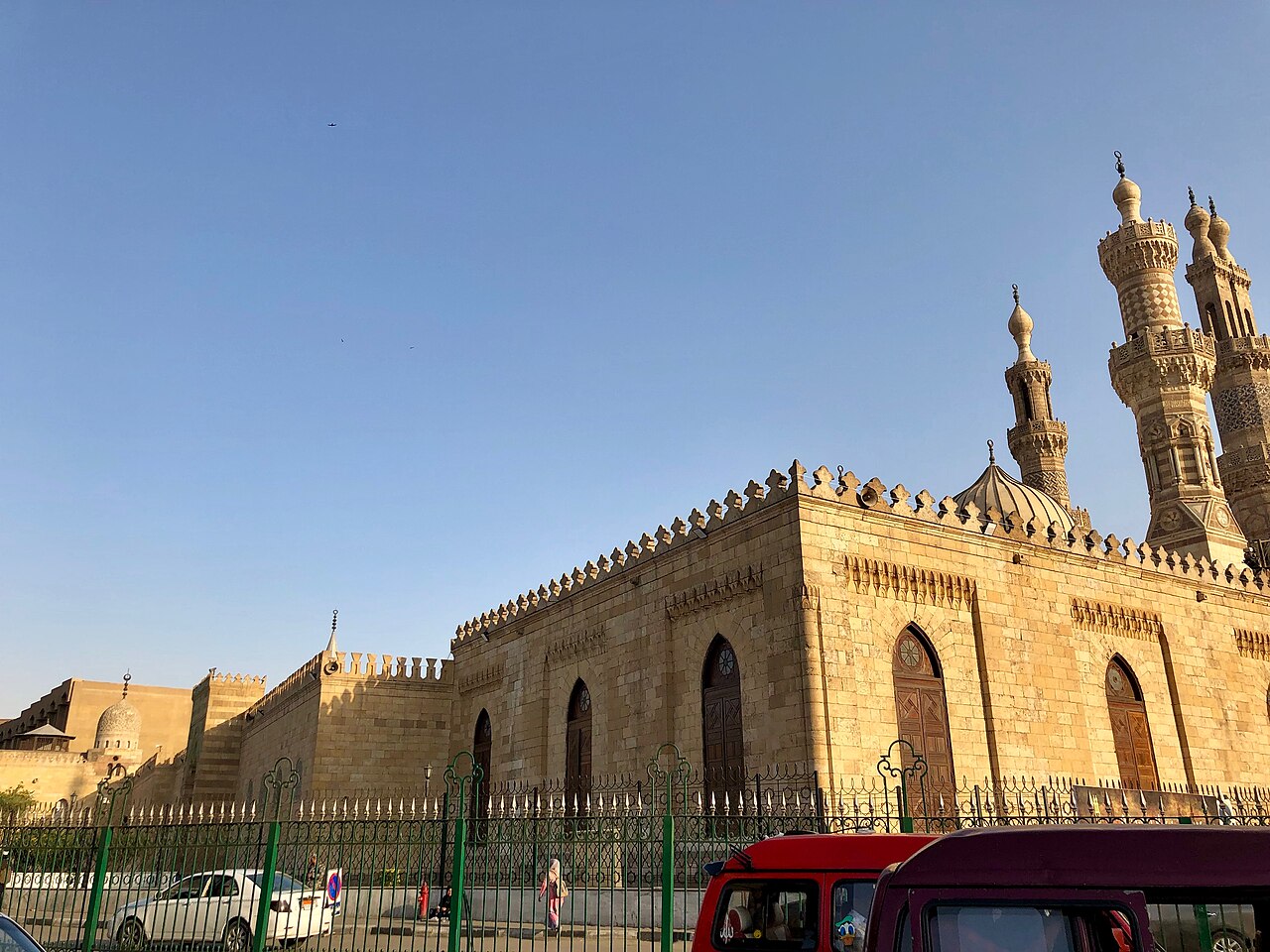
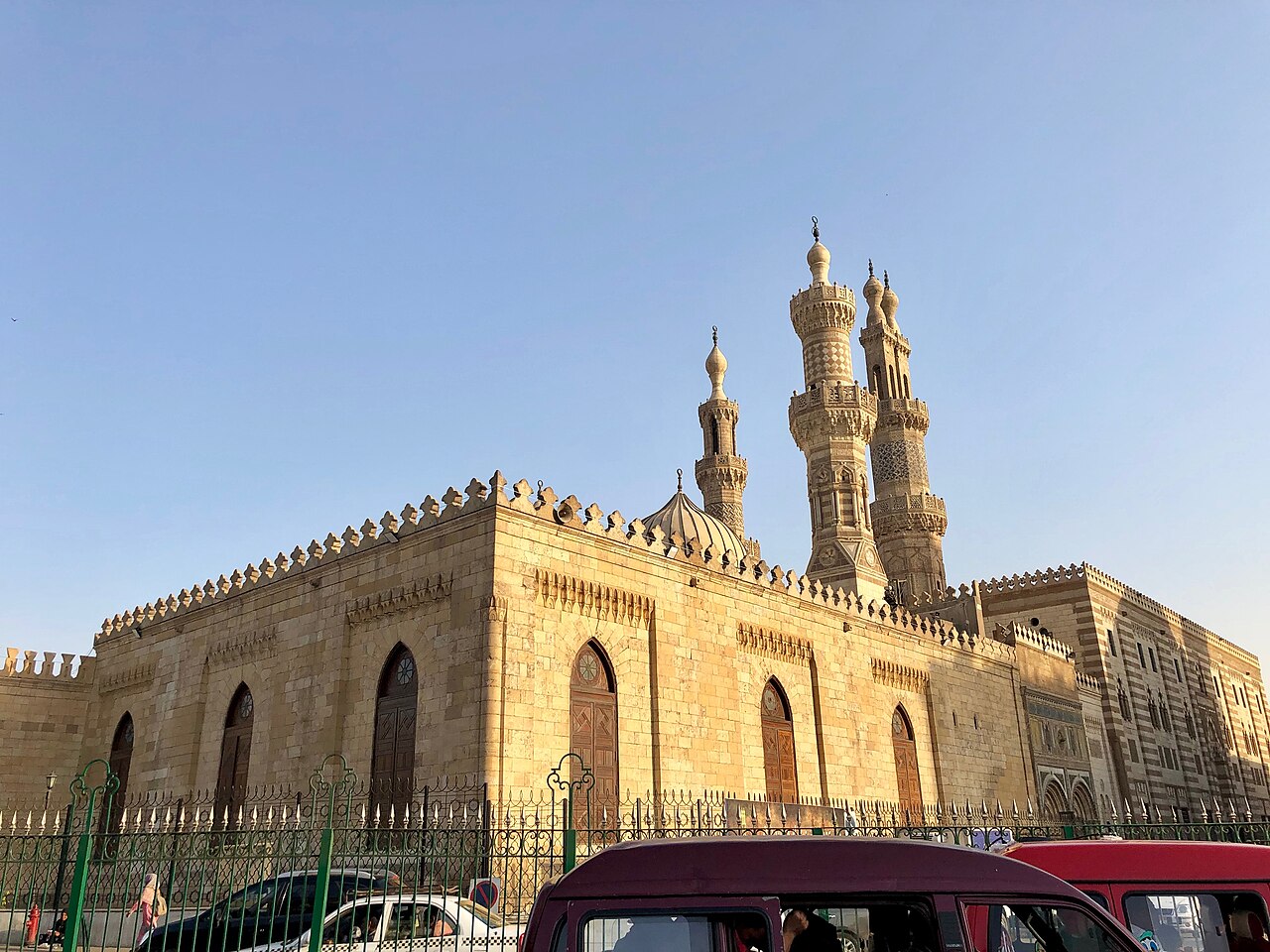
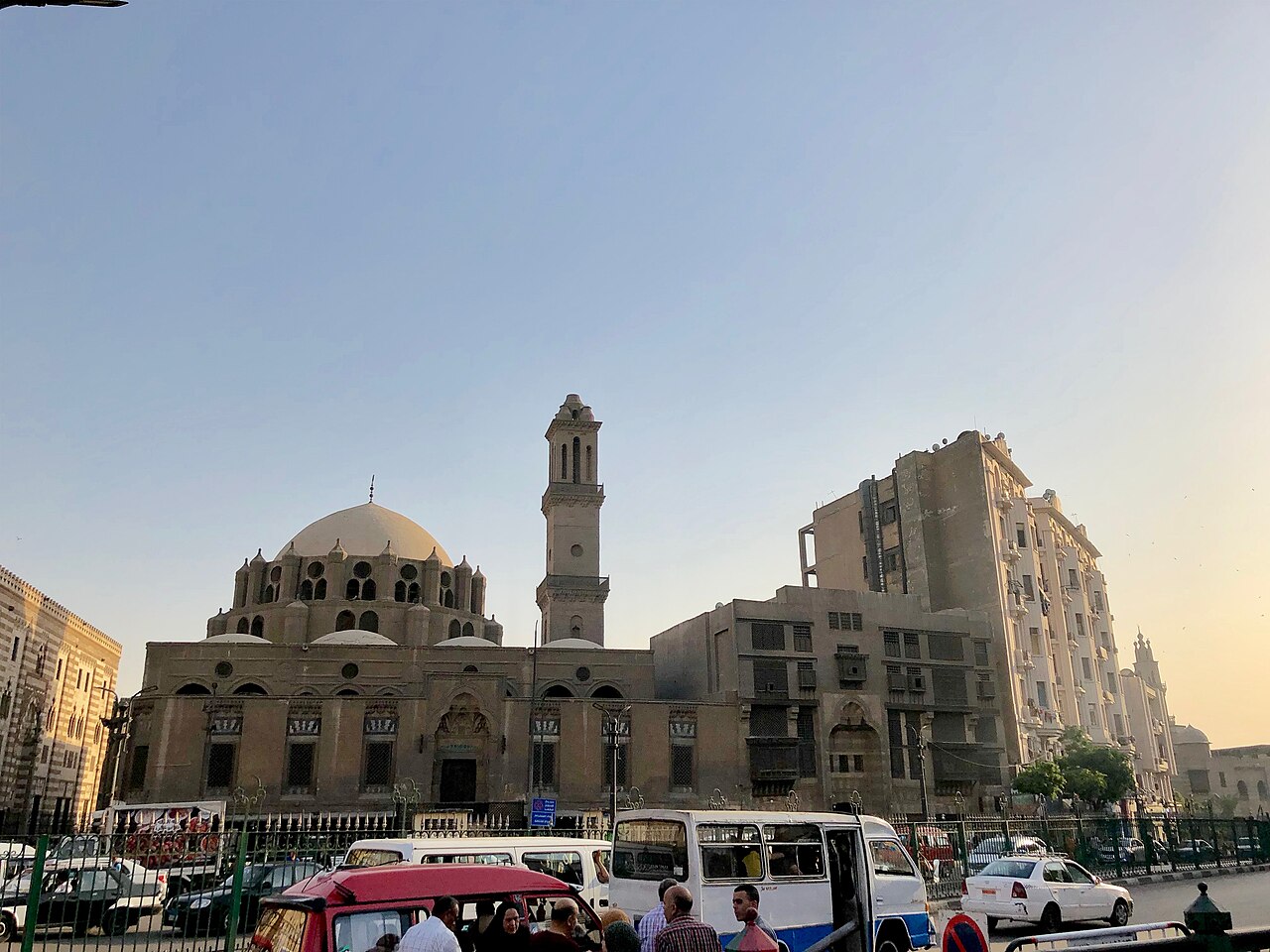
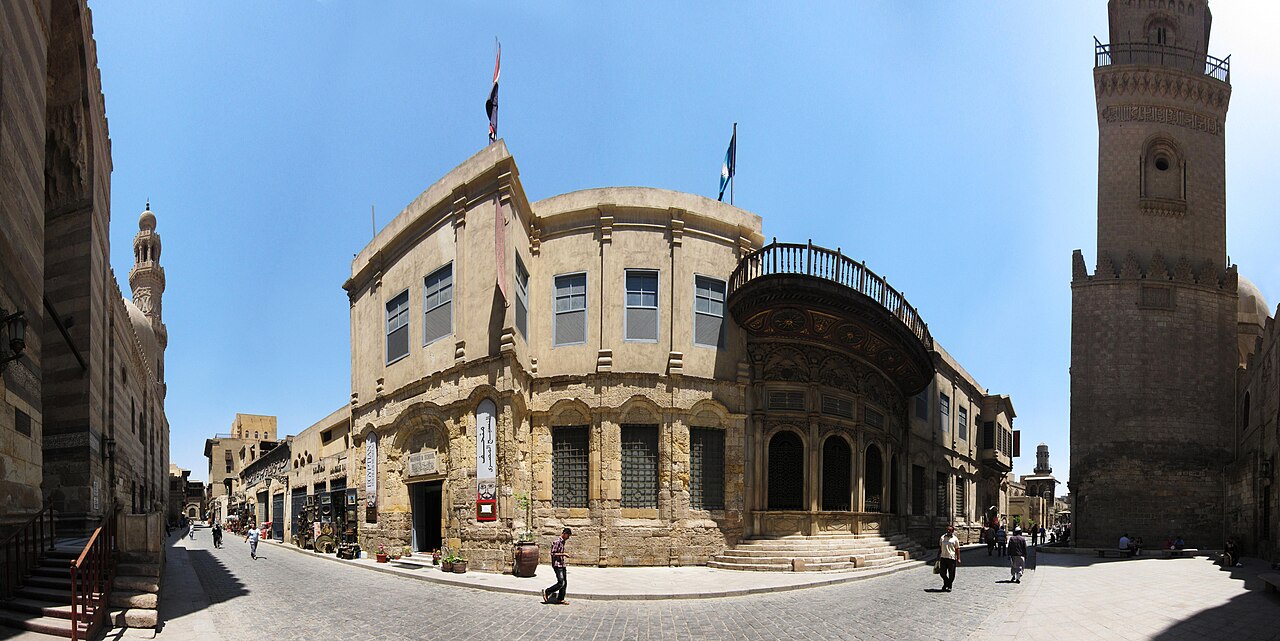
Founded in 970 CE by the Fatimid general Jawhar al-Siqilli and completed in 972, Al-Azhar was Cairo's first great mosque, and the teaching institution that grew around it became one of the world's oldest continuously operating universities and the foremost seat of Sunni Islamic scholarship. Its hypostyle prayer hall layers Fatimid, Mamluk and Ottoman work, and the marble courtyard, five minarets and reused antique columns tell a thousand years of architectural history in one place. A major Saudi-funded restoration was completed in 2018, followed by ongoing conservation through 2025 (including some 1,300 rare books), so in 2026 the mosque is fully open as a living place of worship and study. Approach it less as a tourist stop and more as an active spiritual and academic site to be explored quietly.
The large marble-paved central courtyard (sahn) ringed by arcades of distinctive keel-shaped arches, at its best in soft early-morning light
Five minarets from different eras, notably the Qaytbay minaret (1483–1495) and the twin-finialled Qansuh al-Ghuri minaret (1509) with its blue faience tilework
The original Fatimid mihrabs, fine stucco ornamentation and marble columns salvaged from across Egyptian history
Historic gates such as Bab al-Muzayinin (Gate of the Barbers) and the gilded minbar (pulpit)
The living scholarship of Al-Azhar University — students studying scripture in the arcades, a scene unbroken for a millennium
Good to know
RulesAs an active place of worship, modest dress covering shoulders, arms and legs is required. Women may be asked to wear a headscarf, and free cover-up robes are usually available at the entrance. Shoes must be removed before entering, so easy-off footwear is convenient.
MannersThis is a working mosque and university. Non-Muslim visits are restricted during the five daily prayers and Friday midday prayer (roughly 12:00–14:00), so avoid those windows, keep your voice low indoors, and do not photograph worshippers or students head-on.
SeasonCairo summers (June–August) regularly exceed 35–40°C with little shade in the marble courtyard. An early-morning visit is cooler and less crowded; bring water, a hat and sunglasses. During Ramadan, opening and prayer times change significantly.
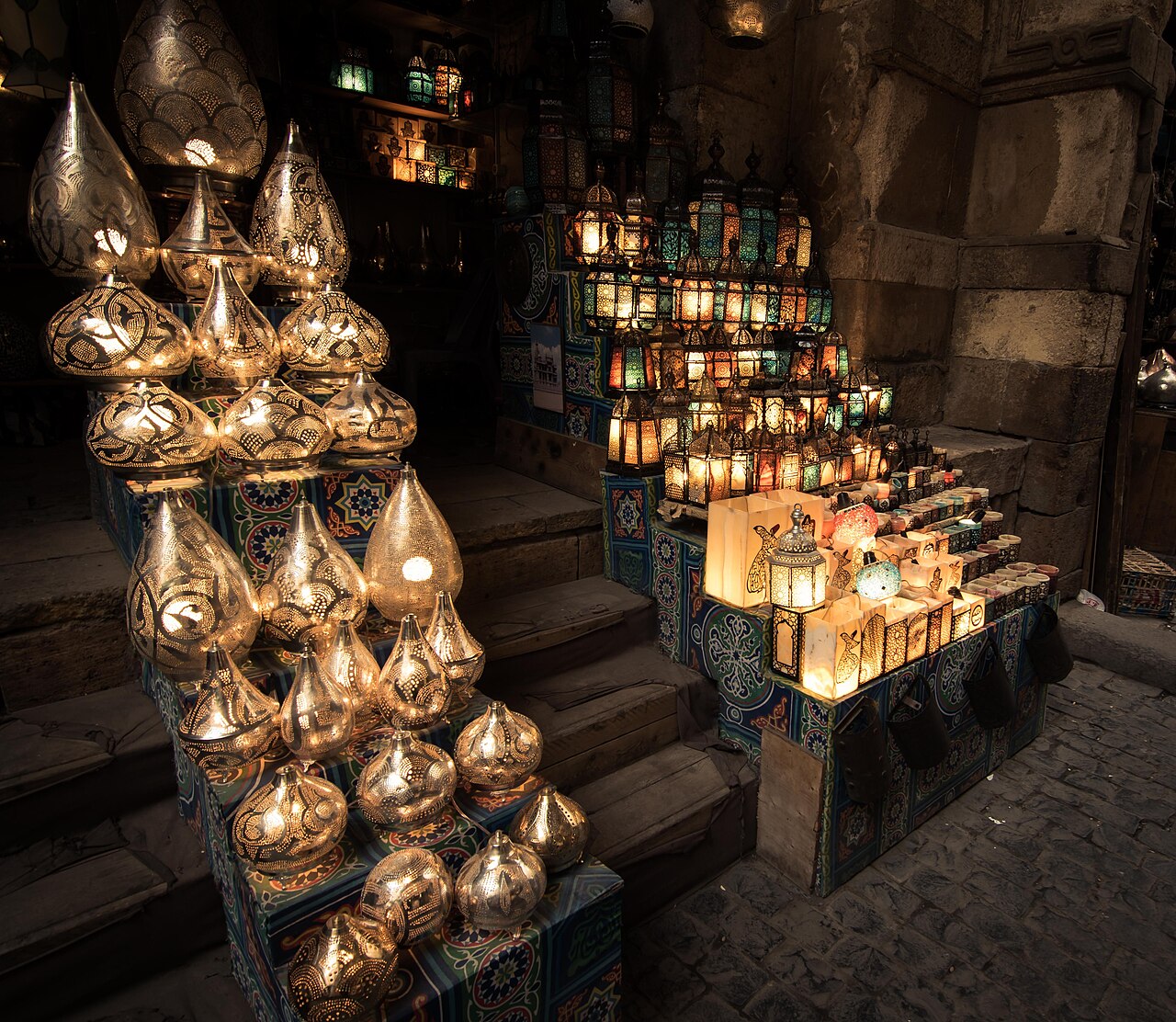
CautionIn the adjoining Khan el-Khalili bazaar and around the mosque, 'free' guides or self-appointed shoe-minders may approach and then demand a tip, or quote inflated prices. Agree on any price and tipping upfront, and decline firmly if you are not interested.
SafetyWatch for pickpockets in the crowded bazaar and mosque surroundings; carry bags in front. Take care crossing busy roads like Al-Azhar Street, and after dark use a licensed taxi or a ride-hailing app such as Uber or Careem.
MannersSmall tipping (baksheesh) is a routine part of Egyptian life. Shoe attendants and restroom staff typically expect a small tip, so keep low-denomination Egyptian pound notes handy and consider a donation in the box.
Practical info
The nearest metro is Ataba (Lines 1 and 2), about a 15–18 minute walk away; many visitors find it easier to take a taxi or a ride-hailing app (Uber/Careem) with 'Khan el-Khalili' as the destination. Non-Muslim visiting is generally possible outside prayer times, roughly 9:00 to 21:00, but prayer closures, any small visitor fee and dress rules can change — always confirm the latest opening hours and ticketing before you go.
On-site reviews📍 Verified on-site
No reviews yet. If you are here, be the first to leave one.