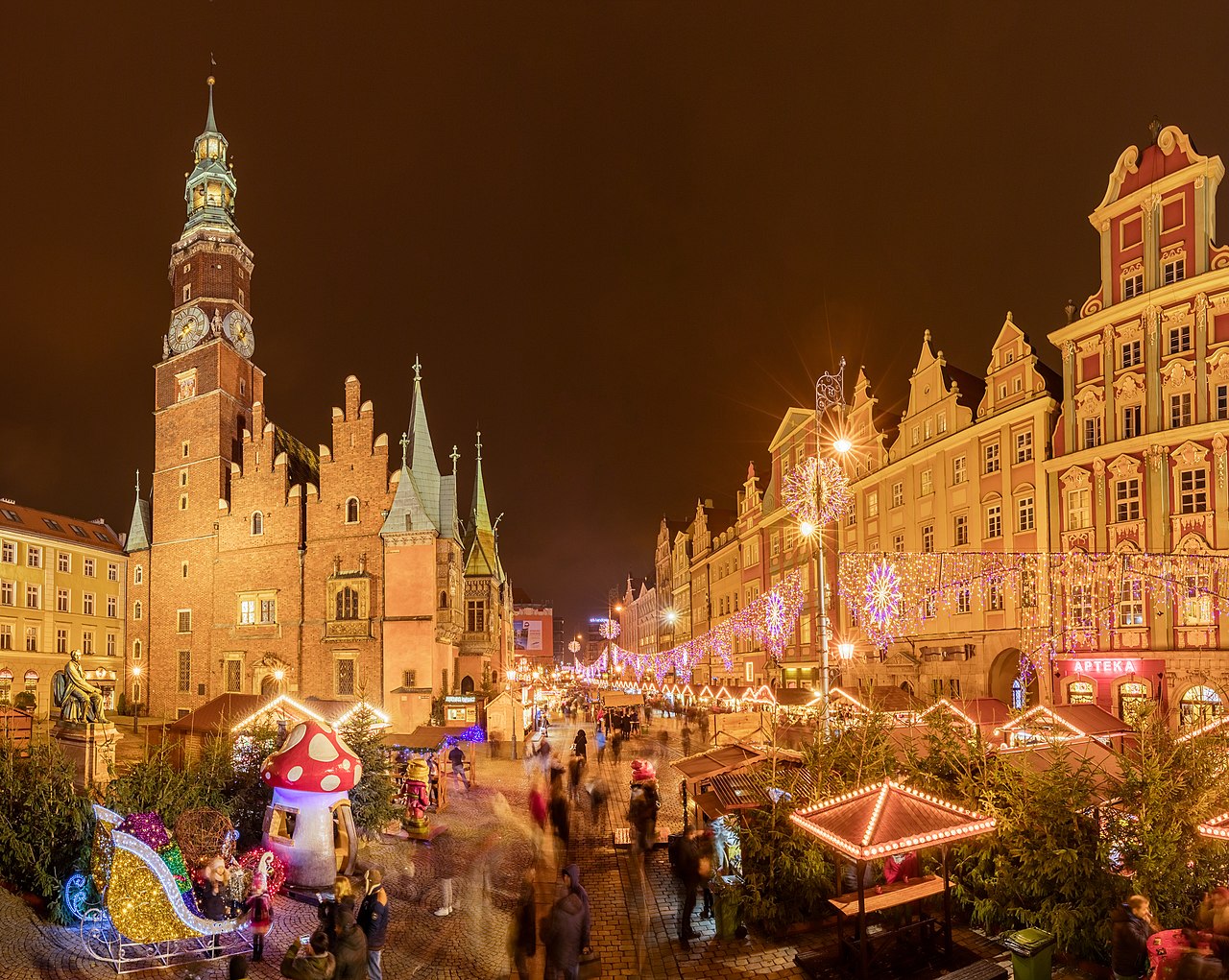
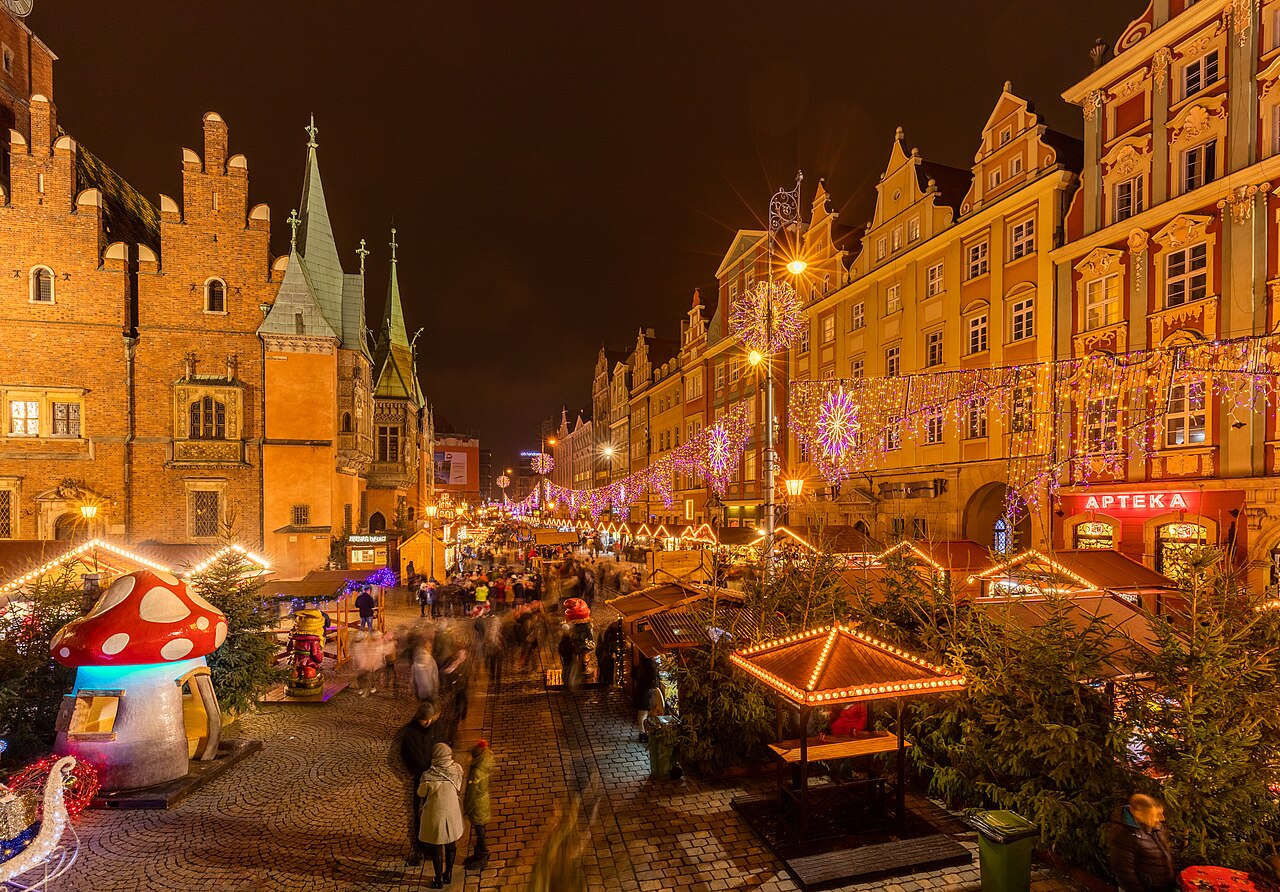
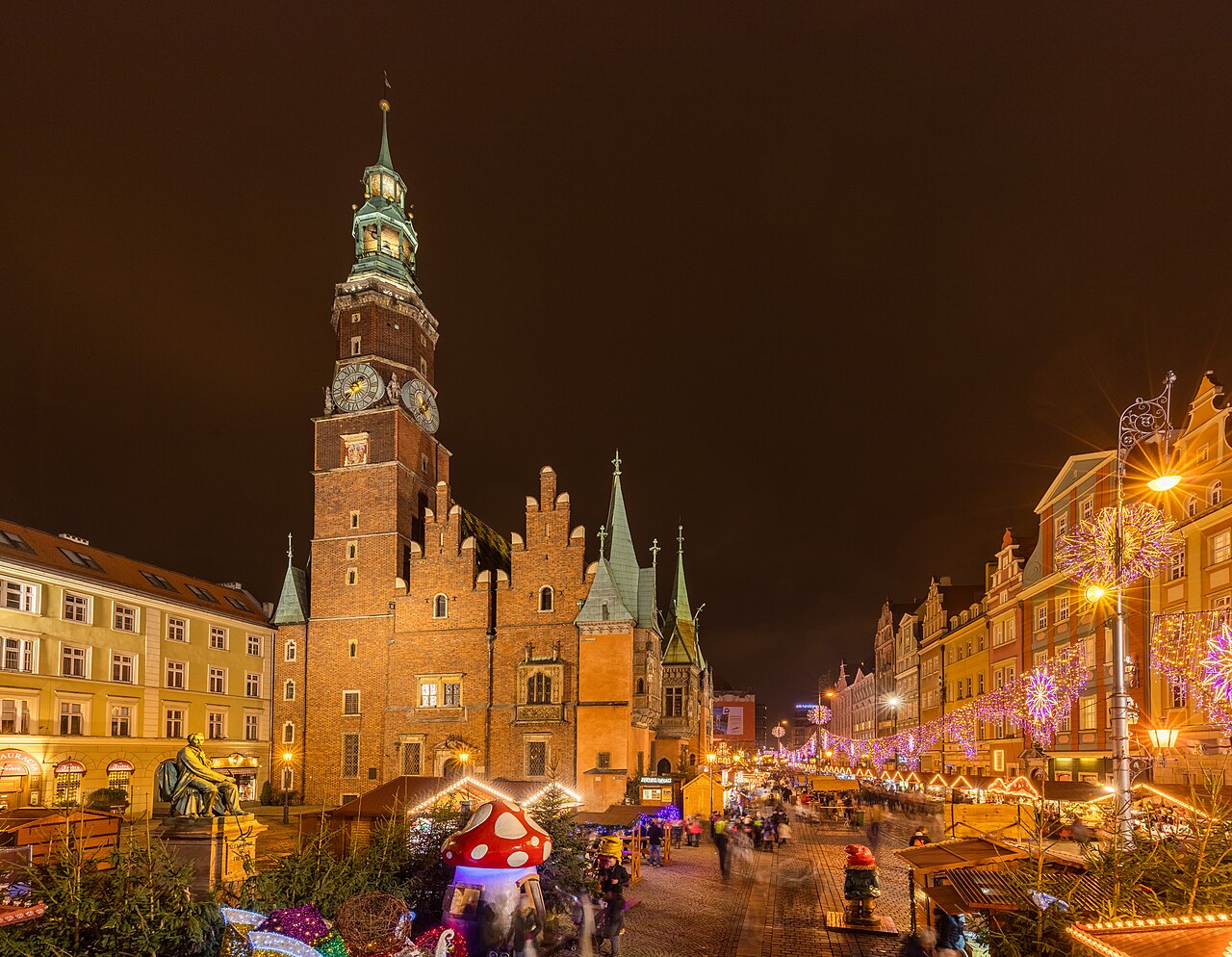
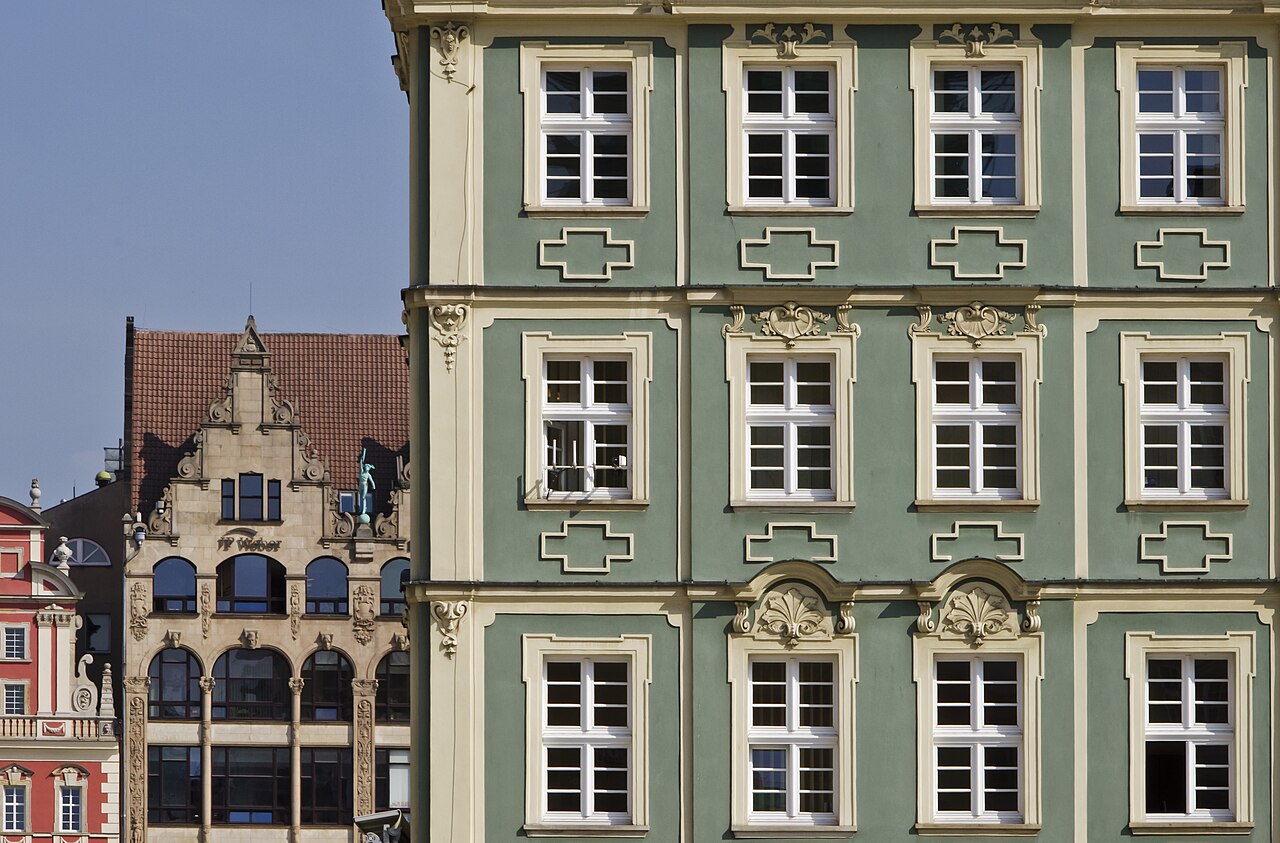
Wrocław's Market Square (Rynek) is one of Europe's largest medieval market squares, laid out in the early 13th century (c. 1214–1232) under Magdeburg law and measuring roughly 213 by 178 metres. At its centre stands the late-Gothic Old Town Hall, ringed by rows of colourful patrician tenement houses; the whole ensemble was declared a Historic Monument of Poland in 1994. In 2026 it remains the beating heart of the city, packed year-round with cafés, restaurants and open-air terraces, and it is the natural starting point for hunting the 1,000-plus bronze 'dwarf' (krasnale) figurines scattered across the old town. Treat it less as a single sight and more as a stroll through the historic centre and the lanes around the square.
Old Town Hall (Stary Ratusz): a late-Gothic masterpiece built over roughly 250 years, famous for its ornate eastern facade and astronomical clock; inside is the City Museum of Wrocław (Museum of Bourgeois Art).
Piwnica Świdnicka: the cellar beneath the Old Town Hall, one of the oldest restaurant spaces in Europe.
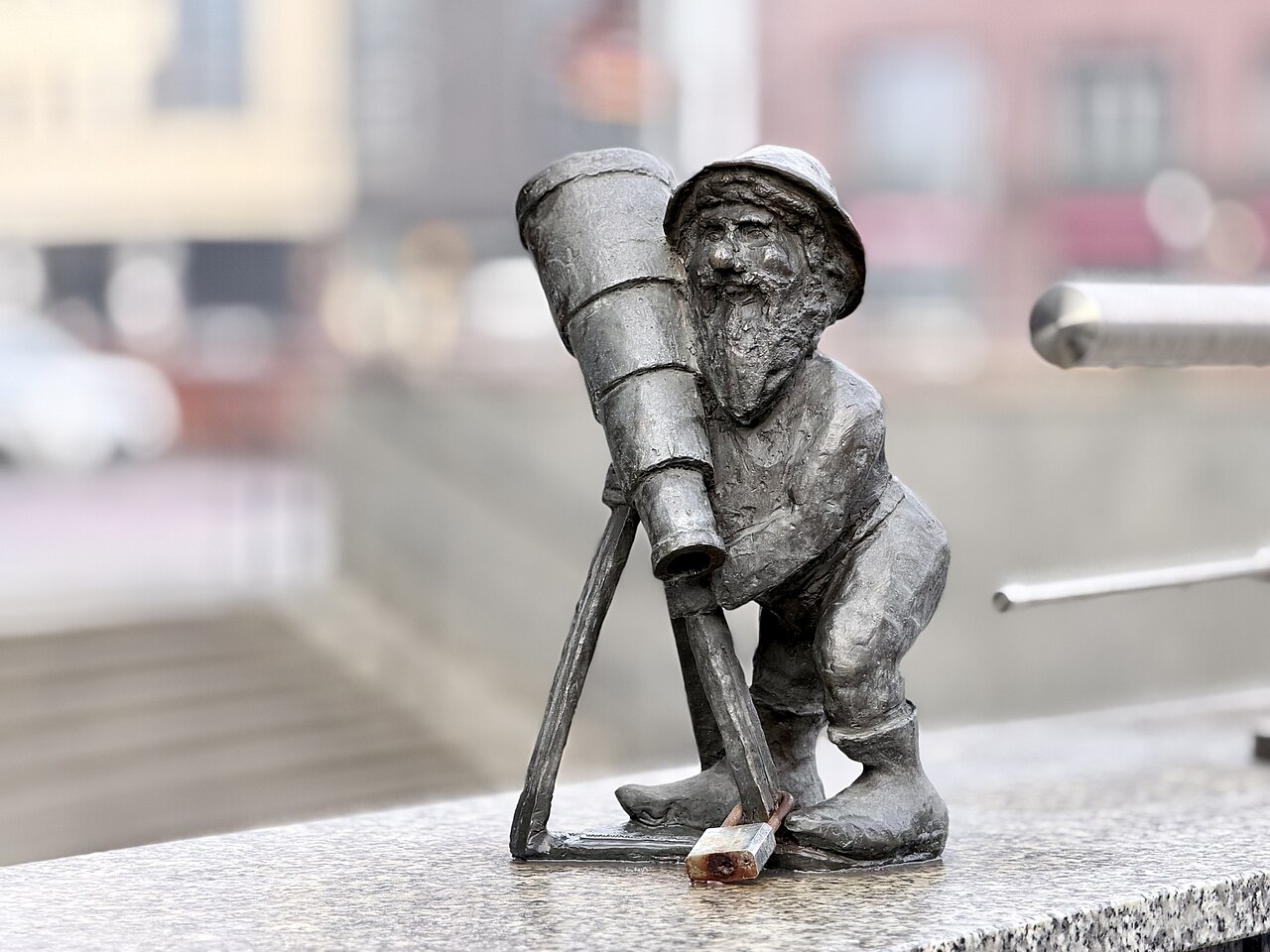
Wrocław Dwarfs (krasnale): whimsical little bronze figures, over 1,000 by 2026 and growing, densely clustered around the Rynek and Plac Solny — pick up a map at the information office and go hunting.
Jaś i Małgosia (Hansel and Gretel) houses: a pair of small medieval houses beside St. Elizabeth's Church, linked by an arch inscribed 'Mors Ianua Vitae' (Death is the gateway to life).
St. Elizabeth's Church tower: a roughly 91 m viewing tower reached by a narrow spiral staircase — one of the highest viewpoints over the old town (separate ticket).
The pręgierz (whipping post) and the modern Zdrój fountain: a 1985 reconstruction of the 1492 pillory topped by a figure of Roland, and a fountain that draws families on hot days.
Good to know
CautionAround the square and church, be wary of people asking you to sign a petition, handing out 'free' roses, or asking you to take their photo — these are common distractions used by pickpockets. Decline and keep your bag in front of you.
SafetyPickpocketing is the main risk in crowds — terraces, markets and the Christmas market. Keep your wallet, passport and phone in an inside pocket or a cross-body bag and never leave them out of sight.
CautionIn bars and clubs, not specifying a brand can lead to being served the most expensive spirit and an inflated bill. State the brand and measure when ordering and check your receipt.
MannersTipping isn't mandatory but 10–15% is customary in restaurants. Polish card terminals often have no tip prompt, so tell the server the total (including tip) before they charge you. Say 'proszę' if you want change back, or 'dziękuję' if you want them to keep it as a tip.
RulesThe square itself is a free, open pedestrian zone, but the Old Town Hall museum is closed Mondays and Tuesdays and the church tower has its own hours and fee. Confirm the latest details before you go.
SeasonSummer (June–August) is peak season and very crowded; the November–December Christmas market makes the square its most magical but busiest. In winter the tower stairs can be slippery and windy — dress warmly.
SafetyFor taxis, use apps like Bolt, Uber or FreeNow rather than hailing on the street, so the fare is fixed in advance and you avoid overcharging. On trams and buses, always validate (punch) your ticket.
Practical info
The square is an open-air pedestrian zone accessible at any hour, a few minutes' walk from the tram stops Rynek, Świdnicka, Zamkowa, Galeria Dominikańska and Oławska. The City Museum inside the Old Town Hall and the St. Elizabeth's Church viewing tower each require separate tickets and have their own hours (the museum is closed Mon–Tue, tickets around 15 PLN); always check current prices and opening times on the official websites.
On-site reviews📍 Verified on-site
No reviews yet. If you are here, be the first to leave one.