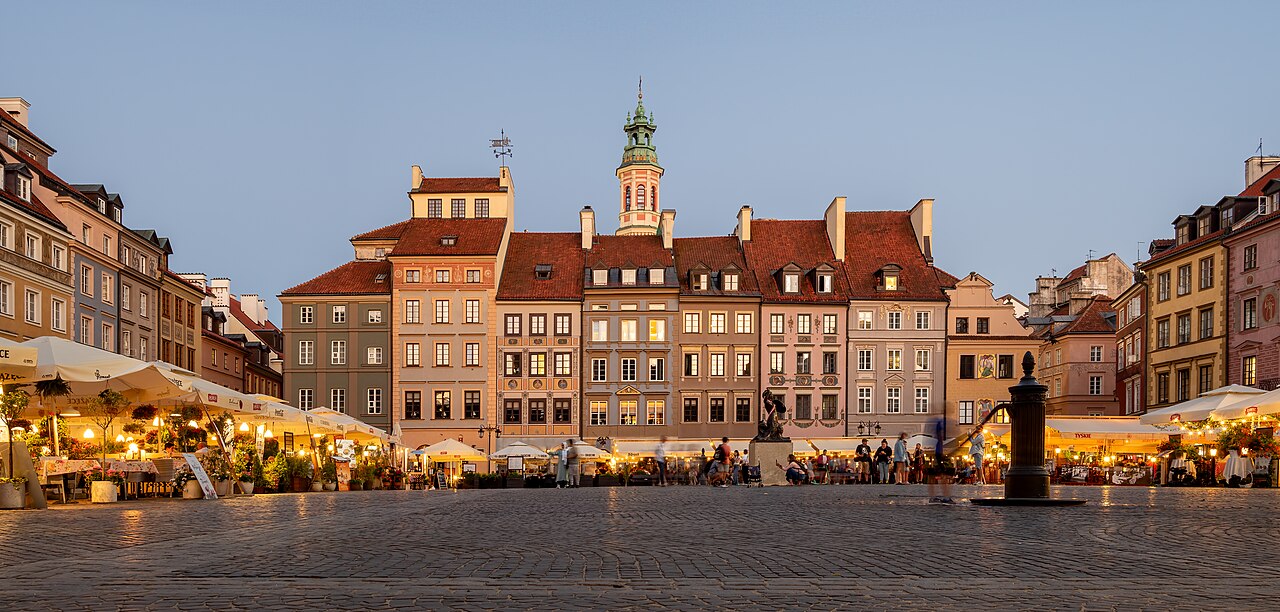
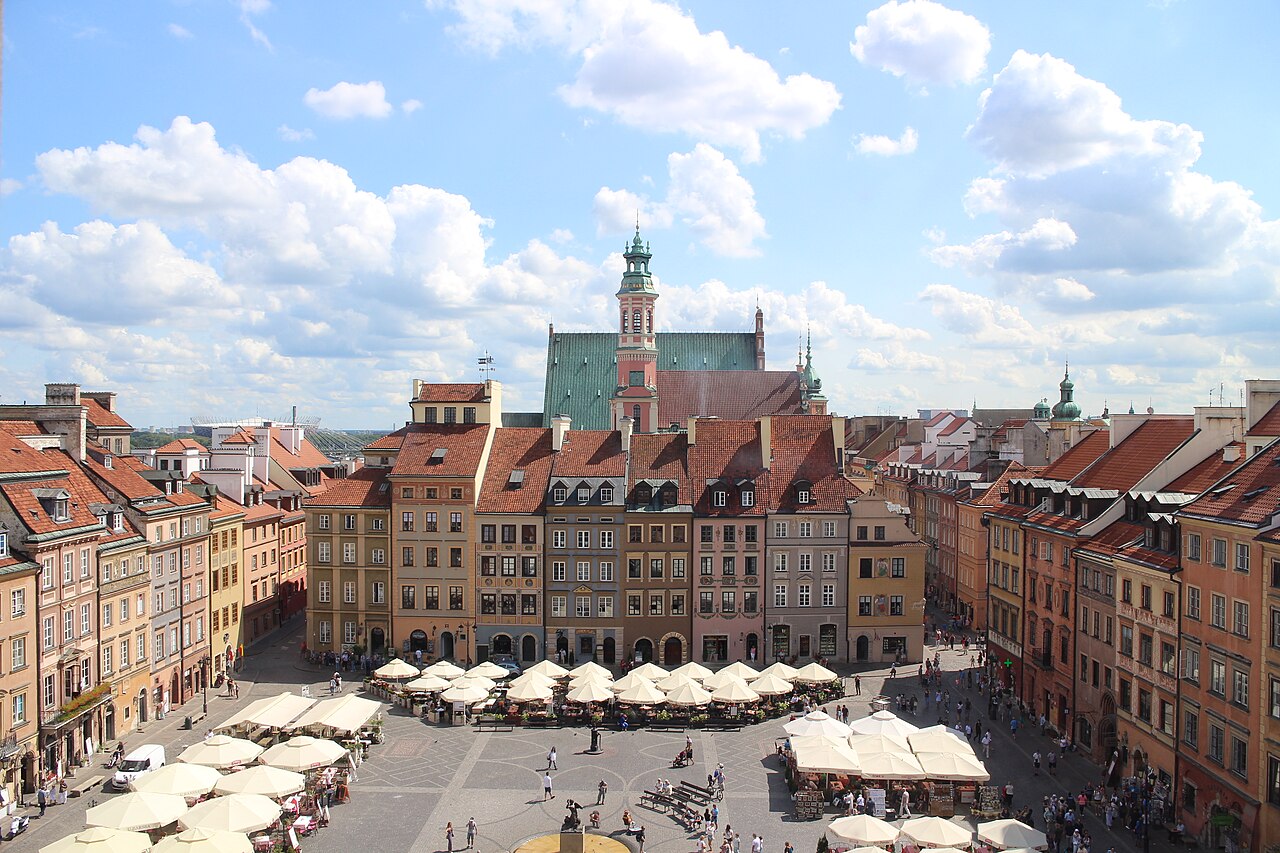
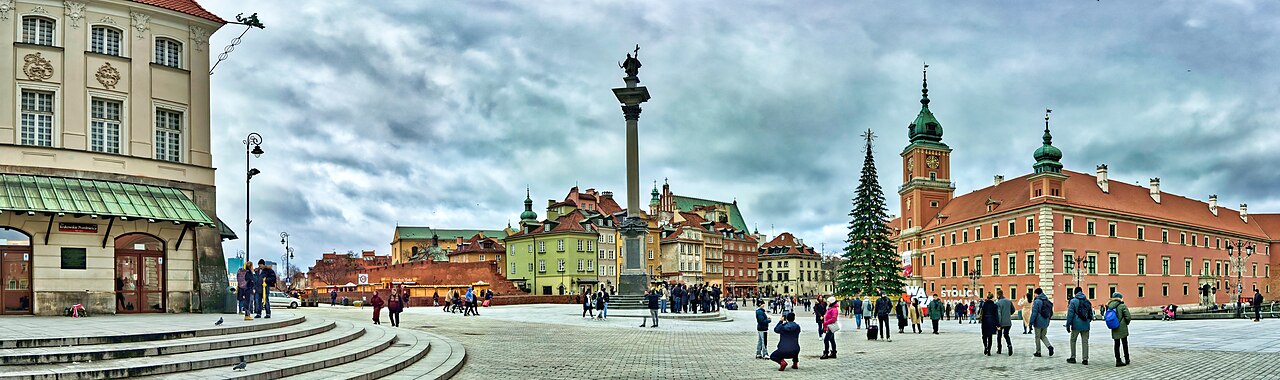
Warsaw's Old Town Market Square (Rynek Starego Miasta) took shape in the late 13th century and was the heart of the whole city until the 18th century. After more than 85% of the historic centre was destroyed by German troops during the 1944 Warsaw Uprising, residents painstakingly rebuilt the pastel merchant townhouses between 1948 and 1953 using Canaletto (Bellotto) paintings and old photographs — a reconstruction so remarkable it earned UNESCO World Heritage status in 1980. In 2026 the square is a lively hub of café terraces, restaurants, street performers and horse-drawn carriages, watched over by the bronze Mermaid of Warsaw (Syrenka) at its centre, the city's enduring symbol.
The Mermaid of Warsaw (Syrenka) at the square's centre — the city emblem. The figure standing today is a copy; Konstanty Hegel's original is preserved in the nearby Museum of Warsaw.
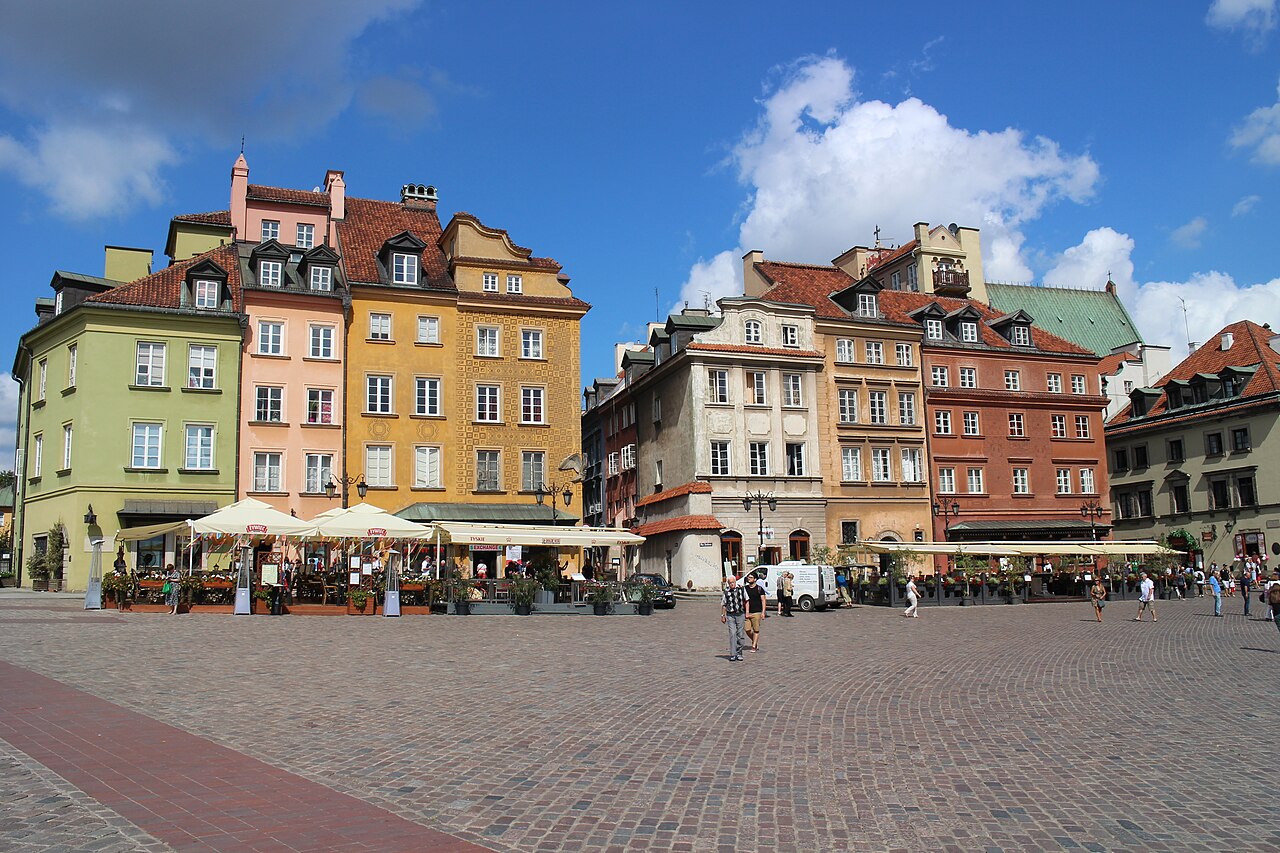
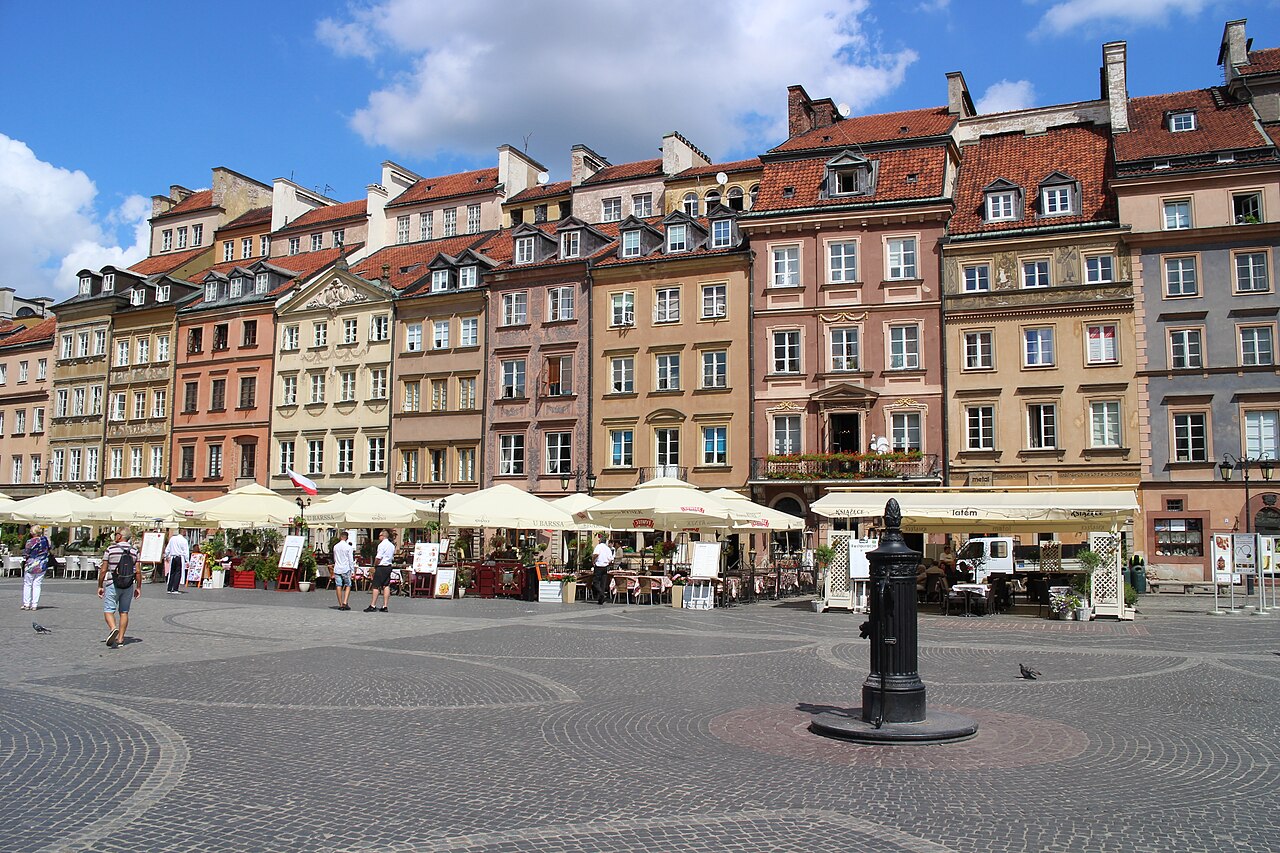
The rows of colourful reconstructed burgher townhouses — each of the square's four sides bears an 18th-century name: Dekert (north), Zakrzewski (south), Barss (east) and Kołłątaj (west).
The Museum of Warsaw on the northern Dekert side — eleven historic townhouses fused into one building, telling the story of the city's destruction and rebirth.
The reconstruction story itself — the world's first attempt to resurrect an entire ruined historic core from paintings and records, which reshaped post-war conservation thinking.
The walkable surroundings — St John's Archcathedral, the Barbican (city-wall fortification) and Castle Square (plac Zamkowy) are all a few minutes' stroll away.
Good to know
CautionPickpockets work the crowds on the square and along the Royal Route in peak season, often in teams — one distracts while another lifts your wallet. Wear bags in front, keep your phone and cash in zipped front pockets, and on café terraces keep bags on your lap, never on the chair back or floor.
CautionRestaurants with pushy touts on the square are prone to tourist-trap billing: unordered bread or water may appear on the tab, or totals get padded. Check the bill before paying. Prices and tipping (usually around 10%) should be confirmed on the spot.
CautionBeware the 'deaf-charity petition' distraction — someone thrusts a clipboard at you while an accomplice reaches into your bag. Politely decline strangers waving petitions or maps and move on.
RulesPoland uses the złoty (PLN), not the euro. Cards are widely accepted, but compare rates at 'kantor' exchange offices, and if a card terminal offers to charge you in your home currency, decline and pay in PLN for a better rate.
SeasonIn summer (now) the square is very crowded, with busy terraces and buskers; in winter it is cold, the cobbles can be icy, and a Christmas market appears. The square's uneven cobblestones make flat, comfortable shoes essential year-round.
MannersThis is a reconstructed UNESCO site carrying deep wartime memory. Photography and watching street performers are welcome, but be considerate of noise and passage around the carriages, the cathedral and memorial spaces.
Practical info
Take Metro line M1 (blue) to Ratusz Arsenał, then walk about 10 minutes north through Castle Square, or reach nearby stops by tram or bus and continue on foot. The Old Town is pedestrianised, so the final stretch to the square is on foot; the square itself is free and open 24 hours. Indoor sights such as the Museum of Warsaw and St John's Archcathedral have separate opening hours and tickets, so confirm fares and times before your visit.
On-site reviews📍 Verified on-site
No reviews yet. If you are here, be the first to leave one.