La Recoleta Cemetery, opened in 1822, is the oldest cemetery in Buenos Aires, set in the heart of the upscale Recoleta neighborhood. Its roughly 4,700 above-ground vaults, packed with marble mausoleums and statuary along narrow lanes, have earned it the nickname 'open-air museum,' and it is the resting place of Eva Perón (Evita) along with numerous presidents and national figures. As of 2026, foreign visitors pay a card-only admission fee while Argentine nationals and residents enter free with ID. It works both as a solemn place of remembrance and as a walkable showcase of 19th and 20th century architecture and sculpture.
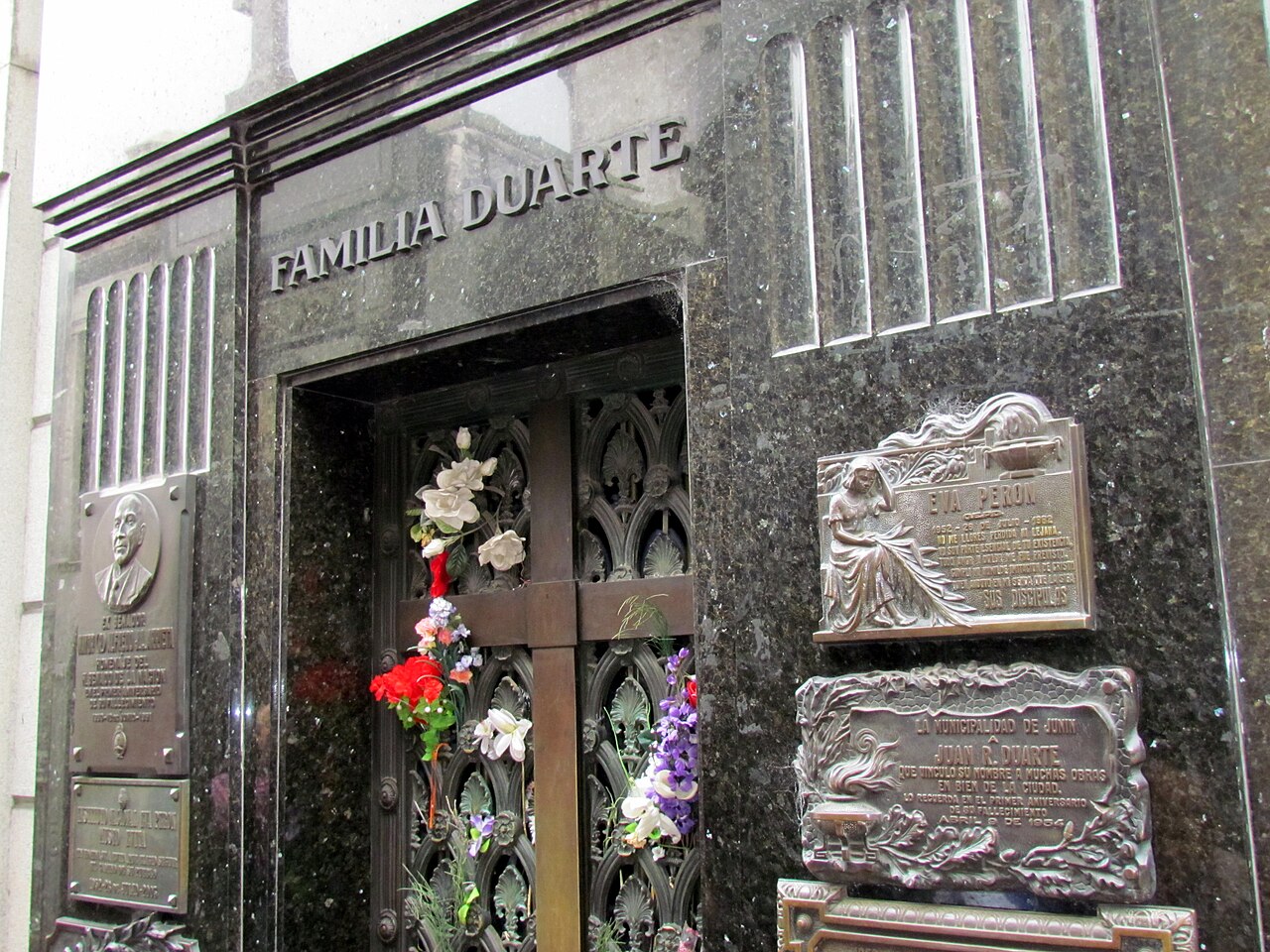
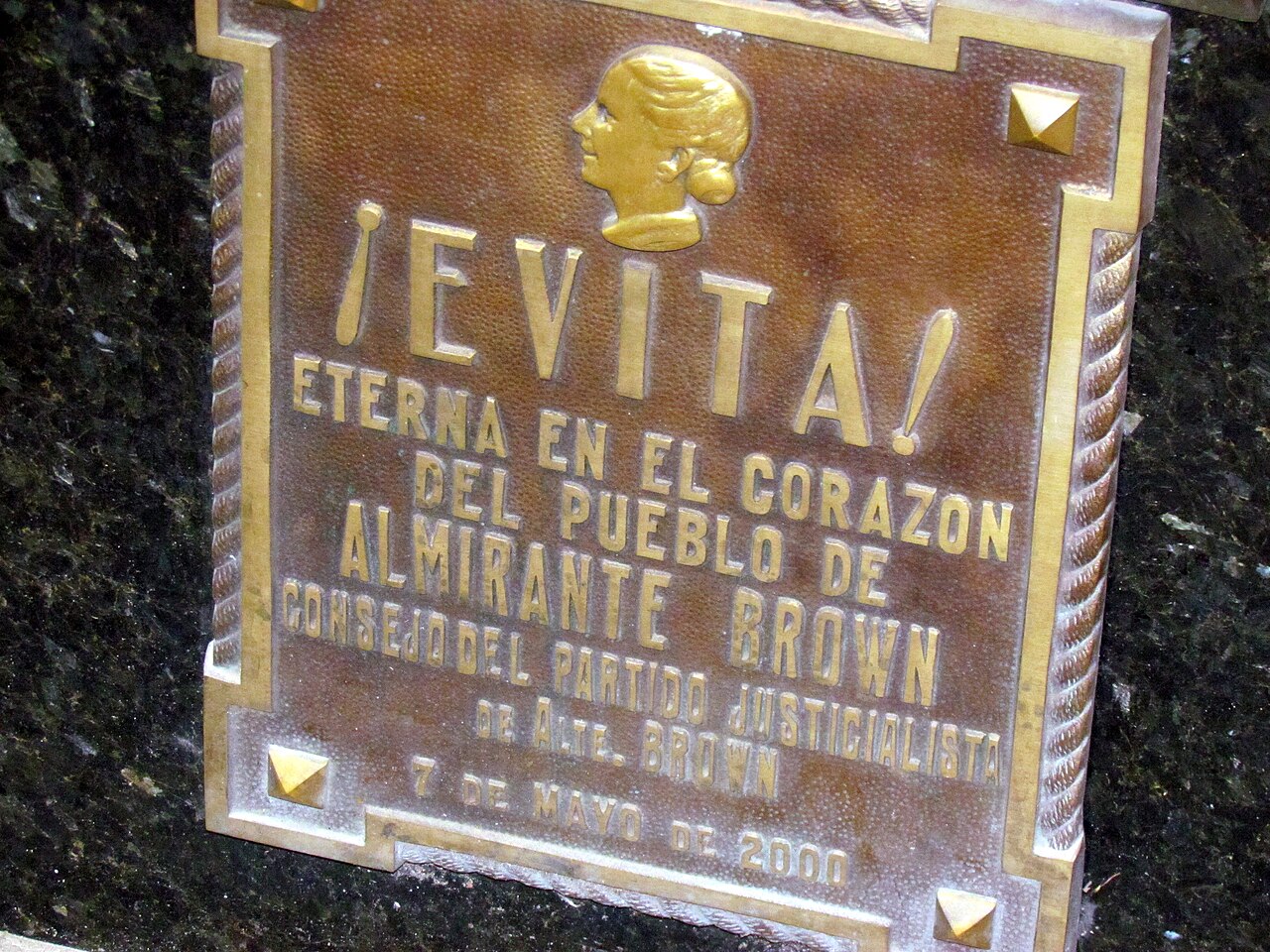
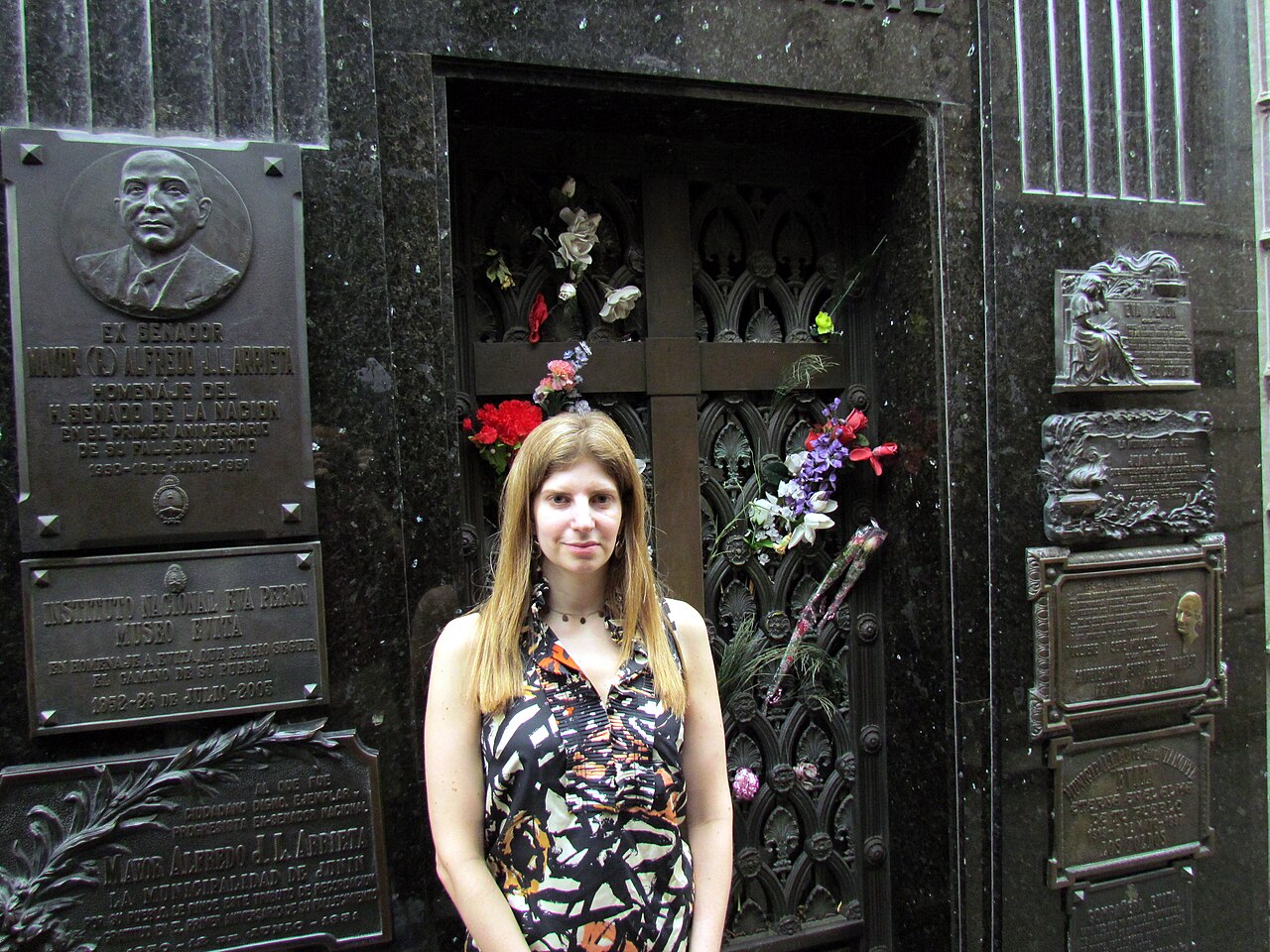
The Duarte family mausoleum where Eva Perón (Evita) rests - a modest black-marble tomb that still receives fresh flowers and letters daily.
94 vaults declared National Historical Monuments, spanning Art Deco, Art Nouveau, Baroque and Neo-Gothic styles.
The Paz family's black-stone mausoleum, adorned with marble angels and Masonic symbols.
Legend-laden tombs such as the Art Nouveau grave of Rufina Cambaceres and Liliana Crociati's tomb with its wedding-dress statue.
The neoclassical main gate with Doric columns and the 'Requiescant in Pace' inscription, opening onto tree-lined central avenues.
Good to know
RulesAs of 2026, non-resident foreign tourists must pay an admission fee (roughly in the ARS 24,000 range, variable with inflation), payable at the gate by credit or debit card only - no cash. Bring a card and confirm the current price before your visit.
MannersThis is a working cemetery where funerals still take place. Keep your voice down, do not climb on or touch the tombs and statues, and never disturb mourners or funeral processions.
SeasonIn the Southern Hemisphere the seasons are reversed: July is winter (chilly) and January is peak summer. There is little shade, so bring a hat, sunscreen and water in summer and a warm layer in winter.
SafetyRecoleta is a relatively safe, affluent district, but pickpocketing occurs across Buenos Aires. Keep bags and phones in front of you and stay alert around the crowded main gate and on the subway and buses.
CautionTaxi overcharging and counterfeit banknotes are common. Use official apps (Uber, Cabify) or licensed taxis, avoid informal street money changers ('arbolitos'), and check your change on the spot.
MannersFree Spanish-language guided tours run daily and English tours operate on select days. If you take a guided tour, a small tip is customary.
Practical info
Reach it via Subte (metro) Line D to Facultad de Derecho station (about a 10-minute walk) or by several city buses; the address is Junín 1760. It is generally open daily from around 9am to 5pm (some sources list 8am-6pm), and picking up a map at the entrance makes navigating easier. Fees and hours change, so confirm the latest details on the official site before you go.
On-site reviews📍 Verified on-site
No reviews yet. If you are here, be the first to leave one.