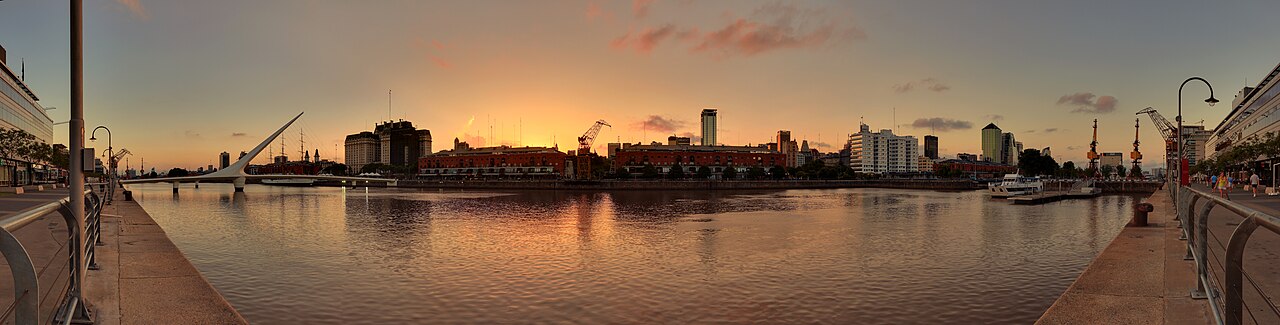
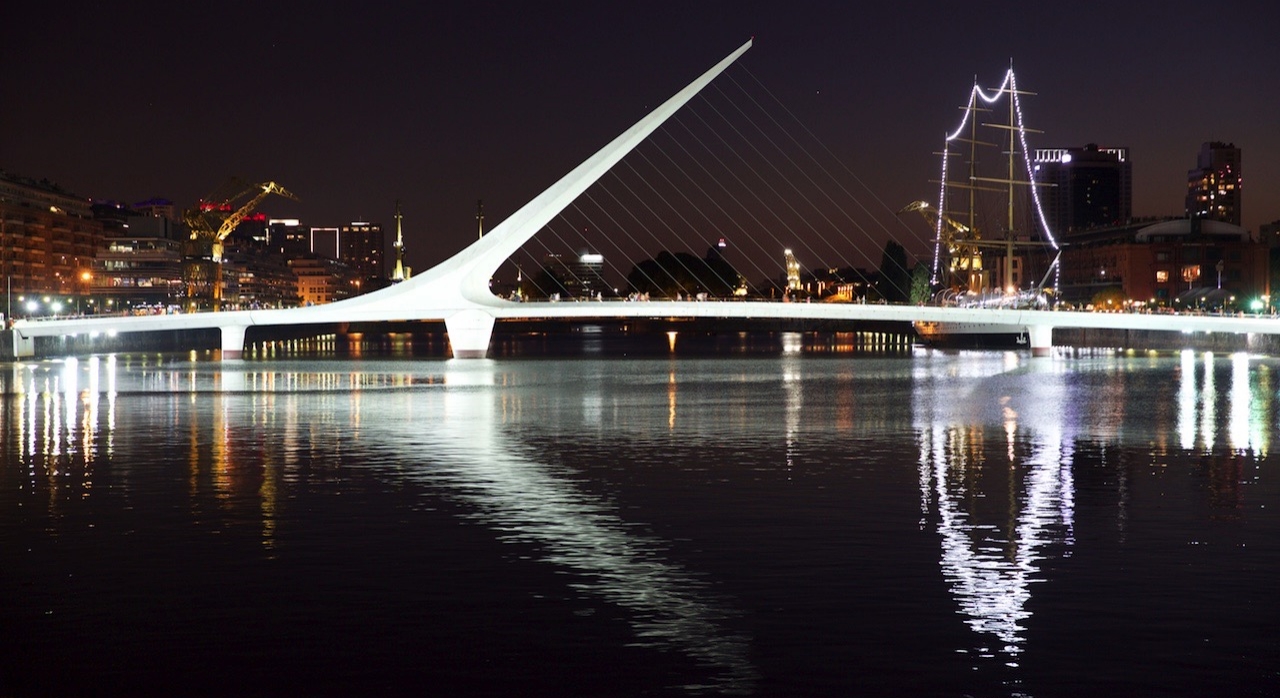
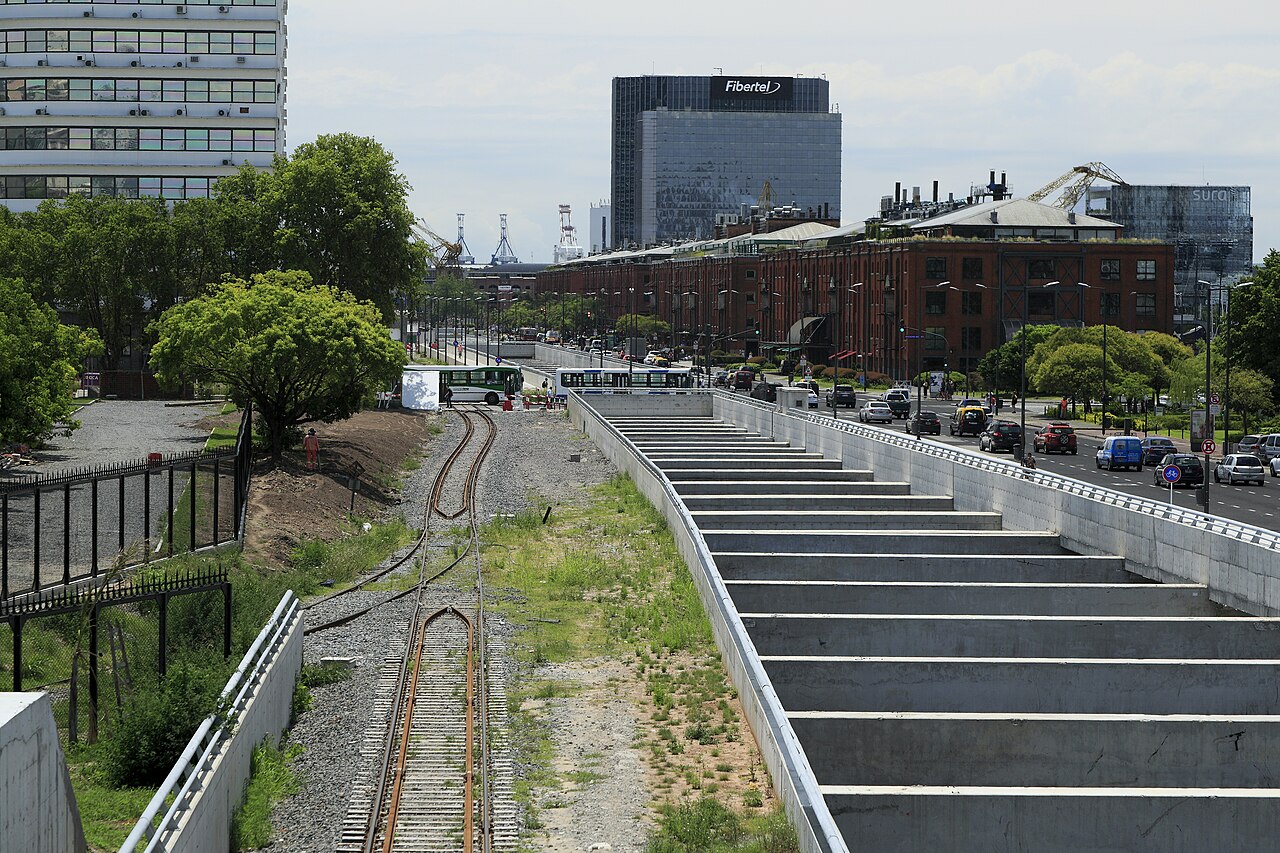
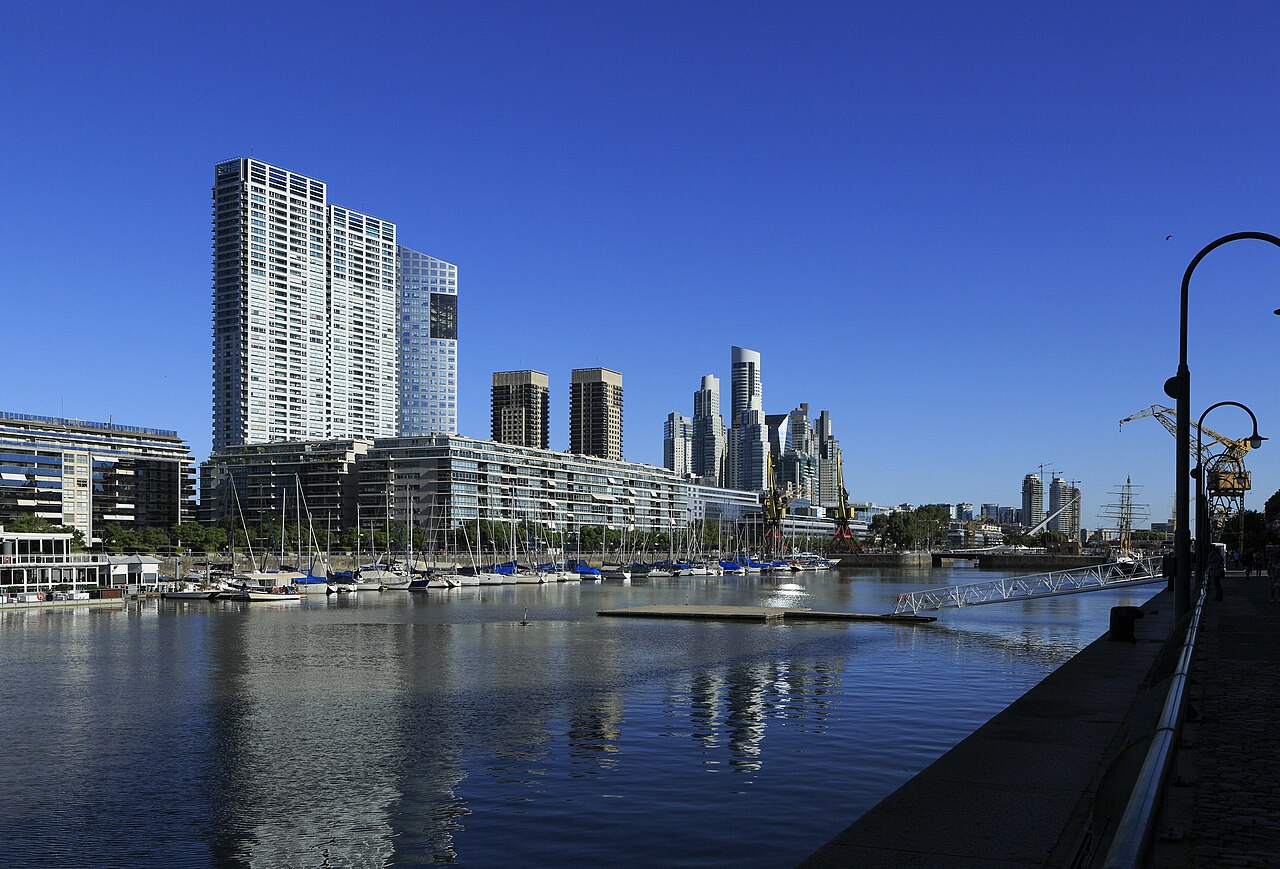
Puerto Madero is Buenos Aires's newest and most modern waterfront district, built on the city's old redeveloped port docks (diques), where glass high-rises mingle with restaurants set in converted red-brick warehouses along a long riverside promenade. Its icon is the Puente de la Mujer (Women's Bridge), a rotating footbridge completed in 2001 by Spanish architect Santiago Calatrava to evoke a couple dancing tango; it swings 90 degrees to let boats pass and is one of the city's most photographed spots. Following the April 2025 lifting of Argentina's currency controls (the 'cepo'), by 2026 the gap between card payments and cash exchange rates has all but vanished, making travel simpler. Crossing the bridge and strolling the riverfront and ecological reserve are free, making this an easy half-day walk.
Puente de la Mujer: Calatrava's rotating pedestrian bridge, especially striking when lit at night, is the district's signature photo stop.
Fragata Sarmiento museum ship: Argentina's first naval training vessel, built in England in 1898 and now a floating museum moored at Dock 3.
Costanera Sur Ecological Reserve: at roughly 350 hectares the city's largest green space, free to enter, and great for birdwatching, walking and cycling.
Colección Fortabat (Amalia Fortabat Art Collection): modern and contemporary Argentine and European art housed under a distinctive glass roof.
Dockside promenade and the Nereids Fountain: an upscale dining strip in old brick warehouses alongside sculptor Lola Mora's marble fountain.
Good to know
SafetyPuerto Madero is among the safest, best-lit and most patrolled areas of Buenos Aires, but pickpockets still target phones and bags on crowded subways, buses and busy tourist spots, so keep valuables in front of you. At night, prefer a radio taxi or ride-hailing app over walking long distances alone.
CautionTouts offering a 'fixed rate' near the Buquebus ferry terminal or the airports are overcharging. Use a licensed radio taxi or the Cabify/Uber apps, and don't follow strangers who offer to walk you to a cab.
CautionStreet money-changers shouting 'cambio' risk giving you counterfeit or torn notes. Because the 2025 easing of currency controls has narrowed rates in 2026, card payments (at the MEP rate) are now close to cash, so there is little reason to chase the 'blue dollar.'
MannersThe Argentine 'cubierto' (a per-person cover charge for table service and bread) is a legal, standard practice, not a scam. Tipping is customarily around 10% of the bill, often left in cash, and Puerto Madero restaurants run pricier than elsewhere in the city, so budget accordingly.
SeasonThis is the Southern Hemisphere, so a July visit falls in mid-winter, with chilly daytime temperatures (roughly 8-15°C) and strong river winds; bring a warm jacket. If you come in summer (Dec-Feb), prepare for heat and strong sun.
RulesThe ecological reserve is free but closes on Mondays and during rain or strong wind, with hours that vary by season. The Fragata Sarmiento museum ship is closed Mon-Tue and takes cash only, so confirm days and fees before you go and carry some small cash. (The bridge and promenade are always free.)
Practical info
The bridge, riverside promenade and ecological reserve are free and always open. There is no subway station inside the district, so reach it on foot from Subte Line E (Catalinas) or Line B (L. N. Alem), by the many city buses (colectivos), or on a short walk from the Microcentro downtown. Hours and fees for the Fragata Sarmiento (Thu-Fri 13:00-19:00, Sat/Sun/holidays 12:00-19:00, cash only), the Fortabat museum (Thu-Sun 12:00-20:00) and the ecological reserve change from time to time, so check each venue's official channel for the latest before visiting.
On-site reviews📍 Verified on-site
No reviews yet. If you are here, be the first to leave one.