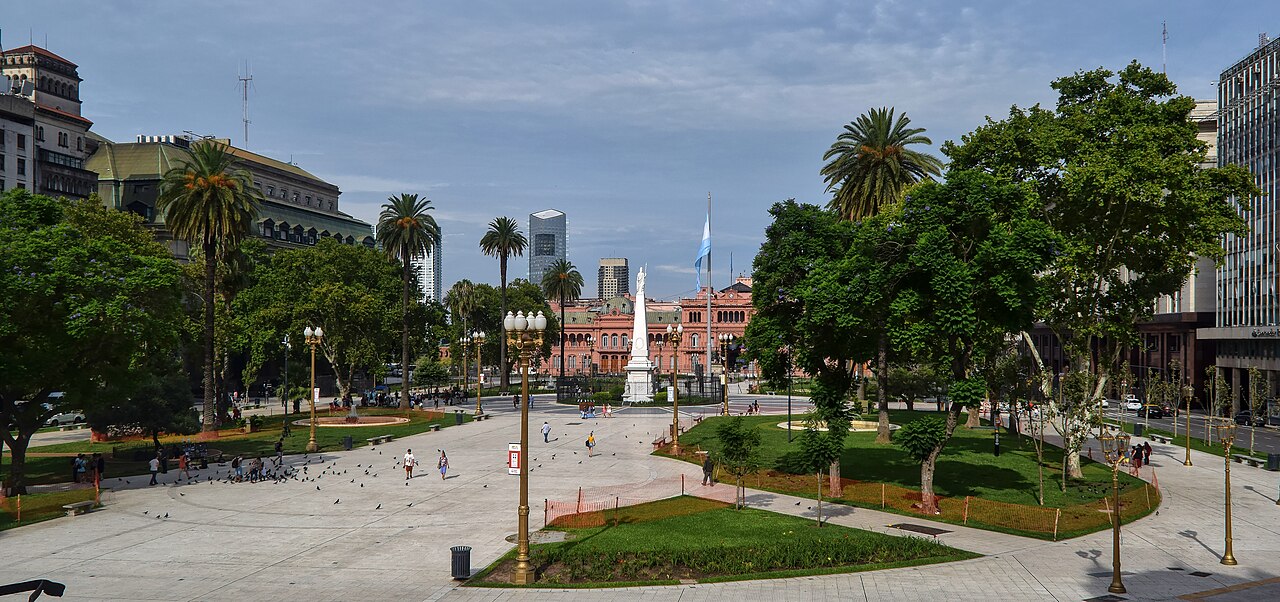
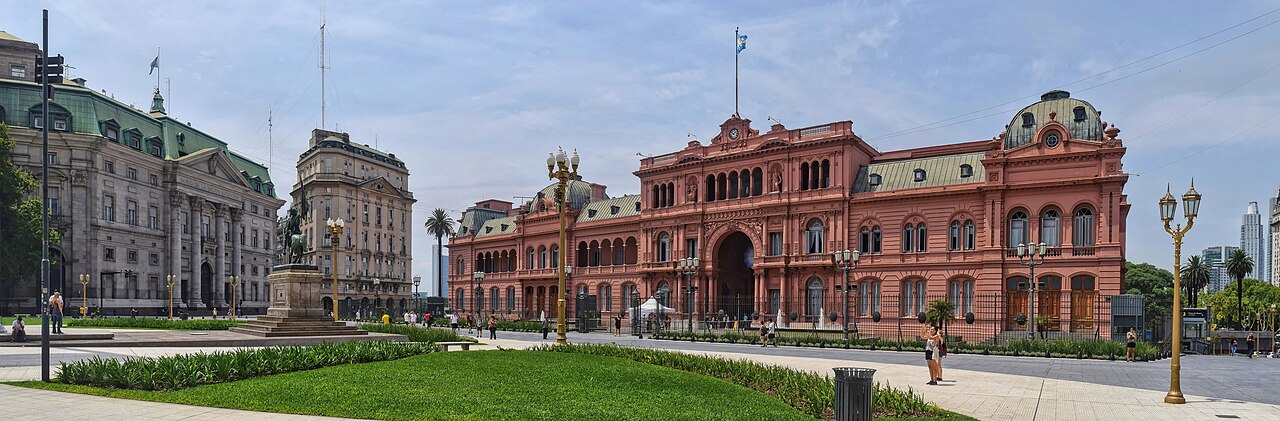
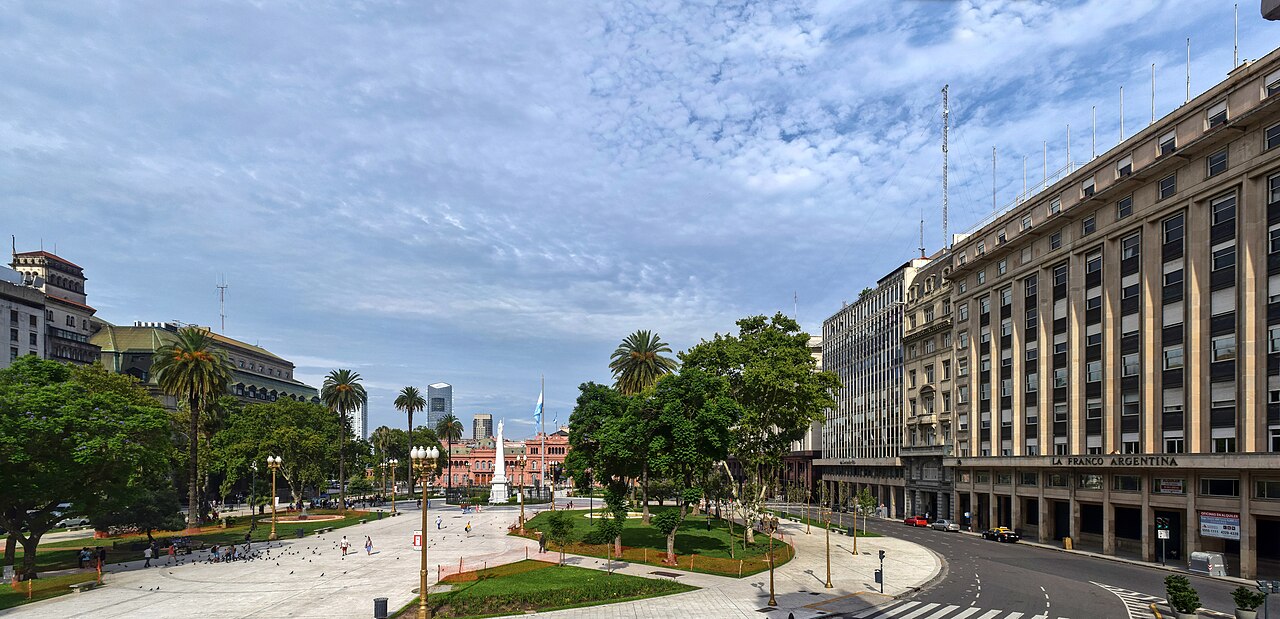
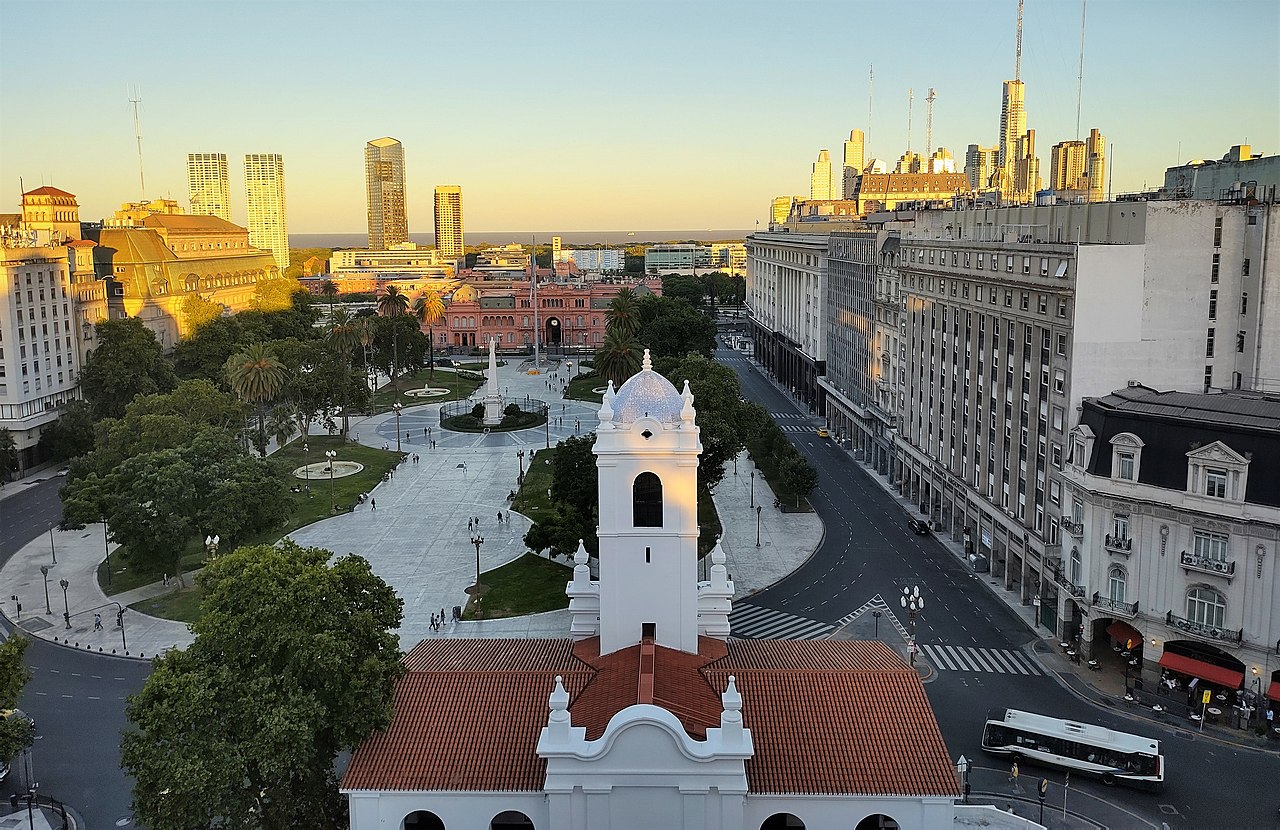
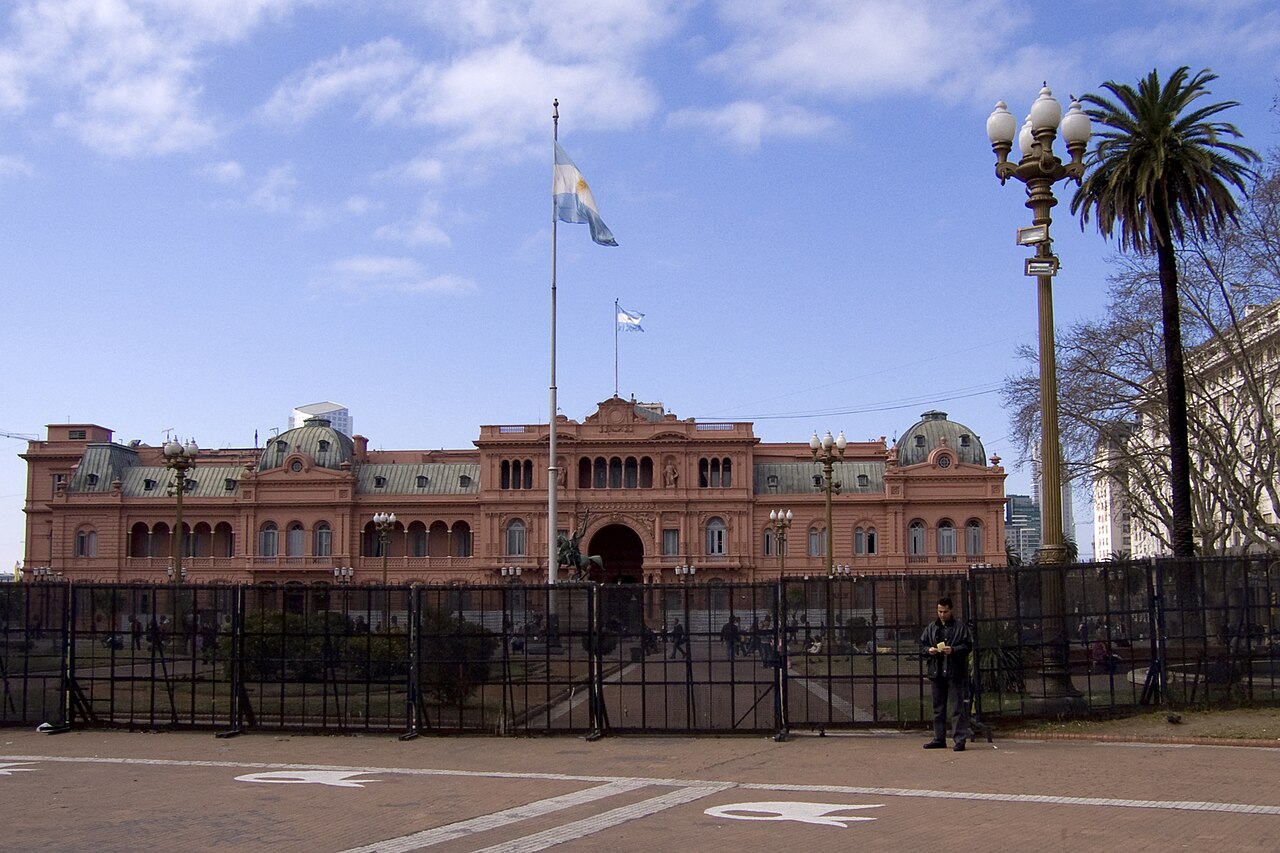
Plaza de Mayo is the political and historical heart of Buenos Aires. Named for the May Revolution of 1810, the square is framed by the pink presidential palace (Casa Rosada), the colonial town hall (Cabildo) and the Metropolitan Cathedral. It remains a living stage for Argentina's public life, where rallies and demonstrations are common, and where the Mothers of Plaza de Mayo still march every Thursday afternoon in memory of the disappeared. It is an ideal starting point for a half-day walk through the historic center.
The Pirámide de Mayo (1811) at the center — Argentina's first national monument, commemorating the May Revolution
The pink Casa Rosada with its famous balcony (of Evita fame); inside is a free museum, open Wednesday to Sunday
The white colonial Cabildo — now the National Historical Museum of the May Revolution, free to enter
The Metropolitan Cathedral — resting place of independence hero General José de San Martín, and the church where Pope Francis served as archbishop
The white headscarves (pañuelos) painted on the pavement — the emblem of the Mothers of Plaza de Mayo, best seen during their Thursday march
Good to know
SafetyAs the epicenter of Argentine politics, the plaza frequently hosts large rallies and protests. On days with heavy crowds or a strong police presence, take a detour and do not approach demonstrations.
CautionPickpocketing and bag-snatching are common in the surrounding Microcentro. Keep your phone and wallet in a front pocket or crossbody bag, and never hang a bag on the back of a café chair. Beware of the classic distraction trick where someone sprays mustard or 'bird droppings' on you and offers to help clean it off.
CautionAvoid street money-changers calling out 'cambio, cambio' — they risk counterfeit notes and poor rates. Use licensed exchange houses or official channels. Argentina's exchange rates and payment conditions change often, so confirm the latest cash-vs-card strategy before your trip.
MannersThe Mothers of Plaza de Mayo march and the white headscarves on the ground honor those forcibly disappeared during the military dictatorship. Photograph and behave respectfully.
RulesThe Casa Rosada, Cabildo and Cathedral are free, but individual guided tours run on a changeable schedule and involve security screening. The Cathedral is an active place of worship — keep quiet during Mass and dress modestly.
SeasonSeasons are reversed in the Southern Hemisphere. December–February is hot and humid summer; June–August is a mild winter that turns chilly at night. The open plaza offers little shade, so bring sun protection and water in summer, and stick to busy main streets after dark as the center empties out.
Practical info
The plaza connects directly to the Subte (metro): Line A at Plaza de Mayo, Line D at Catedral and Line E at Bolívar, plus many bus routes (public transport requires a SUBE card). The square itself is open and free 24 hours; the Casa Rosada Museum is free and open Wednesday–Sunday 11:00–18:00 (closed Mon/Tue), and the Cabildo is free Wednesday–Sunday 10:30–17:30. Prices, opening hours and guided-tour availability change frequently, so always confirm the latest details on the official sites before visiting.
On-site reviews📍 Verified on-site
No reviews yet. If you are here, be the first to leave one.