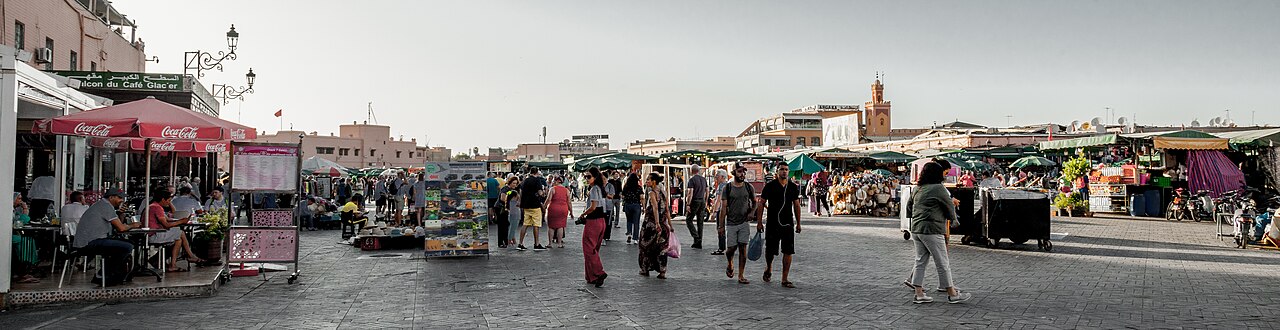
The Koutoubia Mosque is the great Almohad mosque that defines the skyline of Marrakech's old medina. Founded in 1147 under Caliph Abd al-Mu'min after the Almohads took the city, its roughly 77-metre pink-sandstone minaret was completed in the late 12th century under Ya'qub al-Mansur. The minaret is a masterpiece of Almohad architecture and served as the prototype for Seville's Giralda and Rabat's Hassan Tower; it was included when the Medina of Marrakech was inscribed as a UNESCO World Heritage Site in 1985. As of 2026 it remains an active place of worship, so non-Muslims cannot enter the interior, but walking the surrounding gardens and photographing the minaret is a highlight in itself.
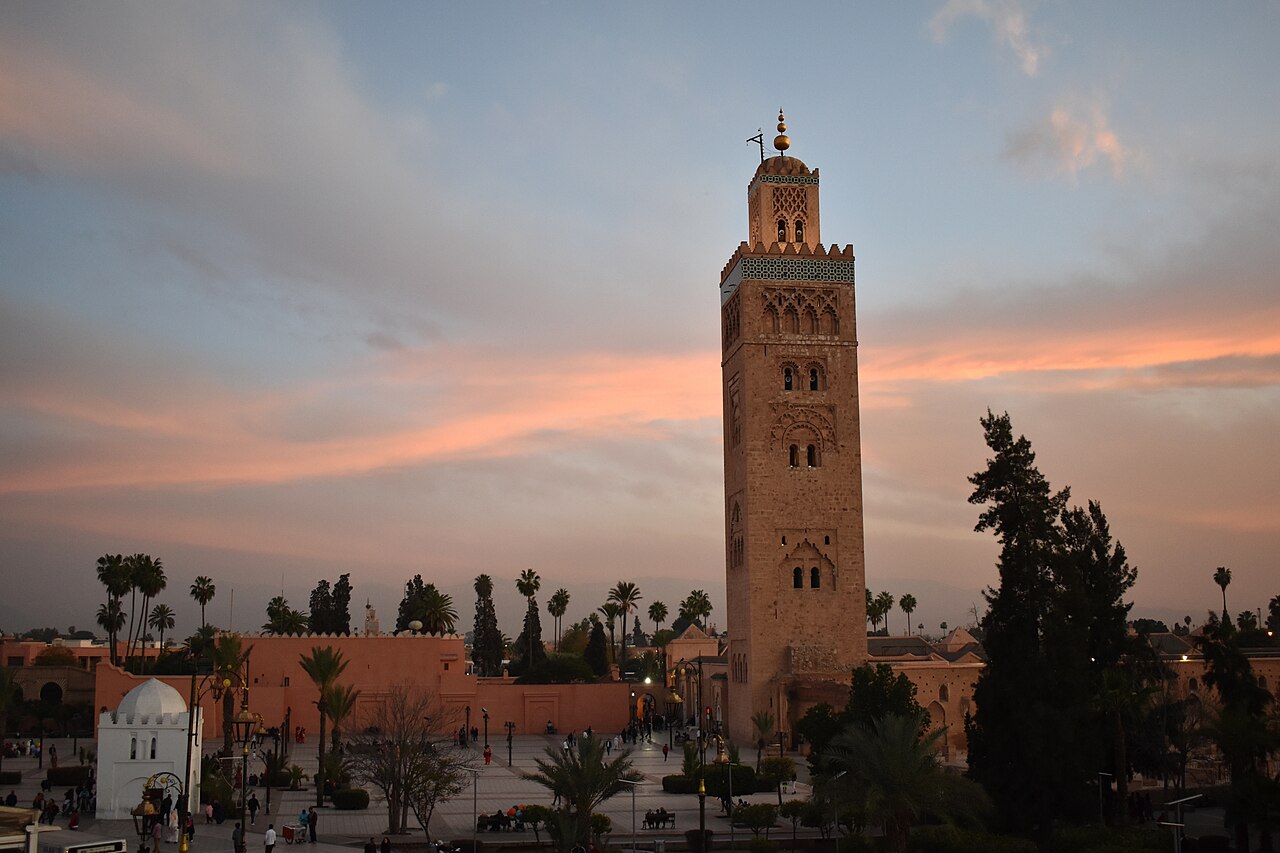
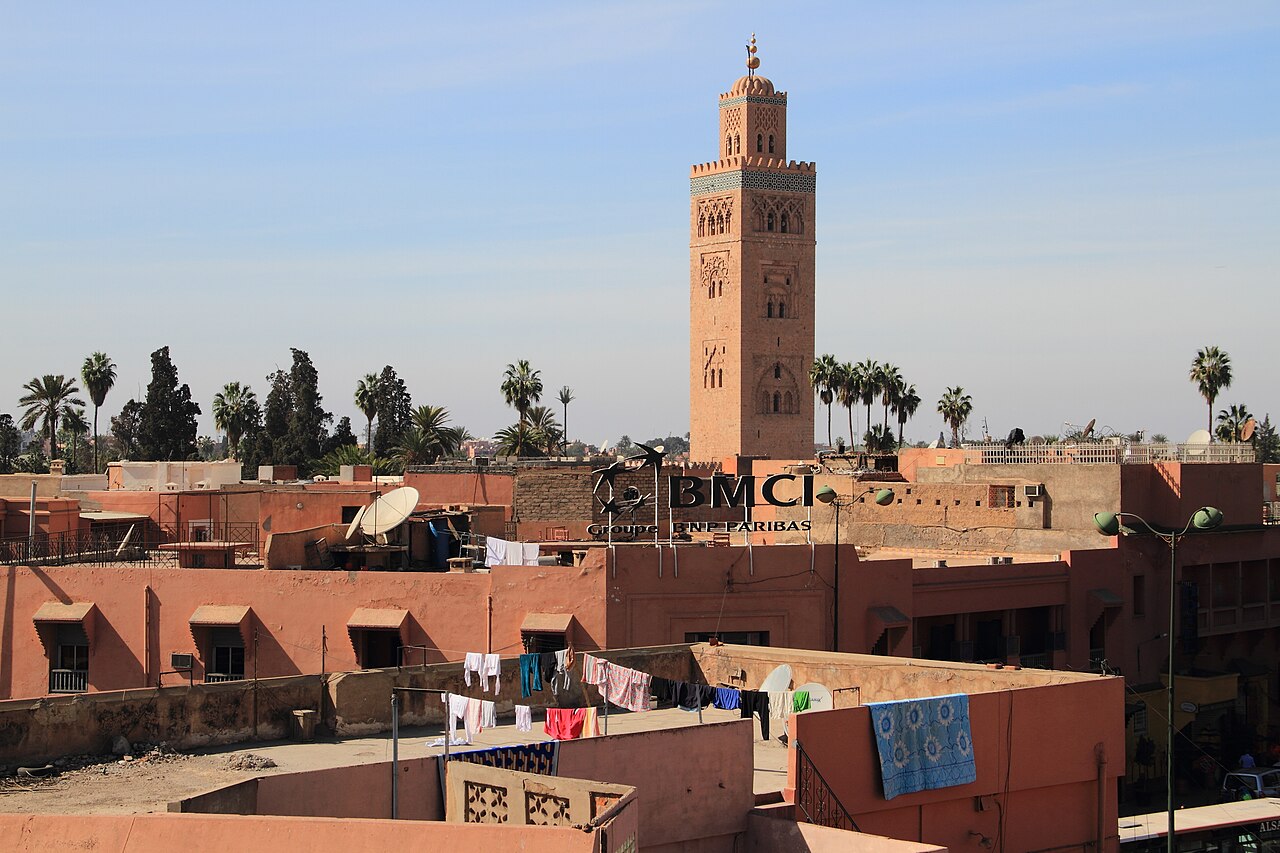
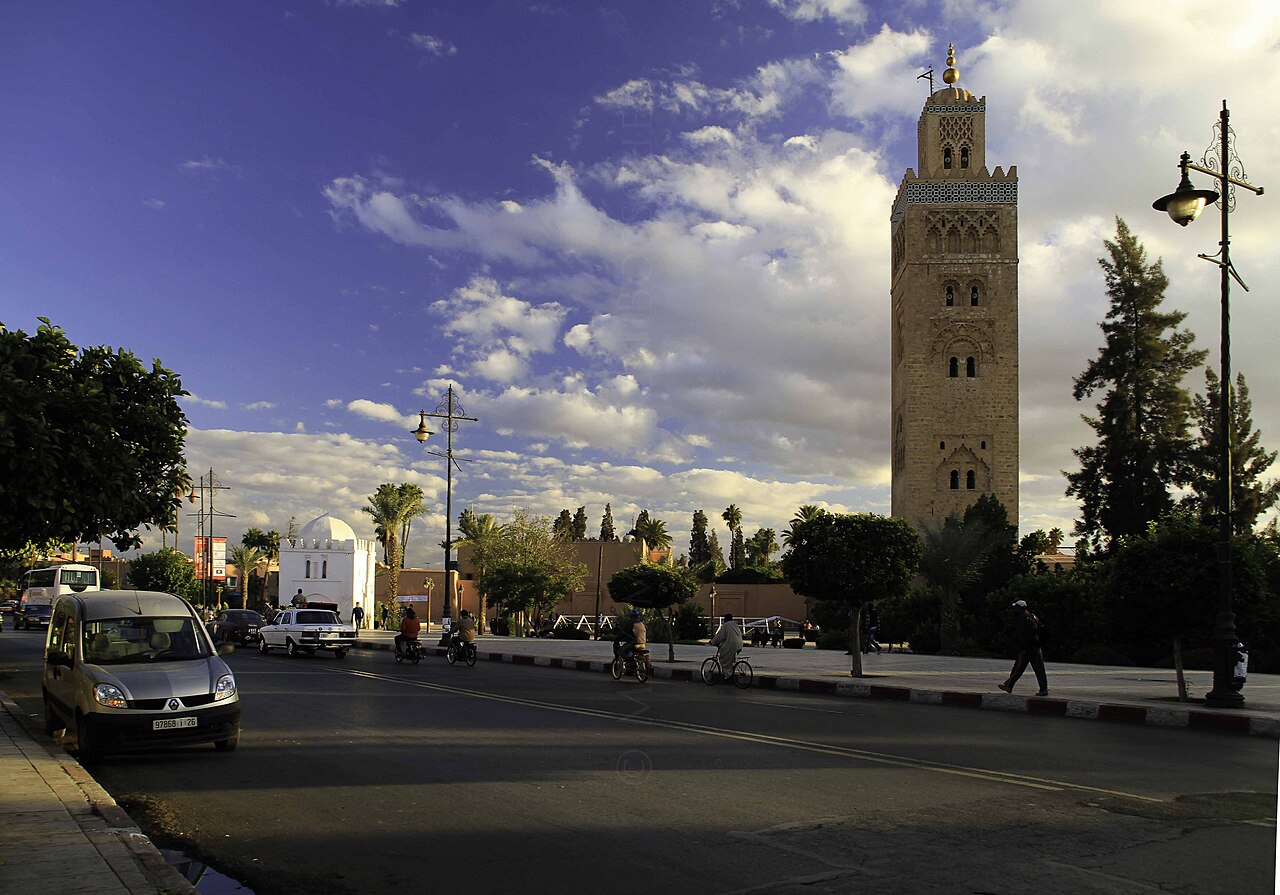
The ~77 m minaret — each of its four faces carries a different geometric tracery (polylobes, diamonds, chevrons), crowned by three gilded copper orbs (local legend says they are solid gold).
The tower that inspired Seville's Giralda and Rabat's Hassan Tower — widely regarded as the peak of Almohad architecture.
The sandstone walls shifting from ochre to deep rose at golden hour, and the floodlit minaret after dark.
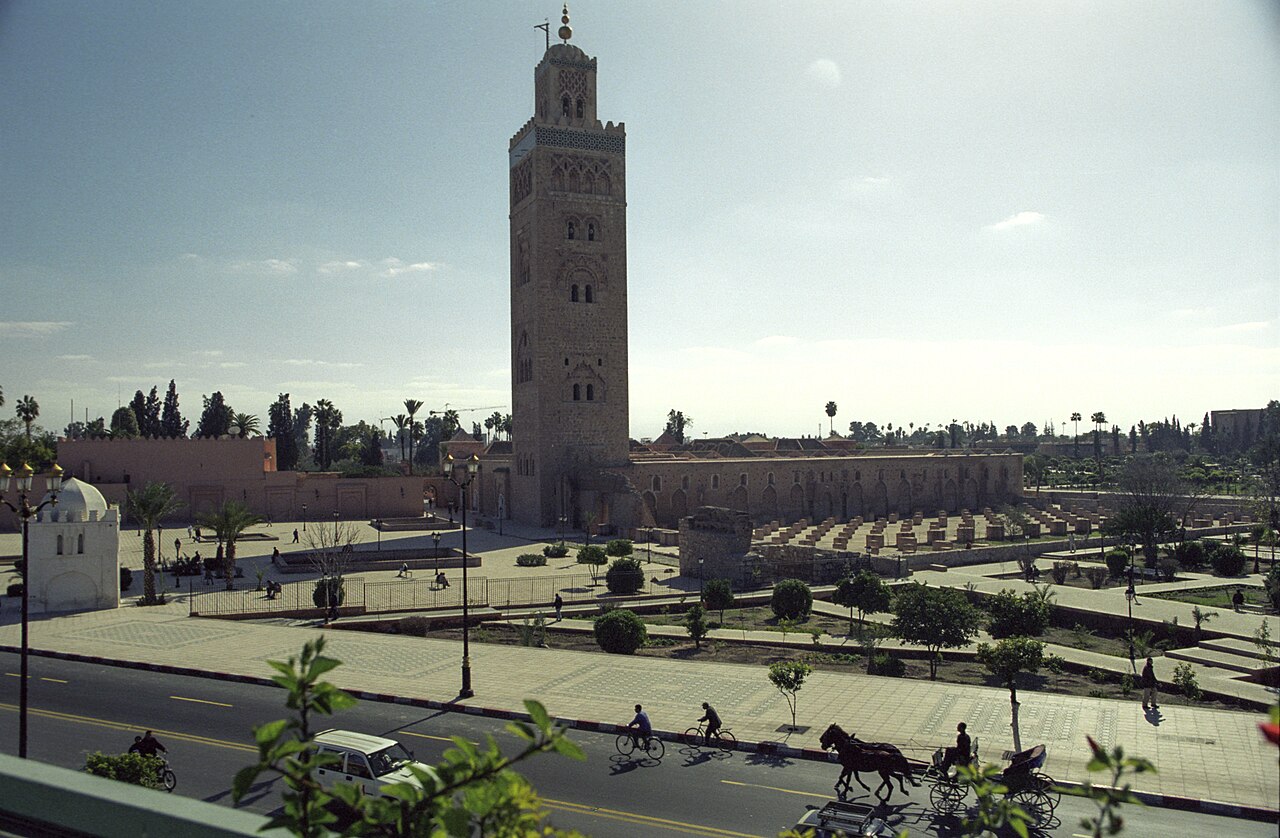
The gardens to the southwest, with orange trees, roses and fountains — the best vantage point and photo spot for the minaret.
Traces of the first mosque, rebuilt because its qibla (prayer axis) was misaligned, and the immediately adjacent Jemaa el-Fnaa square.
Good to know
RulesNon-Muslims may not enter the mosque interior; viewing is limited to the exterior and the gardens. Ignore any tour that promises 'inside access.'
MannersThis is a working mosque. During the five daily prayers, avoid loitering at the entrances or making noise, and dress modestly with shoulders and knees covered as a sign of respect.
CautionAround the square and gardens, henna artists may grab your hand uninvited, apply a design, then demand 200–500 MAD; black henna can contain PPD that triggers allergic reactions, so avoid it. Keep hands pocketed and walk on with 'la, shukran' (no, thank you).
CautionSnake charmers may drape a snake on you and then demand a photo fee, and self-appointed guides may 'help' with directions and then ask for money. For taxis, insist on the meter ('compteur') or agree a fare first (a central-Marrakech ride is roughly 15–30 MAD).
SeasonIt is now high summer (July), with daytime highs above 40°C. Avoid the fierce midday sun (noon–3 pm) and carry water, a hat and sunscreen. Early morning or the golden hour before sunset offers the best light and thinner crowds.
SafetyJemaa el-Fnaa and the souks get crowded, so pickpocketing can occur. Wear your bag in front and mind your phone and wallet, including during evening photography of the illuminated minaret.
Practical info
It is about a 5-minute walk (200 m) southwest of Jemaa el-Fnaa, and the minaret itself is an easy landmark to navigate by. The minaret and gardens are freely accessible with no ticket, while the interior is closed to non-Muslims; confirm current garden opening hours and access locally for the latest information.
On-site reviews📍 Verified on-site
No reviews yet. If you are here, be the first to leave one.