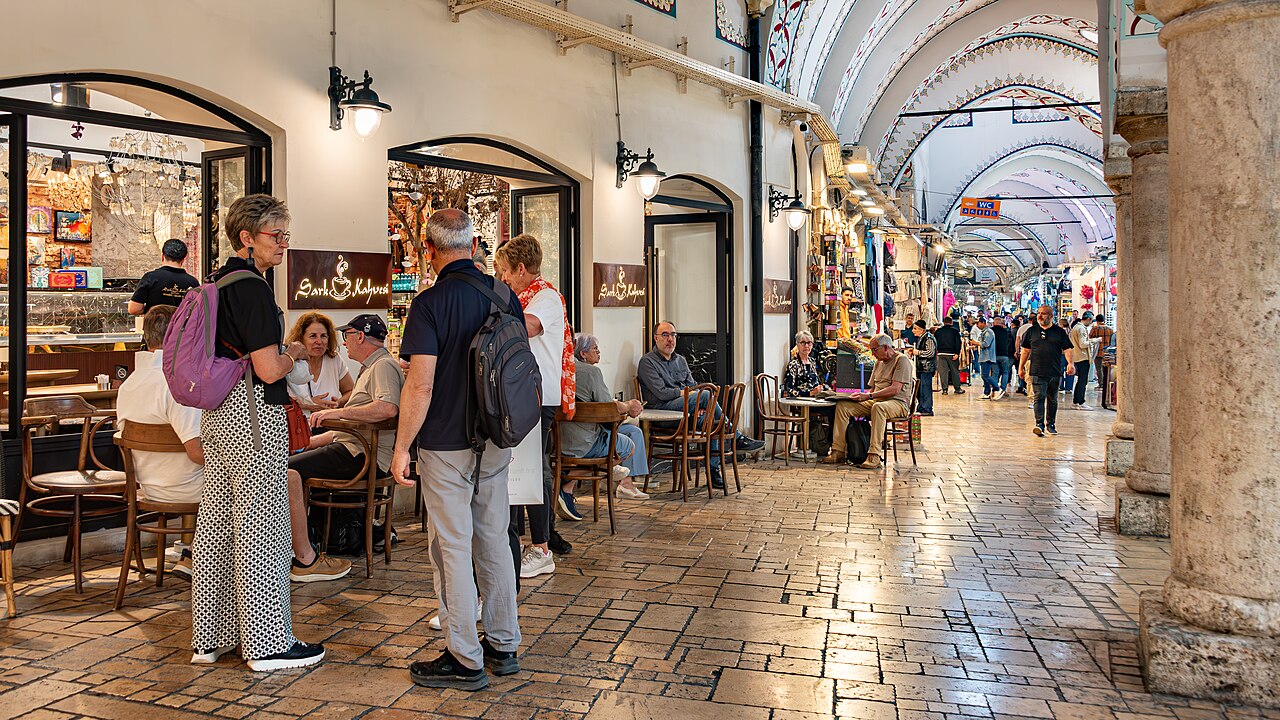
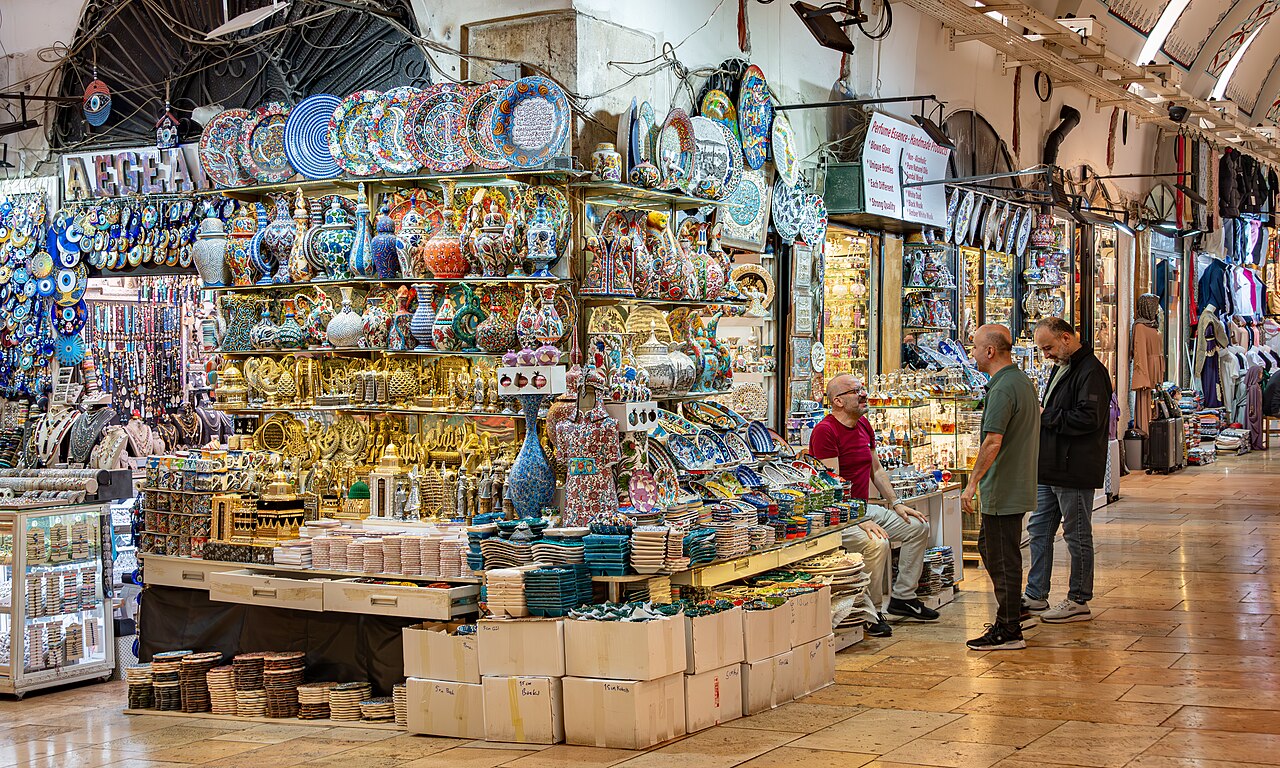
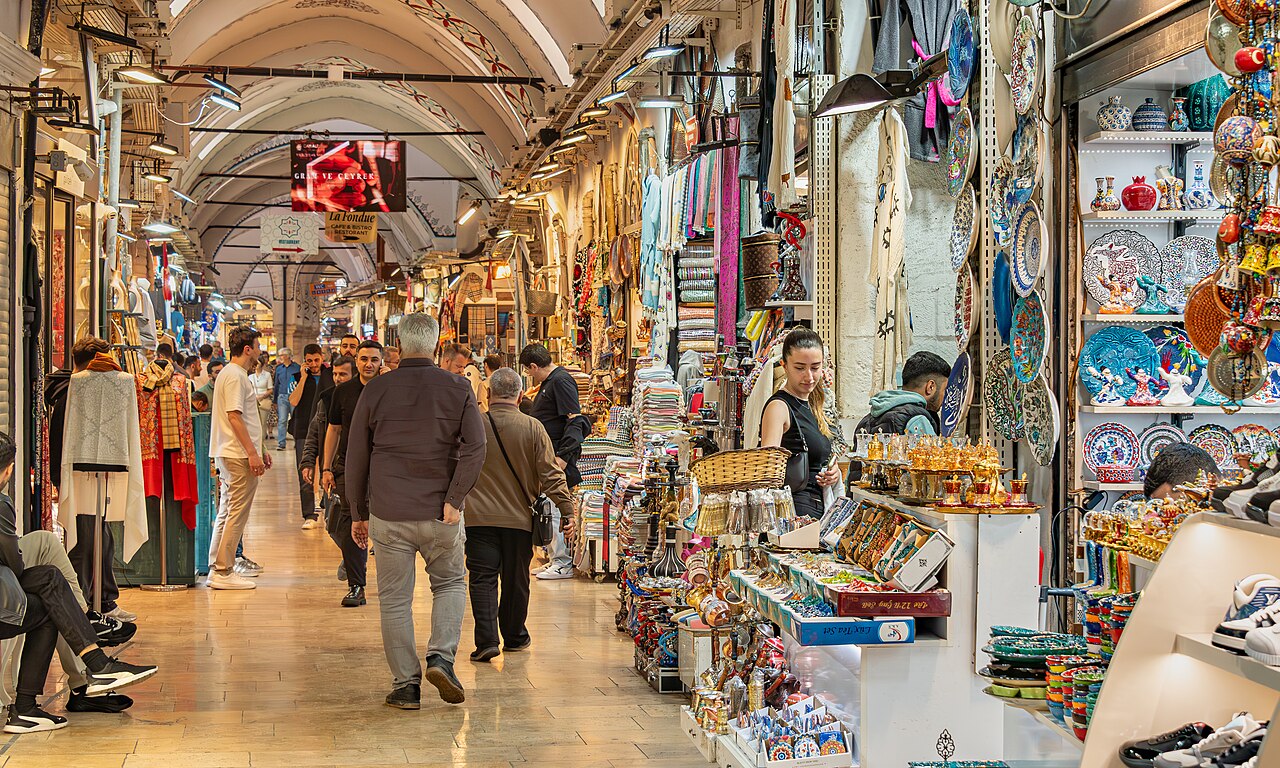
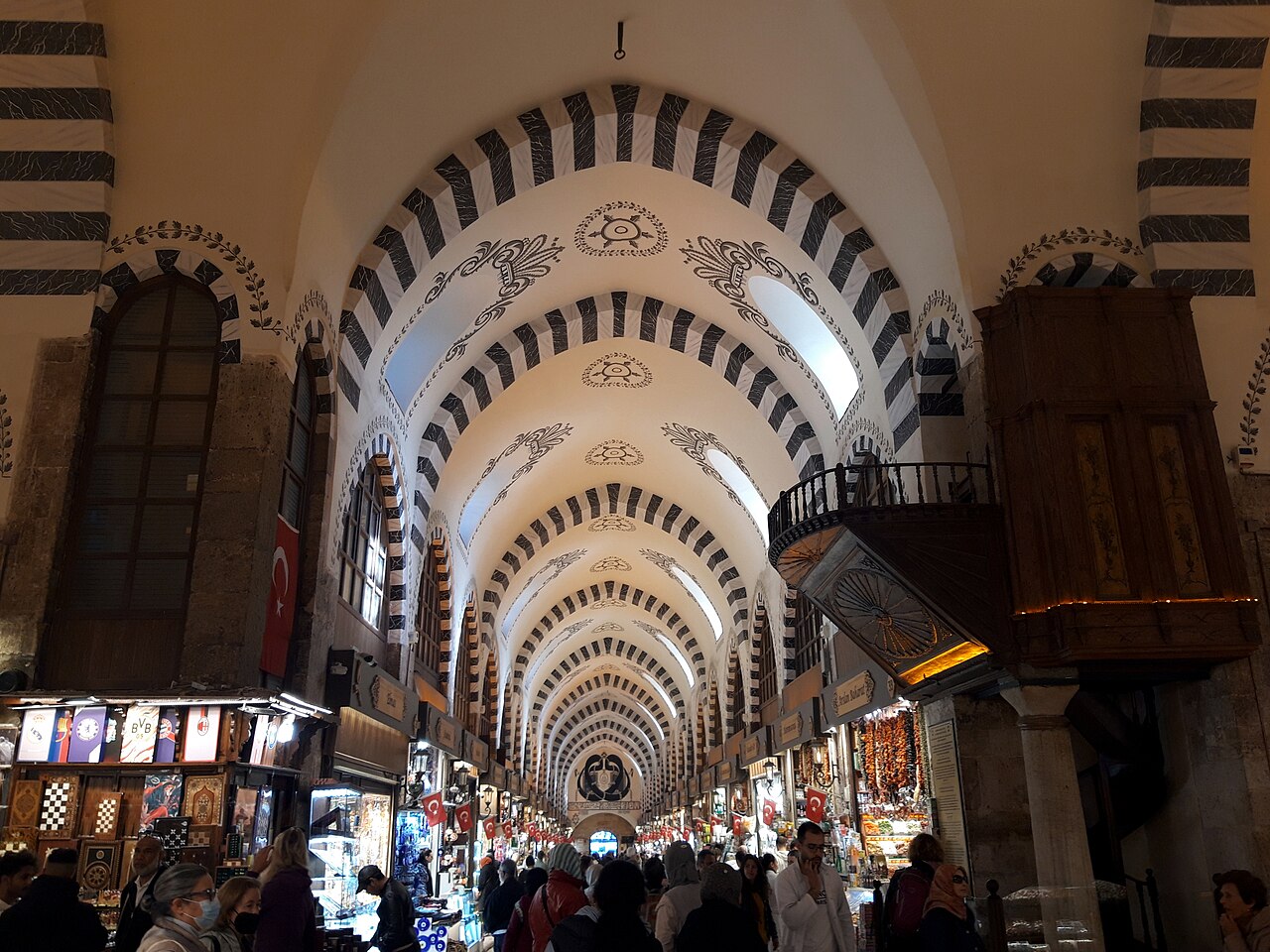
The Grand Bazaar (Turkish: Kapalıçarşı, 'covered market') is one of the world's oldest and largest covered markets, founded in 1461 by Sultan Mehmed II the Conqueror, with more than 4,000 shops woven through some 60 vaulted lanes in a maze-like layout. Packed with gold and silver jewellery, carpets, Turkish lamps, ceramics, spices and leather goods, it preserves the commercial life of the Ottoman era and forms part of the UNESCO World Heritage 'Historic Areas of Istanbul' (inscribed 1985). Following major restoration work from 2012 onward, it remains fully active in 2026 and is Istanbul's busiest shopping and sightseeing draw, welcoming an estimated 250,000–400,000 visitors a day. You don't need to buy anything to enjoy it — simply wandering the labyrinth and admiring its historic gates and shopfronts is a highlight in itself.
The 21-plus historic gates, including the main Beyazıt Gate and the Nuruosmaniye Gate crowned with the Ottoman imperial coat of arms
The İç Bedesten (Cevahir Bedesten), the bazaar's oldest core, where fine jewellery, antiques and curios are concentrated
Kalpakçılar Caddesi, the 'golden street' lined with dazzling gold and silver jewellers
The old caravanserai courtyards (hans) such as Zincirli Han, quieter corners still home to working artisans
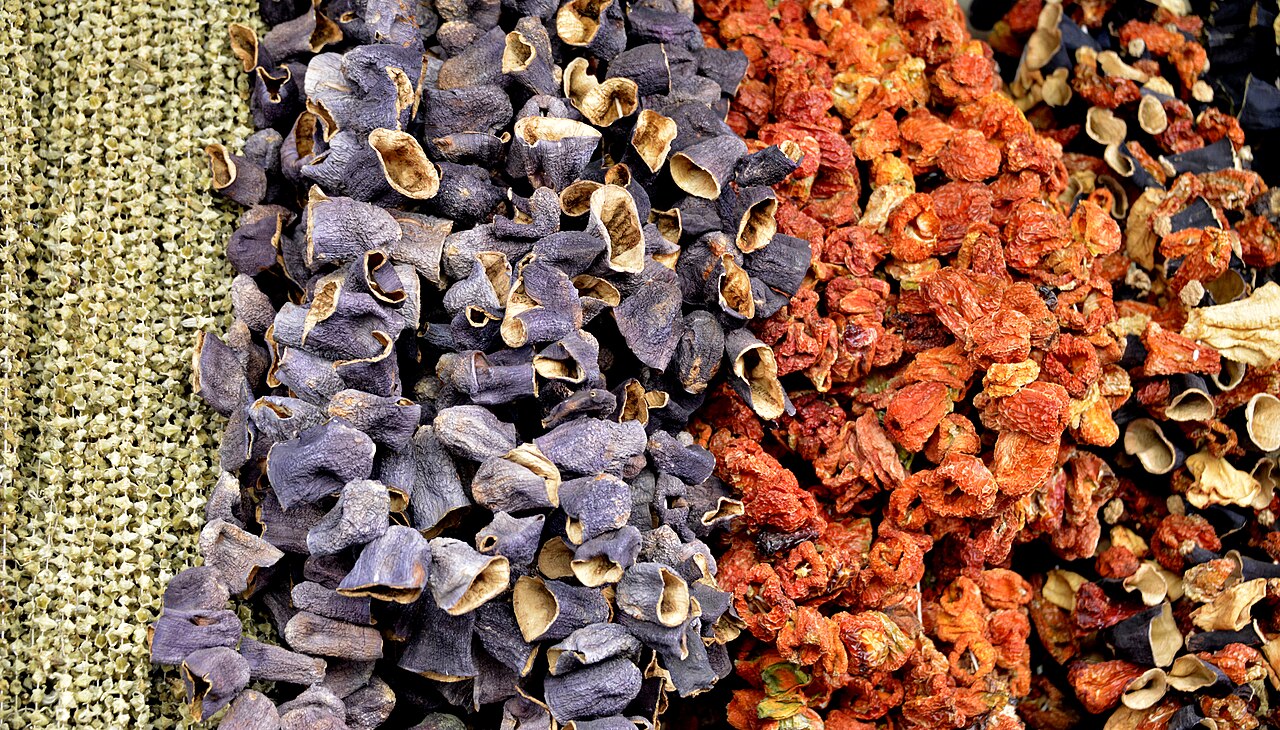
Traditional crafts — Turkish carpets and kilims, mosaic lamps, İznik-style ceramics, spices — and historic tea houses like the Şark Kahvesi
Good to know
Caution'Genuine' carpets or antiques pushed by touts in the lanes carry a high risk of being fakes. Do not buy antiques without an official export permit — they can be seized by customs when you leave the country.
CautionAvoid the currency-exchange booths inside the bazaar; their rates are poor. Change money at city banks, official exchange offices or ATMs. If a card terminal offers to bill in your home currency (DCC), choose Turkish lira instead.
MannersBargaining is the norm here and part of the culture. Start around half the asking price, haggle politely, and simply walk away if the price isn't right — paying cash often gets you a better deal.
SafetyAround midday and early afternoon (when cruise-ship groups arrive) it gets very crowded and pickpockets are active. Wear bags in front and split up your wallet and passport. Watch too for the 'dropped brush' shoe-shine scam just outside the bazaar.
RulesThe bazaar is closed on Sundays, on the first day of religious holidays (Eid al-Fitr and Eid al-Adha) and on Republic Day (29 Oct). Opening hours (roughly Mon–Sat 08:30–19:00) and closure dates should be checked for the latest information before you go.
SeasonIn high summer the covered lanes stay hot and packed. Early morning right after opening is the most comfortable time, and note that hours and atmosphere can shift during Ramadan.
Practical info
The main Beyazıt Gate sits directly opposite the T1 tram stop 'Beyazıt-Kapalıçarşı,' and the neighbouring Çemberlitaş stop is about a 5-minute walk away. Entry is free and it generally runs Mon–Sat roughly 08:30–19:00, but it closes on Sundays and religious holidays, so check the latest opening hours and closure dates before visiting.
On-site reviews📍 Verified on-site
No reviews yet. If you are here, be the first to leave one.