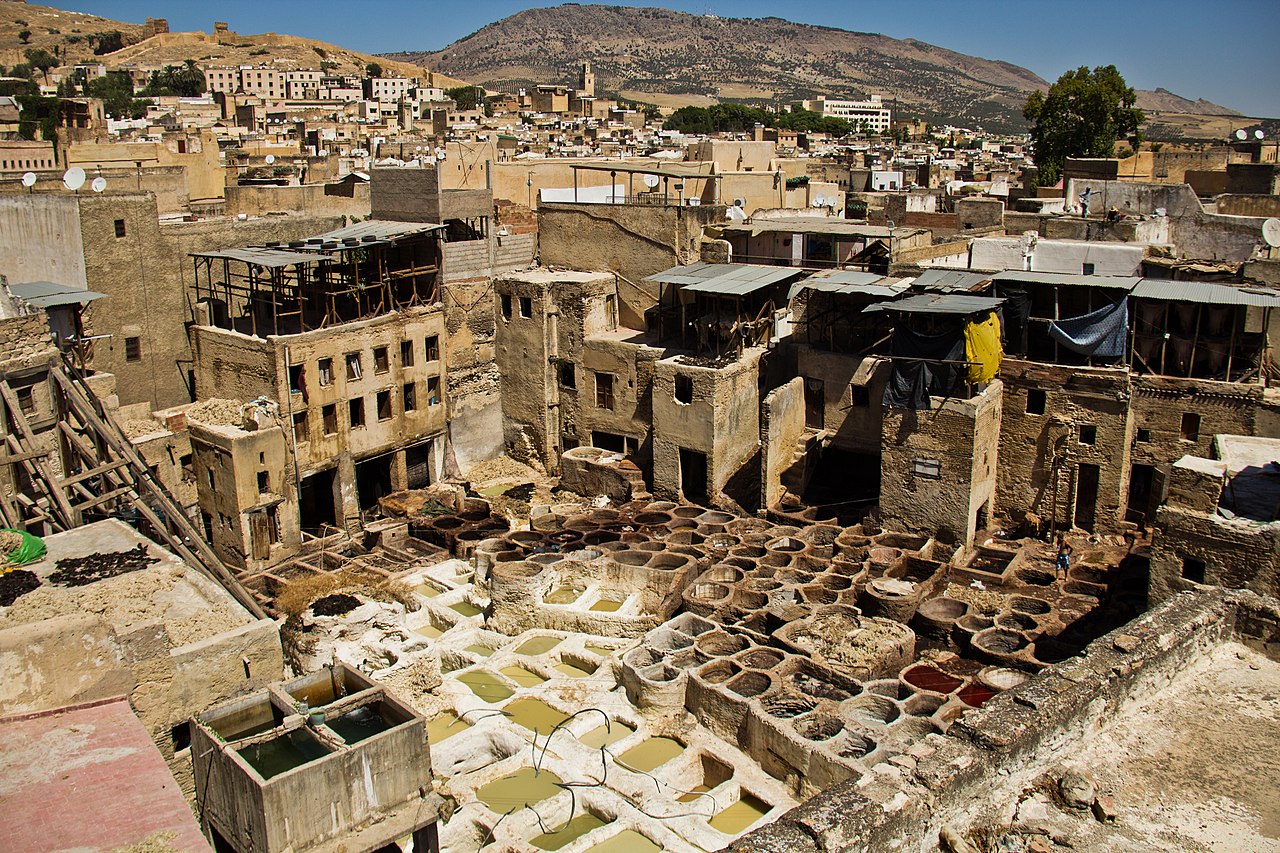
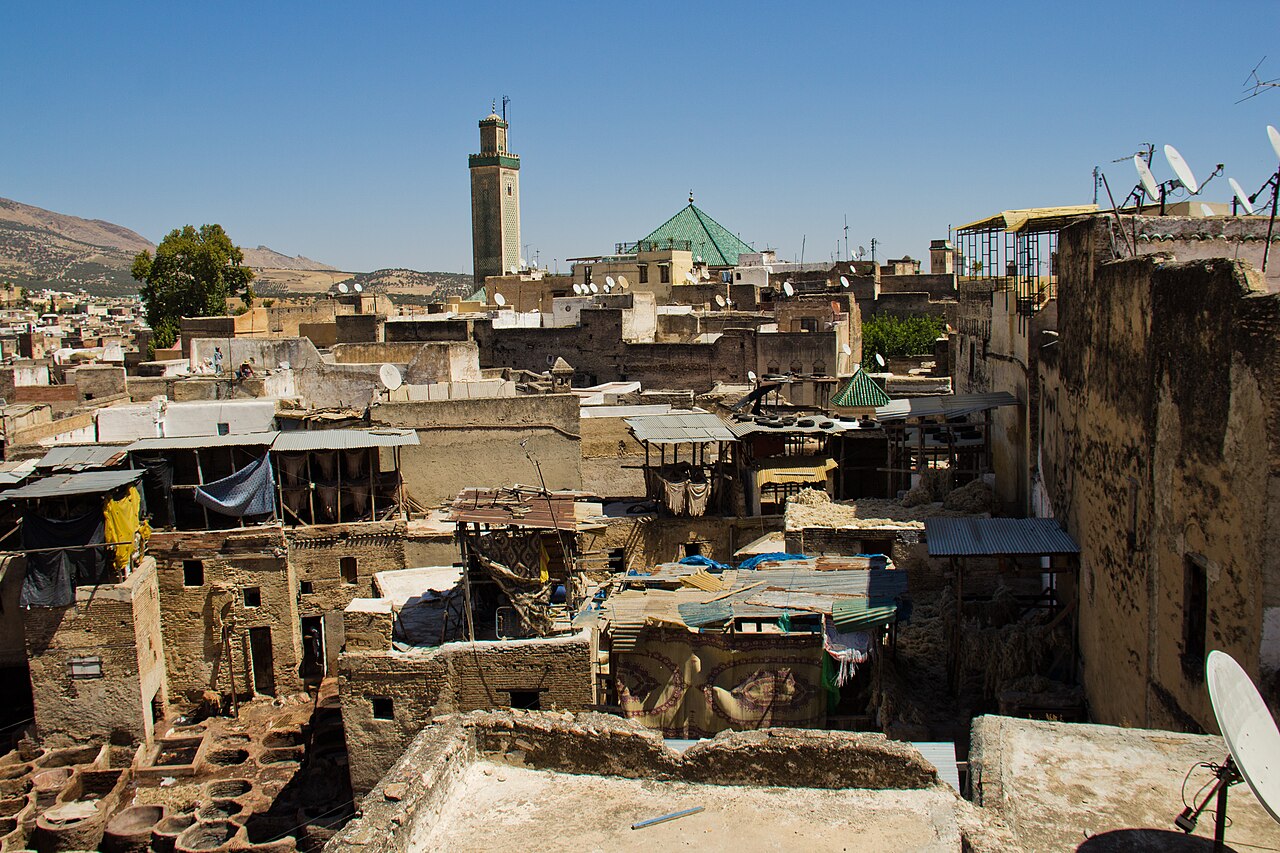
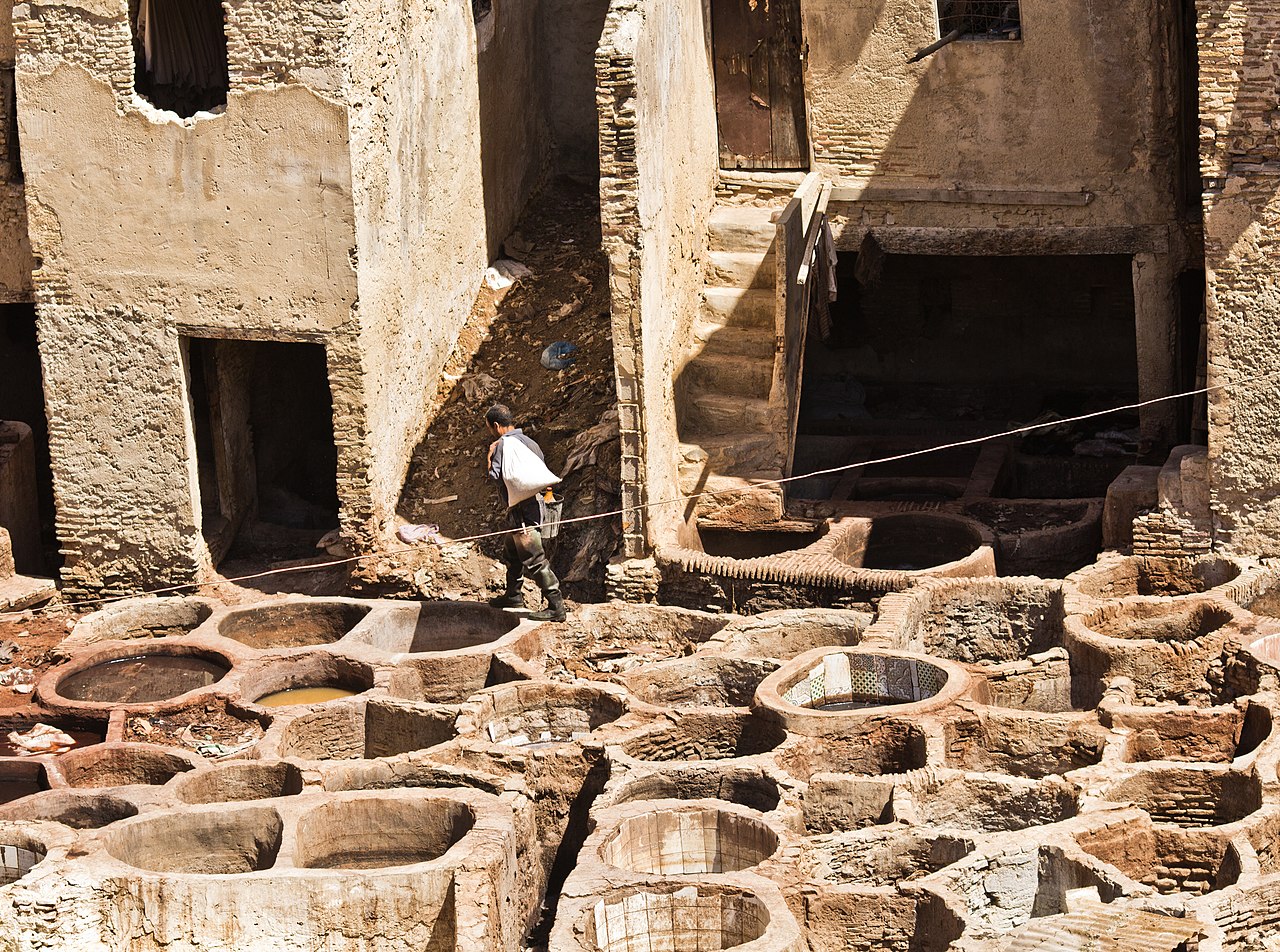
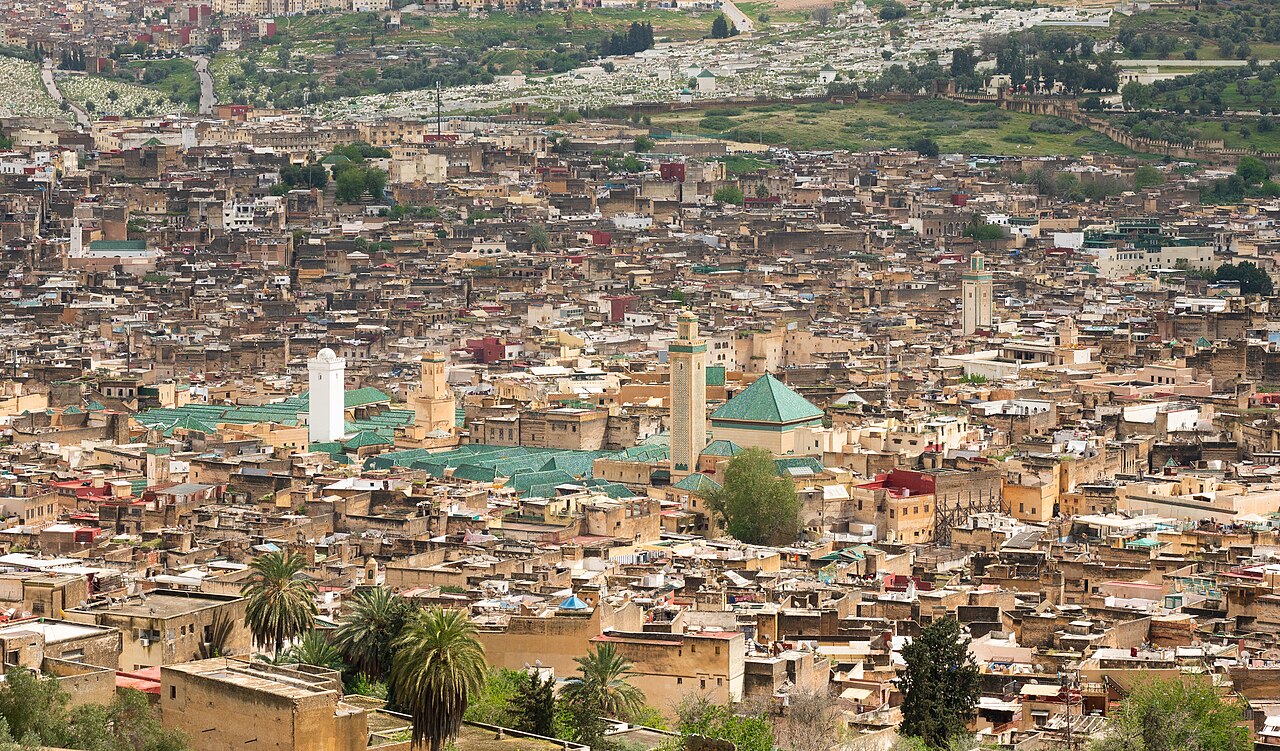
Fes el-Bali is the old walled medina of Fez, founded in the early 9th century by the Idrisid dynasty and inscribed on the UNESCO World Heritage List in 1981 as the 'Medina of Fez' (together with Fes Jdid). Its labyrinth of more than 9,000 narrow alleys forms one of the largest car-free urban areas in the world. At its heart stand the Al-Qarawiyyin Mosque and University — founded in 859 CE and recognized as the oldest continuously operating university on Earth — and traditional leather tanneries still worked by hand. As of 2026 it remains a living neighbourhood home to thousands of residents, so it is best explored not as a museum but as a working medieval city.
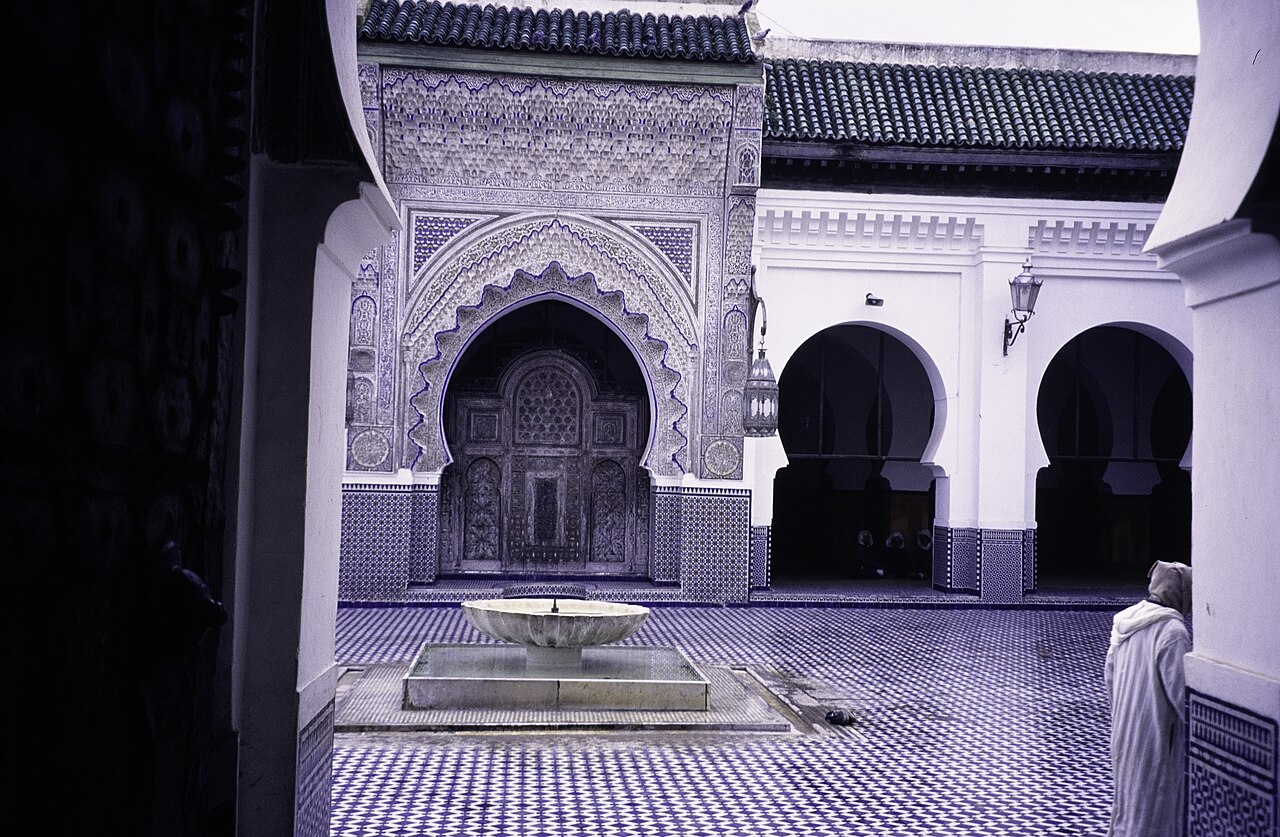
Al-Qarawiyyin Mosque & University (859 CE), the world's oldest continuously operating university; non-Muslims cannot enter the prayer hall but can glimpse the ornate courtyard from the doorways
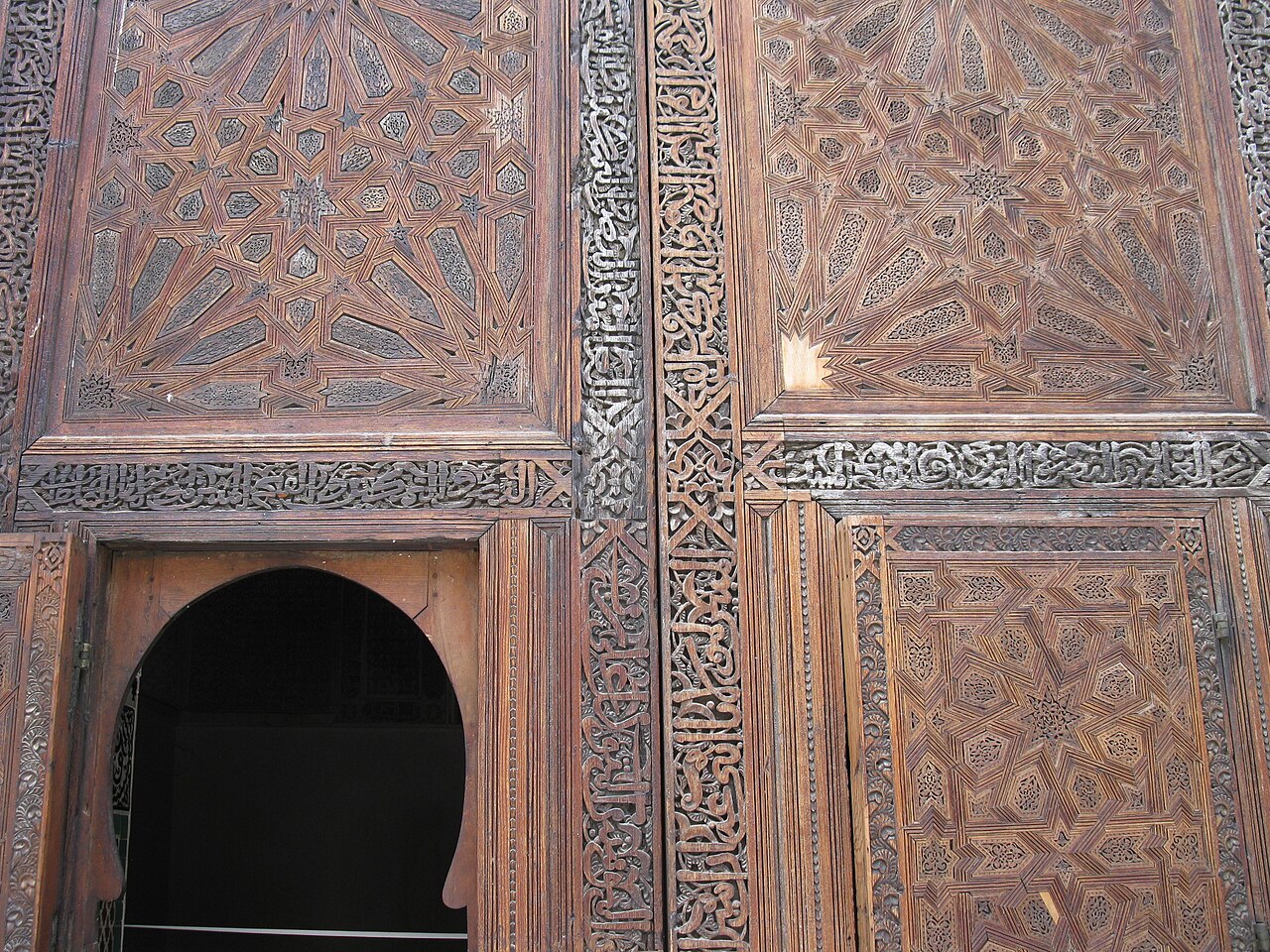
Bou Inania Madrasa (1350–1355, Marinid era), famed for intricate zellij tilework and carved cedar, and one of the few religious schools open to non-Muslims
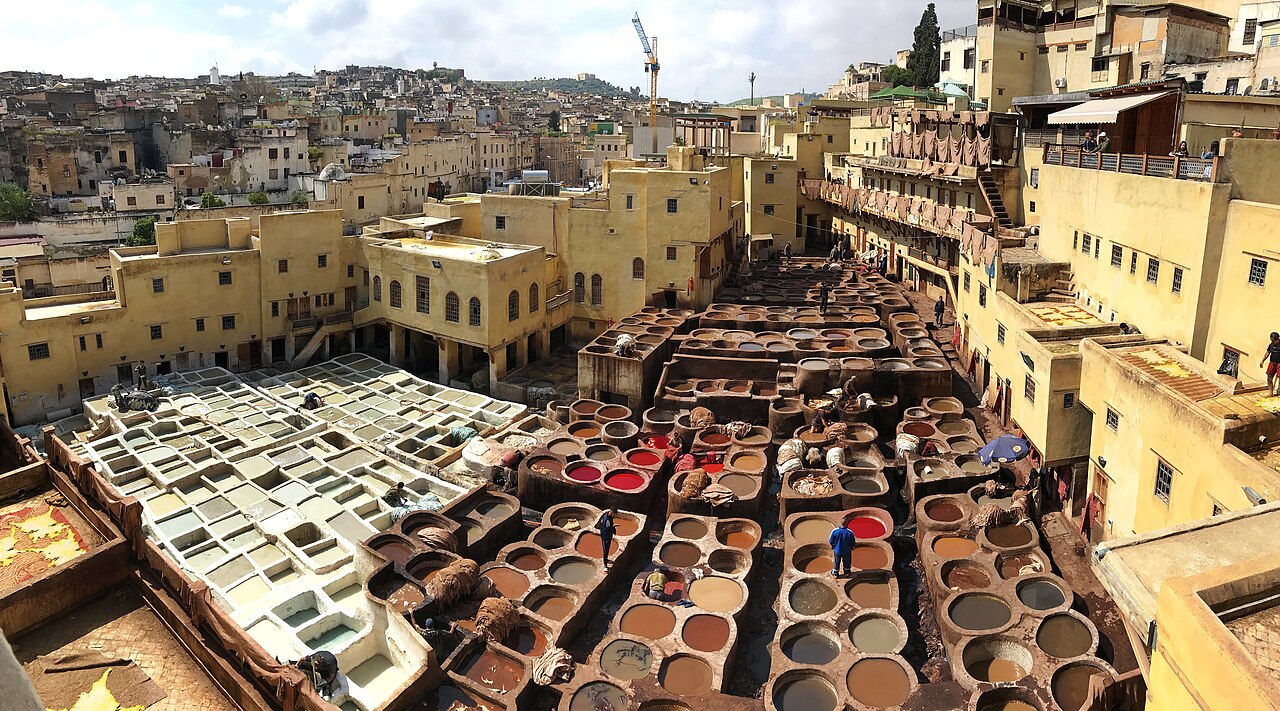
Chouara Tannery, Morocco's largest traditional tannery, best viewed from the rooftop terraces of the surrounding leather shops
Nejjarine Museum of Wooden Arts & Crafts and its fountain, set in a beautifully restored caravanserai (fondouk) with a rooftop café over the medina
Bab Bou Jeloud (the Blue Gate), the medina's ornate western gateway and a classic point of entry
Good to know
SafetyWith over 9,000 alleys it is very easy to get lost. Download offline maps (Google Maps or Maps.me) in advance and navigate by big landmarks such as Bab Bou Jeloud or Al-Qarawiyyin. In the crowded souks wear your bag on the front and keep valuables to a minimum to guard against pickpockets.
CautionA common trick is a stranger insisting 'this way is closed' or 'there's a special festival today', guiding you a short distance and then demanding 100–200 dirhams. Fake guides also steer you to a specific 'free' tannery viewpoint that is really a commission shop. Refuse politely but firmly, and arrange guidance only through your riad or a licensed guide.
CautionSouks have no fixed prices, so the first quote is heavily inflated — haggling is expected and you can often start below half. Many shops take cash only, so carry small dirham notes; the tannery terraces are technically free to enter, but a tip of about 10–20 MAD per person is customary if you don't buy anything.
RulesActive mosques including Al-Qarawiyyin are closed to non-Muslims, while sites such as the Bou Inania Madrasa and the Nejjarine Museum are open. During Ramadan (roughly mid-February to mid-March in 2026) daytime shop and restaurant hours change significantly, so check ahead if your visit overlaps.
MannersThis is a living religious and residential district, so modest dress covering shoulders and knees is advisable. Do not photograph residents — especially women — without permission, and in the narrow lanes give way to the donkeys and handcarts that carry goods through the medina.
SeasonSummer (July–August) brings high midday heat and a stronger tannery odour; spring (April–May) and autumn (September–October) are the most comfortable for walking. Aim for the morning when the tannery dyes are most vivid, and note that work slows around Friday midday for prayers.
Practical info
Fès–Saïss International Airport (FEZ) lies about 15 km from the centre, and ONCF trains link Fez with Casablanca, Rabat and Tangier (get off at Fès station and take a taxi to a medina gate such as Bab Bou Jeloud). The medina interior is fully pedestrian and off-limits to cars. Opening hours and ticket prices for individual sites such as Al-Qarawiyyin, plus train timetables, change by season, so confirm the latest official information before you go.
On-site reviews📍 Verified on-site
No reviews yet. If you are here, be the first to leave one.