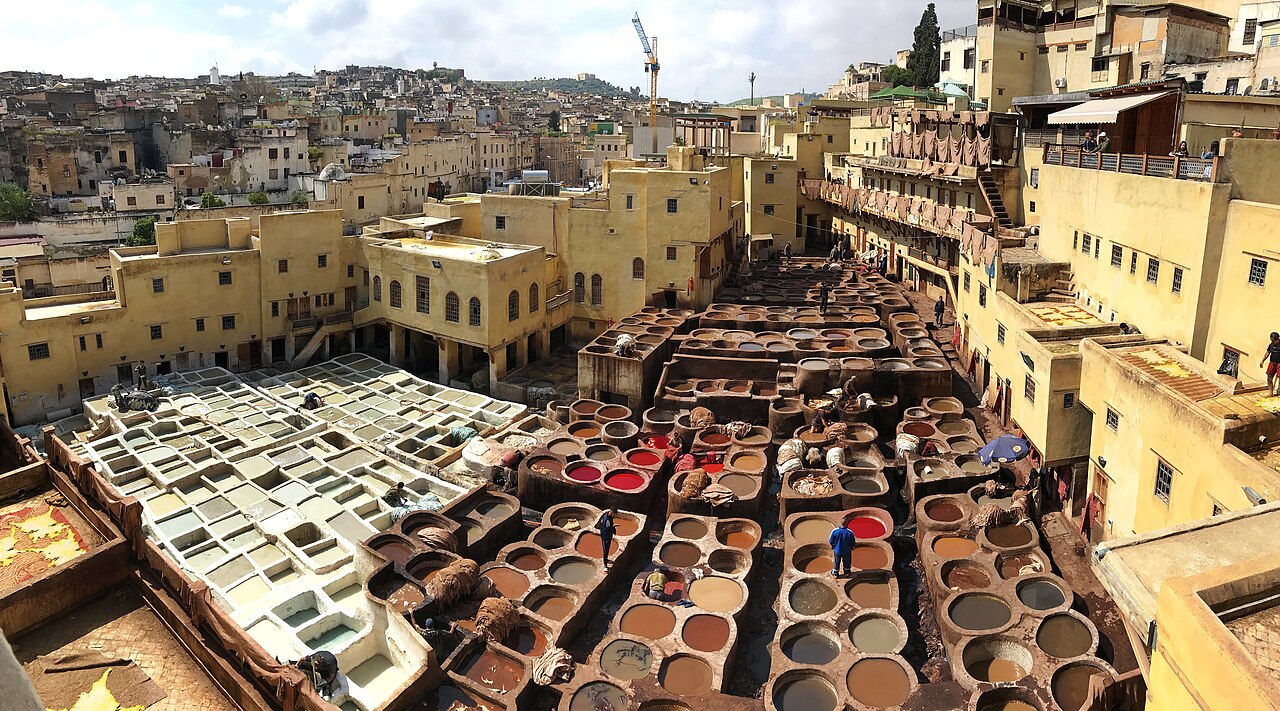
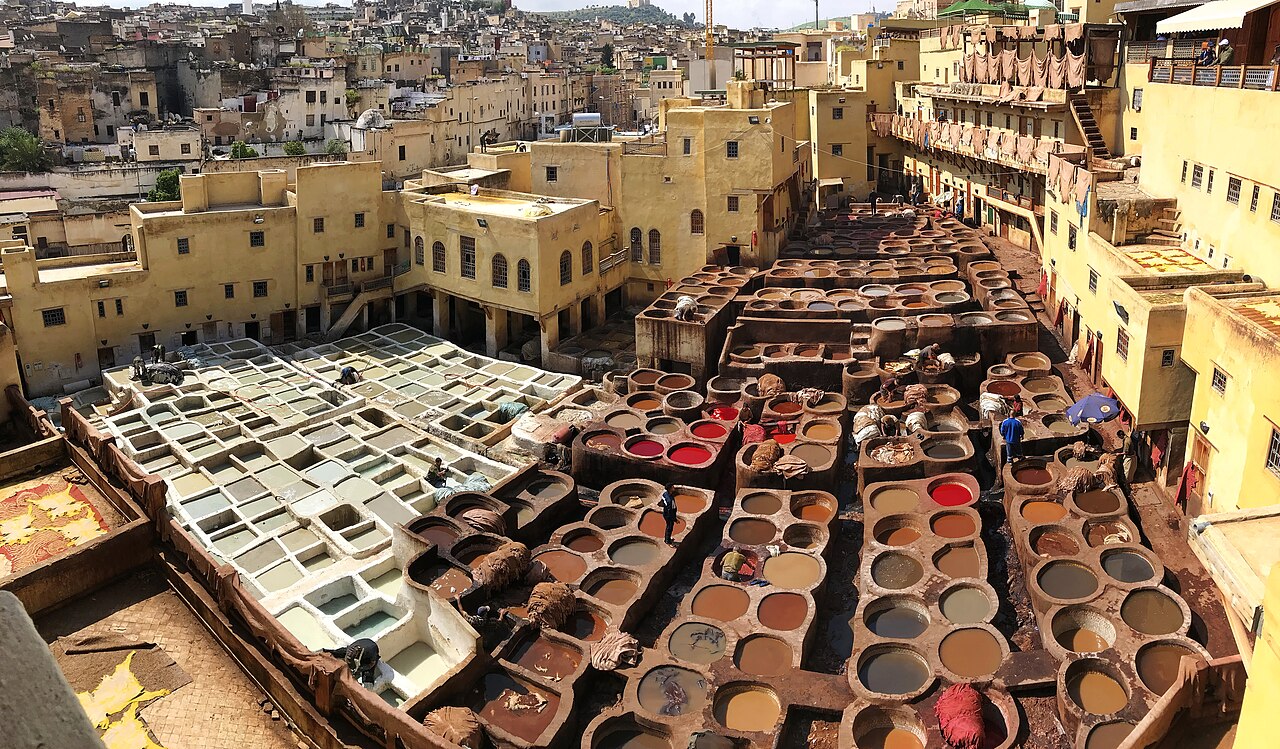
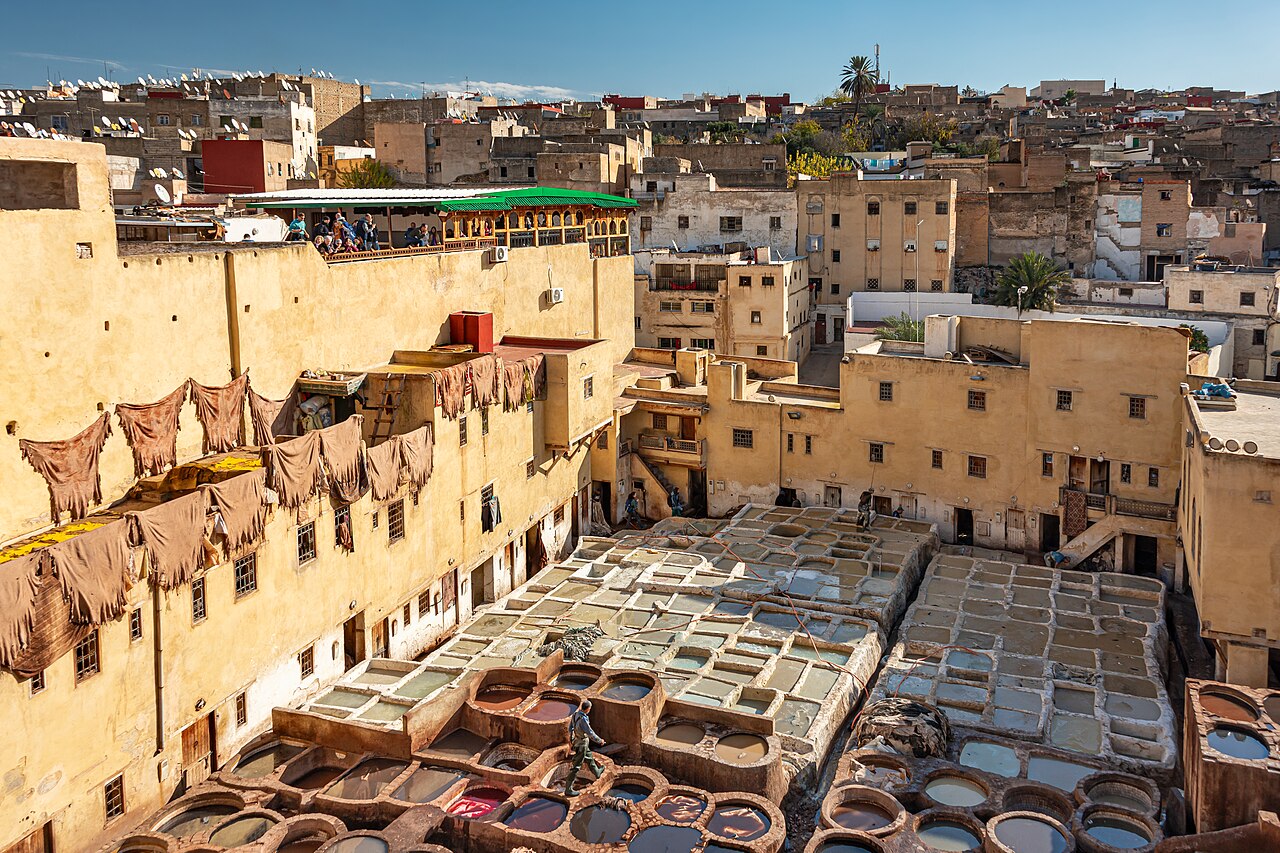
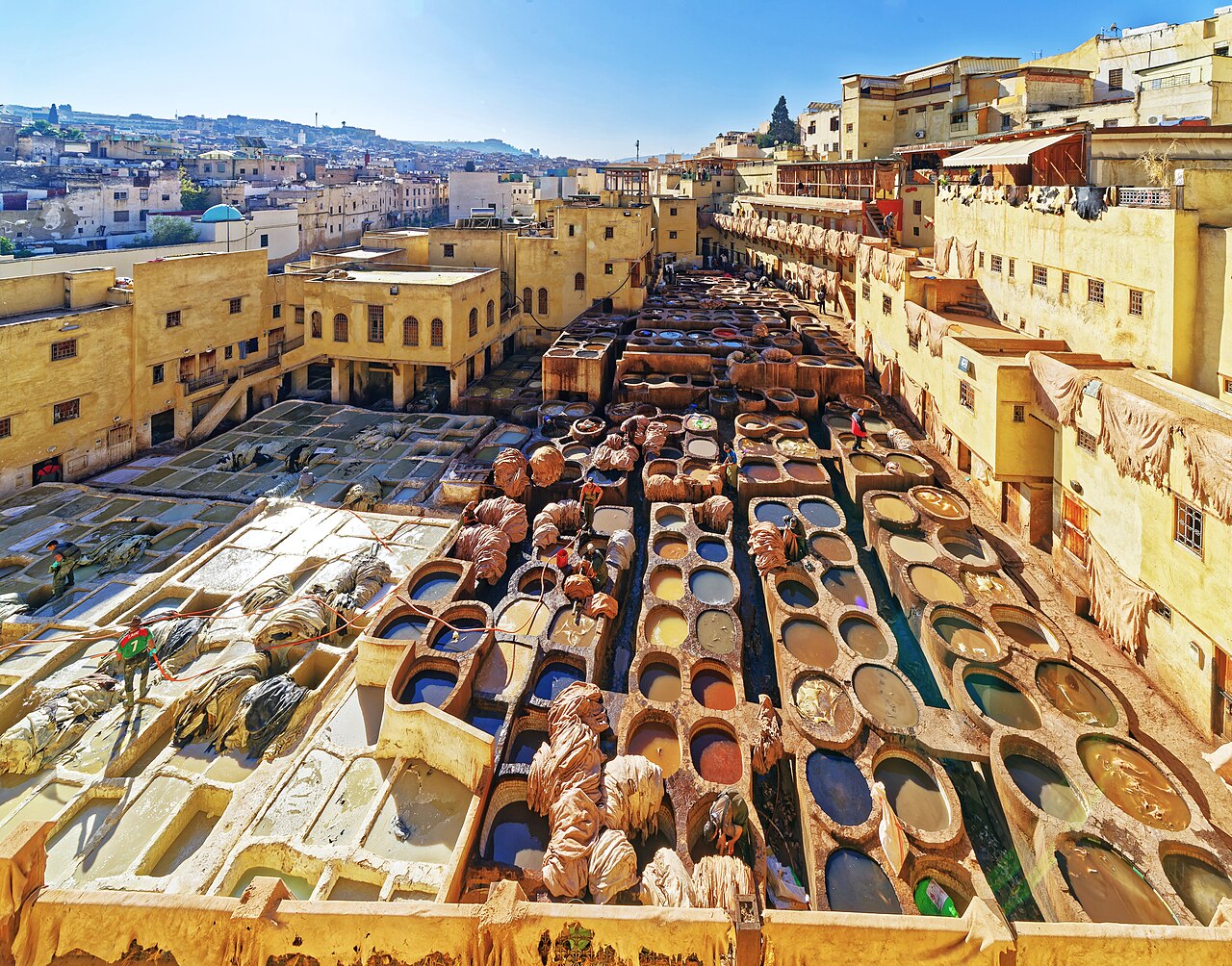
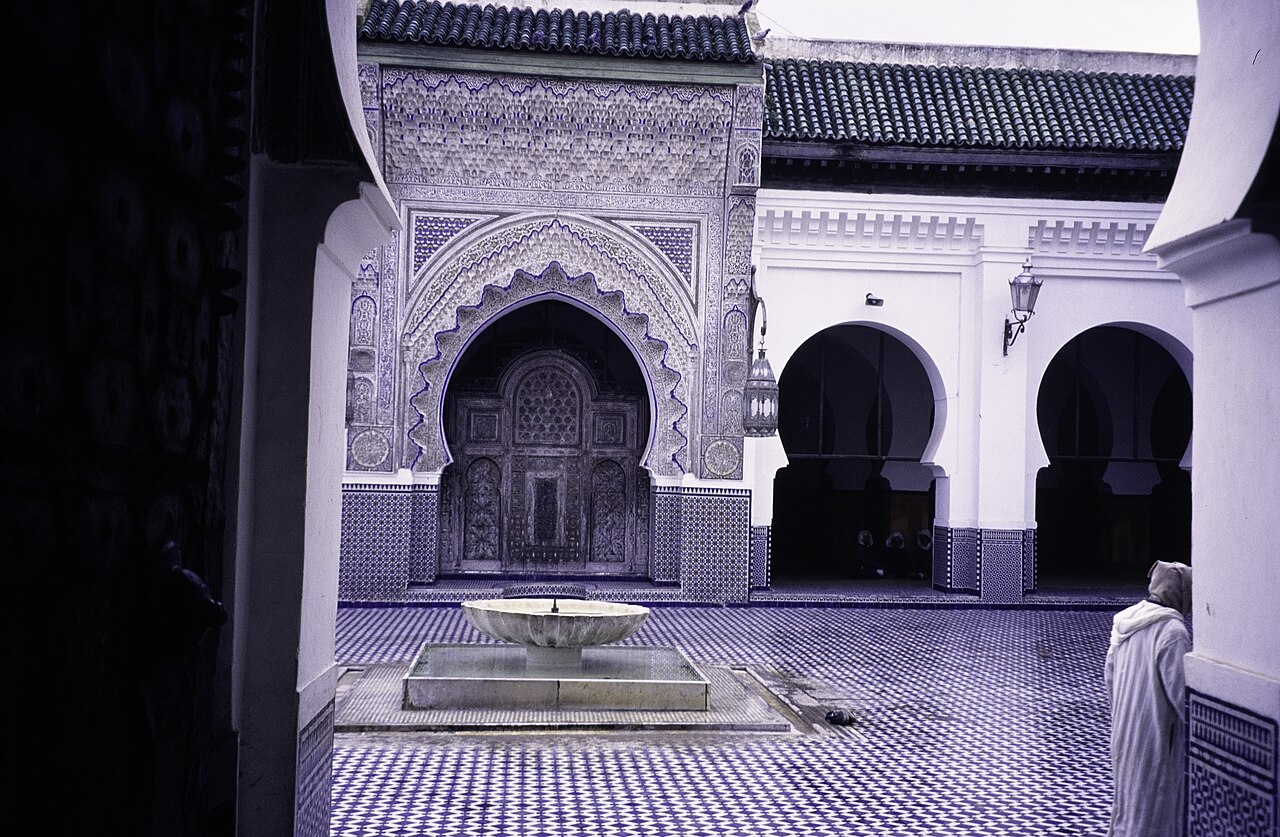
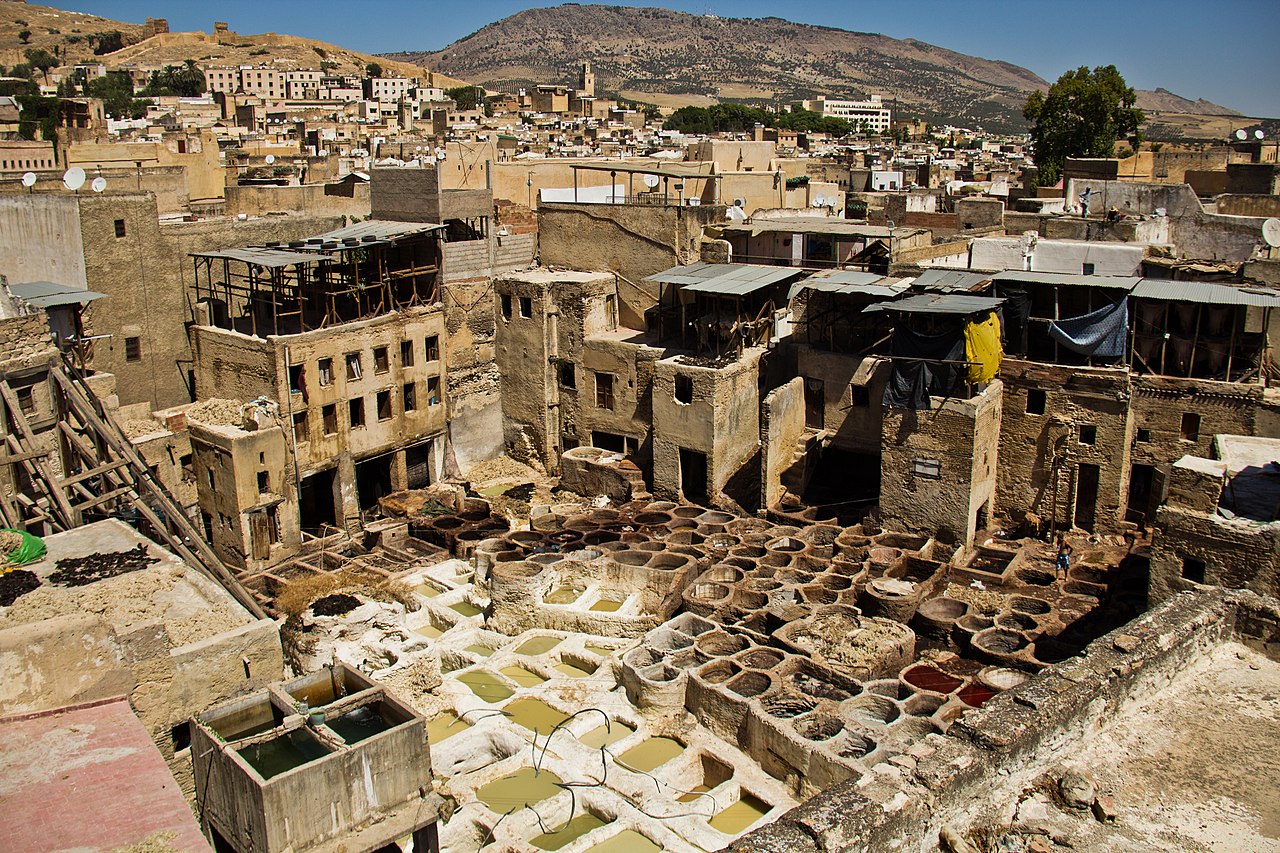
The Chouara Tannery, in the old medina of Fes (Fes el Bali), is among the oldest working leather tanneries in the world. It is famous for its honeycomb of hundreds of stone dyeing vats and a hand-tanning process that has barely changed since the 11th century, forming one of the signature sights of the UNESCO-listed Medina of Fez. A UNESCO-backed restoration in 2014–2016 stabilized the pits and improved drainage and terrace safety while keeping the traditional methods intact, and as of 2026 it remains both a fully operational workshop and a top attraction. Most visitors take in the spectacle from the rooftop terraces of the surrounding leather shops.
The palette of dozens of round stone vats filled with natural dyes—indigo (blue), saffron/turmeric (yellow), henna (orange), poppy (red) and mint (green)
Tanners working entirely by hand, standing in the vats to tread, rinse and dye the hides
The two-stage system: white 'softening' pits (quicklime, pigeon droppings and more) versus the colored dyeing pits
Slightly different panoramic angles from each shop's rooftop terrace (colors are most vivid from late morning to early afternoon)
Finished leather goods inside the shops—jackets, bags, babouche slippers and poufs
Good to know
CautionViewing from the terraces is officially free, but you reach them through a shop, so hard-sell pressure is common. Ask up front, 'Is the terrace free? I'm just looking,' and if you don't buy, a 10–20 MAD tip is fair (quotes of 200 MAD are a rip-off).
CautionSelf-appointed 'guides' often offer to lead you there. Agree the price and terms in advance, and decline firmly if you don't want the service.
MannersThe mint sprig handed to you for the smell is sometimes charged for—check whether it's free before accepting. When buying leather, expect to bargain, typically starting well below half the first price.
SafetyWatch for pickpockets in the narrow, crowded medina lanes—carry bags to the front. Terrace railings can be low or slippery, so take care near the edge when taking photos.
SeasonSummer brings heat and a much stronger smell, with less midday work; spring and autumn are most comfortable, and in summer early morning is best. Hours and activity may be reduced during Ramadan.
RulesAsk before photographing the workers (some expect a small tip) and dress modestly—covering shoulders and knees—in keeping with the conservative local setting.
Practical info
It sits near the Saffarin Madrasa in Fes el Bali; reach it on foot in about 20 minutes from the Blue Gate (Bab Boujloud) along Tala'a Kebira, or take a taxi from the train station to a medina gate (roughly 25–40 MAD) and walk in, as no cars enter the medina. There is no formal ticket or fixed opening time—terraces are accessible during shop hours (roughly morning to dusk)—but tips, prices and hours change often, so check the latest before you go.
On-site reviews📍 Verified on-site
No reviews yet. If you are here, be the first to leave one.