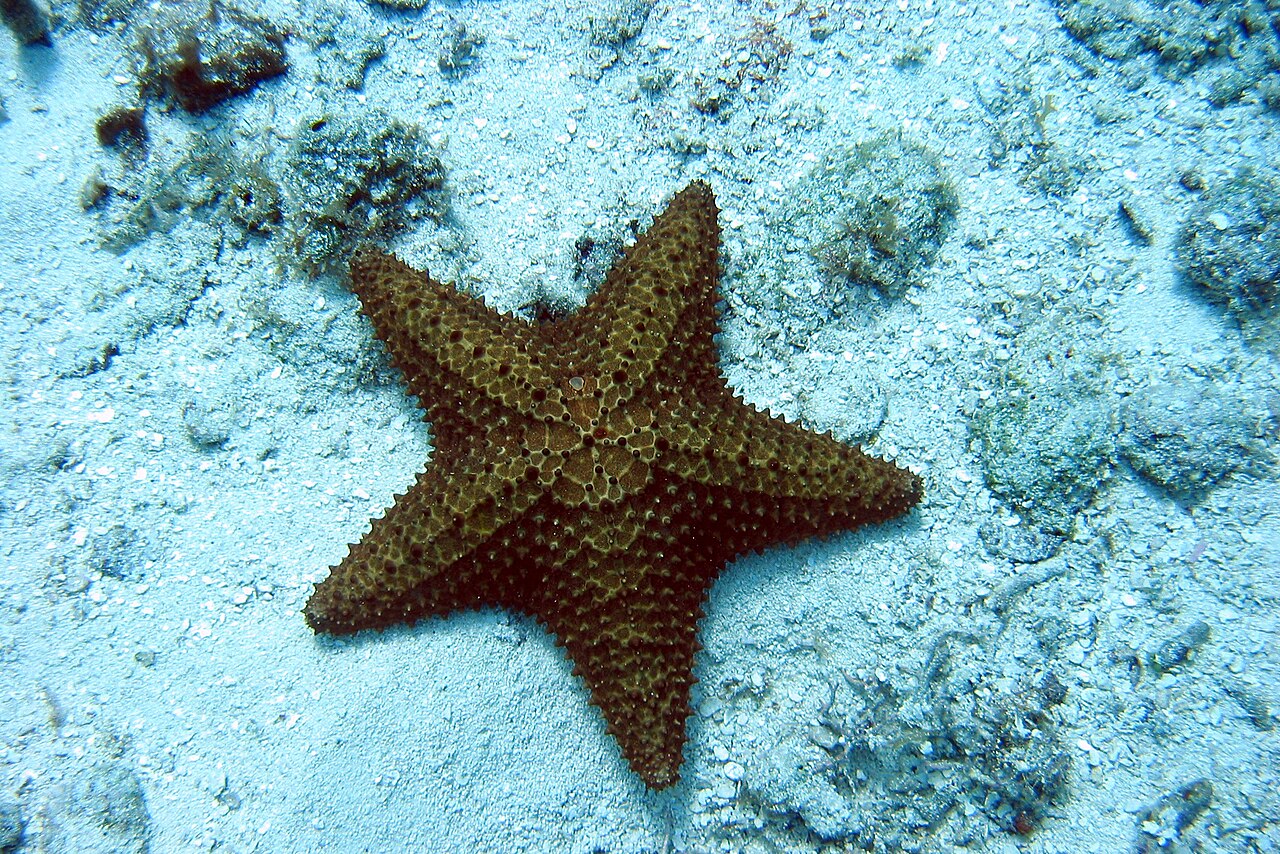
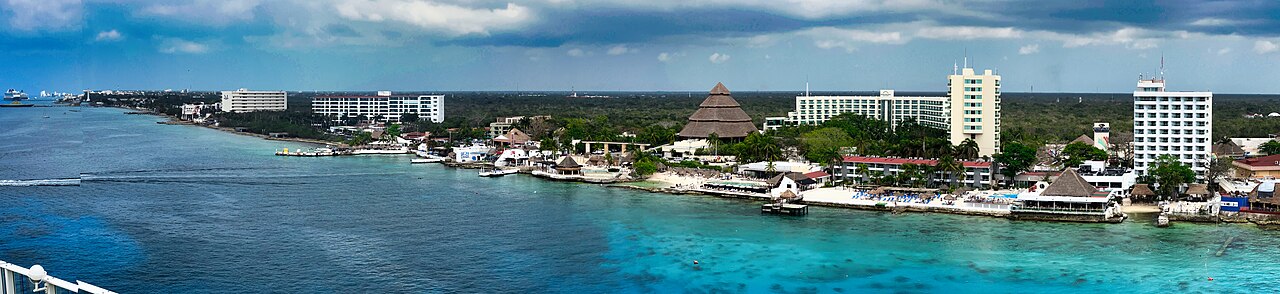
El Cielo is a very shallow white-sand sandbar off the southwest coast of Cozumel, Mexico. Its name means "heaven" in Spanish, and the water lives up to it: glass-clear, turquoise, and only waist- to chest-deep (about 1-2 m). Dozens to hundreds of large cushion sea stars (Oreaster reticulatus) rest on the sand, which has made it one of the world's most famous beginner snorkeling spots. Because it sits inside the reef, the lagoon stays flat and calm with little current and visibility often 15-30 m, and you may also spot southern stingrays and hawksbill or green sea turtles gliding over the seagrass. It lies within Cozumel's marine national park (Parque Nacional Arrecifes de Cozumel), and as of 2026 it can only be reached by boat with a park permit.
Large cushion sea stars (Oreaster reticulatus, 20-35 cm across) scattered over a sky-blue, shallow white-sand flat
Waist-to-chest-deep, current-free lagoon that non-swimmers and children can enjoy comfortably with a life vest
Southern stingrays resting half-buried in the sand, plus hawksbill and green turtles feeding over the seagrass
Mirror-flat, ultra-clear water in the early morning (8-10 AM) when you can read individual grains of sand
Usually visited as part of a drift-snorkel tour linking the nearby Palancar and Colombia reefs
Good to know
SafetyTour boats and water taxis crowd the sandbar (8-12 vessels at once on big cruise days). Surface snorkelers are hard for boat drivers to see, so always wear your life vest, stay with a buddy and your guide, and don't leave the marked zone near your own boat. The lagoon is calm, but beginners shouldn't snorkel alone; carry a float or buoy and keep checking your position so you don't drift toward the deeper channel or open water.
SeasonWater is a warm 26-29C year-round. March-May offers the clearest, calmest water before sargassum arrives, with November-December the second-best window; starfish concentrate more from November to April. June-November is hurricane season (peak August-October), when tours may be cancelled by weather, and sargassum seaweed can reach the coast in June-August, though Cozumel's west side is far less affected than the mainland.
SafetyStingrays rest half-buried in the sand. When you need to stand, do the shuffle-step (slide your feet instead of stepping down) so you don't step on one and get stung by its tail barb.
SafetyThere is no shade at all. Long exposure brings sunburn, heat, and dehydration, and a long swim can chill you. Cover up with a rash guard, hydrate, and don't push on if your mask fogs or you start to panic.
RulesNever lift a cushion sea star out of the water. They breathe through their skin (papulae) and suffocate within minutes, which can be fatal. Lifting one even briefly for a photo is forbidden, and rangers can remove or fine violators.
RulesMarine-park rules forbid touching, moving, or collecting any organism (starfish, coral, shells). A park permit is required to visit and is included in licensed tours. Only reef-safe (biodegradable) sunscreen is allowed, and some operators ban sunscreen entirely, so a rash guard is the safest choice.
MannersDon't stand on or kick the seagrass and coral (it takes years to recover), and keep a respectful distance from turtles and rays. Never touch or feed the wildlife.
Practical info
El Cielo is boat-access only, roughly 15-20 minutes from the cruise pier or San Miguel, and is usually visited on a half-day tour that also stops at 2-4 reef sites such as Palancar and Colombia. Book a properly licensed operator whose price includes the marine-park permit, and aim for early morning when the water is clearest and boats are fewer. Always confirm current prices, schedules, and seasonal conditions before you book.
On-site reviews📍 Verified on-site
No reviews yet. If you are here, be the first to leave one.