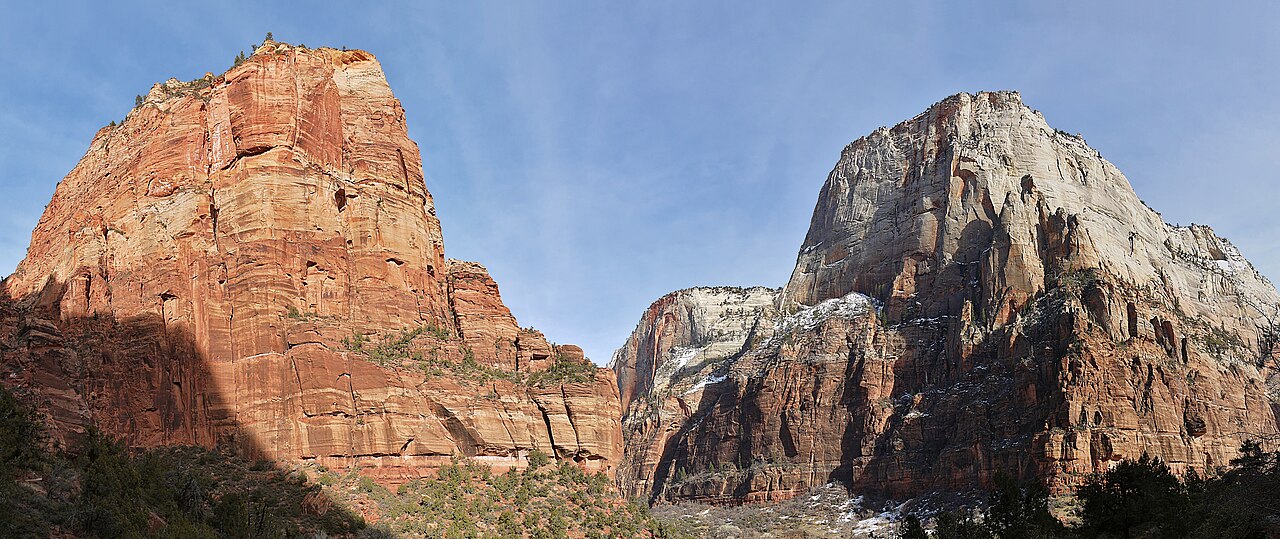
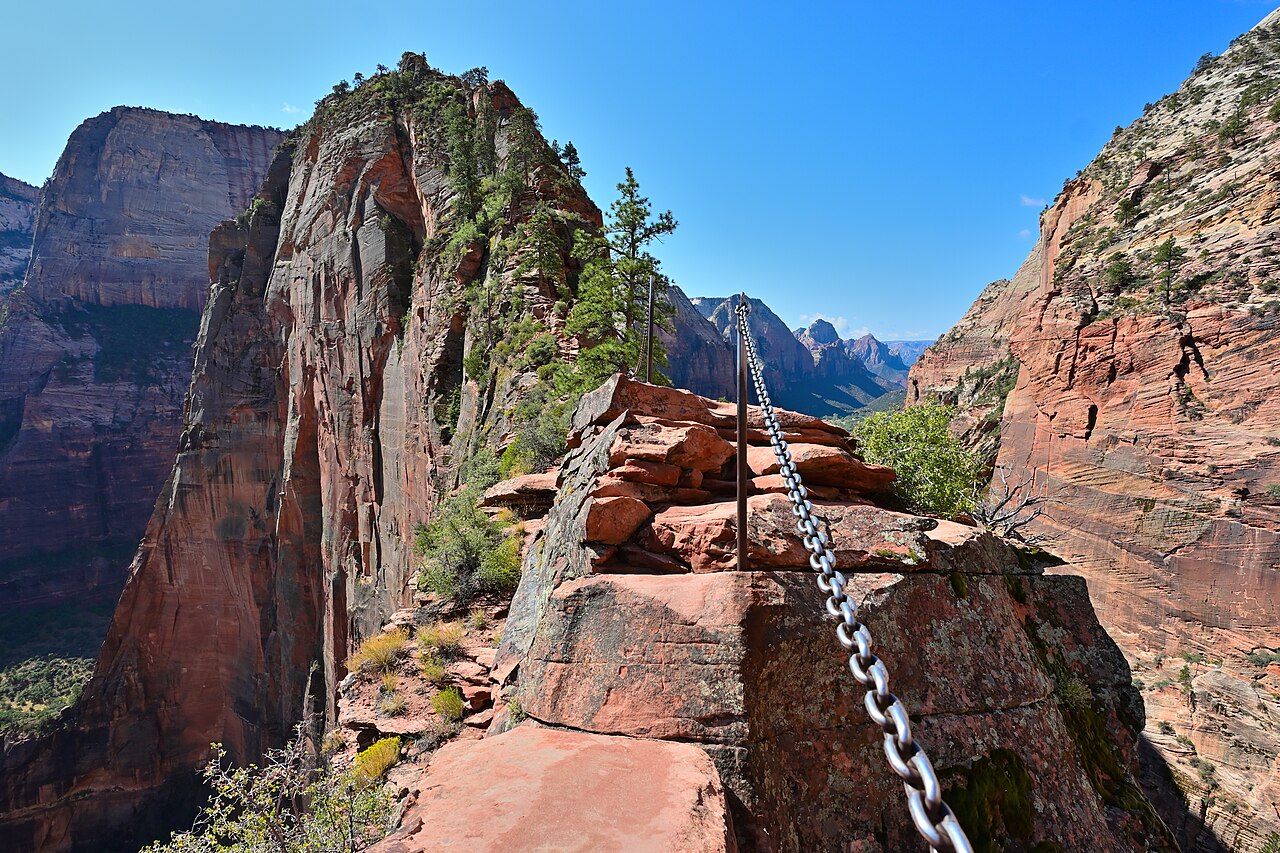
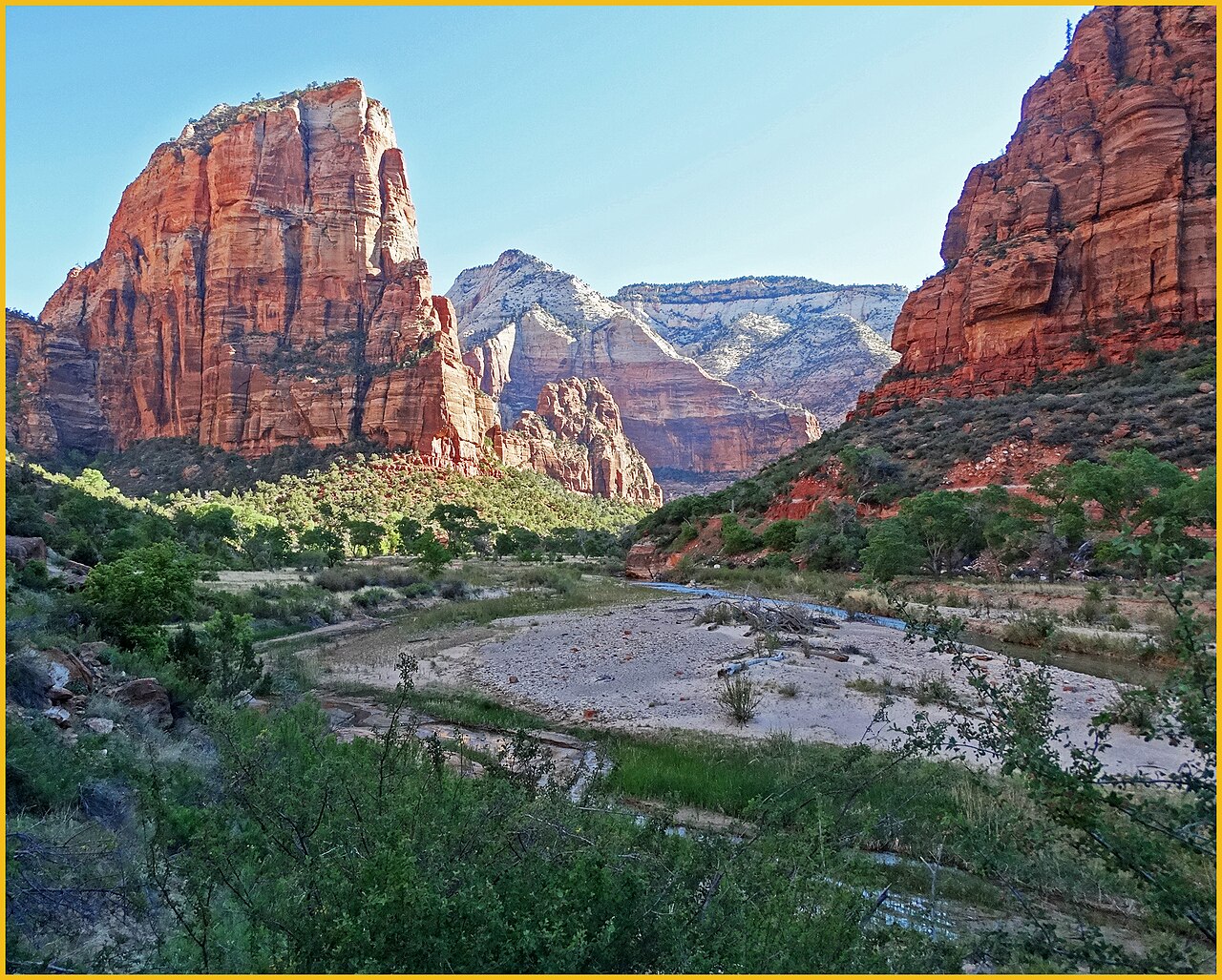
Angels Landing is a narrow sandstone fin rising above Zion Canyon in Utah, famous for its final half-mile 'knife-edge' section where hikers pull themselves up steep rock using fixed chains with sheer drop-offs on either side. Carved into the cliff in 1926 along with the 21 switchbacks of Walter's Wiggles, it has become one of the most iconic — and most photographed — hikes in the U.S. National Park System. As of 2026, the NPS permit lottery introduced in 2022 to curb overcrowding and fatal falls remains in effect, and a fatal fall in April 2026 (the first since the permit system began) is a reminder that the risk hasn't disappeared. Treat it as a serious, exposed climb rather than a casual walk — plan ahead for the permit, and only attempt the chain section if you are fit, comfortable with heights, and confident in current conditions.
Scout Lookout — the viewpoint just before the chains begin; reachable without a permit and a satisfying turnaround point for many hikers
Walter's Wiggles — 21 tight switchbacks carved into the rock in 1926, a landmark feat of early NPS trail engineering
Refrigerator Canyon — a shaded, cool passage that offers a break before the steepest climbing begins
The chain section — the final 0.5-mile knife-edge ridge with sheer drop-offs, the signature (and most dangerous) stretch of the hike
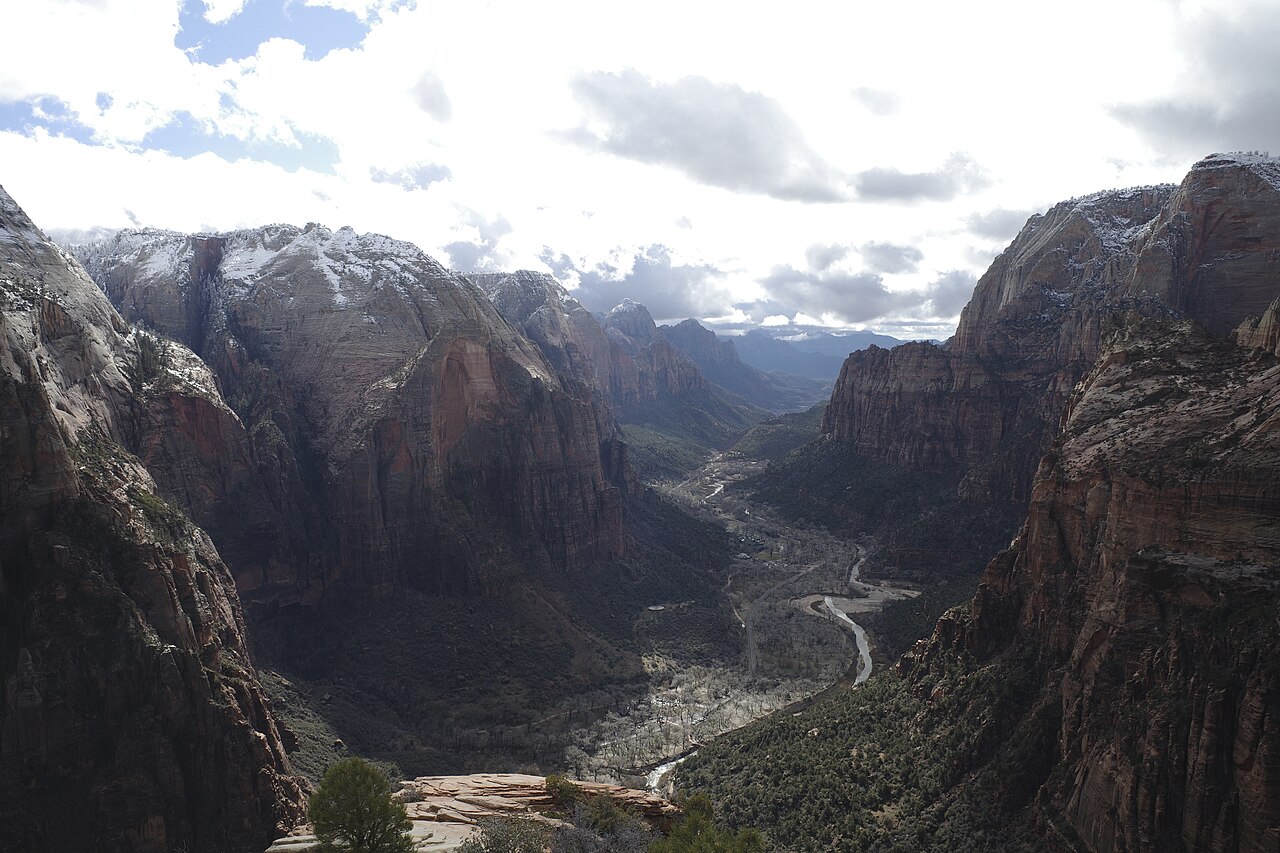
Summit panorama — a 360-degree view over the Virgin River, Zion Canyon, and Great White Throne
Good to know
RulesA permit is required for everyone continuing past Scout Lookout onto the chained section. Apply through Recreation.gov via the seasonal lottery (opens weeks ahead of each season) or the day-before lottery (applications 12:01 a.m.–3:00 p.m. MT); hiking the chains without one is prohibited and enforced at the trailhead.
SafetyWith 18+ confirmed fall fatalities as of 2025, Angels Landing is considered the deadliest trail in Zion and in Utah. The final stretch narrows to about three feet wide with drop-offs of hundreds of feet on both sides — those afraid of heights, traveling with young children, or not in good physical condition should plan to stop at Scout Lookout.
SeasonSummer heat (roughly May–September) is intense: canyon walls radiate heat, making conditions feel 10–15°F hotter than the reported temperature, raising the risk of heat exhaustion and heatstroke. Start before 8 a.m. and carry about one gallon (4 liters) of water per person.
SeasonLate July through August is monsoon season, bringing sudden afternoon thunderstorms and flash-flood risk. Wet sandstone and chains become extremely slippery; the NPS advises against attempting the hike if storms or rain are in the forecast.
SafetyIn winter (December–February) ice and snow can coat the chain section, sharply raising the danger level. The NPS recommends gloves since the metal chains get very cold, and traction devices may be needed on icy sections; the trail can be temporarily closed after storms.
RulesStarting January 1, 2026, Zion is among 11 national parks charging a $100-per-person nonresident surcharge for non-U.S. residents (Korean travelers included), in addition to the standard entrance fee, unless you hold a qualifying annual pass. Fees change — verify current rates on nps.gov before your trip.
Practical info
Most visitors fly into Las Vegas (about a 2.5-hour drive) or the smaller St. George Regional Airport (about 45 minutes) and rent a car; from March through November the Zion Canyon Scenic Drive is closed to private vehicles, so you'll reach The Grotto trailhead via the park's free shuttle. Entrance fees, permit costs, and the nonresident surcharge are all subject to change, so confirm current rates and lottery dates on nps.gov and recreation.gov before you go.
On-site reviews📍 Verified on-site
No reviews yet. If you are here, be the first to leave one.