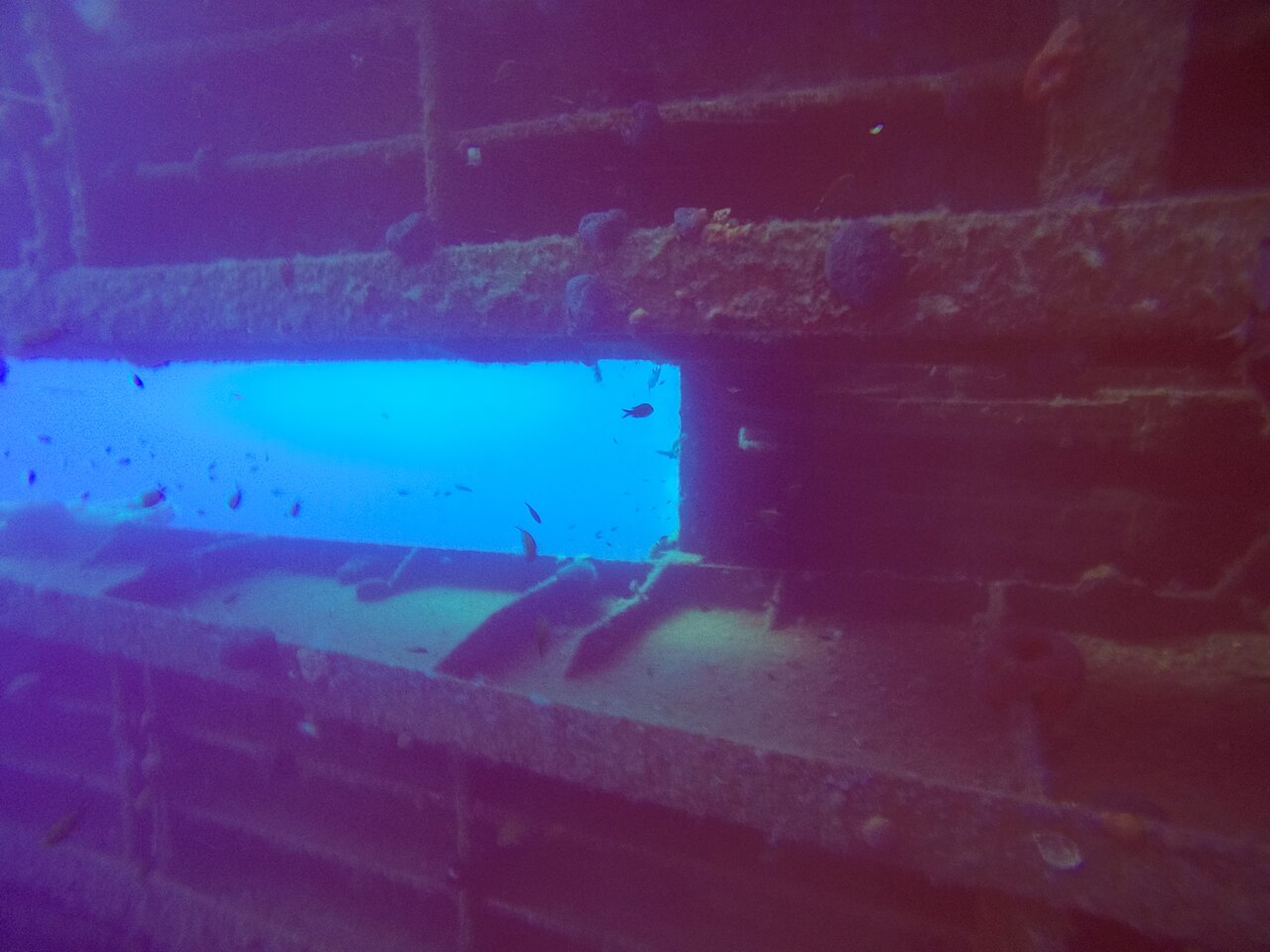
The Zenobia is a 172m roll-on/roll-off ferry that capsized onto her port side and sank on her maiden voyage in 1980, after a ballast control malfunction, roughly 1.5km off Larnaca. Her exposed starboard side sits at 16-18m while the seabed side reaches 42-43m, making her one of the very few wrecks in the world a freediver can take in whole on a single breath. Summer water runs 27-29°C with visibility of 30-40m on good days, and June through October offers the most reliable conditions. This is not a casual sightseeing wreck, though: it is a busy scuba site with a repeated history of fatalities inside the hull, and freediving it properly means a full safety team, not just a buddy.
The starboard flank at 16-18m — the most realistic freediving line, letting you trace the hull for a full breath-hold
The sheer 172m x 28m silhouette, which resolves into a single view from around 20m when visibility opens up
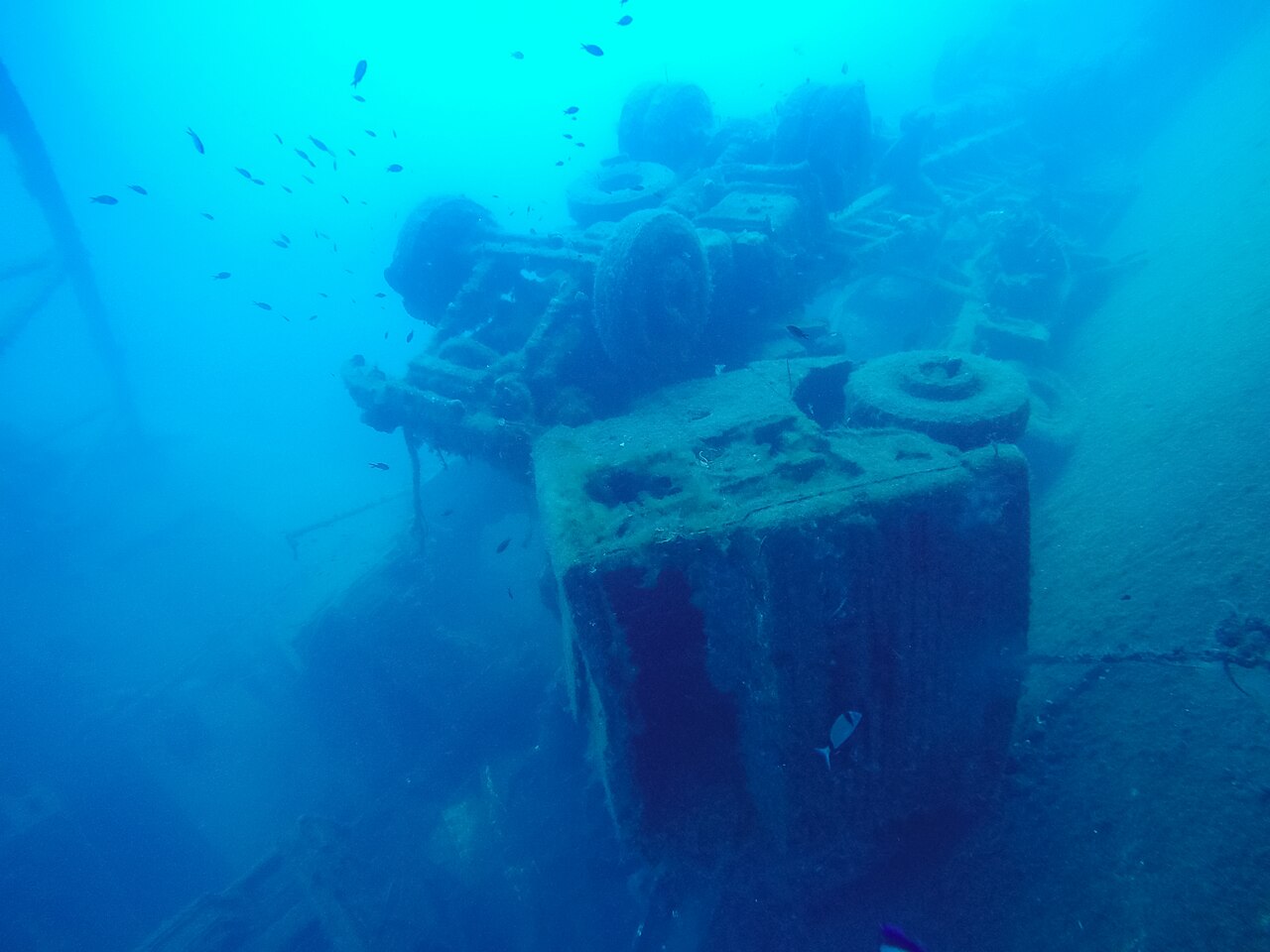
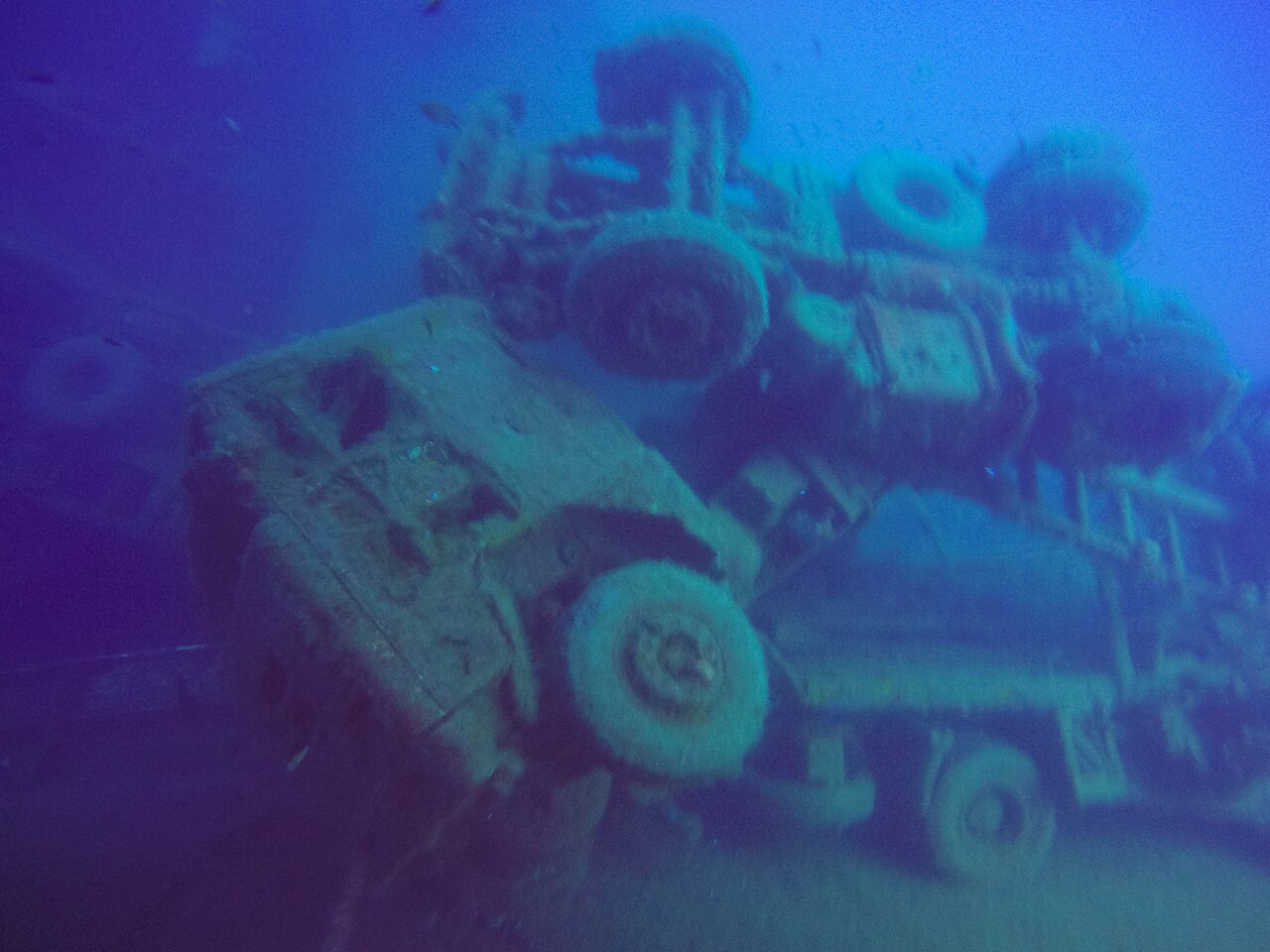
Around 100 cargo trucks still lashed inside the holds — everything worth seeing can be seen from outside the openings
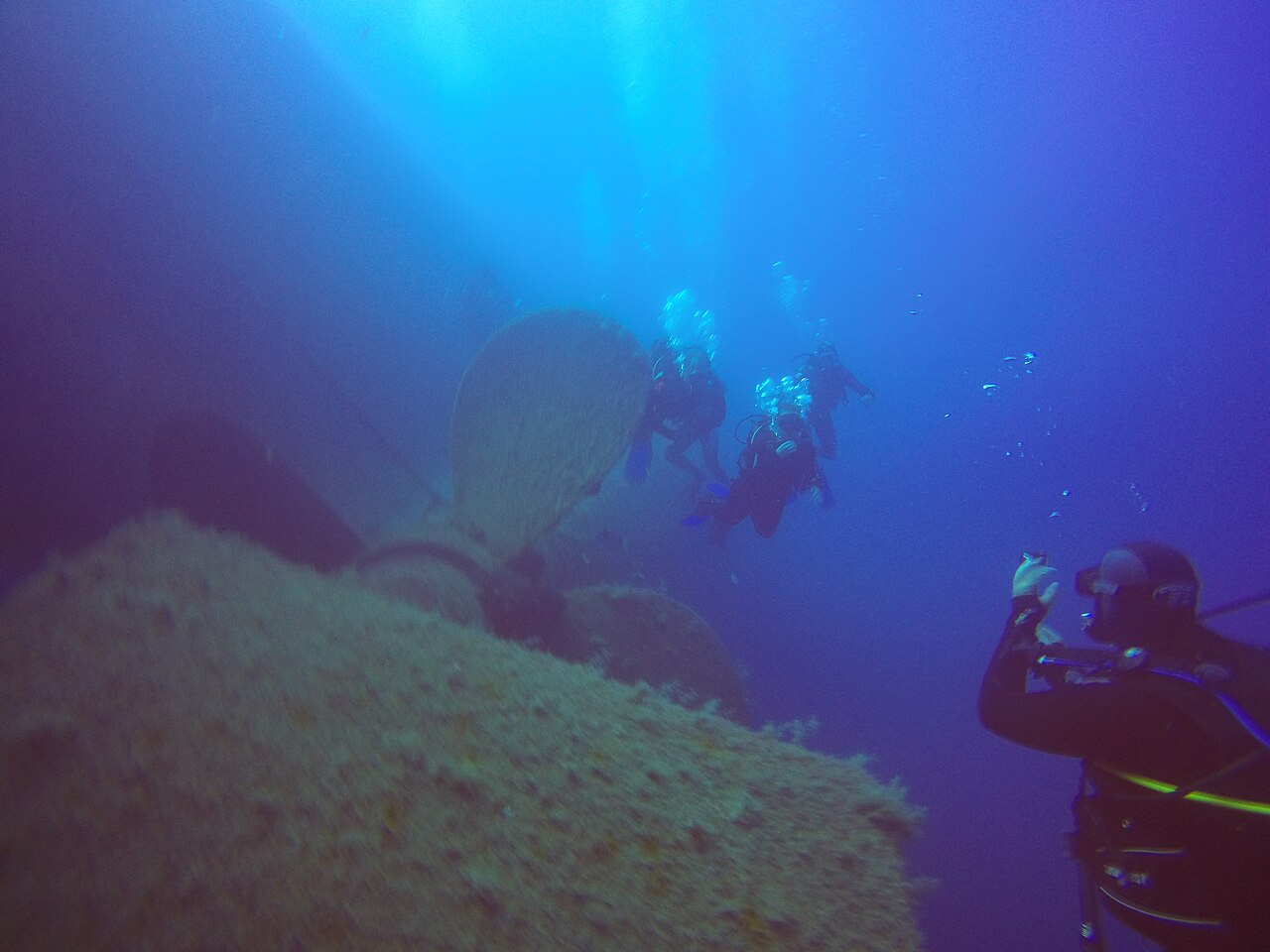
The huge propellers, stern and bridge sections between 35-42m — a deep-session target only with real experience and support
Grouper, barracuda, moray eels and turtles that have colonised the wreck over four decades of artificial-reef life
The unlimited-depth training lines off Psarolimano in Larnaca, which pair naturally with a wreck trip in one itinerary
Good to know
SafetyFreediving penetration into the hull is off limits, full stop. Several divers died lost inside during the 1990s, and in March 2026 a 67-year-old instructor died here on a training dive. In an overhead environment a blackout is a drowning: the moment you enter a space you cannot ascend straight out of on a held breath, rescue stops being realistic.
SafetyShallow water blackout and LMC cluster in the last 10m of ascent and in the seconds after surfacing. Solo diving is never acceptable, and a buddy taking turns is not enough on its own — you want a safety diver meeting you at 15-20m and a surface protocol of at least 30 seconds of active observation. Being surrounded by scuba divers is not supervision.
SafetyAlways dive a descent line with a buoy and lanyard. Surface and deep currents can run in different directions here, and below the thermocline the cold blunts your senses enough to lose the line. Plan anything past 30m only with a boat team running counter-ballast and oxygen, and hold to the maximum depth you agreed beforehand rather than the one that feels good on the day.
SafetyThe Zenobia is a heavily trafficked scuba site, so your vertical line crosses theirs. Never descend into the bubbles of an ascending team, and treat boat propellers as a live hazard whenever you are on the surface. Add to that torn steel edges and leftover fishing line and netting, which cause real entanglements — carry a line cutter and be practised at releasing your lanyard instantly.
RulesFreediving wreck trips are effectively centre-booked, and most operators will want to see certification, recent depth experience and insurance that actually covers diving (DAN or equivalent). Cyprus is currently tightening licensing for dive businesses — CYS EN ISO 24803 certification, professional insurance, a national register — so paperwork and operating conditions may shift; confirm current requirements directly with your centre before booking.
SeasonWater swings from 17-18°C in February to 28-29°C in August. June to October is the sweet spot for both temperature and visibility, and winter diving is possible with an appropriate suit. October is also when Larnaca hosts international freediving competitions, which books out boats, safety crews and accommodation at once — plan a wreck trip well ahead if your dates overlap.
MannersTake nothing off the wreck or its cargo. People have died here, and souvenir hunting or clowning for the camera reads badly to everyone on the boat. Avoid kicking up silt that ruins visibility for scuba teams below you, and leave the resident morays and turtles alone rather than touching or herding them.
Practical info
Larnaca International Airport is about 15 minutes by car from the city and marina, and the site is a 10-15 minute boat ride from the harbour. June to October brings the best conditions, and freediving wreck trips normally run through a dive centre after they verify certification, recent experience and insurance. Prices, departure schedules and entry requirements change with the season and with Cyprus's evolving dive regulations, so check the latest details before you book.
On-site reviews📍 Verified on-site
No reviews yet. If you are here, be the first to leave one.