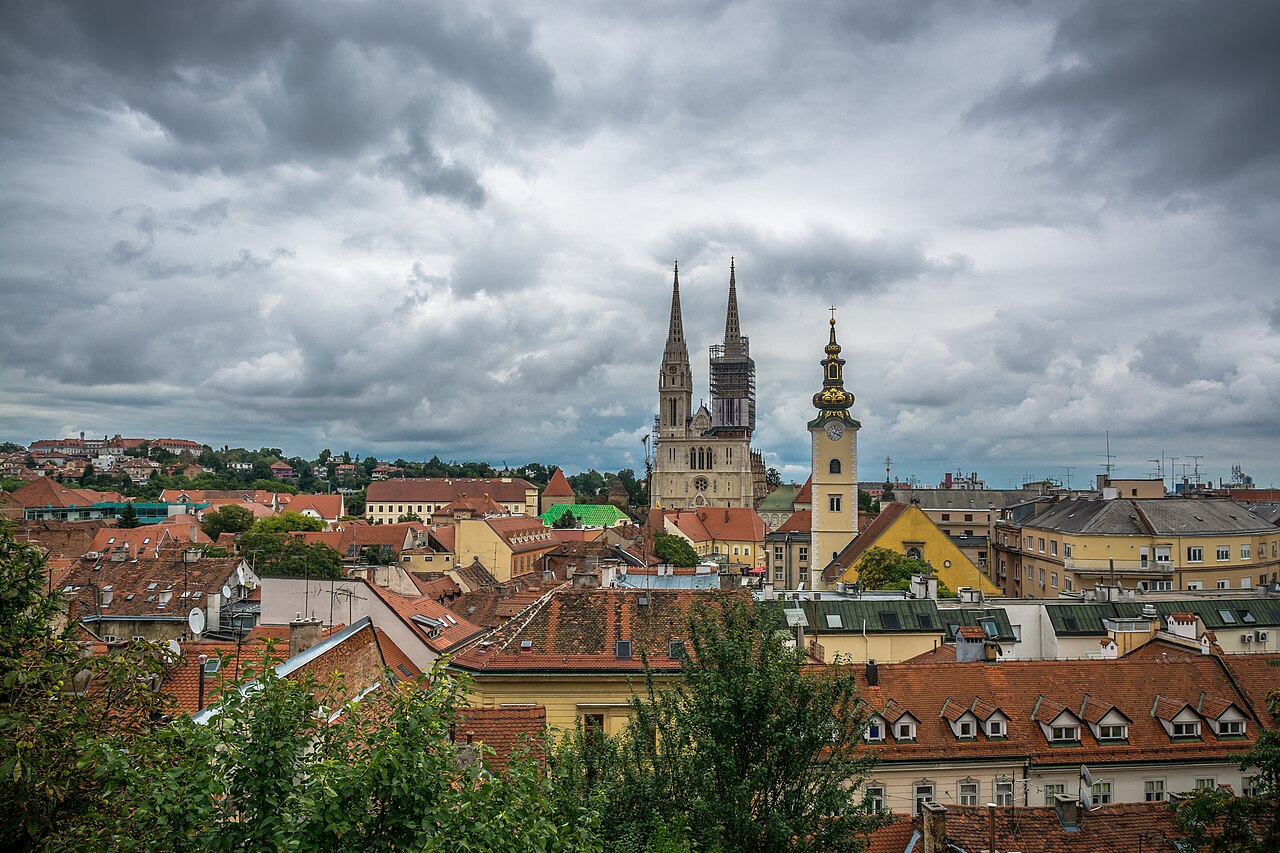
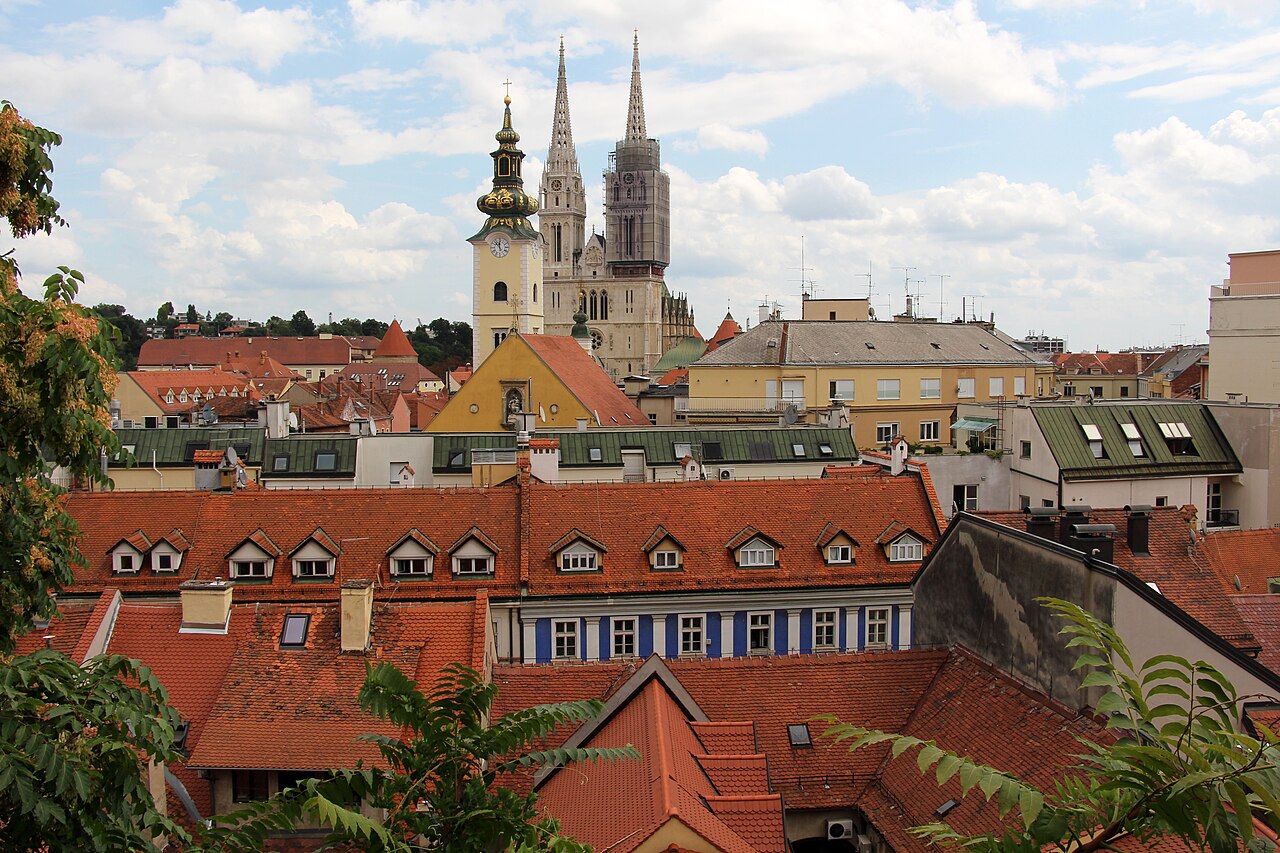
Zagreb's Upper Town (Gornji Grad, historically Gradec) is the oldest medieval hilltop quarter of the Croatian capital, a largely pedestrian old town where cobbled lanes, ancient gates, towers and churches survive intact. Iconic sights cluster within a compact area: St. Mark's Church with its famously colorful tiled roof, the Lotrščak Tower whose cannon fires daily at noon, and the Stone Gate with its revered Madonna shrine, together forming one of the enduring symbols of the city. In May 2026 the beloved funicular reopened after a year-long overhaul, now running with air-conditioned, step-free cabins that once again link the Lower and Upper Towns comfortably. It is an unhurried district best explored on foot over half a day.
St. Mark's Church (Crkva sv. Marka): a 13th-century church whose real showpiece is the vivid tiled roof added in 1880, bearing the coats of arms of Croatia, Dalmatia and Slavonia alongside the emblem of Zagreb. The same square faces the Croatian Parliament (Sabor) and the government seat (Banski dvori).
Stone Gate (Kamenita vrata): the only surviving medieval town gate, its passage housing a small chapel around a Madonna painting said to have survived the great fire of 1731, where locals still light candles and pray.
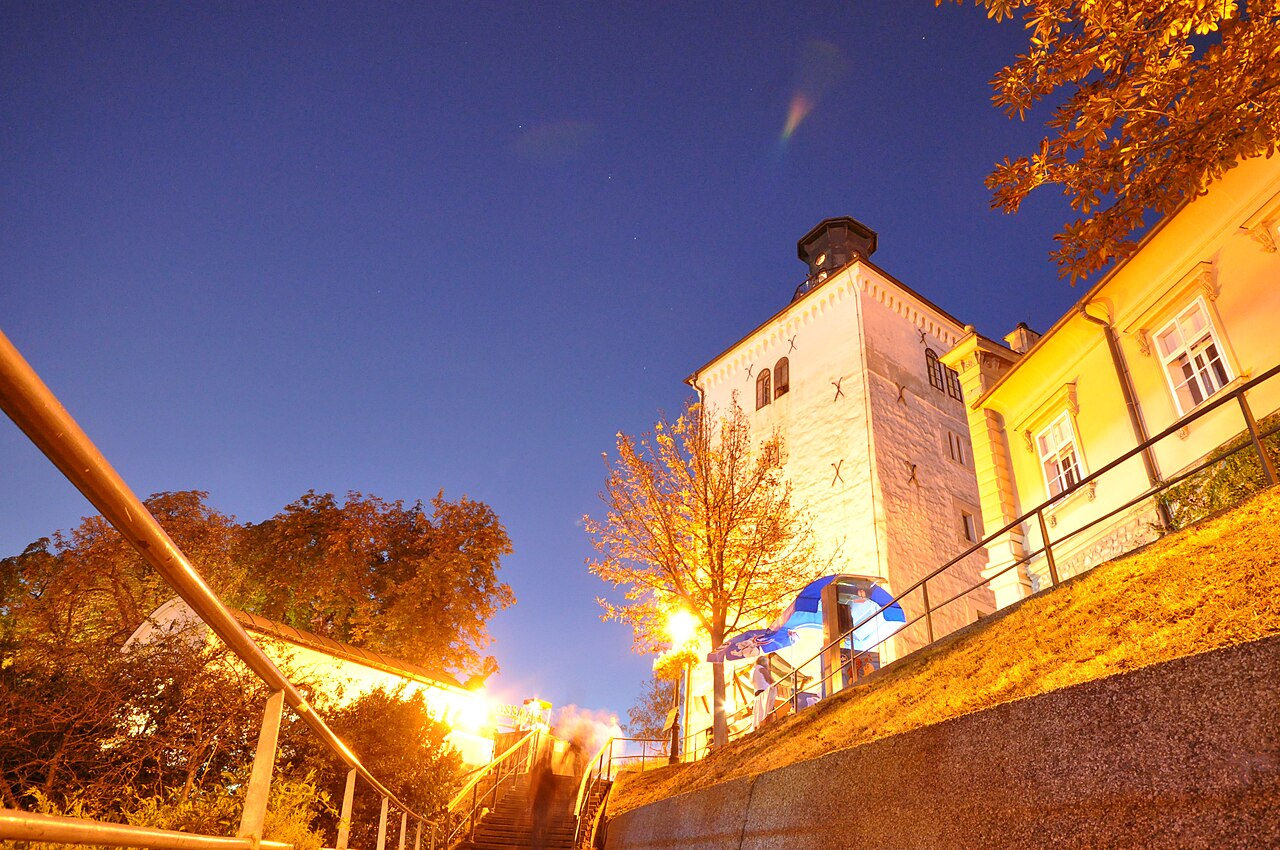
Lotrščak Tower (Kula Lotrščak) and the Grič cannon: a 13th-century defensive tower turned viewpoint, keeping the centuries-old tradition of firing a cannon every day at noon to set the city's clocks.
The Funicular (Uspinjača): at just 66 m, one of the shortest public funiculars in the world, running again with air-conditioned cars since its 2026 reopening.
Strossmayer Promenade (Strossmartre) and the Museum of Broken Relationships: a scenic tree-lined walk along the old walls, plus the internationally famous museum displaying personal objects and stories from failed relationships.
Good to know
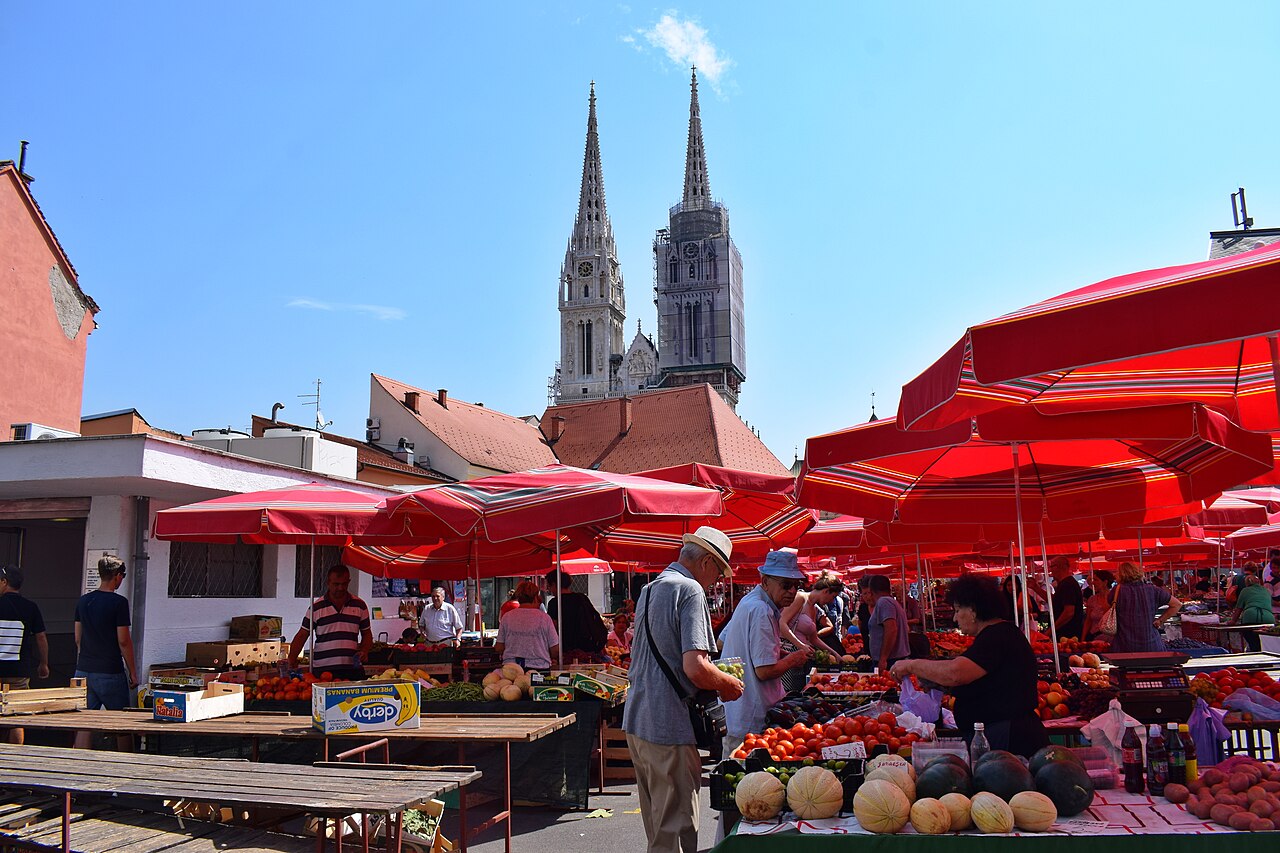
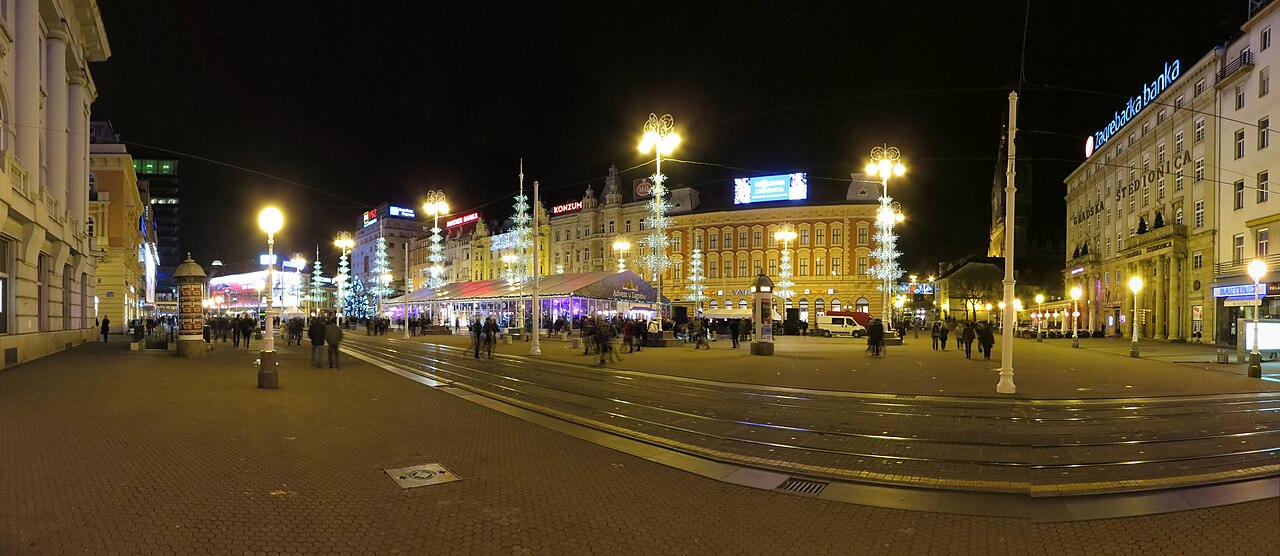
SafetyZagreb is among the safer European capitals, but stay alert for pickpockets in crowded spots such as Ban Jelačić Square, the Dolac market and on trams. The Upper Town's cobblestones and slopes make comfortable, sturdy shoes essential.
SafetyThe Grič cannon at Lotrščak Tower is fired every day at exactly noon with a very loud bang. If you are nearby, be ready for it so you are not startled.
SeasonJuly can be hot at midday, so carry water and a hat. Conversely, during the December 'Zagreb Advent' season the Upper Town gets very crowded and cold, so dress warmly and allow extra time.
RulesSt. Mark's Church interior is not open for general tourism; it is a working parish church you can enter only during Mass. Do not cross the barriers or guarded zones around the Parliament and government buildings on the square.
MannersThe chapel inside the Stone Gate is an active place of prayer for locals, so pass through quietly and avoid using flash photography.
CautionUse ride apps (Bolt, Uber) or a metered taxi rather than street-hailed cabs. Croatia uses the euro; when paying by card, decline any 'charge in your home currency' (DCC) offer and always pay in local euros (EUR) to avoid poor conversion rates.
Practical info
Reach the Upper Town on foot from Ban Jelačić Square via the stairways or Tkalčićeva Street, or ride the funicular (Uspinjača) up from Tomićeva Street; wandering the streets themselves is free. Individual attractions such as the Lotrščak Tower and the Museum of Broken Relationships charge separate admission, and prices and opening hours change often, so check the latest details on official websites before your visit.
On-site reviews📍 Verified on-site
No reviews yet. If you are here, be the first to leave one.