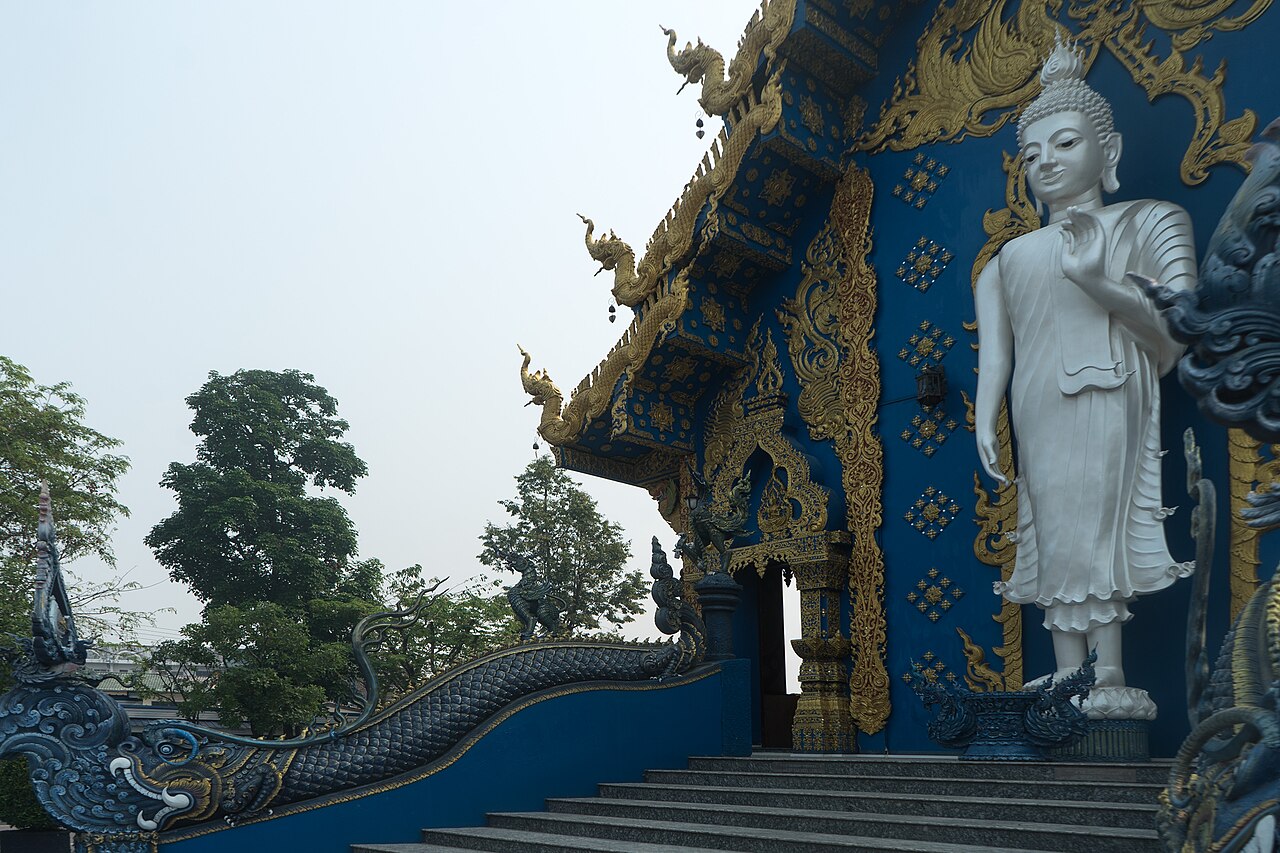
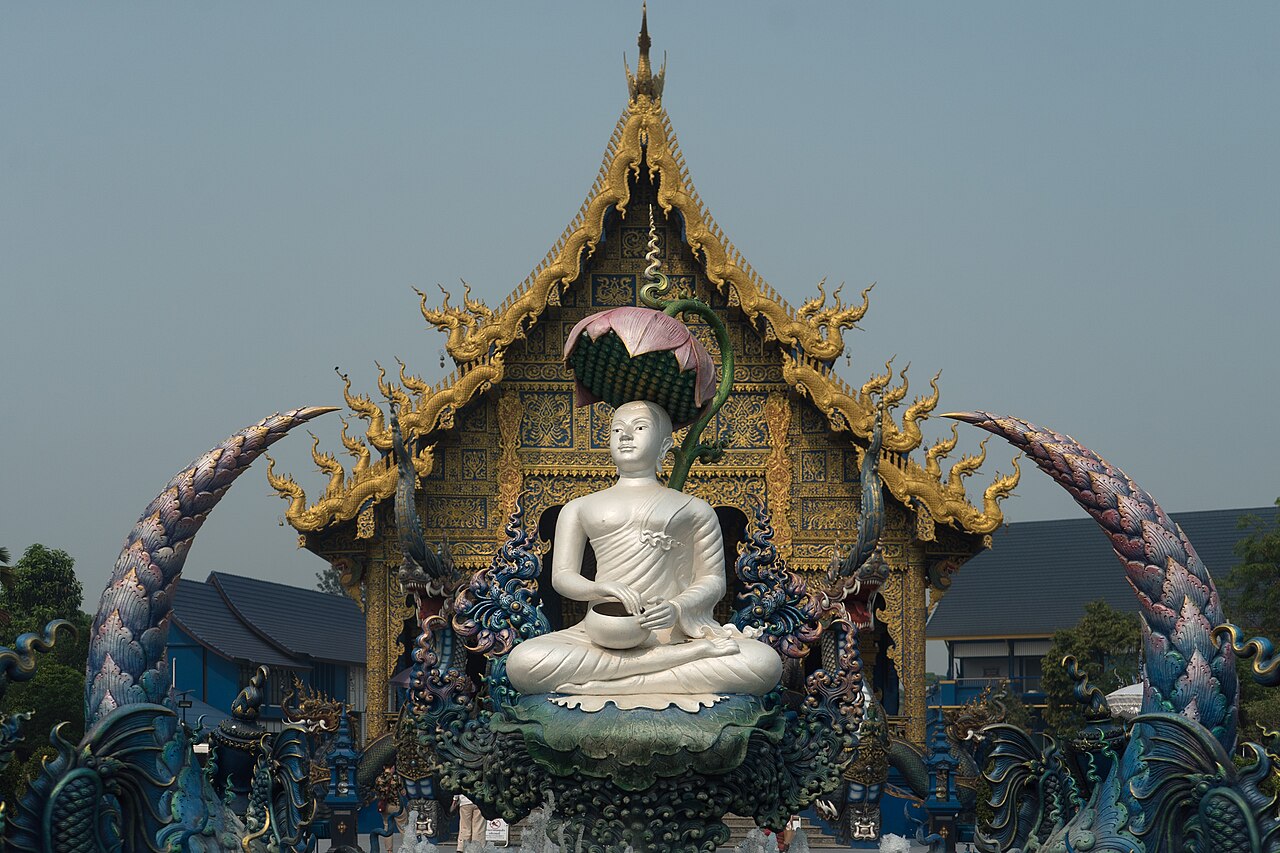
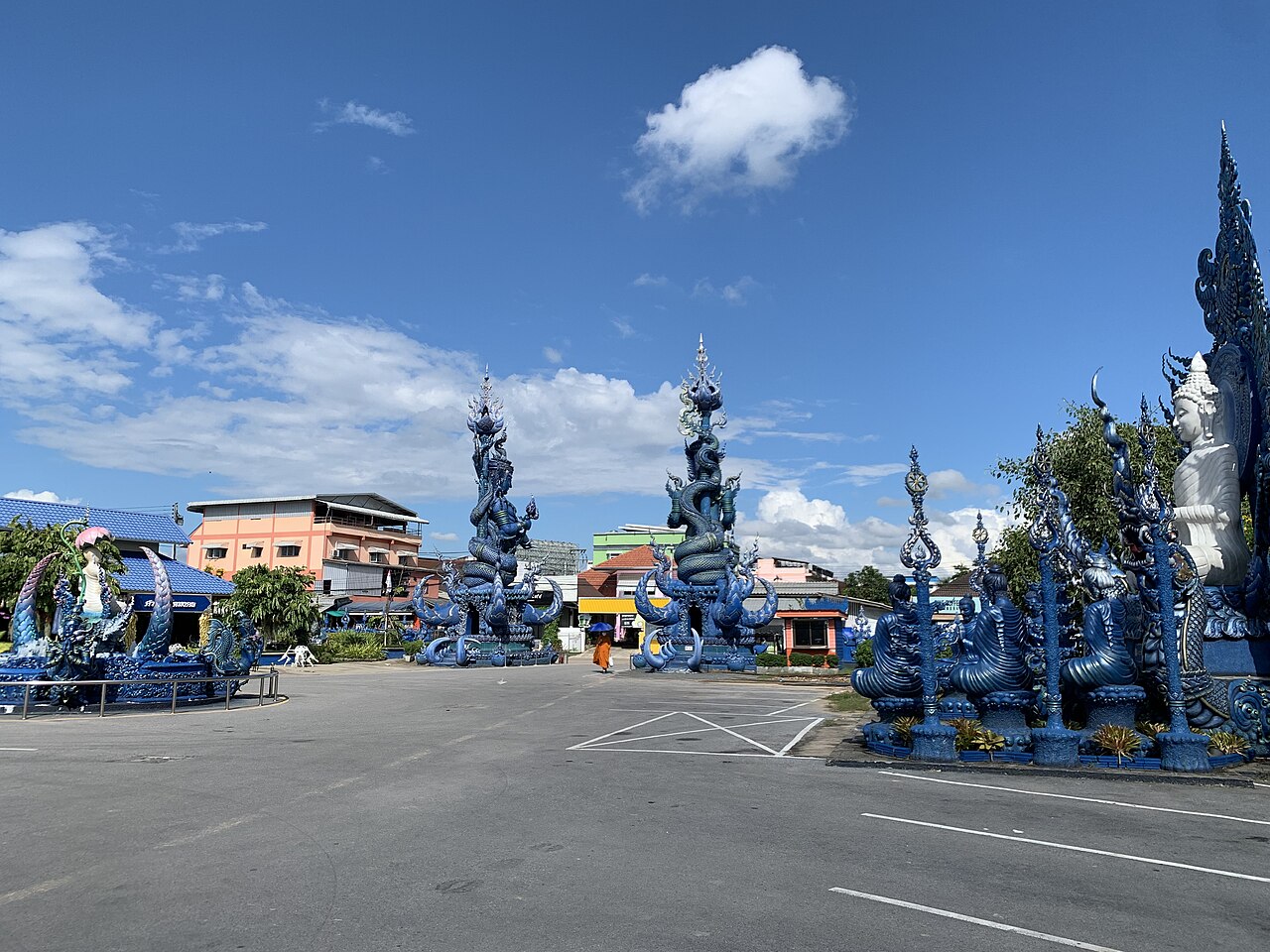
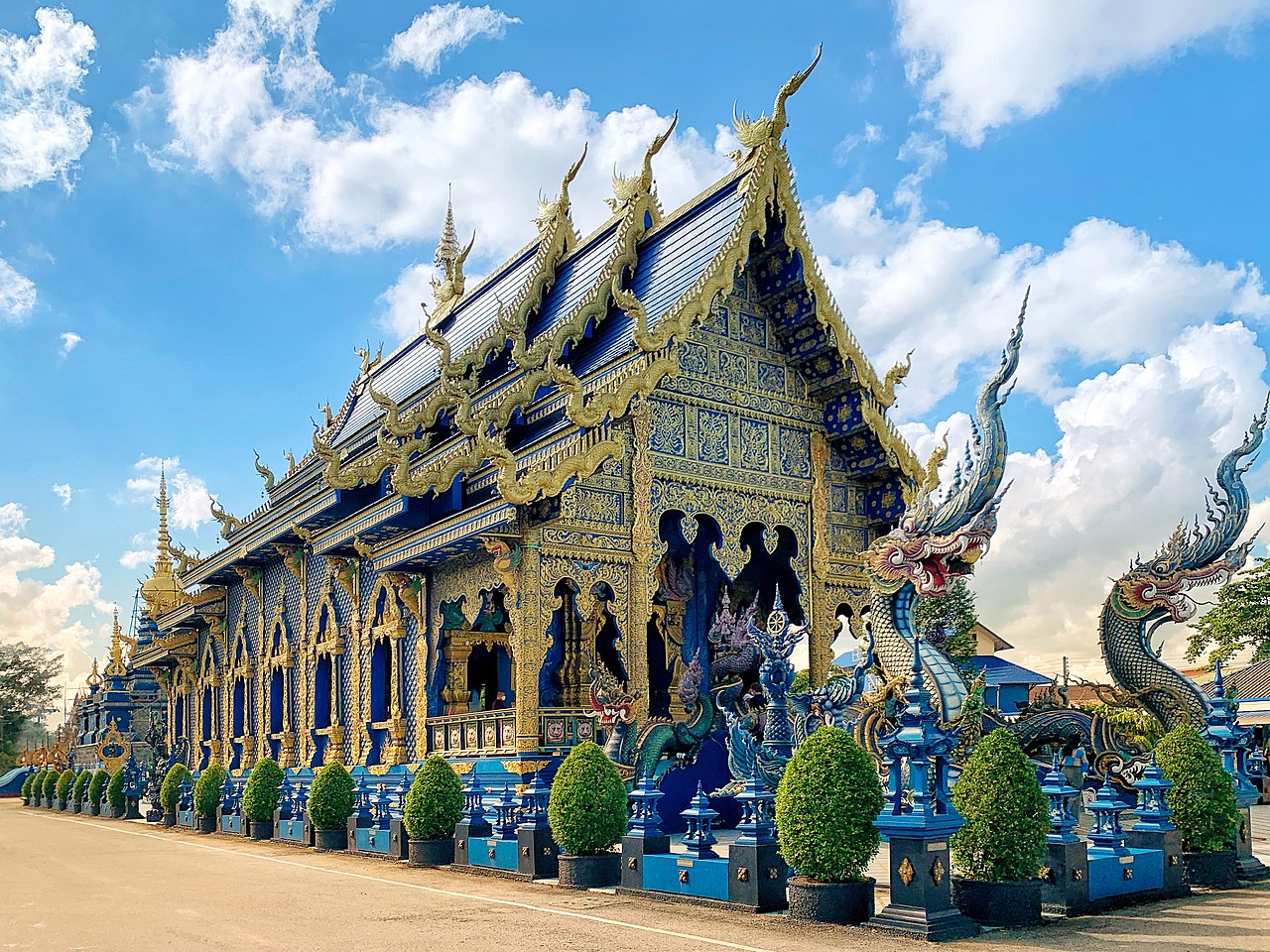
Wat Rong Suea Ten, better known as the Blue Temple, is a modern Buddhist temple just north of Chiang Rai city, famous for coating every surface - walls, pillars, roof and statues - in deep sapphire blue accented with gold. It was designed by a local artist who studied under Chalermchai Kositpipat (creator of the White Temple) and completed in 2016; its name means 'Temple of the Dancing Tiger,' after a legend that tigers once leapt across the abandoned site. Compact enough to explore in 45 minutes to an hour, it is one of Chiang Rai's most photogenic stops.
A striking white porcelain seated Buddha in the bhumisparsha (earth-touching) mudra, representing enlightenment and contrasting dramatically with the blue interior.
Elaborate contemporary murals covering the blue walls and ceiling, depicting the life of the Buddha in a bold, vivid style.
Two large naga (serpent) guardian sculptures flanking the main stairway, with sharp teeth, coiling tails and shimmering blue scales.
The sapphire-and-gold exterior - blue looks richer on overcast days, while the gold accents glow at sunrise and sunset for great photos.
One of Chiang Rai's classic trio of sights, easily combined in a day with the White Temple (Wat Rong Khun) and the Black House.
Good to know
MannersRemove your shoes before entering the main hall, and never point your feet toward or turn your back on the Buddha image while seated - both are considered disrespectful.
RulesCover shoulders and knees. Avoid tank tops, short shorts and revealing clothing; carry a scarf or sarong just in case (jeans are fine).
CautionBeware fake-monk donation scams: genuine monks never solicit money from tourists. If someone in robes offers a bracelet, beads or blessing and then demands 200-1,000 baht, politely decline and give only via the temple's official donation boxes.
CautionWatch for tuk-tuk/taxi overcharging: drivers from the city may quote 100-150 baht or more, but a fair one-way fare is around 50 baht (no more than 100). Use the Grab app for fixed, transparent pricing.
SafetyEntry is free, so the temple gets crowded with tour buses at midday. Visiting early (8-10am) or late afternoon means fewer crowds and less exposure to pickpocketing in the crush.
SeasonDuring the rainy season (roughly June-October) expect sudden showers and slippery floors; in the March-April hot season, note the intense heat and northern Thailand's seasonal haze when planning your visit.
Practical info
Free entry (donations encouraged); typically open daily about 07:00-20:00 - confirm fees, hours and rules before visiting. Located roughly 6 km north of Chiang Rai city (about a 10-minute drive). Reach it by Grab, tuk-tuk or songthaew. Allow about 45 minutes to 1 hour.
On-site reviews📍 Verified on-site
No reviews yet. If you are here, be the first to leave one.