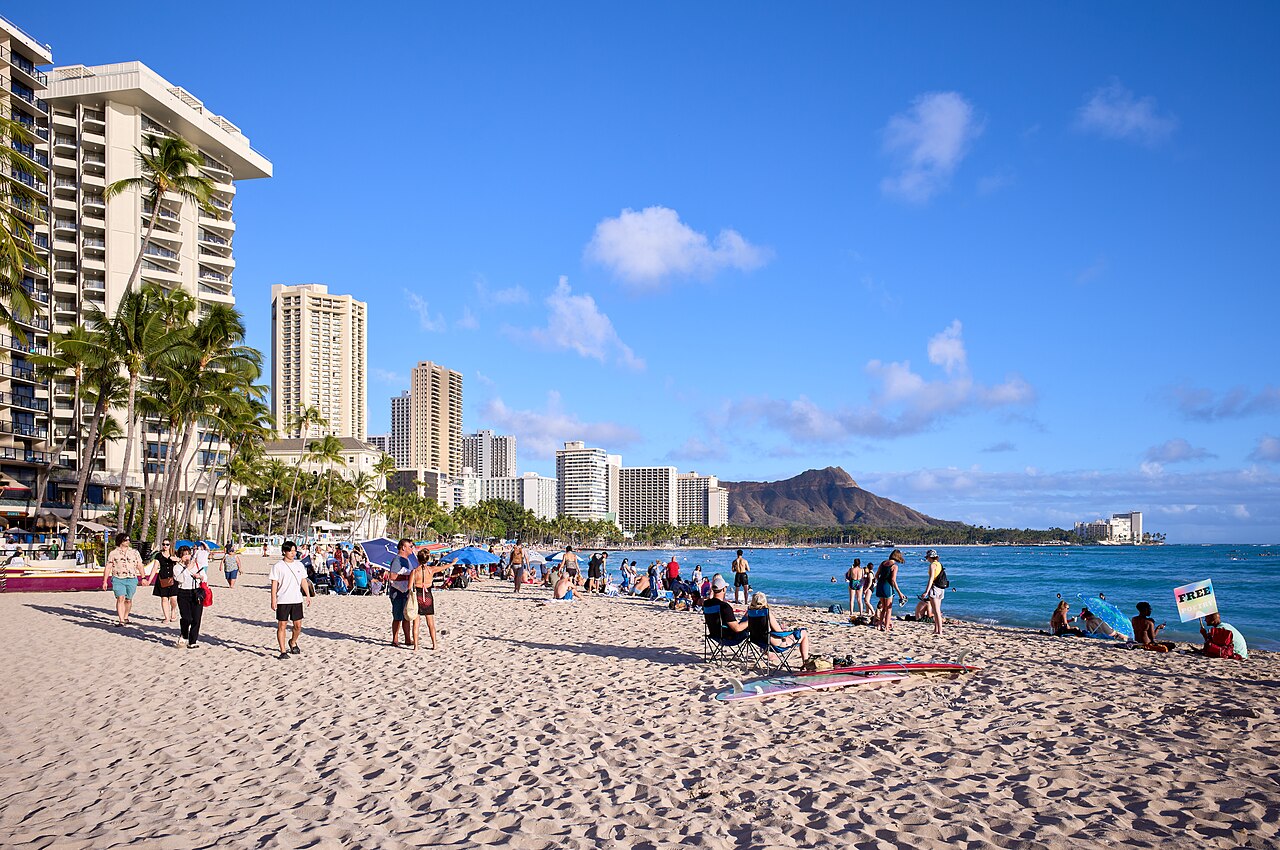
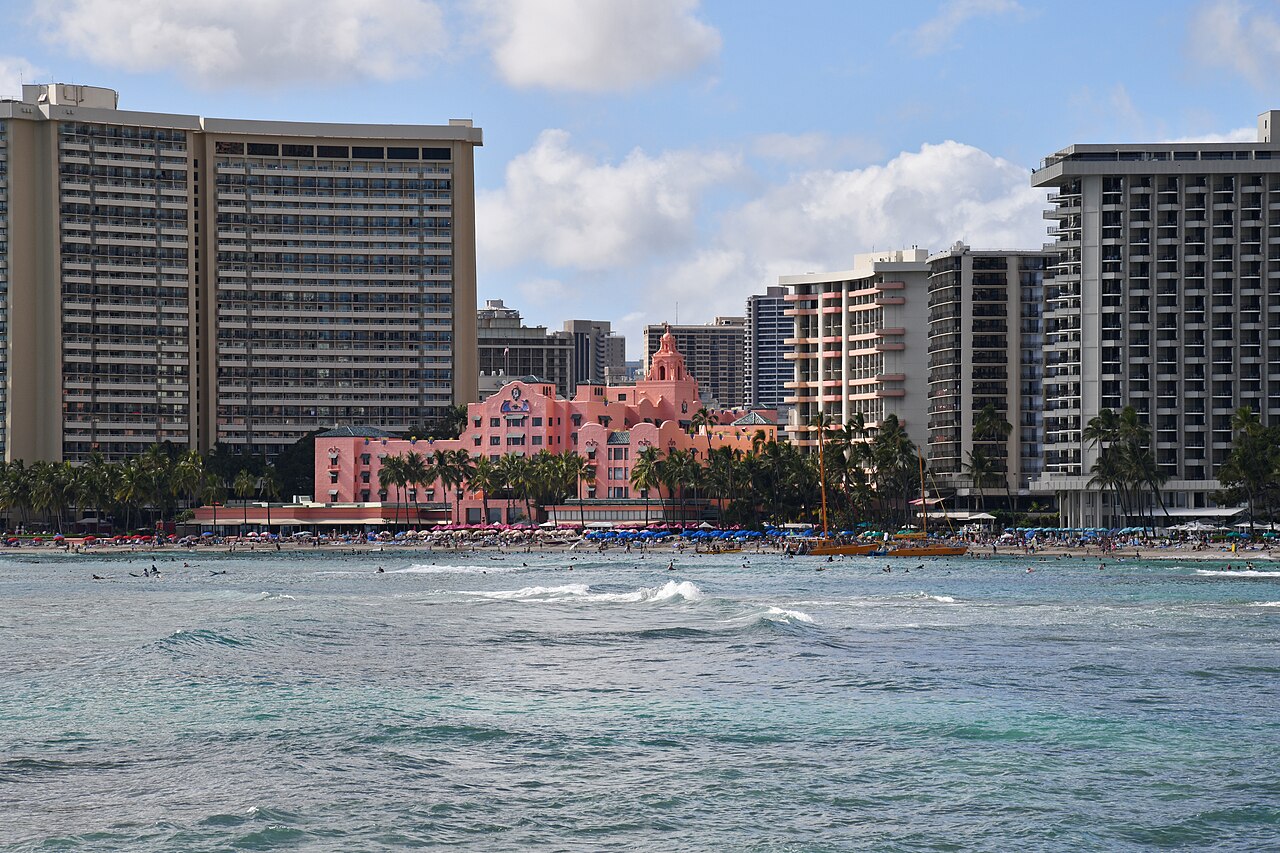
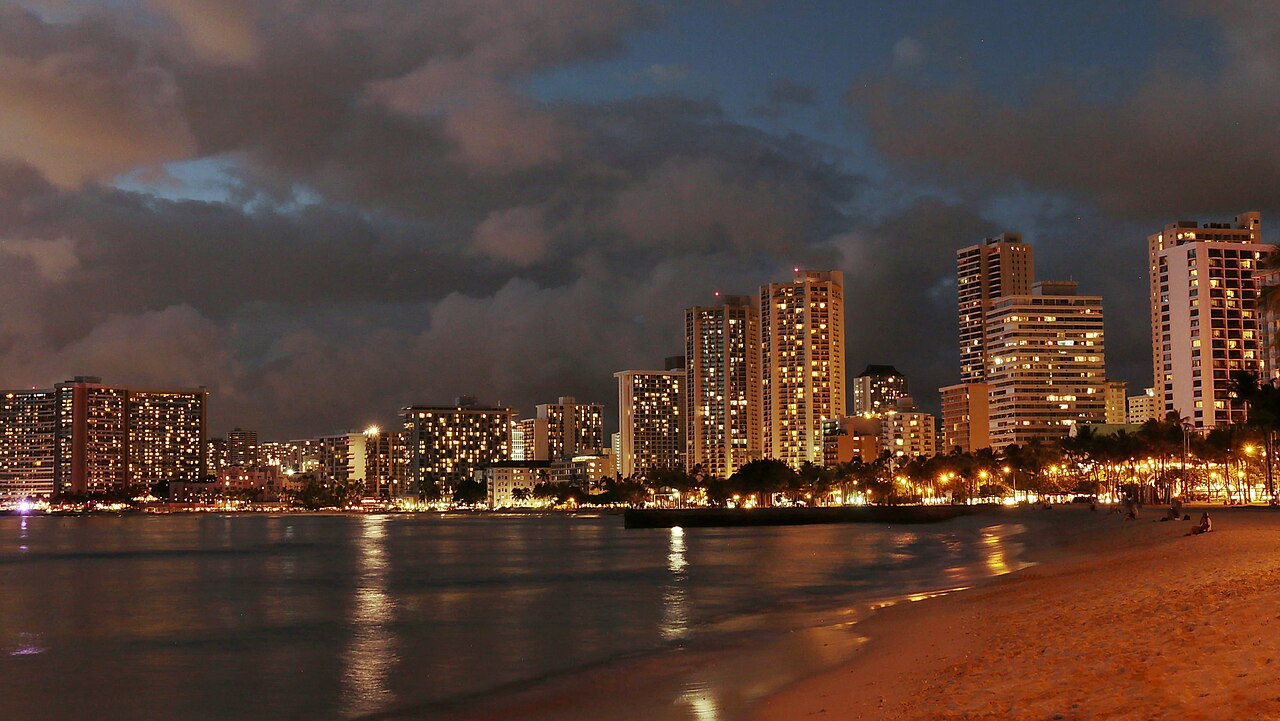
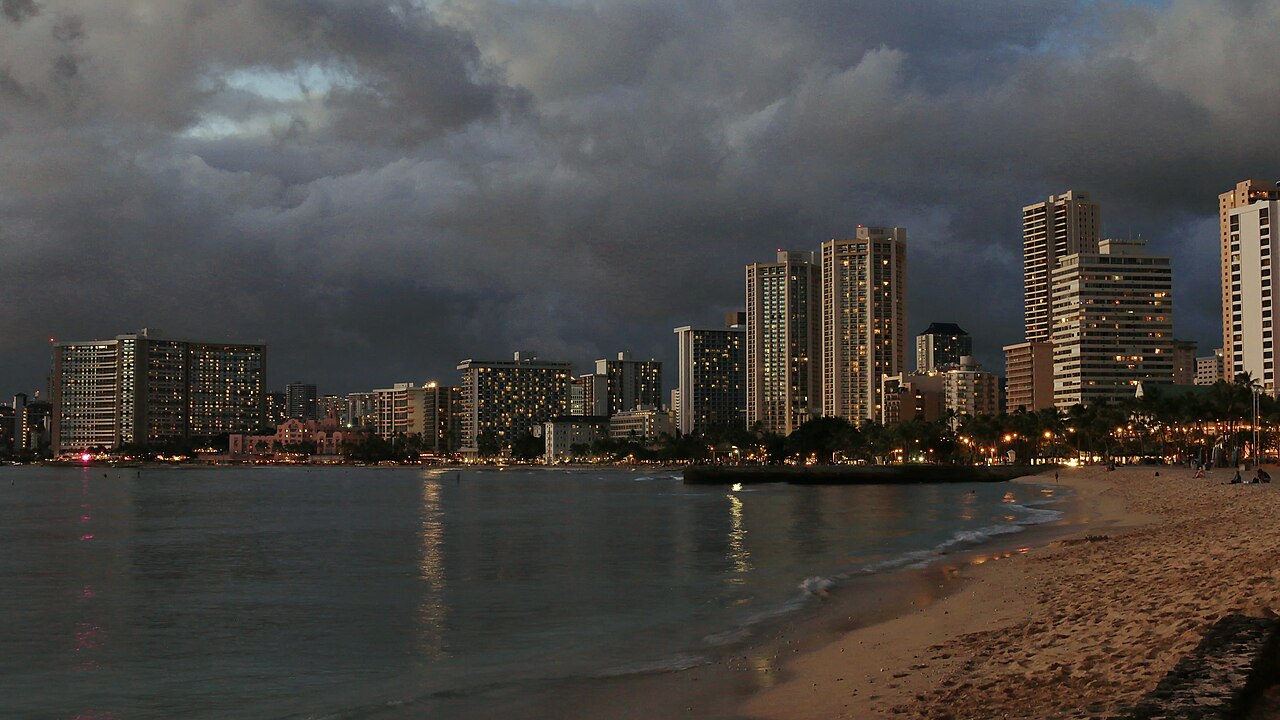
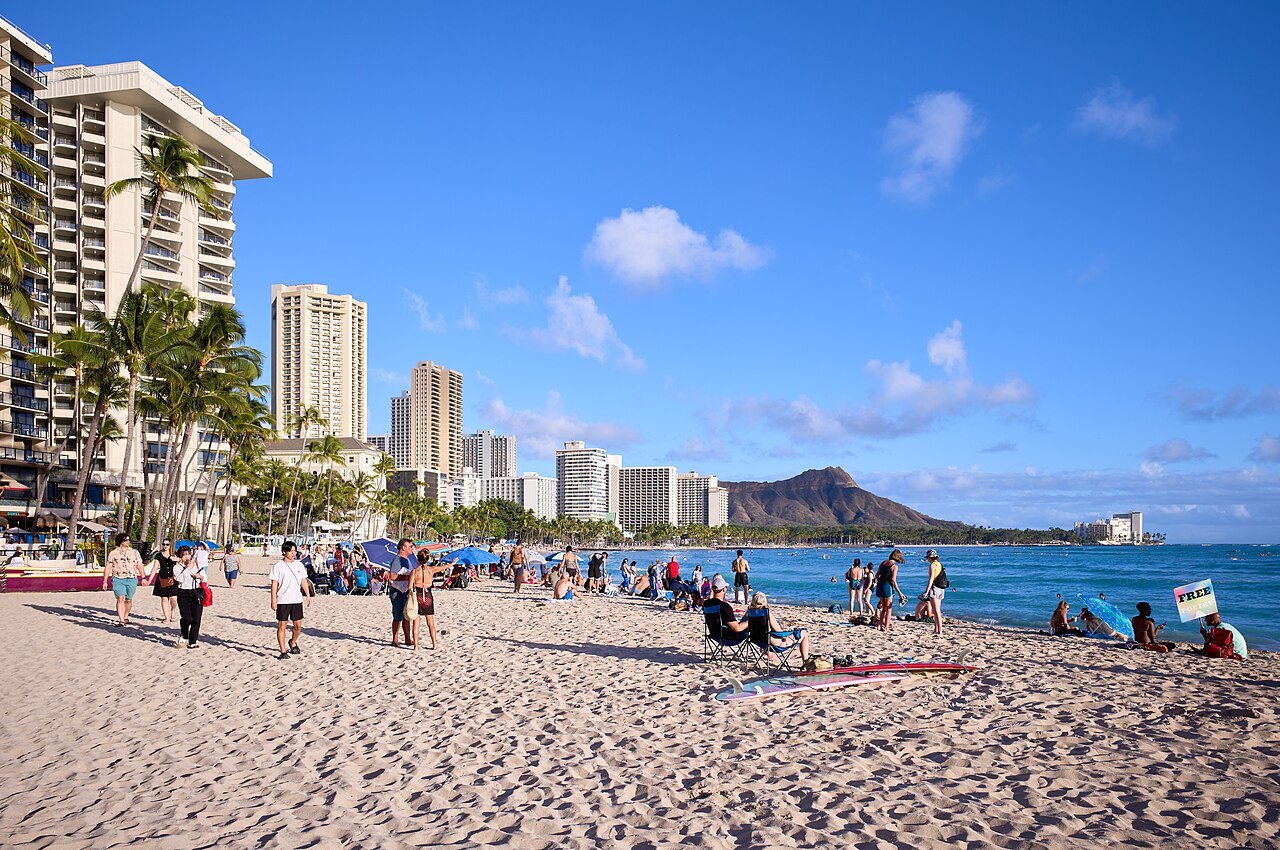
Waikiki Beach is a roughly two-mile (3 km) stretch of white sand on Honolulu's south shore, Oʻahu, world-famous for its gentle, long-breaking waves and postcard views of Diamond Head. It is where waterman and Olympic swimmer Duke Kahanamoku helped popularize modern surfing, and it remains one of the best places for first-time surf and outrigger canoe lessons, spanning several named sections such as Fort DeRussy, Duke Kahanamoku Beach, Kūhiō Beach, and Queen's Surf. As of 2026 the shoreline continues to face chronic erosion, with the State of Hawaiʻi and the Waikiki Beach Special Improvement District Association (WBSIDA) carrying out phased sand-replenishment and shoreline-stabilization work, so the width of sand can vary noticeably by section. The beach itself is open 24 hours, but conditions, lifeguard hours, and any construction areas should be checked before you go.
Duke Kahanamoku Statue and the Kalākaua Avenue beach walk
Kūhiō Beach's gentle break, popular for beginner surf and outrigger canoe lessons
Diamond Head as a backdrop for sunrise and sunset photos
Friday-night fireworks over Hilton Hawaiian Village
Green sea turtles (honu) and occasional Hawaiian monk seals resting on the sand
Good to know
SafetyShorebreak and rip currents can be dangerous even when waves look small; swim near a staffed lifeguard tower and check the color-coded warning flags before entering the water.
SafetyBox jellyfish reliably arrive roughly 8-10 days after each full moon on south-facing Oʻahu beaches, including Waikiki; heed posted advisories and treat stings with vinegar, not fresh water.
SeasonBecause Waikiki faces south, its biggest surf and highest hazard days actually come in summer (roughly May-September) with south swells — the opposite pattern from Oʻahu's North Shore — while winter is generally calmer here.
RulesHawaiʻi's expanded 2026 sunscreen law prohibits sale and use of sunscreens containing oxybenzone, octinoxate, octocrylene, homosalate, octisalate, or avobenzone on state-controlled land — bring mineral (zinc oxide/titanium dioxide) sunscreen only.
RulesFederal and state law require staying at least 10 ft (3 m) from sea turtles and 50 ft (150 ft near mothers with pups) from Hawaiian monk seals; touching, chasing, or feeding them is illegal.
MannersErosion has narrowed the sand strip in several sections, so avoid staking out large areas with towels or umbrellas during peak midday hours; an early-morning visit is far less crowded.
CautionBe wary of people on the beach walk offering 'free' lei, luau tickets, or discounted activities — these are frequently timeshare-presentation touts or lead to surprise charges.
Practical info
Honolulu International Airport (HNL) is about 20-30 minutes from Waikiki by car, rideshare, or shuttle; TheBus routes 19/20 or the Waikiki Trolley are convenient alternatives to driving, since parking near the beach is scarce and mostly metered or garage-based. The beach itself is free and open to the public, but always verify current parking rates, lifeguard hours, and any construction closures before your visit.
On-site reviews📍 Verified on-site
No reviews yet. If you are here, be the first to leave one.