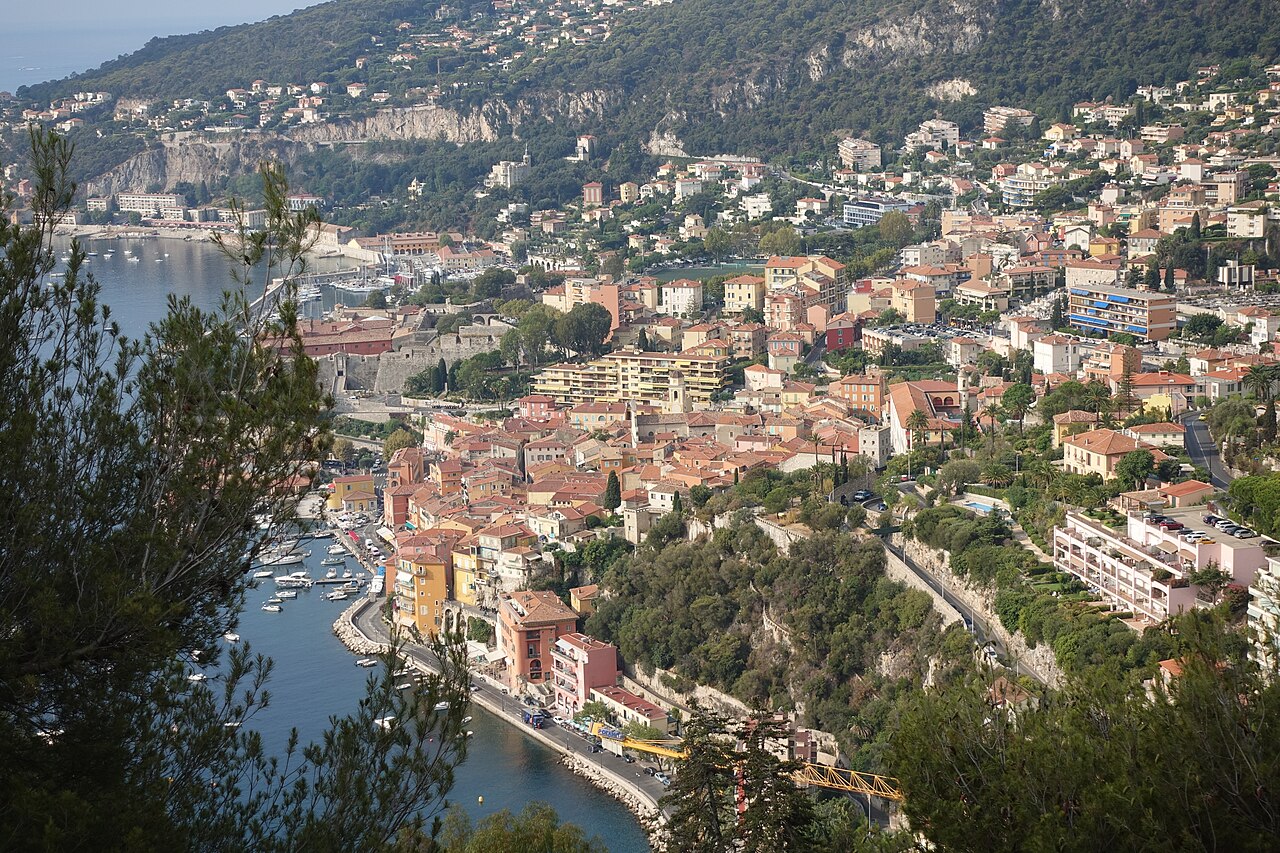
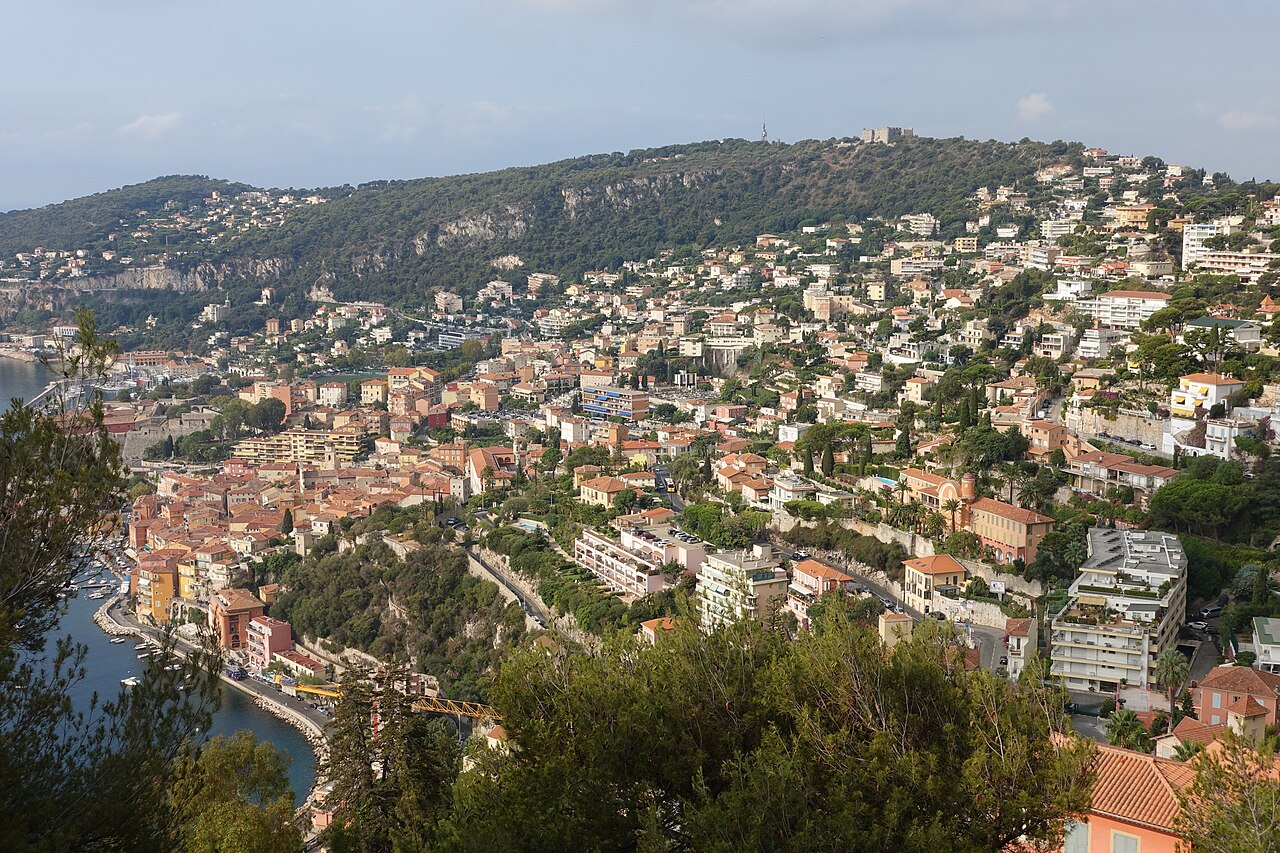
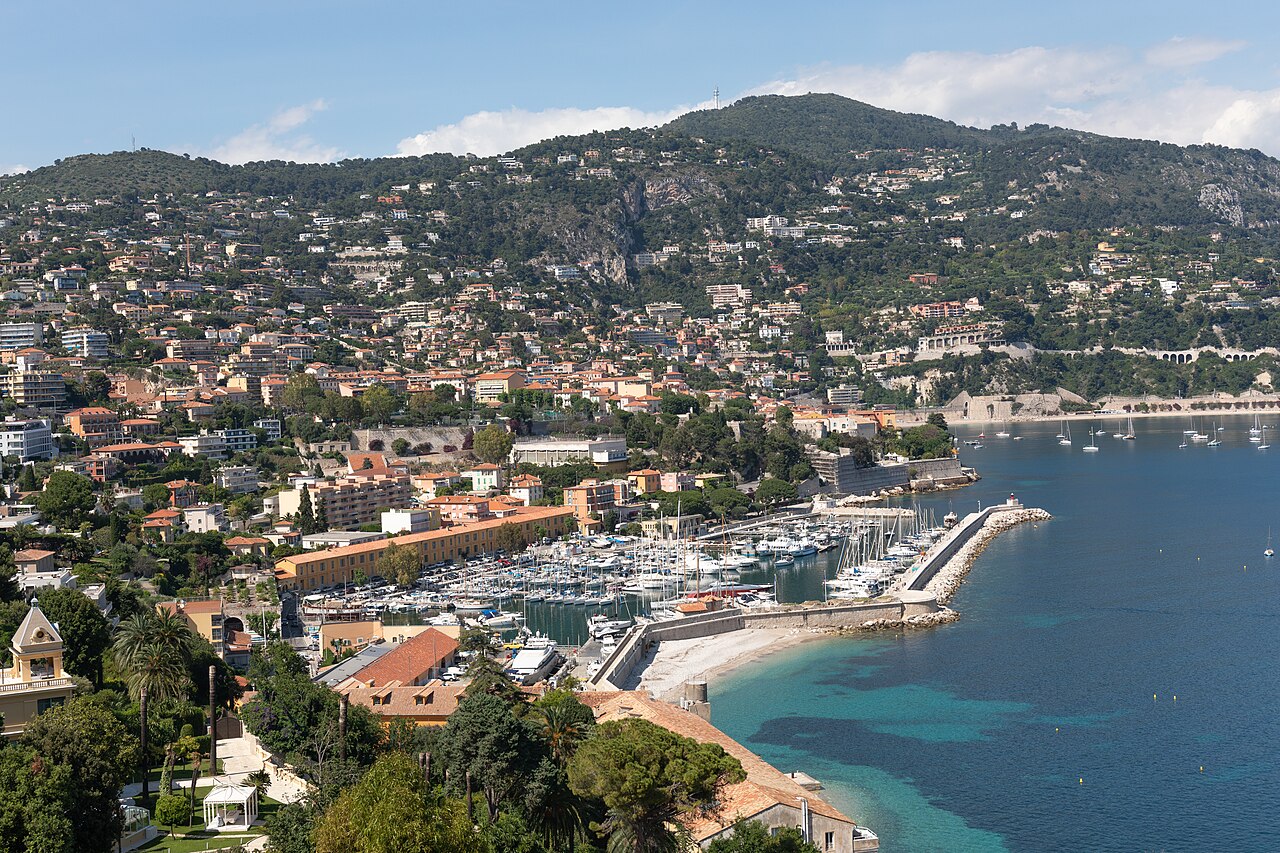
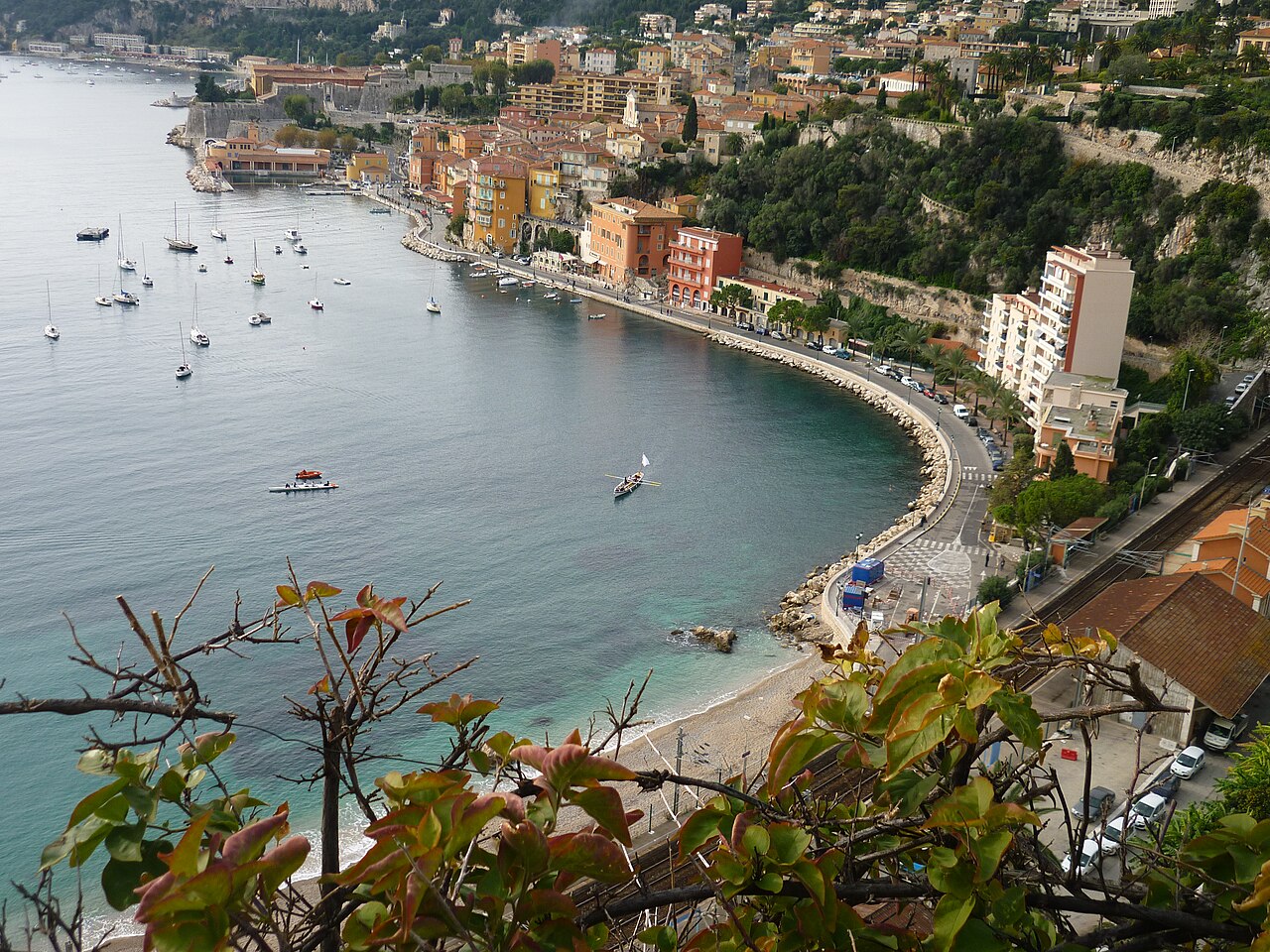
Villefranche-sur-Mer is a small harbour town on the Côte d'Azur (French Riviera) between Nice and Cap-Ferrat, wrapped around one of the deepest natural bays in the Mediterranean (the Rade de Villefranche), which is why large cruise ships anchor here. Pastel-hued old town lanes, the 16th-century Citadelle Saint-Elme, and the Saint-Pierre chapel that Jean Cocteau decorated for local fishermen sit close together above the water. In 2026 it remains busy on summer peak days and cruise-call days, yet it is only about a 7-minute train ride from Nice, making it an easy half-day escape.
Rade de Villefranche: one of the Mediterranean's deepest natural harbours, with deep-blue water, anchored yachts and cruise ships, and sweeping views from the hillsides above.
Old town and the Rue Obscure: colourful houses along narrow lanes, plus a roughly 130 m vaulted, almost-underground covered street dating from the 13th century (a listed historic monument).
Citadelle Saint-Elme: a 16th-century fortress overlooking the bay, home to museums such as the Volti and Goetz-Boumeester collections; entry is free and the sea views are excellent.
Chapelle Saint-Pierre (the Cocteau chapel): a small chapel whose interior and exterior Jean Cocteau decorated in 1956–57 as a tribute to fishermen, with frescoes on the life of Saint Peter.
Plage des Marinières: the main fine-sand beach below the old town, right by the train station, backed by a pastel waterfront of buildings and seaside restaurants.
Good to know
SeasonJuly and August bring peak heat and crowds, and the old town, chapel and beach are especially congested on cruise-call days. Consider May–June or September, or an early-morning visit.
SafetyThe largely unshaded beach and stepped lanes get strong summer sun—carry water and sunscreen and hydrate often. The bay is deep and yachts and cruise tenders pass through, so mind boat lanes when swimming.
RulesSince 1 July 2025, smoking is banned on French beaches and in public gardens and near schools, with fines for violations. Also, some beach sections are paid private clubs, so distinguish them from the free public areas.
MannersThe Cocteau chapel is a working religious site—dress modestly, stay quiet, and note that interior photography may be restricted. In the narrow residential lanes keep noise down, and open interactions in shops with a 'Bonjour'.
CautionPickpockets operate around the Nice and Villefranche train stations and busy tourist spots—wear bags to the front and never leave belongings unattended on the beach. Use official taxis and confirm the fare in advance.
SafetySteep stepped alleys and the cobbled Rue Obscure can be slippery, so non-slip shoes help; take extra care with strollers and wheelchairs.
SafetyFreediving — Never dive alone. Deep sessions need a buddy plus a dedicated safety diver, a lanyard, and counterballast where appropriate; free descents off the line are out at any depth. Shallow-water blackout and LMC usually strike in the last 10 m of the ascent or in the seconds after surfacing, so safety must hold direct contact for at least 30 seconds after your head is out.
SafetyFreediving — People have died in this bay. In April 2007, world-record holder Loïc Leferme was lost here during a private no-limits training dive when his sled failed to bring him up. Reputation is not protection — this is not a place to fold a personal-best attempt into a holiday itinerary.
SafetyFreediving — Boat traffic is heavy. The bay holds mooring buoys for large cruise ships and takes roughly 80–100 calls a year, with yachts, tenders and shuttles moving constantly in summer. A surface marker buoy and dive flag are mandatory in practice, and lines should never be set in the shipping lanes or across the anchorage.
SafetyFreediving — Respect the thermocline. Surface water can exceed 25 °C while it sits near 15 °C below 20–30 m. Repeated dives in a thin suit lead to chilling, cramp and degraded judgement, and cold, tired divers are the ones who black out. Bring a hood and adequate thickness — 3–5 mm even in midsummer.
RulesFreediving — France enforces paperwork. Diving with an FFESSM-affiliated club normally requires an annual licence and a medical certificate of no contraindication (CACI); for competition-oriented apnea beyond 6 m the certificate must be issued by a doctor qualified in diving/hyperbaric medicine. Confirm requirements and insurance cover with your club before you travel — these are not documents you can arrange on arrival.
Practical info
From Nice-Ville station a TER regional train reaches Villefranche-sur-Mer in about 7 minutes, and the old town and beach are roughly a 5-minute walk away—more convenient than the bus. The citadel is free to enter, while the Cocteau chapel charges a small admission and is reported to close on Tuesdays and from mid-November to mid-December; because hours and fares change by season, check the latest before you go.
On-site reviews📍 Verified on-site
No reviews yet. If you are here, be the first to leave one.