Ustica is a small volcanic island in the Tyrrhenian Sea north of Palermo, and the site of Italy's first marine protected area, established in November 1986. It became a landmark in Italian apnea history on 17 September 1992, when Umberto Pelizzari reclaimed the Constant Weight world record at -70m in these waters, and European freedivers still come here for deep line training. Summer water sits around 25-27°C, spring and autumn at 18-23°C, dropping to 15-16°C in winter, with visibility opening to 30-40m on good days. One 2026 caveat: the hyperbaric chamber at the island's health centre is running on a temporary basis while the facility is being rebuilt, so confirm the current emergency setup before you travel.
Secca della Colombara - an offshore seamount off the island's northeast coast whose top rises to about 3m below the surface, with a wall dropping past 30m on the northwest side and a surrounding bottom in the 40-50m range. It is the classic spot for hanging a deep line straight off the boat.
Scoglio del Medico - a basalt outcrop shot through with canyons, tunnels and arches, so the light play is dramatic even at snorkelling depth. You do not need to go deep for this one to be worth the trip.
Pelizzari's -70m water - if the history of apnea means anything to you, knowing what happened here in 1992 changes the character of the dive. Local centres still tell the story.
Red gorgonian fans and orange Astroides coral colonies, alongside groupers, amberjacks and Mediterranean barracuda circling in spirals - the payoff of nearly forty years of protection.
The shoulder months of May-June and September-October - water still workable, clarity at its most consistent, and far fewer boats and people, which many divers rate above midsummer for line work.
Good to know
SafetyBlackout and LMC give no warning, and the diver experiencing them feels nothing coming. Never dive alone. Run strict one-up-one-down, have a safety diver meet you for the last 10-15m, and keep eyes on the surfacing diver for at least 30 seconds. Do not hyperventilate before a dive, for any reason.
SafetyDepth training at Ustica happens offshore over a 40-60m bottom. Do not go down a deep line without a lanyard, a proper buoy-and-bottom-plate setup, and either counterballast or a clearly briefed recovery plan. If there is no way to bring a diver up from the surface, an incident becomes unmanageable.
SafetyOverhead environments are a separate discipline. The tunnels and arches at Scoglio del Medico, and Grotta dei Gamberi with entrances at 40-45m, turn the length of the exit route into your survival margin the moment you enter on a breath-hold. A large share of freediving deaths come from 'it's only a short swim through' decisions. Do not penetrate without specific training, a team and a line.
SafetyColombara is an exposed offshore reef where current is often running even when the sea looks flat - barracuda lined up in one direction is your cue. If the buoy line starts to drift, call the session. Boat traffic is heavy in summer, and the island's medical capacity is limited, with anything serious meaning evacuation to Palermo. Diving insurance is not optional here.
RulesItalian law requires every diver to deploy a float carrying the red flag with a white diagonal stripe (or the Alfa flag), visible from 300m, and to stay within a 50m radius of it. Vessels must keep 100m clear of divers, and non-compliance carries an administrative fine. Freedivers are not exempt.
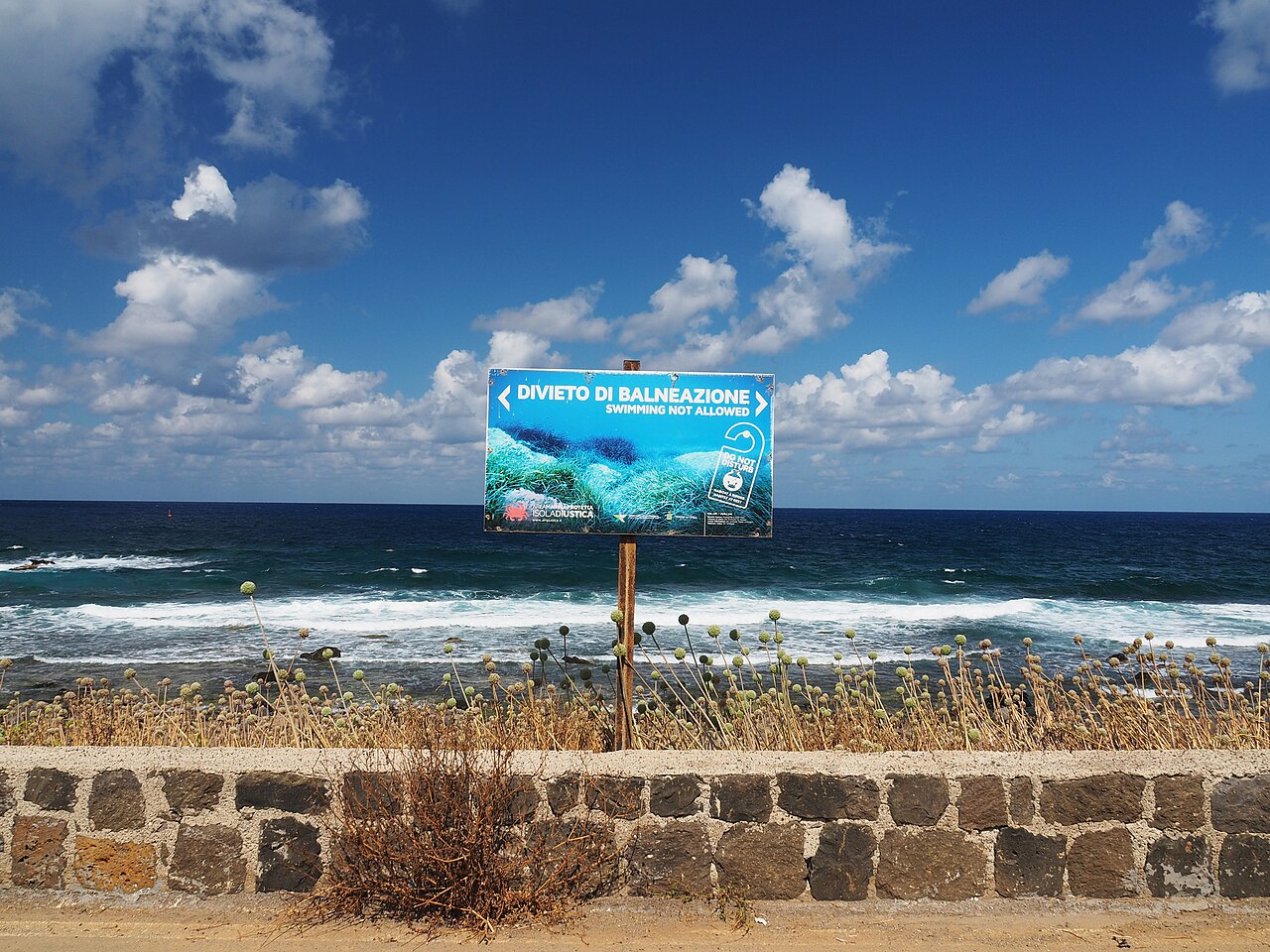
RulesThe marine protected area is split into Zones A, B and C. Zone A (about 60 hectares, full reserve) is closed to navigation, anchoring and access; diving and apnea are not permitted there and only designated swimming points are open. Spearfishing and collecting are banned throughout, and touching gorgonians or Astroides destroys decades of growth in a second. Check the current rules for Zone B and C activity, notification and permits with the AMP office and an authorised dive centre.
SeasonThe season runs May-October, best June-September. Outside peak months and in rough weather, Palermo crossings are cancelled often enough that you should build a day or two of slack into either end of the trip; in high summer, accommodation and boat slots fill early. Winter water drops to 15-16°C, which changes your kit entirely.
Practical info
From Palermo, the Liberty Lines hydrofoil takes roughly 1h20-1h30 and the Siremar ferry about 2.5-3 hours, with three to five sailings a day in summer but frequent weather cancellations. Freediving here is almost always run as a boat programme through an authorised dive centre, so confirm certification, medical and insurance requirements, fees, sailing times and whether a safety diver is included directly with the centre and the AMP office before booking, as these change season to season.
On-site reviews📍 Verified on-site
No reviews yet. If you are here, be the first to leave one.