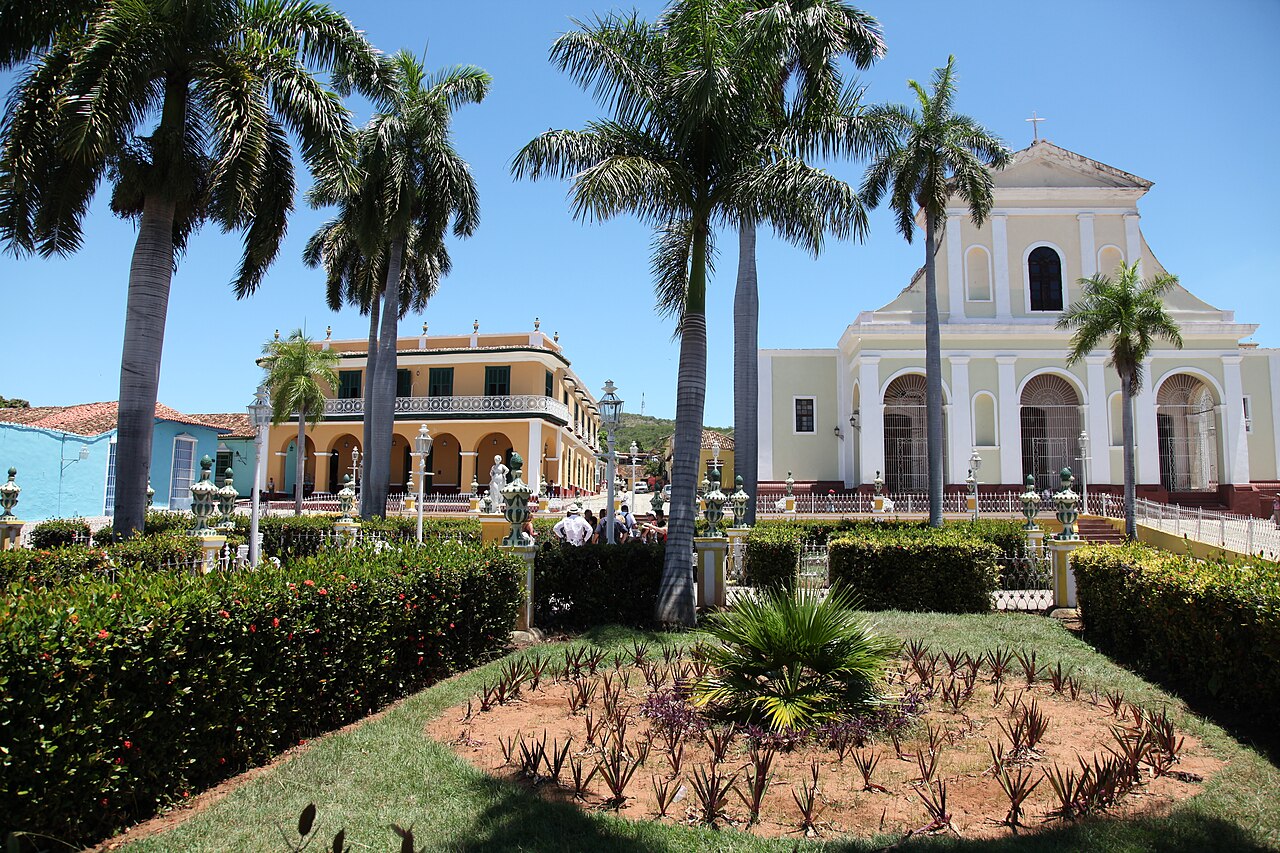
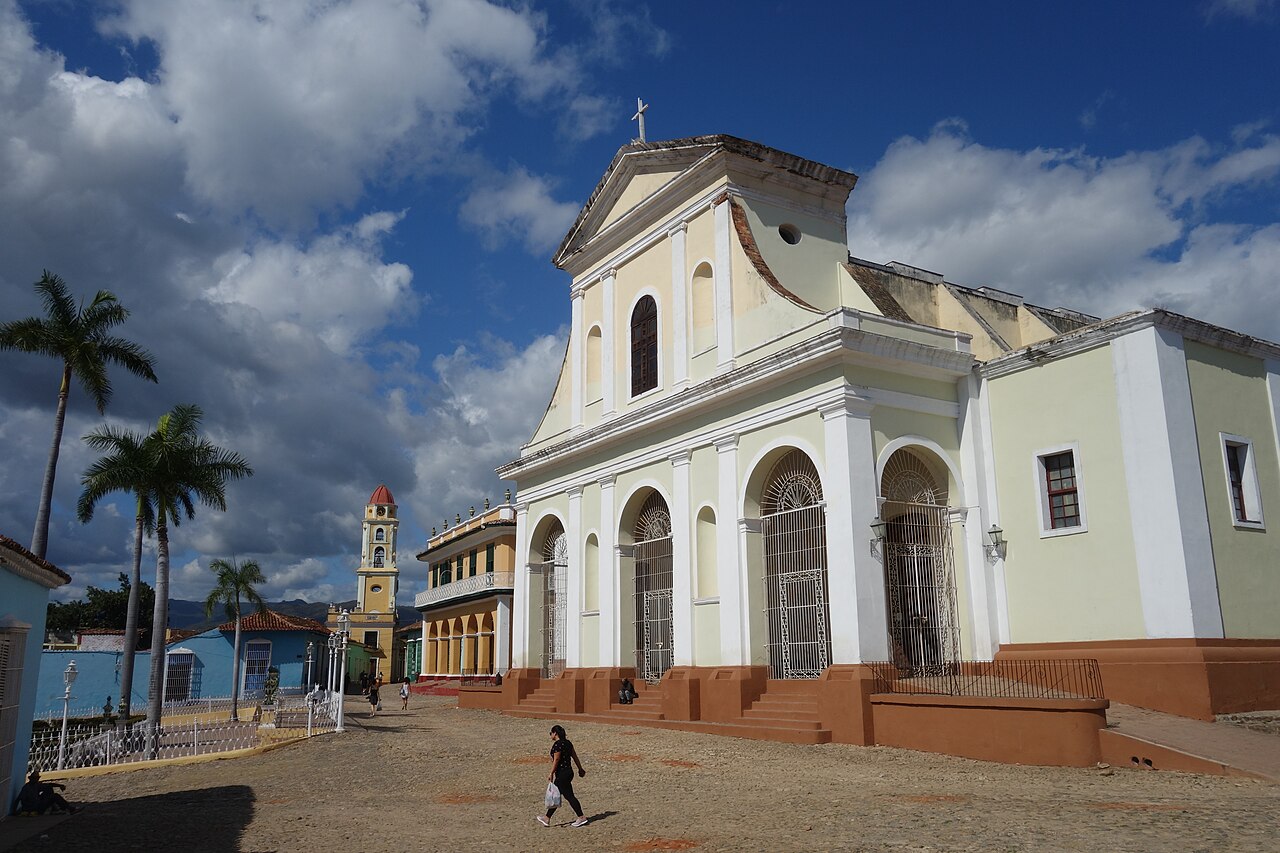
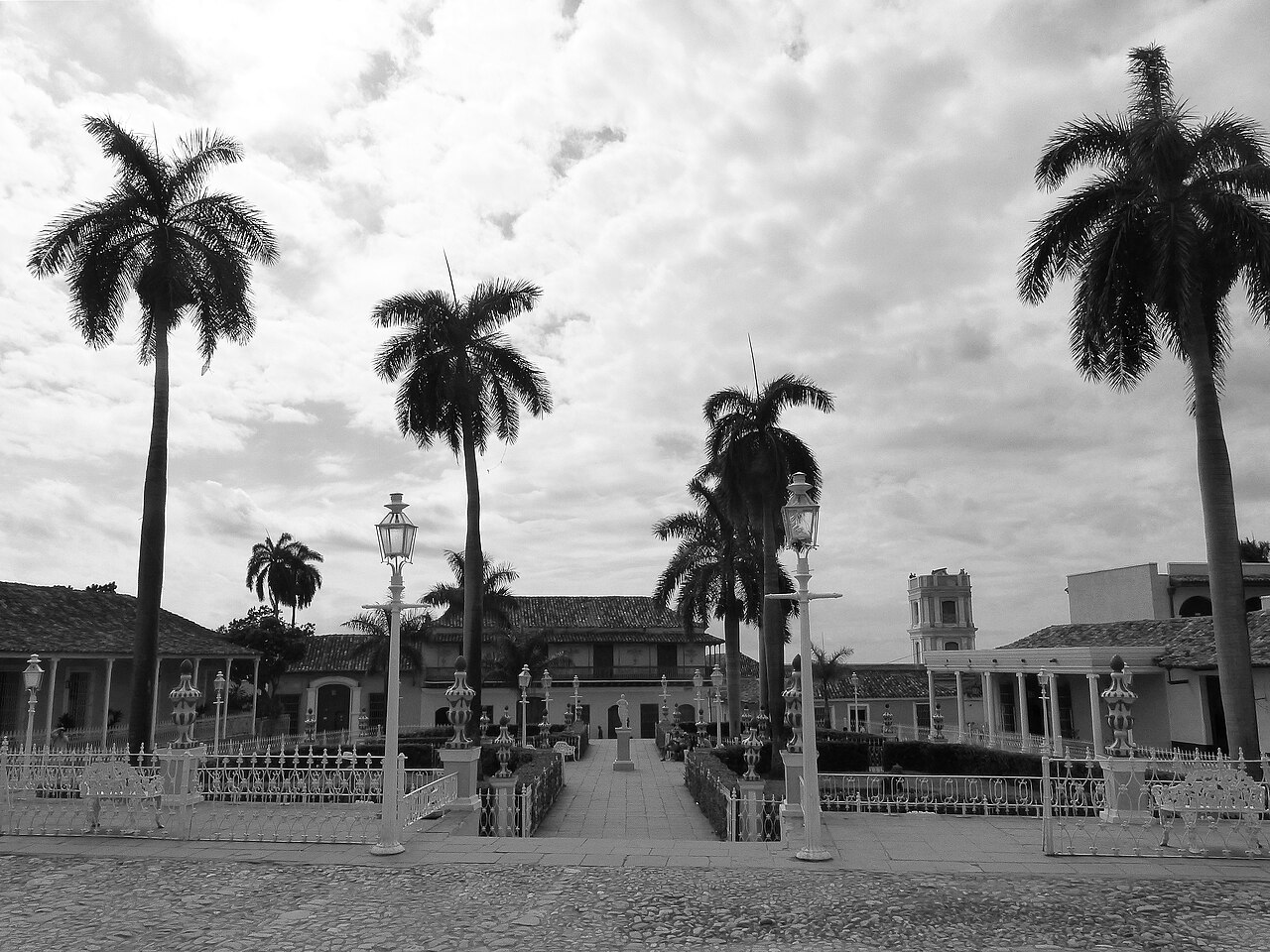
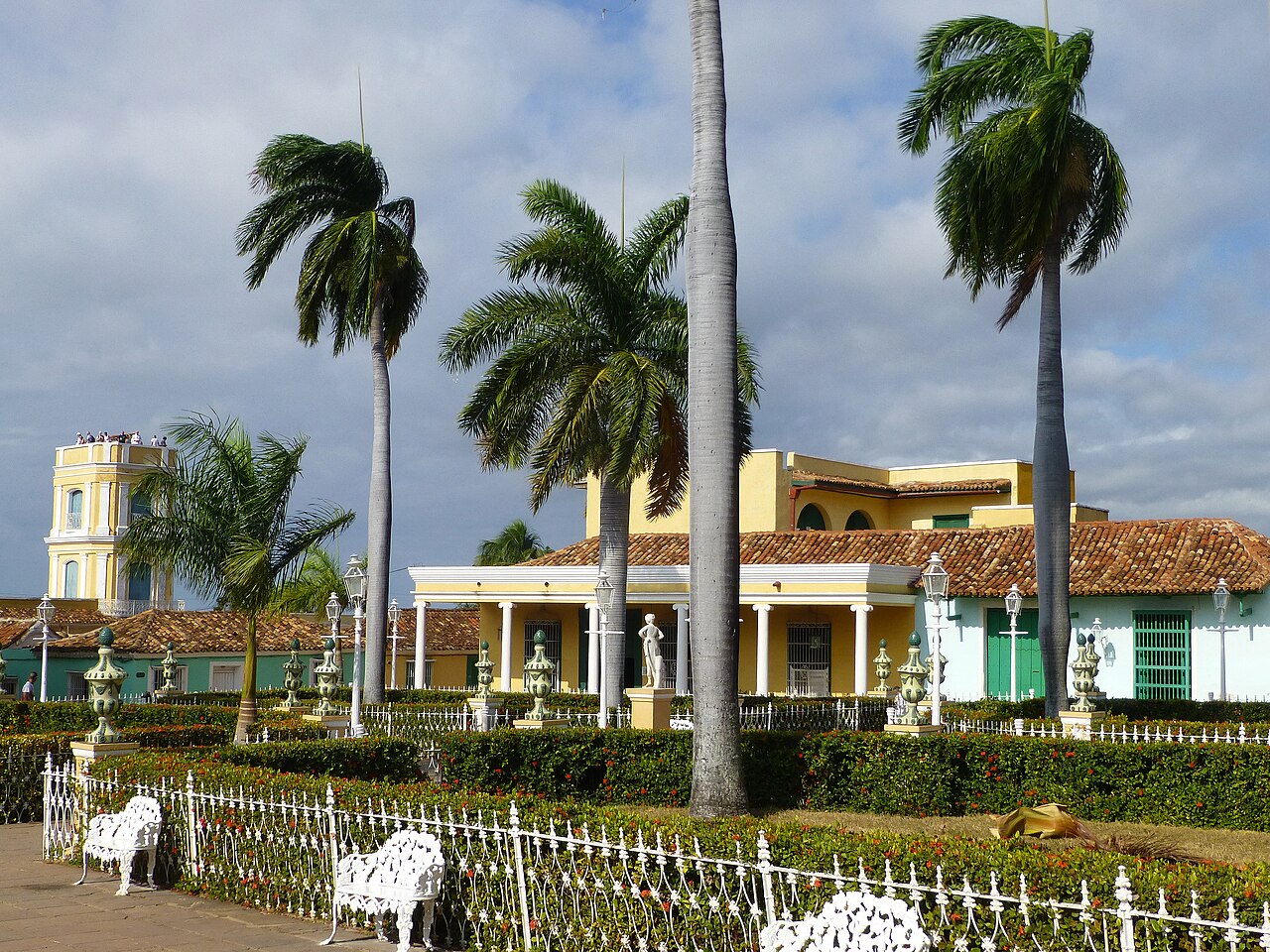
The Plaza Mayor is the heart of Trinidad, a Spanish colonial town founded in 1514, and has anchored local life ever since. Ringed by pastel 18th- and 19th-century mansions built on sugar wealth from the nearby Valley de los Ingenios, the square and its cobbled streets are so well preserved that Trinidad is often called a living museum; it was inscribed on the UNESCO World Heritage List in 1988. The former grand houses around the plaza now hold museums such as the Romantic Museum, the Guamuhaya Archaeology Museum and the Colonial Architecture Museum. Wandering the open square is free, but in 2026 Cuba is deep in an economic crisis with frequent blackouts and a cash-only economy, so plan ahead; half a day covers the plaza, its museums and the nightly music on the nearby steps.
Romantic Museum (Palacio Brunet, 1812) — an ochre two-storey palace facing the square, displaying a sugar-baron family's 19th-century furniture, porcelain and art.
Iglesia Parroquial de la Santísima Trinidad (completed 1892) — the plaza's landmark church, home to the venerated 1713 Christ of the True Cross and Gothic Revival altars.
Municipal History Museum in Palacio Cantero — the former 'sugar king' mansion whose tower gives the classic panorama over red-tiled roofs toward the mountains.
The garden square itself — raised flowerbeds quartered by paths, wrought-iron lamp-posts, terracotta urns and the famous white greyhound statues.
The steps beside the Casa de la Música (the Escalinata) — the hub of Trinidad's nightlife, with live salsa and son most evenings just off the plaza.
Good to know
SafetyCuba's deepening 2026 economic crisis has raised petty (and some violent) crime; keep bags in front in crowds around the plaza and steps, avoid dark unfamiliar streets at night, and check your government's travel advisory before you go.
SeasonThe square offers little shade and midday sun is intense; June–October is the rainy/hurricane season, so visit early morning or late afternoon and bring a hat, water and sunscreen.
RulesWalking the plaza is free, but the surrounding museums and the church tower each charge a small (usually cash CUP) admission, and some add a separate photo fee; prices and opening hours change often, so confirm the latest on site.
MannersThe church is an active place of worship — stay quiet during Mass and dress to cover shoulders and knees; always ask before photographing musicians or costumed locals, who may expect a small tip.
CautionBeware street touts pushing 'today only' cigars, restaurants or currency exchange, plus inflated prices and short-changing; informal exchange beats the state CADECA rate, but always count the cash in front of you.
SafetySince June 2026 Visa and Mastercard are no longer accepted, making Cuba effectively a euro / US-dollar cash economy — bring ample cash in small denominations and a flashlight for the frequent power cuts.
Practical info
Trinidad sits off Cuba's main highway; most travelers arrive by Viazul bus or a colectivo taxi from Havana (about 4–5 hours) or nearby Cienfuegos, and the traffic-restricted old town is explored on foot. The Plaza Mayor is an open-air space accessible around the clock, while the ringing museums and church generally open in the morning — but hours and ticket prices shift frequently, so verify the latest on the day of your visit.
On-site reviews📍 Verified on-site
No reviews yet. If you are here, be the first to leave one.