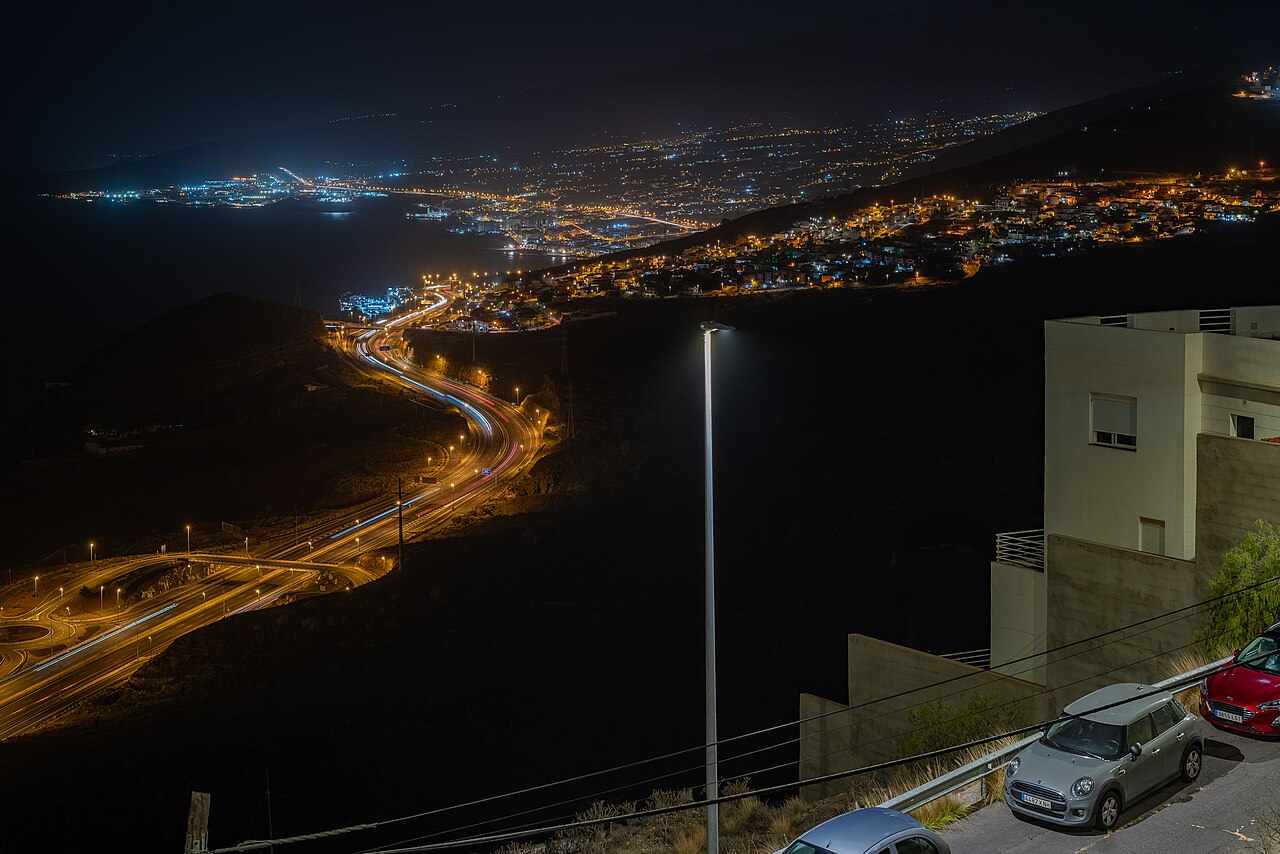
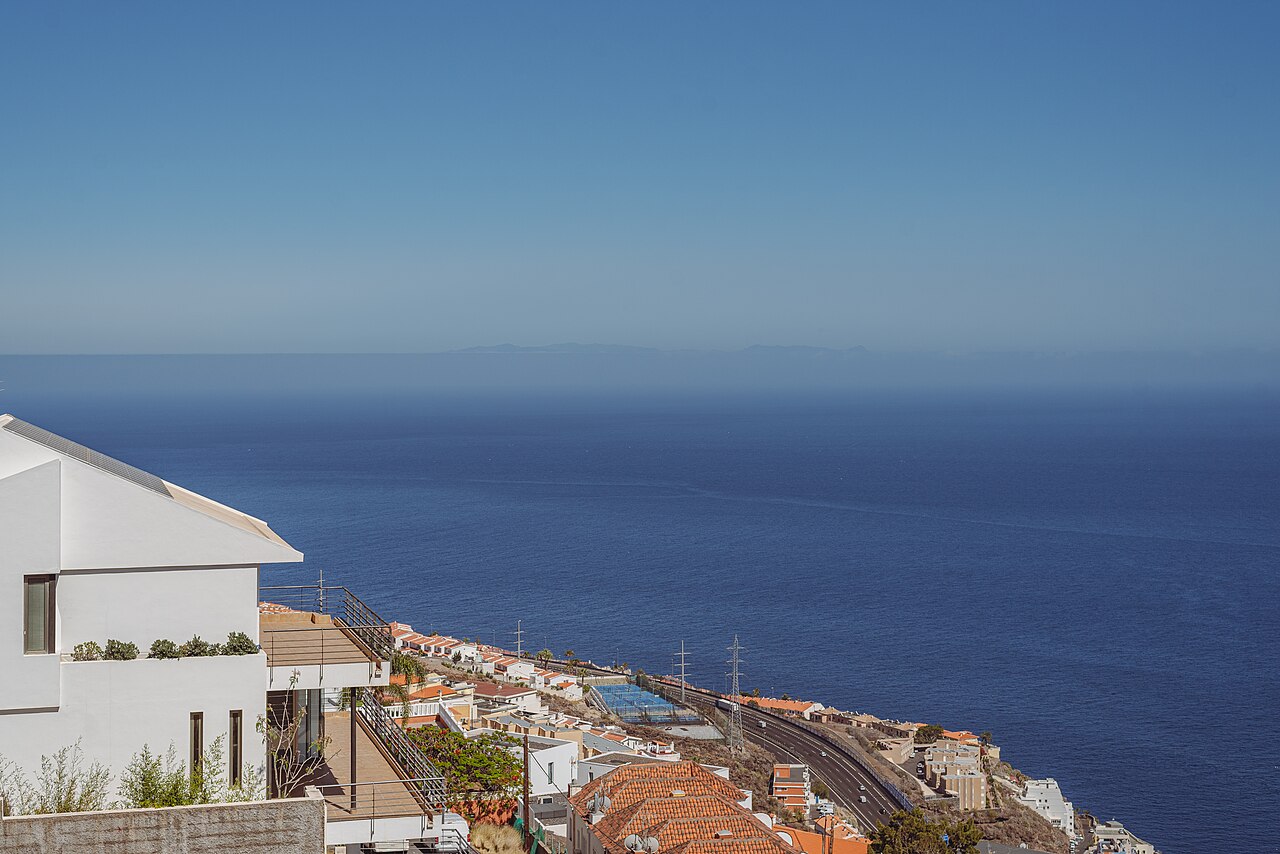
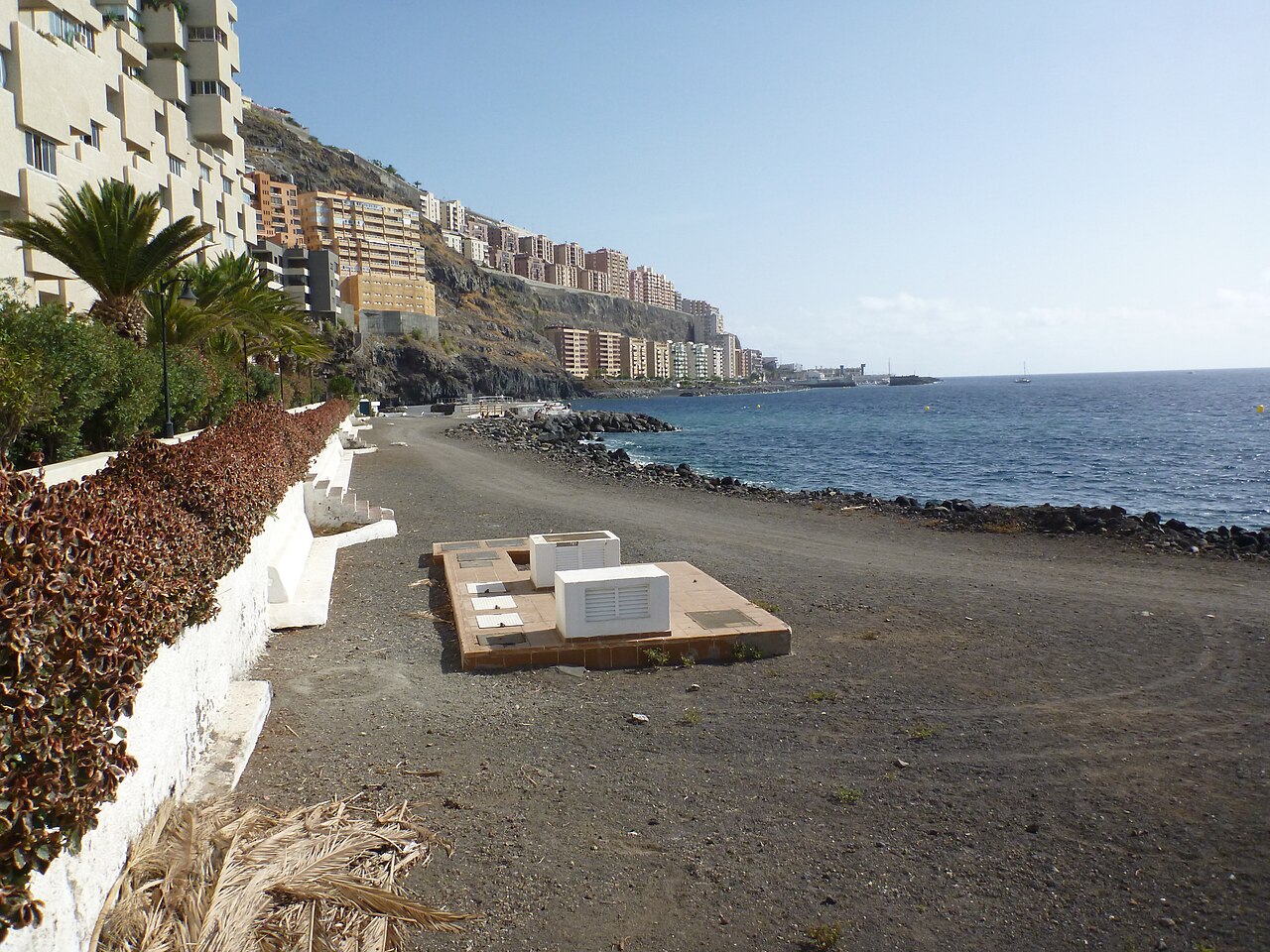
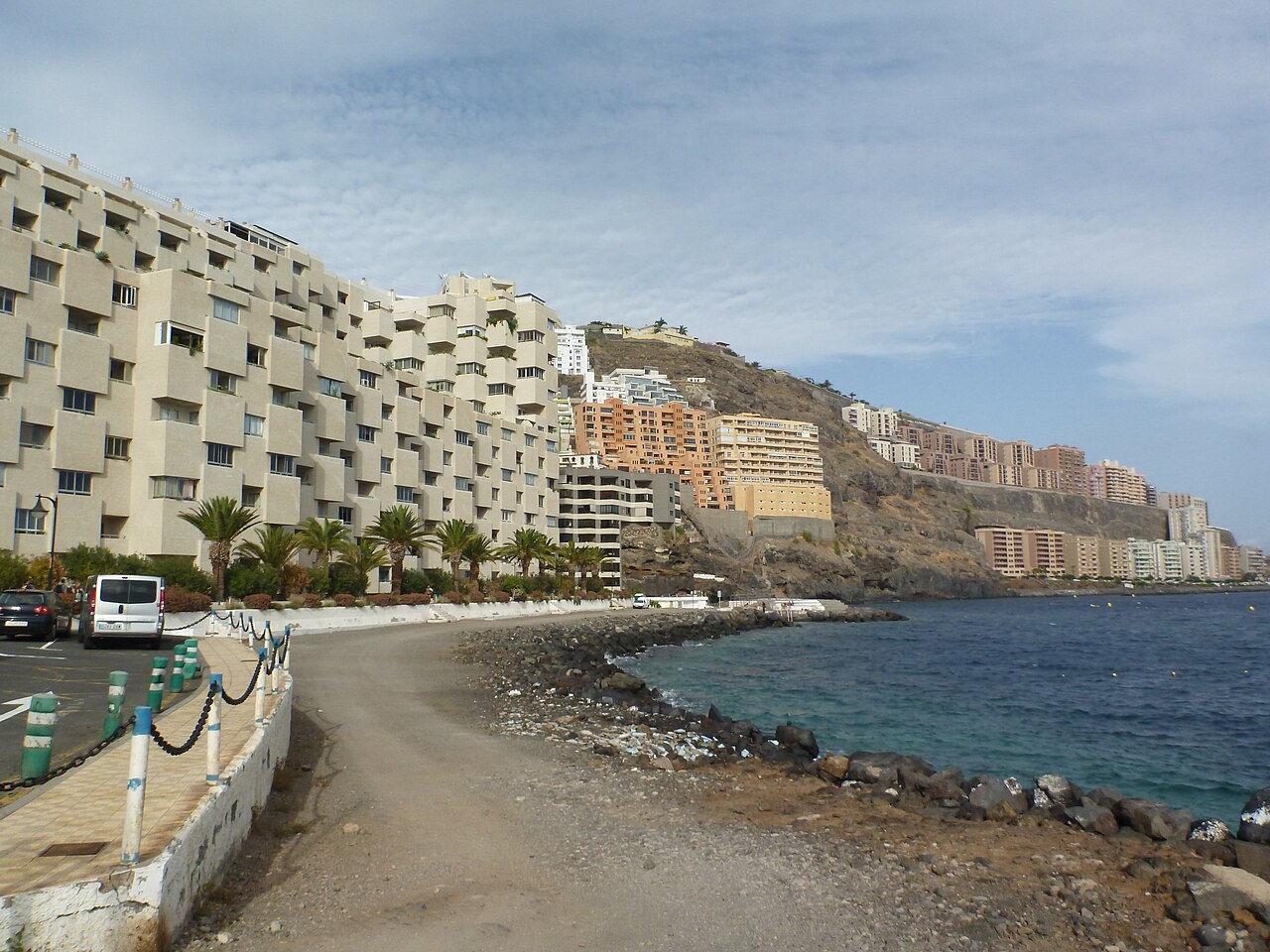
Tabaiba is a small bay on Tenerife's east coast, about 14 km southwest of Santa Cruz de Tenerife in the Atlantic Canary Islands. What made it one of Europe's default year-round depth-training sites is the bathymetry: walk in from shore, swim a short distance, and the bottom drops from -20 m to -100 m, so deep lines can be run without a boat. The bay is sheltered from almost every direction, leaving it near-currentless with a calm surface, visibility typically 15-30 m, and water between 18-19°C in winter and 25-26°C in late summer and autumn. As of 2026 it still fills up with competitive freedivers on winter training camps, so lines and accommodation book out early in season.
Shore entry to a -100 m drop-off within a short swim - a rare setup where serious depth work needs no boat, no transfer, and no charter cost
The El Peñón wreck on the bay floor: a 35 m tugboat scuttled as an artificial reef in 2006, sitting between 18 and 30 m and serving as a visual depth reference on training days
The bay's enclosed shape, which keeps the surface flat and the current negligible - the reason training here runs through all four seasons
Radazul, the neighbouring bay a short walk up the coast, where boat-served lines run at -35, -45 and -60 m with anchorages down to -160 m for staged depth progression
Angel sharks and rays on the sand, plus barracuda, amberjack, octopus and moray around the wreck - worth the downtime between line sets
Good to know
SafetyBecause the drop-off starts metres from shore, it is unusually easy to talk yourself into 'just a bit deeper' and exceed your real limits. Shallow water blackout and LMC are the leading causes of freediving deaths, and most occur in the last 10 m of ascent or seconds after surfacing. Never dive alone at any depth: use a line, a trained buddy, and a minimum 30-second surface watch on every dive.
SafetyDeep line sessions must be done on a lanyard with a qualified safety diver. Anything past -60 m belongs inside a centre's system - counterballast rig, sonar, scootered safety freedivers, oxygen on site. Rigging a personal buoy and line and going deep on your own means there is no way to recover you if something goes wrong.
SafetyWinter water drops to 18-19°C, so a 5 mm suit and hood are the realistic minimum. Cold degrades both judgement and breath-hold performance, which raises blackout risk. Do not mix scuba and freediving on the same day either - the accumulated decompression load makes DCS a genuine hazard.
RulesMost centres require AIDA Level 3 or an SSI/PADI equivalent before you can use their lines independently, and typically run a first assessed session with an instructor to check your safety and rescue skills. Dive insurance that explicitly covers freediving is effectively mandatory: standard travel policies commonly exclude apnea, so confirm DAN or comparable cover before you fly.
SeasonEven a normally glassy bay becomes unenterable when Atlantic swell (marejada) arrives, and winter northwesterly swell or Saharan dust (calima) can cut visibility on any given day. Leave the go/no-go call to the local school and never push a session just because it was booked.
RulesScuba divers use the same bay constantly. Always fly a buoy and dive flag, and never descend at speed without checking what is below you. Boat traffic runs across the mouth of the bay, so keep your line position and surface waiting area exactly where the centre tells you.
MannersThe angel sharks on the sand are a heavily depleted protected species - do not touch, chase, or crowd them with close-range flash, and leave the wreck structure alone. The entry is volcanic shingle with slippery rock and sea urchins, so boots are strongly advised.
Practical info
Fly into Tenerife North (TFN, about 20 km away) or Tenerife South (TFS, about 60 km); there are no direct flights from Korea or Japan, so you will connect through Madrid, Barcelona or another European hub. TITSA bus line 122 from Santa Cruz reaches Tabaiba, but the bay sits below the road via a downhill walk, so a rental car is easier. May to October offers the most stable temperature and visibility while winter is peak training-camp season - and since course schedules, line fees, certification requirements and insurance conditions vary by centre and change often, confirm the current terms directly with the school before booking.
On-site reviews📍 Verified on-site
No reviews yet. If you are here, be the first to leave one.