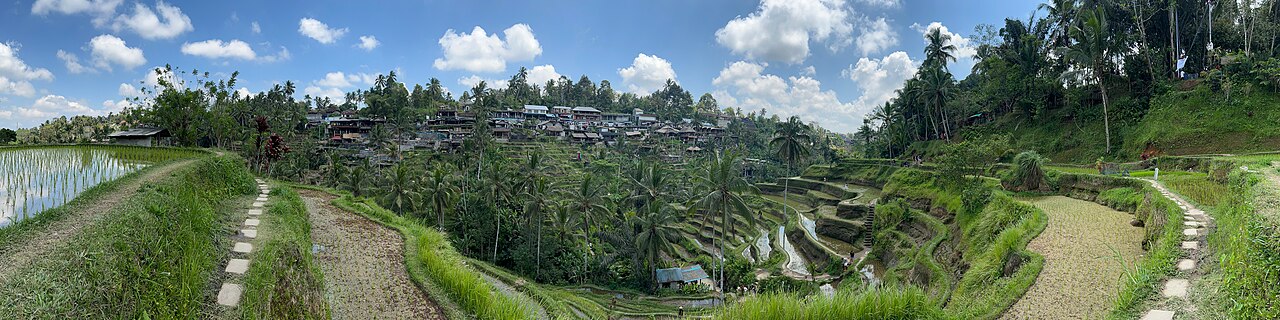
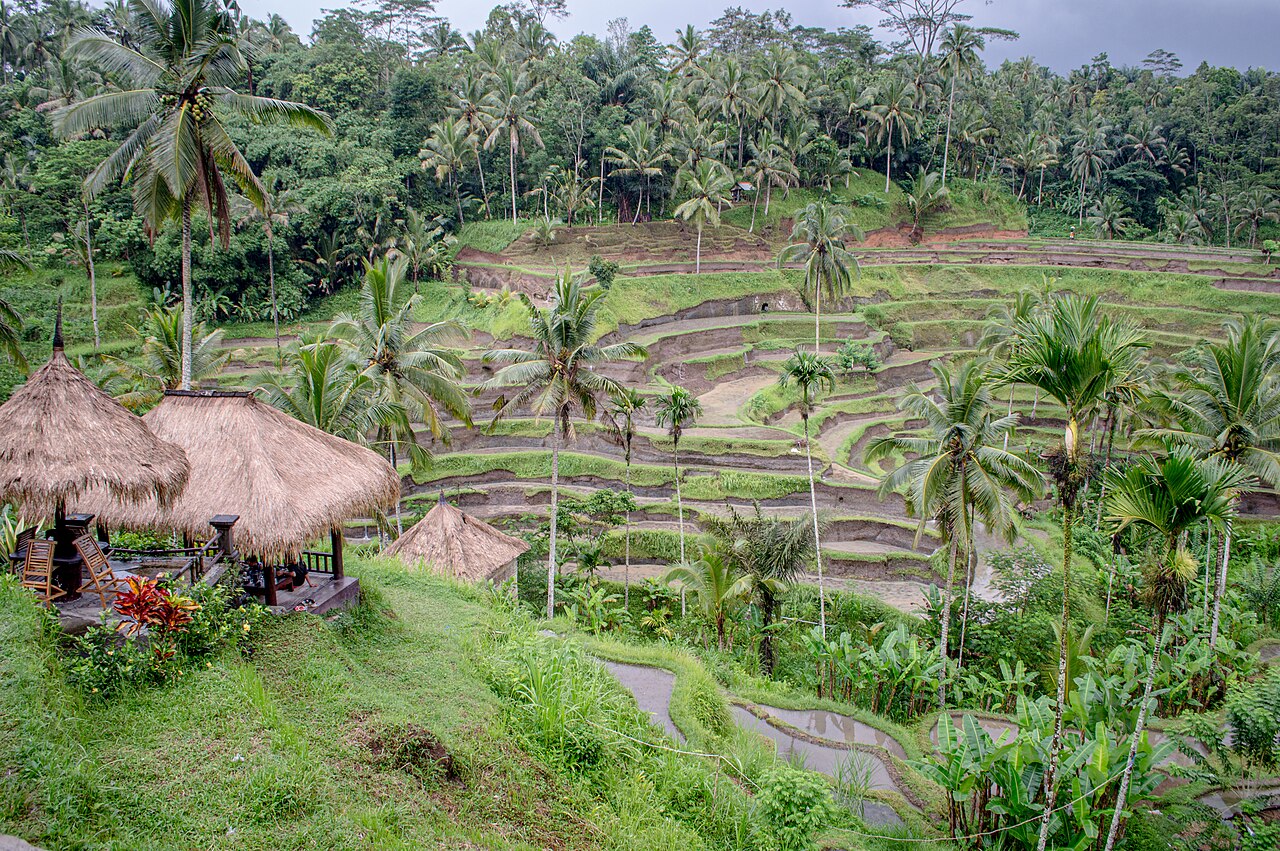
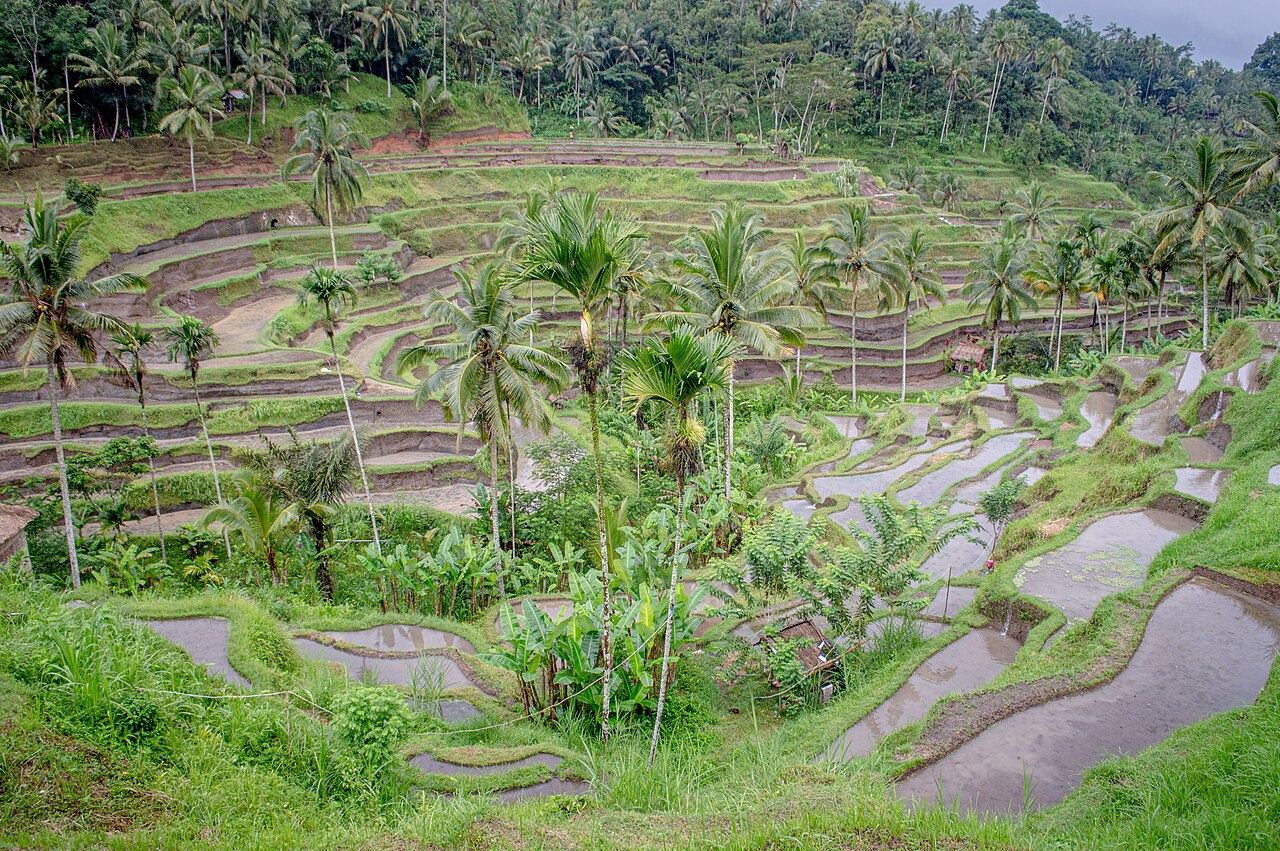
Tegallalang (Ceking) Rice Terrace is a valley of stepped rice paddies just north of Ubud in Gianyar, Bali, and one of the island's most iconic showcases of the traditional Balinese subak irrigation system. This subak cultural landscape was inscribed as a UNESCO World Heritage Site in 2012 and reflects the Tri Hita Karana philosophy of harmony among the divine, nature, and people. Layers of emerald paddies cascading down the valley, framed by palm trees, make it one of Ubud's signature viewpoints.
Sweeping panorama of tiered green rice paddies and palms filling the valley
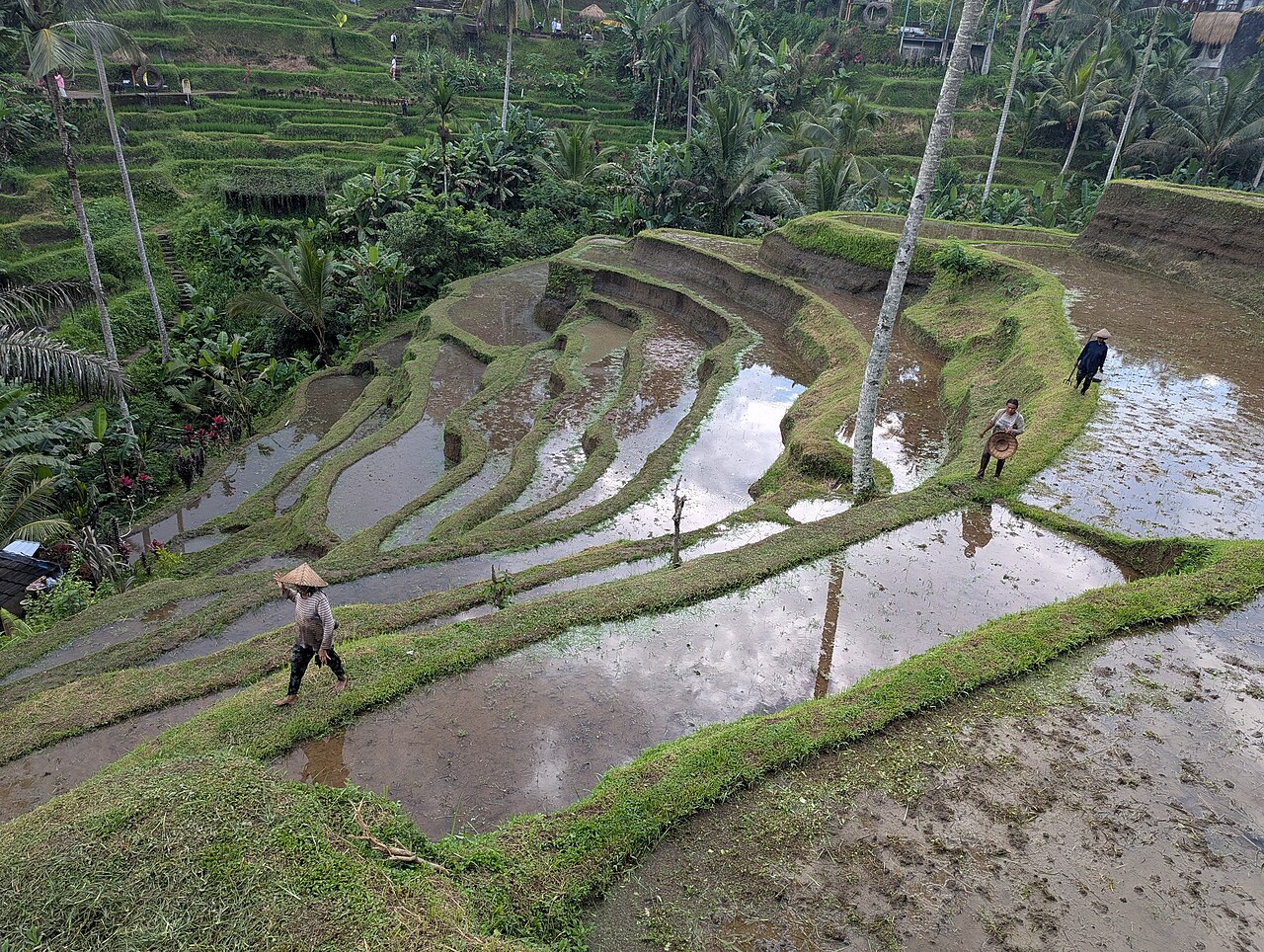
A living UNESCO World Heritage cultural landscape shaped by the centuries-old subak water system
A trekking route that descends among the paddies and climbs the opposite ridge
Jungle swings that soar over the valley, plus bird's-nest photo spots
Viewpoint cafes and terraces overlooking the fields for coffee or a meal
Soft early-morning light and late-afternoon golden hour for photography
Good to know
CautionSmall booths asking for a 'donation' to cross private land or bamboo bridges appear at several points along the paths. The going rate is roughly IDR 10,000-20,000 per person; some may demand excessive amounts, so carry plenty of small (10k) notes and politely decline if you don't wish to pay.
CautionIf a local hands you a basket, hat, or traditional costume and offers to take your photo, they will expect a tip afterward. Don't accept props unless you intend to pay. Viewpoint cafes can also charge inflated prices, so check the menu before ordering.
SafetyThe jungle swings are run by different operators with varying safety standards. A fatal accident occurred here in 2018, so always confirm you are given a harness, follow staff instructions, and avoid risky poses.
SafetyThe stairs and dirt paths down into the paddies are steep and get very slippery, especially after rain. Wear shoes with good grip, use railings and handholds, and take it slow.
MannersThere are shrines and altars among the fields, and farmers actually work here. Modest clothing covering shoulders and knees is respectful; avoid swimwear or very revealing outfits, and never trample the rice plants or step into the paddies uninvited.
SeasonThe dry season (April-October) offers clear skies and easier walking; the wet season (November-March) brings lusher green but muddy paths and misty, rainy mornings. Tour buses arrive after around 10 AM and it gets very crowded, so an early-morning visit is best.
Practical info
About a 20-minute drive from Ubud. Open roughly 07:00-18:00; entrance around IDR 25,000 (cash, subject to change). Grab/Gojek can drop you off but local transport rules often prevent pickup for the return, so arrange a round-trip car in advance. Confirm fees, hours, and rules before you go.
On-site reviews📍 Verified on-site
No reviews yet. If you are here, be the first to leave one.