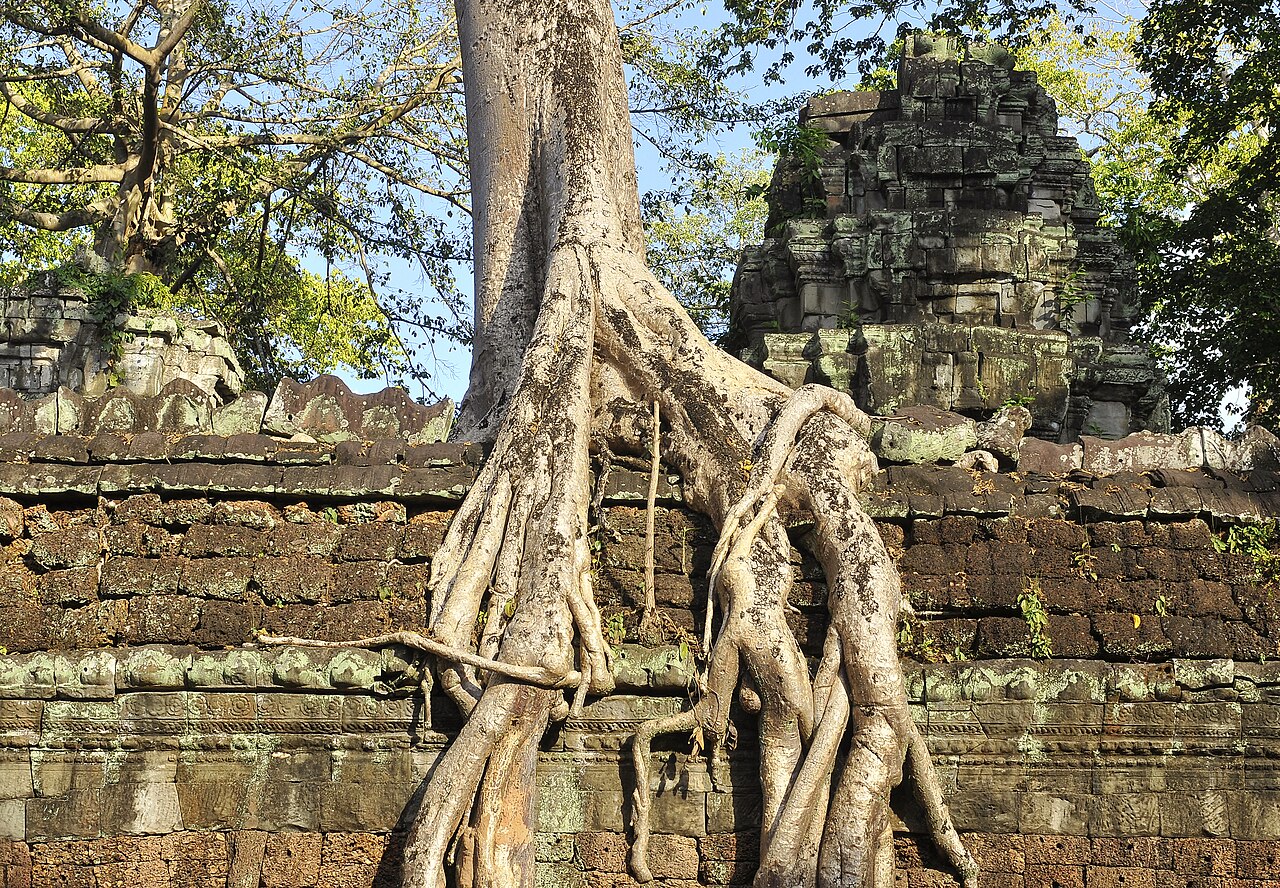
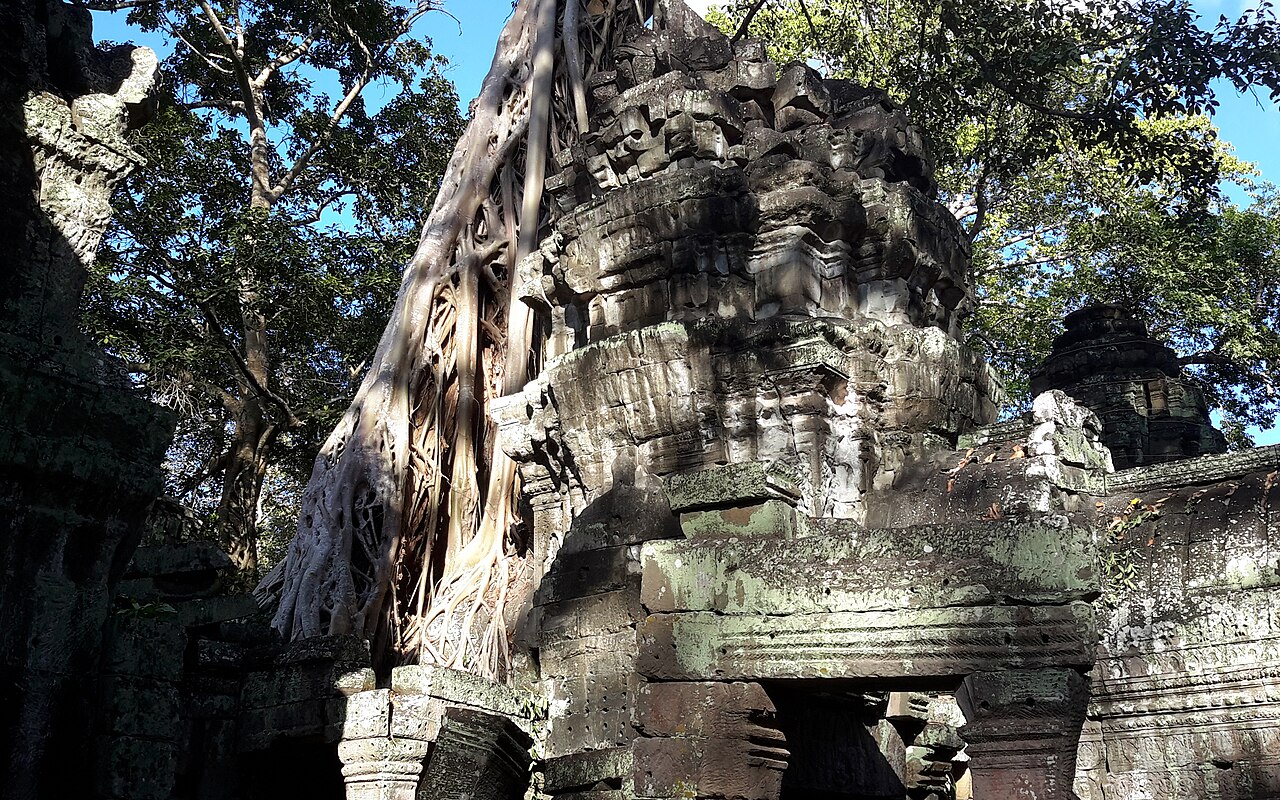
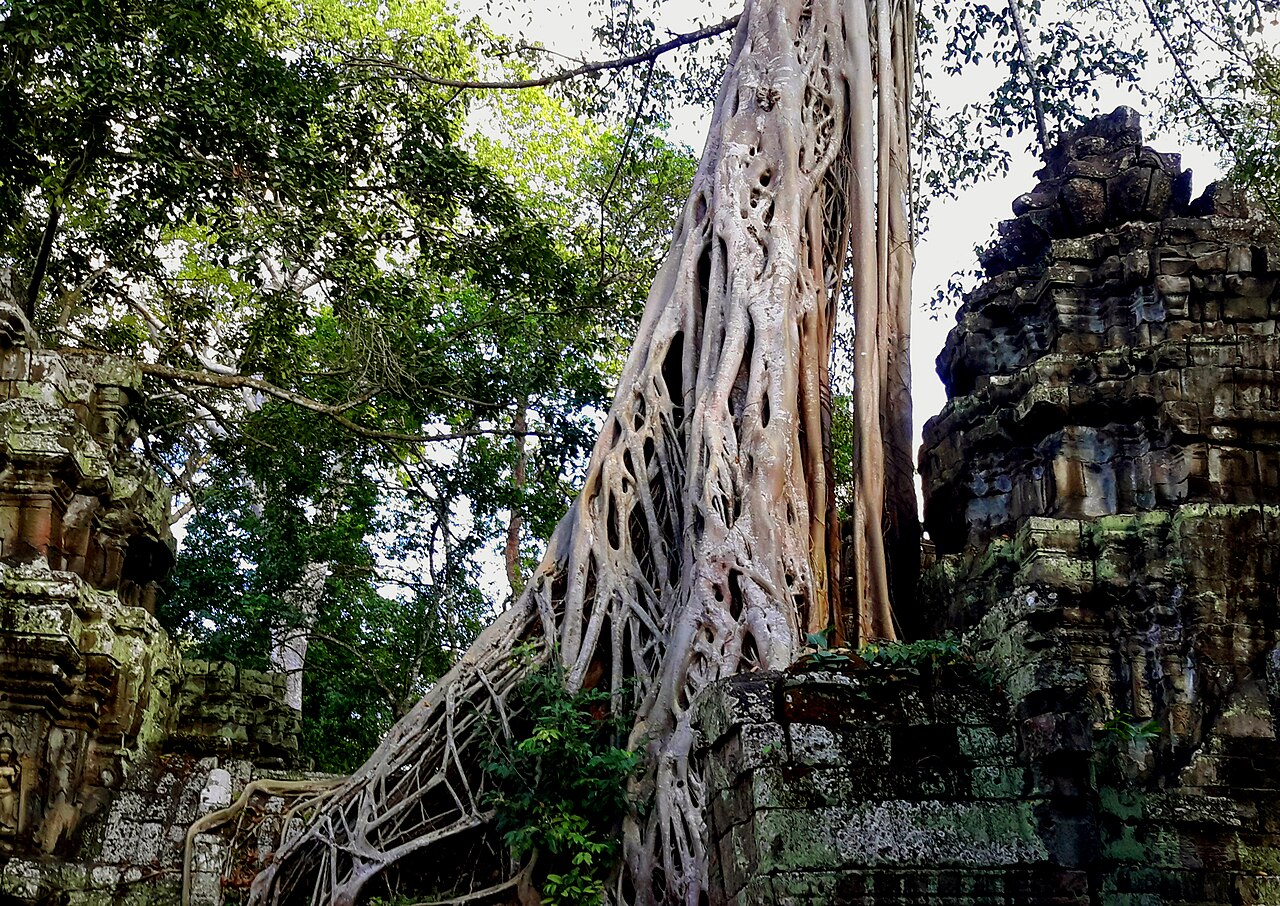
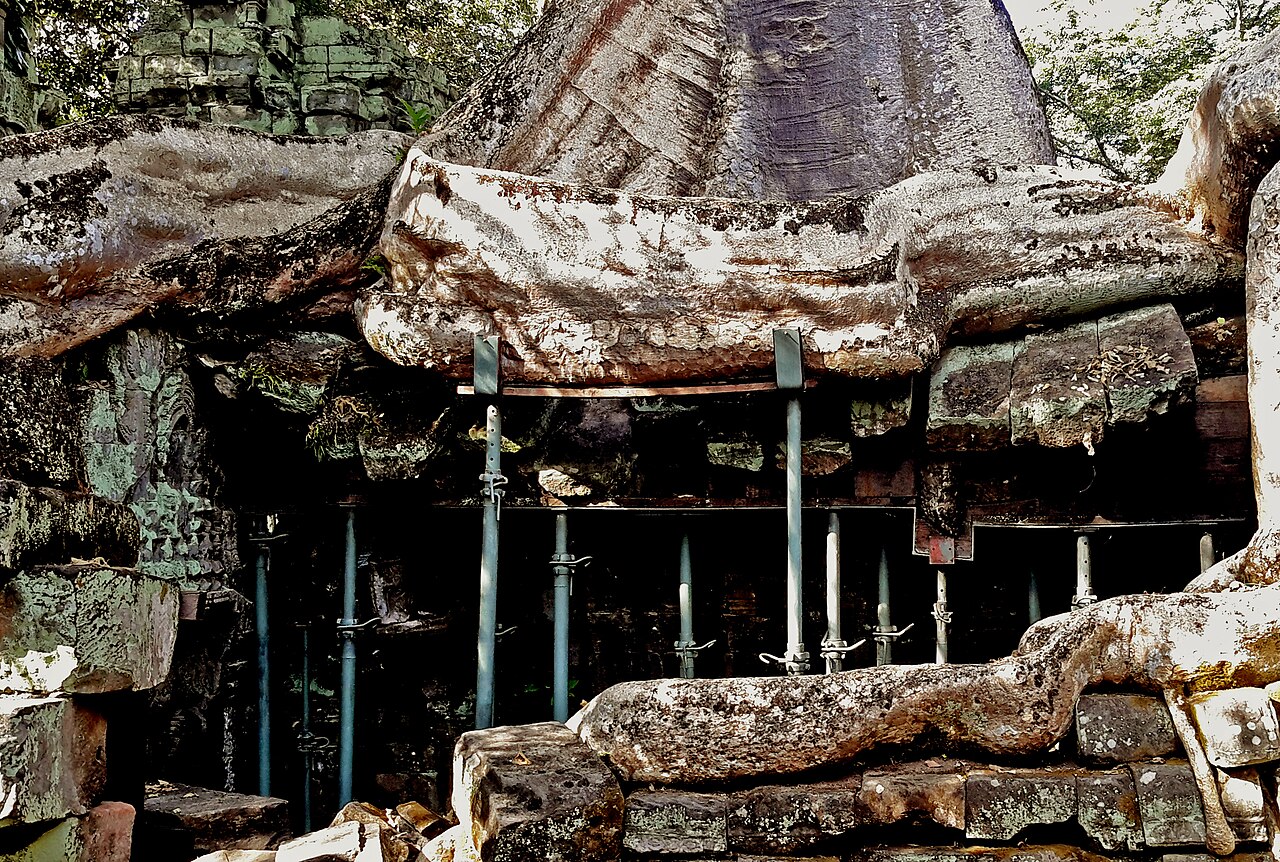
Ta Prohm is a Buddhist monastery temple built in the late 12th century by the Khmer king Jayavarman VII in honor of his mother; its original name was Rajavihara, meaning 'the king's monastery.' Unlike most restored Angkor temples, it was deliberately left merged with the jungle, so massive spung (silk-cotton) and strangler-fig roots now cascade over its stone galleries. It shot to global fame as a filming location for Lara Croft: Tomb Raider (2001).
The iconic giant tree roots that pour over doorways and walls like liquid wax — Ta Prohm's signature photo spot
A hauntingly atmospheric, semi-ruined temple where jungle and stone intertwine (intentionally left unrestored)
The central sanctuary area made famous by the Angelina Jolie film Tomb Raider
A Mahayana Buddhist temple dedicated by Jayavarman VII to his mother, said to have required around 80,000 people to maintain at its peak
Located about 3 km northeast of Angkor Wat on the 'Small Circuit,' easily combined with Angkor Thom and Bayon in a single day
Good to know
RulesThere is no standalone Ta Prohm ticket — you need the Angkor Pass. As of 2026 it is roughly US$37 (1-day), US$62 (3-day), US$72 (7-day); please confirm the latest prices. Children under 12 enter free with passport proof. Buy only from official Angkor Enterprise counters/website and carry your passport, as it is checked.
SafetyDo not climb on the tree roots or fallen stones — there is a risk of falling debris and the ruins are extremely fragile. Stay on the wooden walkways and behind the ropes, and wear sturdy, non-slip shoes as the ground is uneven with exposed roots.
MannersAs a religious site, shoulders and knees must be covered. Sleeveless tops, short shorts and short skirts may be refused entry, so bring light long trousers or a scarf.
CautionBeware unlicensed 'official guides' who approach near the entrance and demand US$20–30 while reciting basic facts. Licensed guides wear official APSARA Authority ID badges. Avoid buying from children selling goods inside the temple, as it encourages child labor.
CautionIn and around Siem Reap, tuk-tuk and taxi drivers often push commission-based stops — gem shops, tailors, fake orphanages. Common tricks include the 'buy me baby formula' scam (the woman resells it and splits the profit) and orphanage 'donation' visits. Always agree on the fare before you get in.
SeasonThe dry season (Nov–Apr) is the best time to visit; the wet season (May–Oct, especially Sep–Oct) brings rain almost daily. Since 10 a.m.–2 p.m. combines heat and crowds, aim for right after opening (around 7:30 a.m.) or late afternoon for a more comfortable visit.
Practical info
About 20 minutes by car from central Siem Reap. Angkor Pass required; cover shoulders and knees; stay on the walkways. Bring water, a hat, sunscreen and mosquito protection, and watch out for unlicensed guides and tuk-tuk commissions. Confirm fees, hours and restoration status before your visit.
On-site reviews📍 Verified on-site
No reviews yet. If you are here, be the first to leave one.