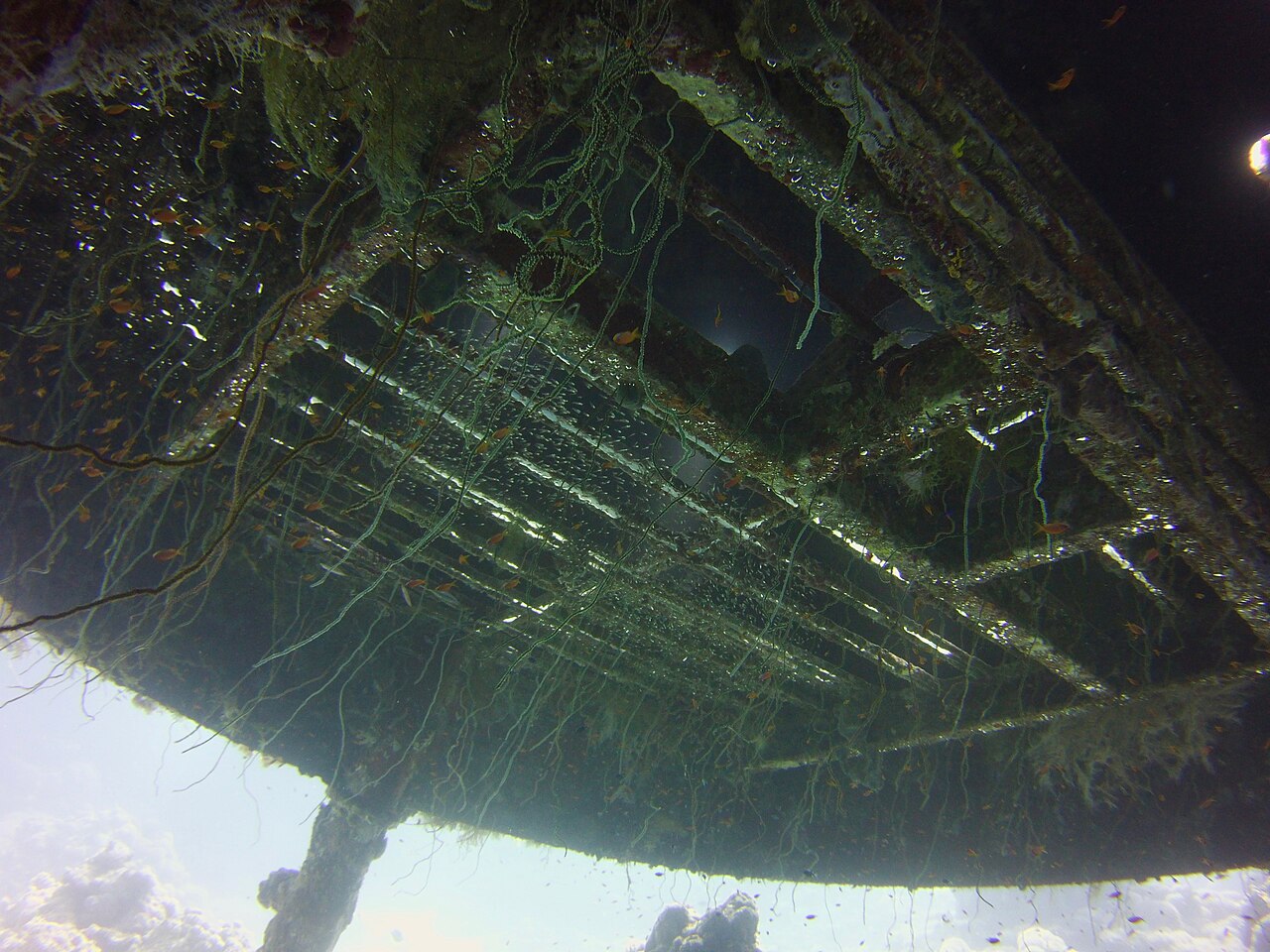
Sha'ab Rumi is an isolated atoll roughly 40–50 km northeast of Port Sudan, and the site where Jacques Cousteau ran his 1963 underwater-living experiment, Conshelf II. The shark cage, fish corral, garage and tool shed still sit on the bottom between 10 and 27 m, so thickly encrusted with coral that the line between artifact and reef has blurred; the hangar dome south of the western passage rests at just 9 m, making this one of the very few places where a freediver can reach a piece of Cousteau's undersea village on a single breath. The south plateau tops out at 25 m — right at the edge of recreational freediving range — with 25–40 m visibility, 24–30°C water and resident grey reef sharks. The catch is that the civil war that began in April 2023 is still running: as of 2026 the major liveaboard operators have pulled their Sudan itineraries, and every major government keeps Sudan at its highest 'do not travel' level.
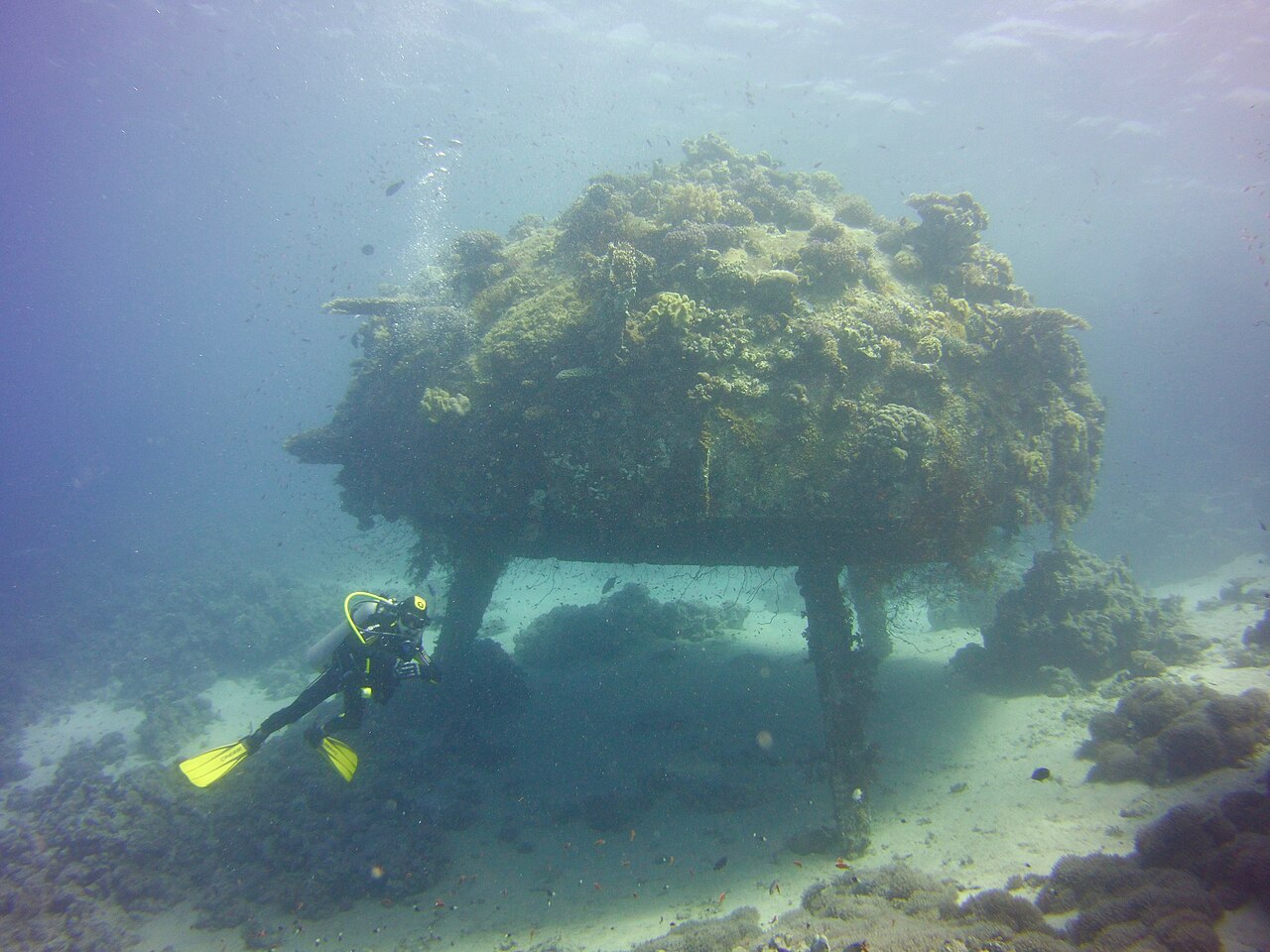
The Conshelf II shark cage at 10–27 m — six decades of coral growth have turned Cousteau's hardware into part of the reef
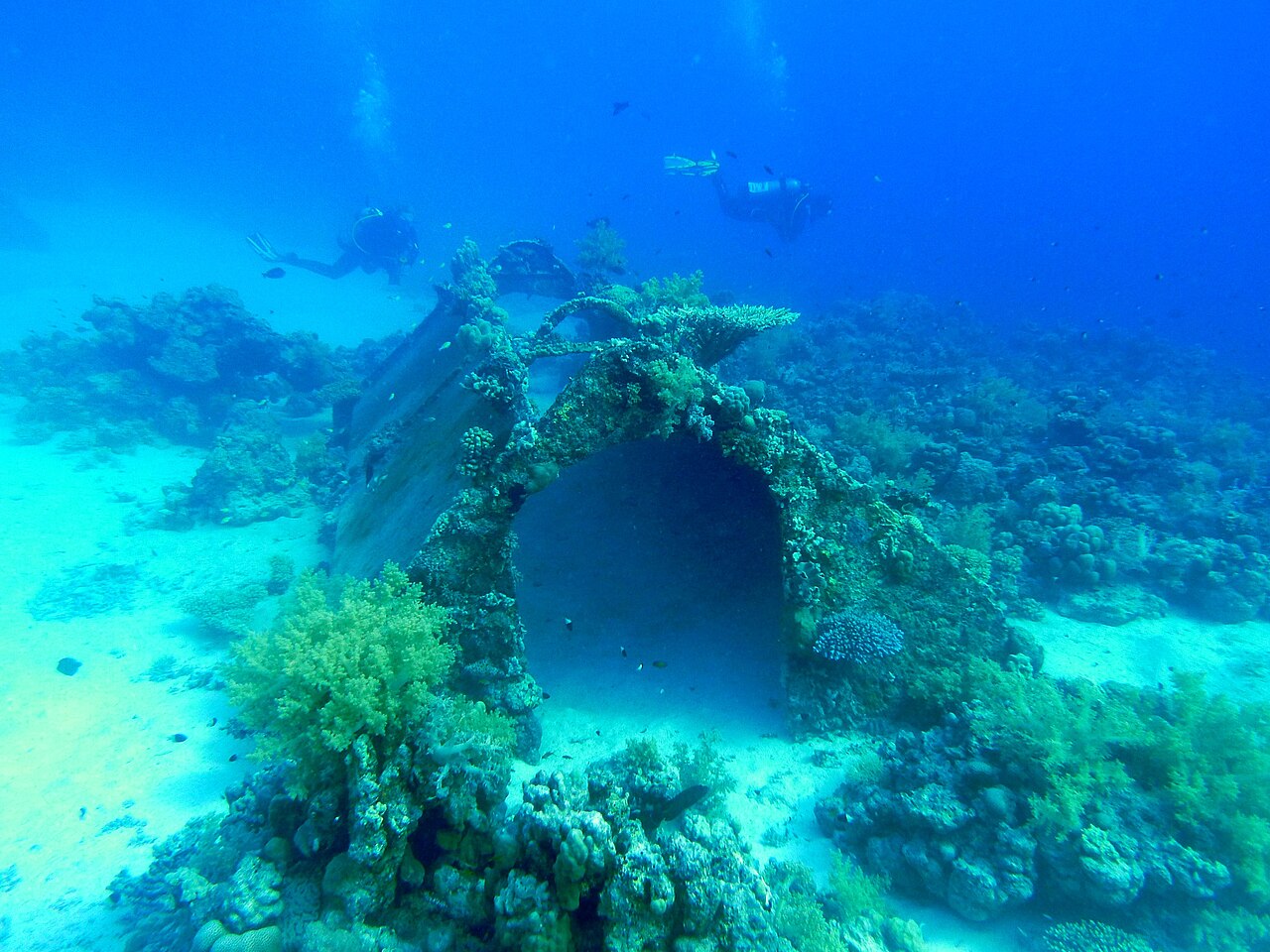
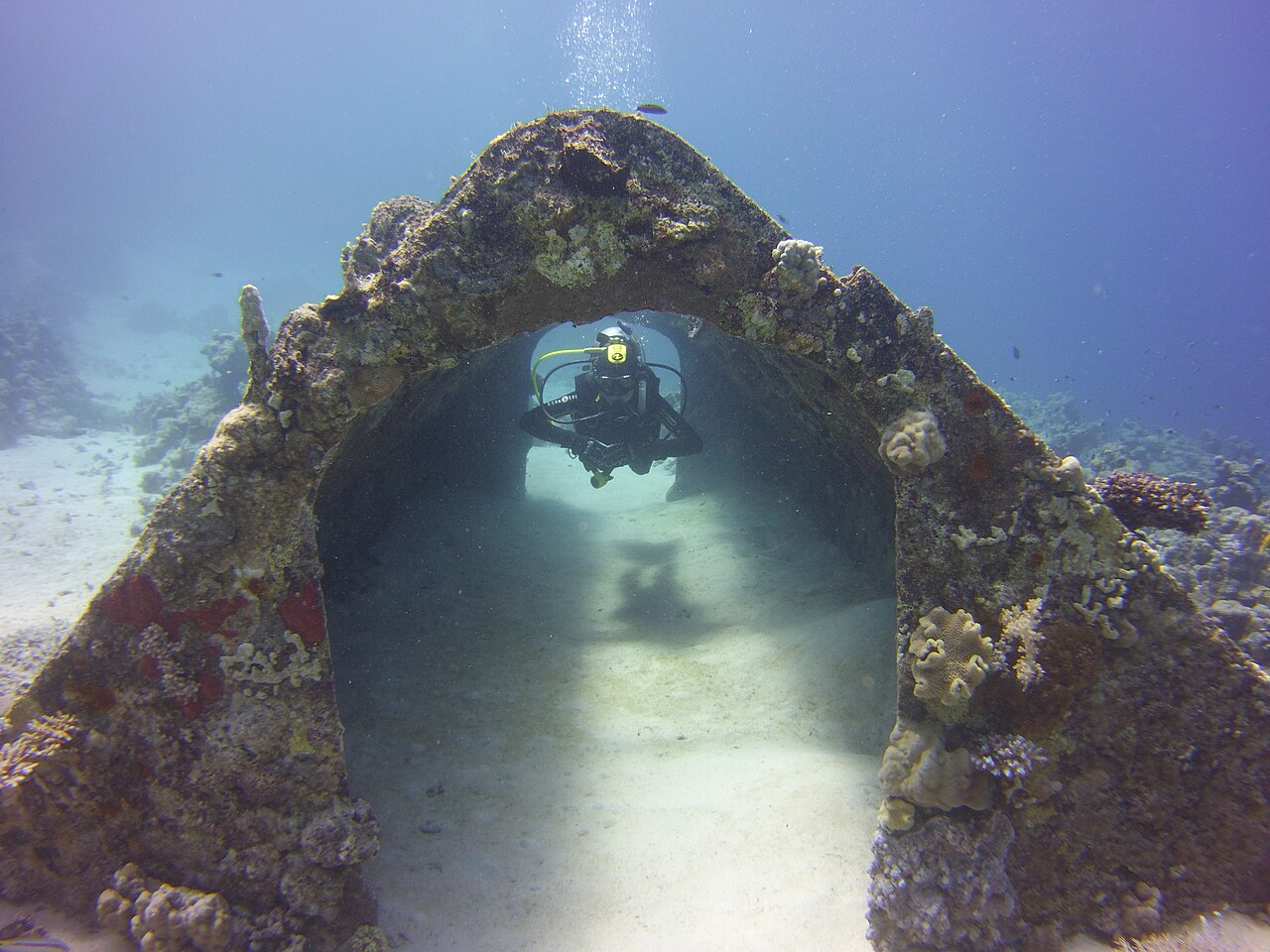
The hangar dome at 9 m, just south of the western passage — the one structure a freediver can reach with time to spare (look, don't enter)
The south plateau at 25 m, where grey reef sharks hold station into the current and where the practical freediving limit sits
Scalloped hammerhead aggregations — sources put the peak variously at Jan–Apr, Nov–Apr or Mar–Jun, so verify locally if trips ever resume
Pristine coral walls in 25–40 m visibility, with Sanganeb lighthouse reef and the Umbria wreck as classic companion sites
Good to know
SafetySudan has been at war since April 2023. The US, UK and Australia all maintain top-level 'do not travel / leave now' advisories for the whole country, and Port Sudan International Airport has been hit by drone strikes and can close without warning, so there is no dependable way in. Operators such as Dive The World state plainly that they are not selling Sudan diving while the conflict continues. Treat this brief as a record for a future reopening, not as a trip you can plan in 2026.
SafetyShallow-water blackout is the leading killer in freediving, and it usually strikes in the last 10 m of the ascent or within 30 seconds of surfacing. Dive one-up-one-down with a trained buddy, and on deeper dives have a safety diver meet you at depth and escort you to the surface and through recovery breathing. LMC — the shakes, the vacant stare — is already an oxygen-debt warning, not a joke. Never dive alone here, for any reason.
SafetyEvery Conshelf II structure — garage, tool shed, hangar dome — is an overhead environment. Penetrating one on a breath-hold leaves no margin if you lose the exit or stir up sediment and lose visibility. Any air trapped inside the dome is sixty-year-old gas of unknown oxygen content: do not breathe it. Circle the structures from outside.
SafetyCurrents are strong and dives are typically drifts; a few careless minutes on the surface will separate you from the boat. Carry a surface float, an SMB and audible/visual signalling gear, and keep visual contact with the vessel. Beyond the resident grey reef sharks and silvertips, oceanic whitetips turn up — and freedivers, unlike scuba divers, spend most of their time at the surface where exposure is highest. If a shark closes in, stay vertical, face it, and move to the boat without turning your back.
SafetyThere is effectively no hyperbaric chamber or medevac capability. The nearest chambers are across the Red Sea in Egypt around Marsa Alam, and even in normal conditions an evacuation would take many hours to days. Blackout, lung squeeze and eardrum rupture are time-critical, and on site your entire treatment capability is the liveaboard's oxygen kit. Choose your depths and dive counts on the assumption that an accident cannot be undone.
RulesTravel and freediving insurance commonly excludes active conflict zones and destinations under government 'do not travel' advisories, which can void your cover entirely — read the actual policy wording. Note also that this is a boat-based sightseeing site, not a depth-training venue: there is no permanent line, lanyard or counterballast setup, so any depth work means bringing your own rig and protocols, and each liveaboard sets its own rules on whether freediving is allowed and what certification it requires. In normal times entry required proof of yellow fever vaccination, and photography around port and military installations was restricted — all of it worth re-checking whenever access reopens.
MannersConshelf II is underwater heritage and, by now, living reef. Don't grab the structures or brace against them with your fins, and don't take fragments, fittings or coral home as souvenirs. What finally collapses a structure that survived sixty years is usually a visitor's hand, not a storm.
Practical info
Access is by liveaboard only — roughly 40–50 km northeast of Port Sudan — with trips historically departing either from Port Sudan itself or, on cross-border itineraries, from Port Ghalib near Marsa Alam in Egypt (mainly October to July, with departures thinning out July–September). As of July 2026 commercial operations are suspended and government 'do not travel' advisories are in force, so before anything else confirm whether trips are running at all, then check pricing, schedules and certification requirements directly with operators and your government's advisory page. The realistic substitute right now is Egypt's southern Red Sea, from Marsa Alam down to Hamata.
On-site reviews📍 Verified on-site
No reviews yet. If you are here, be the first to leave one.