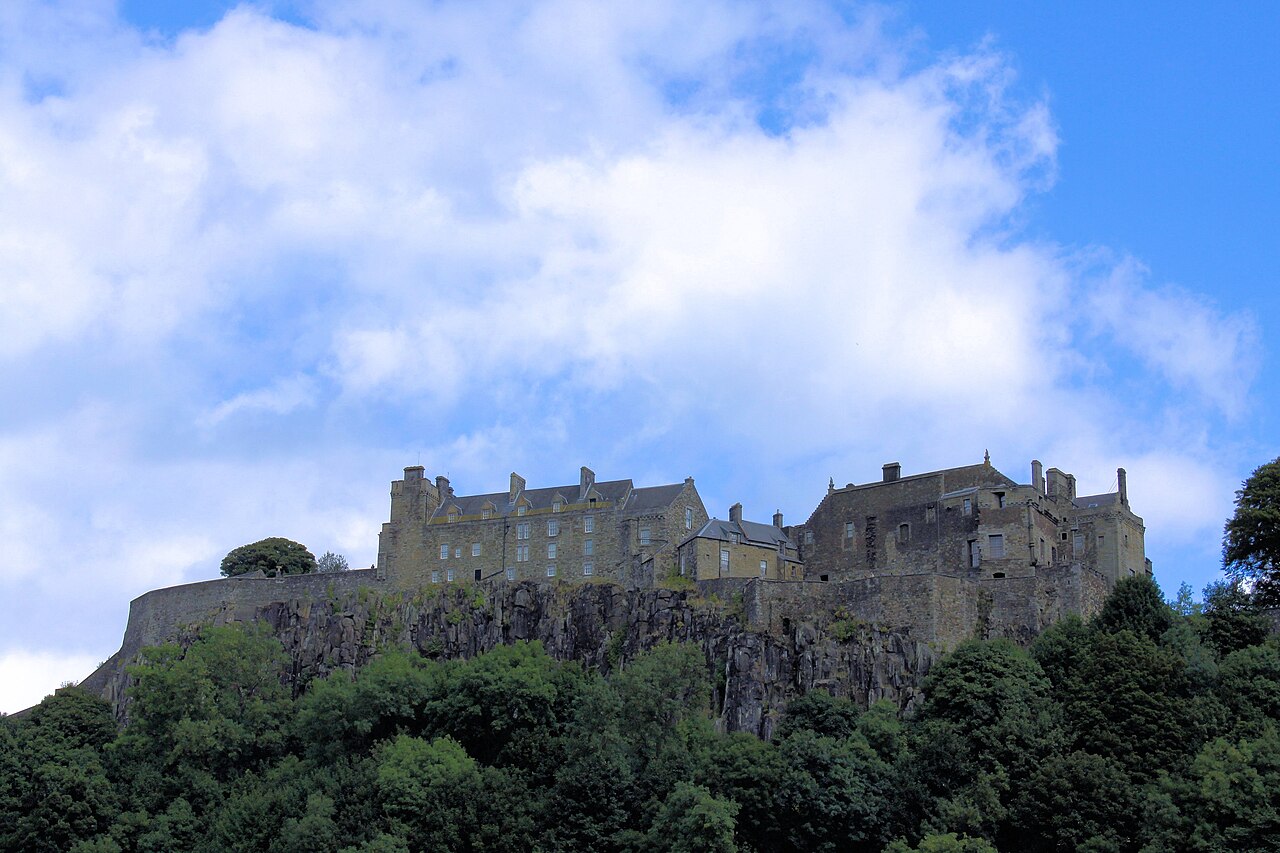
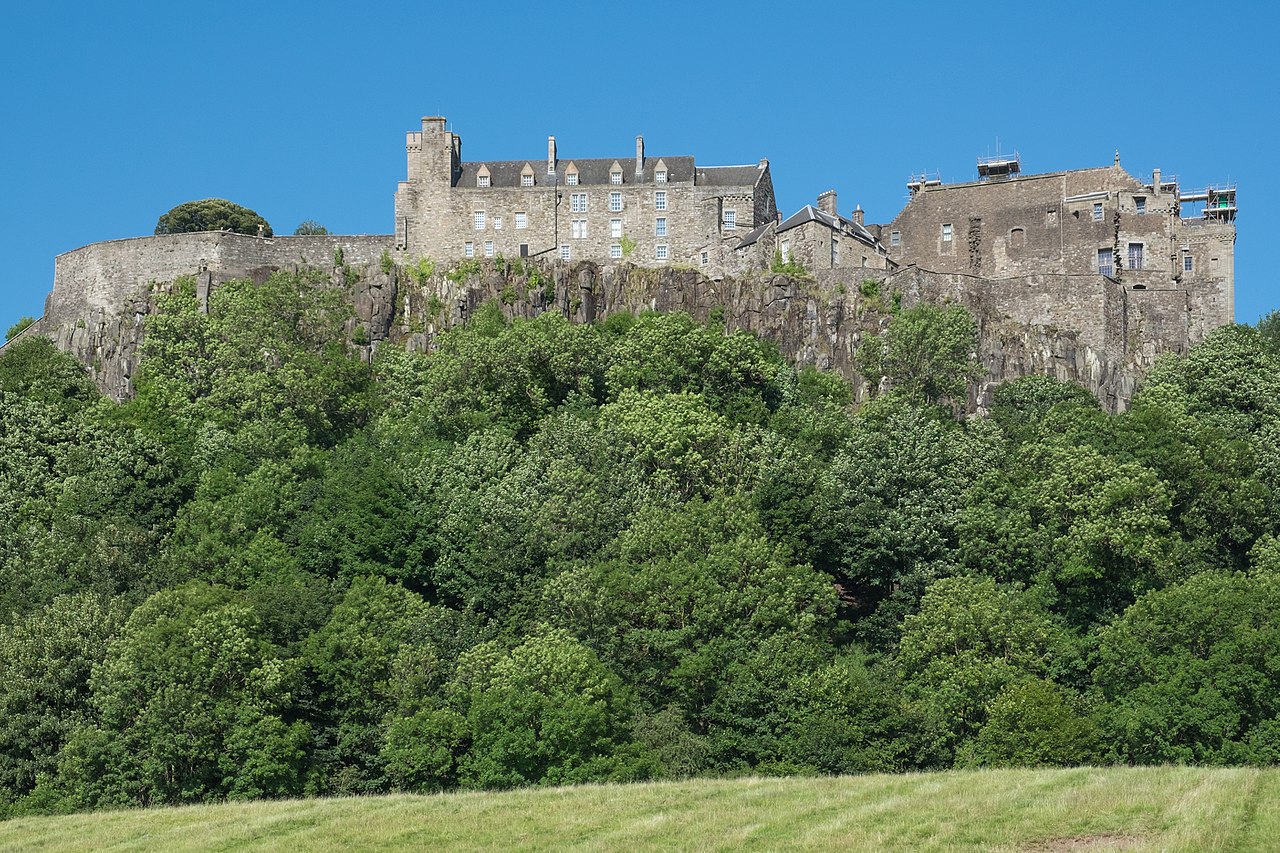
Stirling Castle stands on a volcanic crag in central Scotland, guarding the lowest historic crossing of the River Forth — a position so strategic it was called 'the brooch that clasps the Highlands and Lowlands together.' It is famous for the Renaissance Great Hall and Royal Palace built by James IV and James V, and as the childhood home of Mary Queen of Scots, who was crowned here in 1543. In 2026 it is cared for by Historic Environment Scotland, with the Great Hall, Royal Palace and woven tapestries meticulously restored, making it — alongside Edinburgh Castle — one of Scotland's grandest strongholds. From its hilltop ramparts you can take in sweeping views to the Wallace Monument and the surrounding countryside.
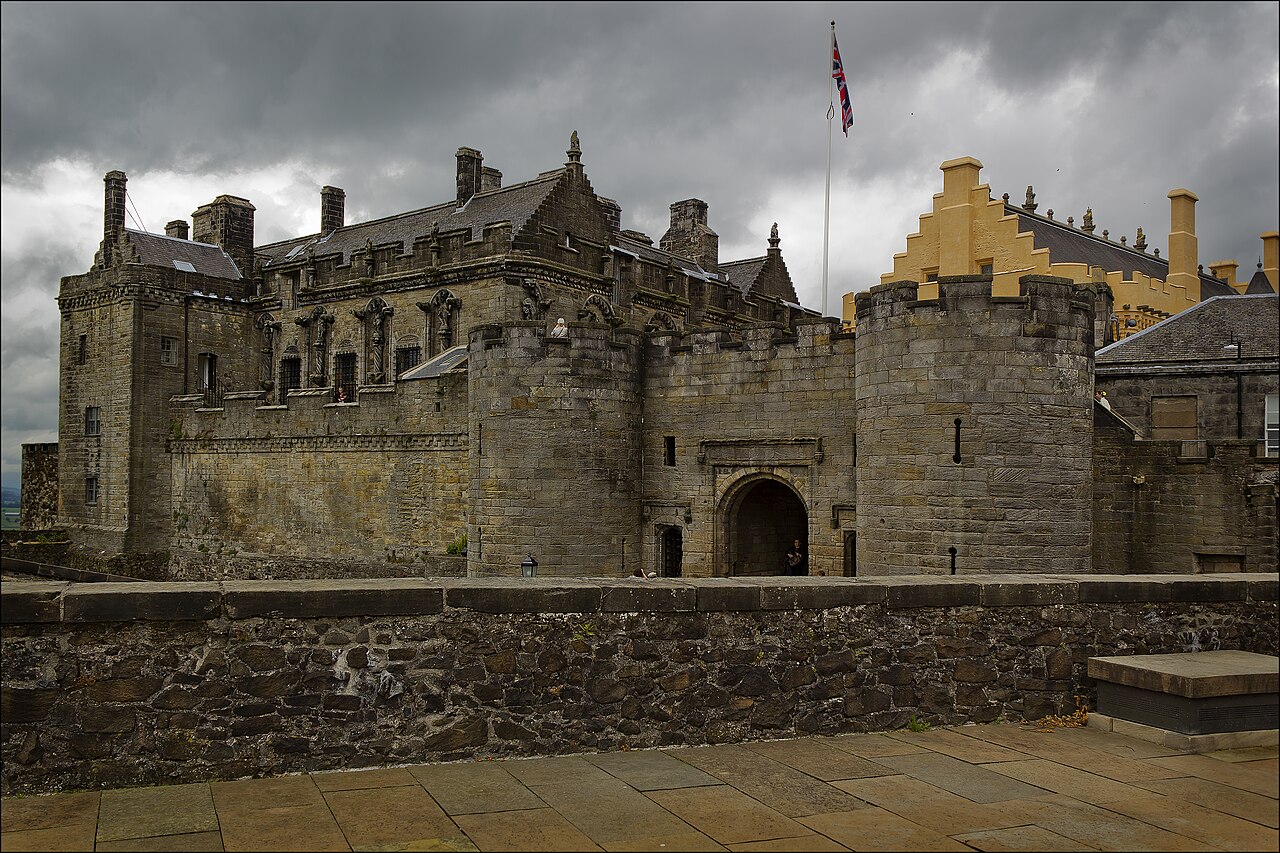
Great Hall: Completed by James IV around 1503, the largest medieval hall ever built in Scotland, restored with its hammerbeam roof and striking golden limewash exterior.
Royal Palace: A Renaissance masterpiece begun by James V in the 1540s, with rooms restored to their appearance in the era of Mary Queen of Scots — richly painted walls and gilded ceilings.
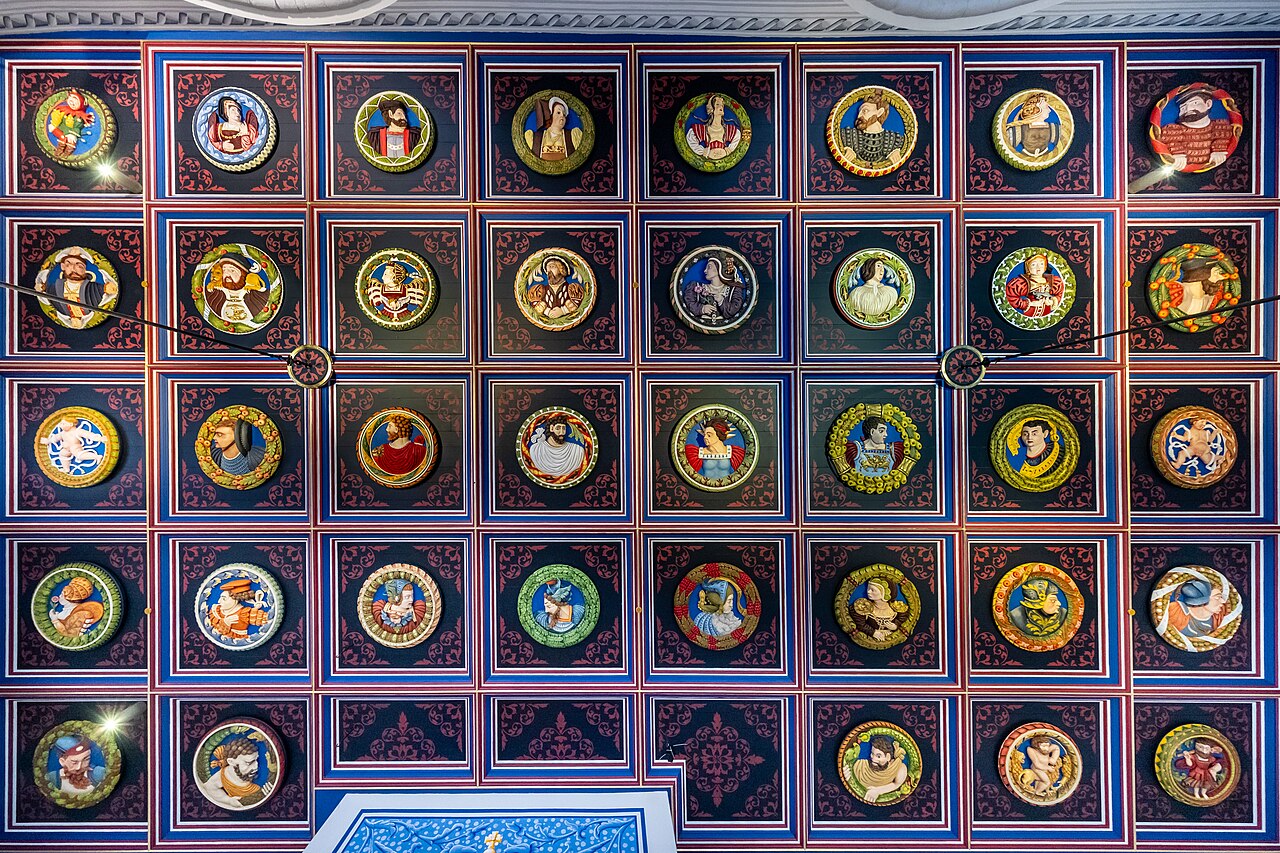
The Stirling Heads: Carved oak medallions of kings, queens, Roman emperors and mythological figures, often called 'Britain's other crown jewels' (originals in a gallery, replicas on the ceiling).
Hunt of the Unicorn tapestries: A seven-piece series hand-woven in the castle's own studio over roughly 13 years, now hanging in the Queen's Inner Hall.
Chapel Royal and the Great Kitchens: The chapel built in 1594 for Prince Henry's baptism, and the kitchens brought to life with wax figures re-creating a royal feast in preparation.
Ramparts and views: Walk the three main enclosures and the wall-walks for panoramic vistas toward the Wallace Monument and the Ochil Hills.
Good to know
SafetyThe castle sits atop a steep hill, roughly a 10–15 minute uphill walk from the train and bus station, so comfortable shoes are essential. The exposed ramparts can be windy and slippery — take care with children and older visitors.
SeasonScottish weather is changeable even in summer, with frequent rain, wind and chill. Pack a waterproof jacket and layers. Summer hours (Apr–Sep) run later than winter, so check the seasonal opening and last-entry times before you go.
RulesPre-booking a dated time slot online is recommended to guarantee entry. If you plan to visit several sites, an Explorer Pass may be better value, and pets are not permitted inside the castle.
MannersKeep quiet indoors, especially in the Chapel Royal, and do not touch the tapestries or the original Stirling Heads. Follow the zone-by-zone photography guidance (flash and tripods may be restricted).
CautionBuy tickets only from the official Historic Environment Scotland site (tickets.historic-scotland.gov.uk). Many third-party resellers push 'skip-the-line' access at inflated prices, so check both the price and the seller.
SafetyAs of 2026 access to the castle car park is restricted and the Castleview Park and Ride is recommended; the shuttle does not run on Sundays, so plan your visit day and transport accordingly.
Practical info
From Stirling train and bus station it is about 0.8 km — a steep 10–15 minute uphill walk — to the castle entrance (Castle Wynd, Stirling, FK8 1EJ). As of 2026 car-park access is restricted and the Castleview Park and Ride (not running Sundays) is recommended; always confirm the latest opening hours, prices and booking requirements on the official Historic Environment Scotland website.
On-site reviews📍 Verified on-site
No reviews yet. If you are here, be the first to leave one.