Diocletian's Palace is a vast seaside palace built around AD 295–305 as the retirement residence of the Roman Emperor Diocletian, and today it forms the very heart of Split's old town. Rather than a ruin behind fences, it is a 'living monument' where shops, cafés, apartments and a cathedral still operate inside the original Roman walls, making it one of the best-preserved examples of Roman architecture in the world and the core of the UNESCO-listed Historical Complex of Split (inscribed 1979). As of 2026 roughly 3,000 people still live within its walls, so it is best experienced as a lived-in Roman quarter rather than a museum. The gates, lanes and the Peristyle square are open and free 24/7, while only certain interiors (cathedral, bell tower, substructures) are ticketed.
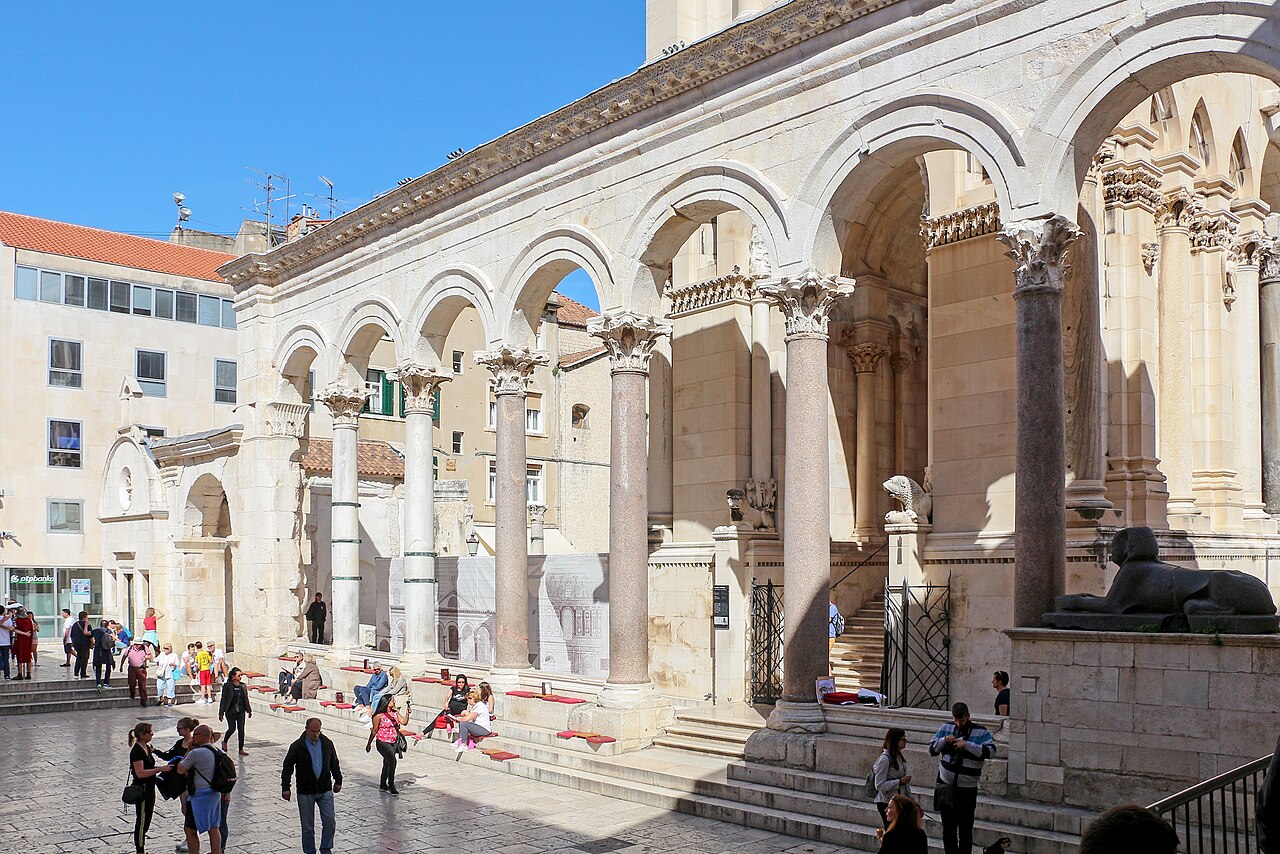
Peristyle (Peristil) — the colonnaded ceremonial court at the palace's heart, framed by red granite columns; best photographed at dawn or dusk before the crowds.
Cathedral of Saint Domnius (Sv. Duje) and its bell tower — originally Diocletian's mausoleum and now one of the oldest cathedrals in continuous use; climb the Romanesque bell tower for sweeping views over the terracotta rooftops and harbour.
The Substructures / Cellars (Podrumi) — vast Roman basement halls that mirror the imperial apartments above; cool even in summer and famous as the 'dragon dungeon' filmed for Game of Thrones.
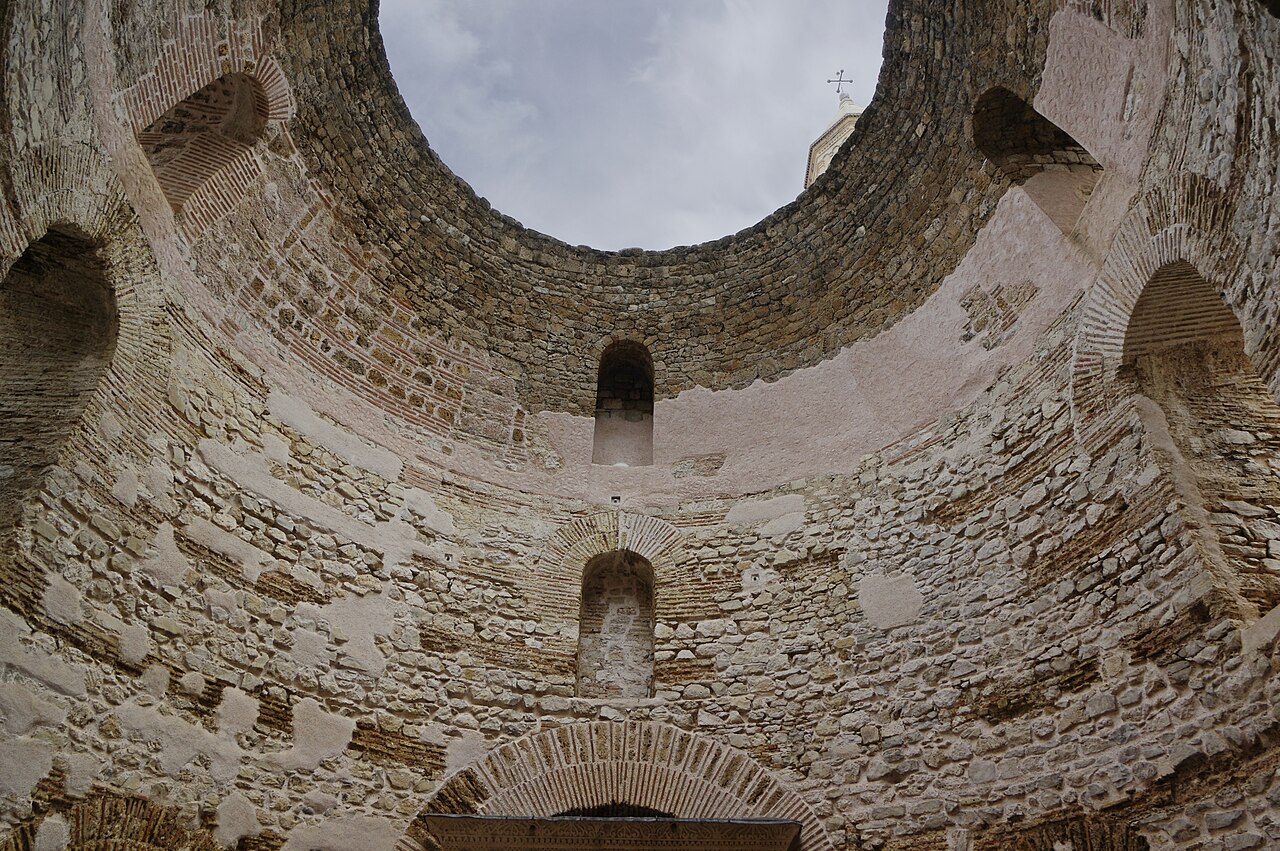
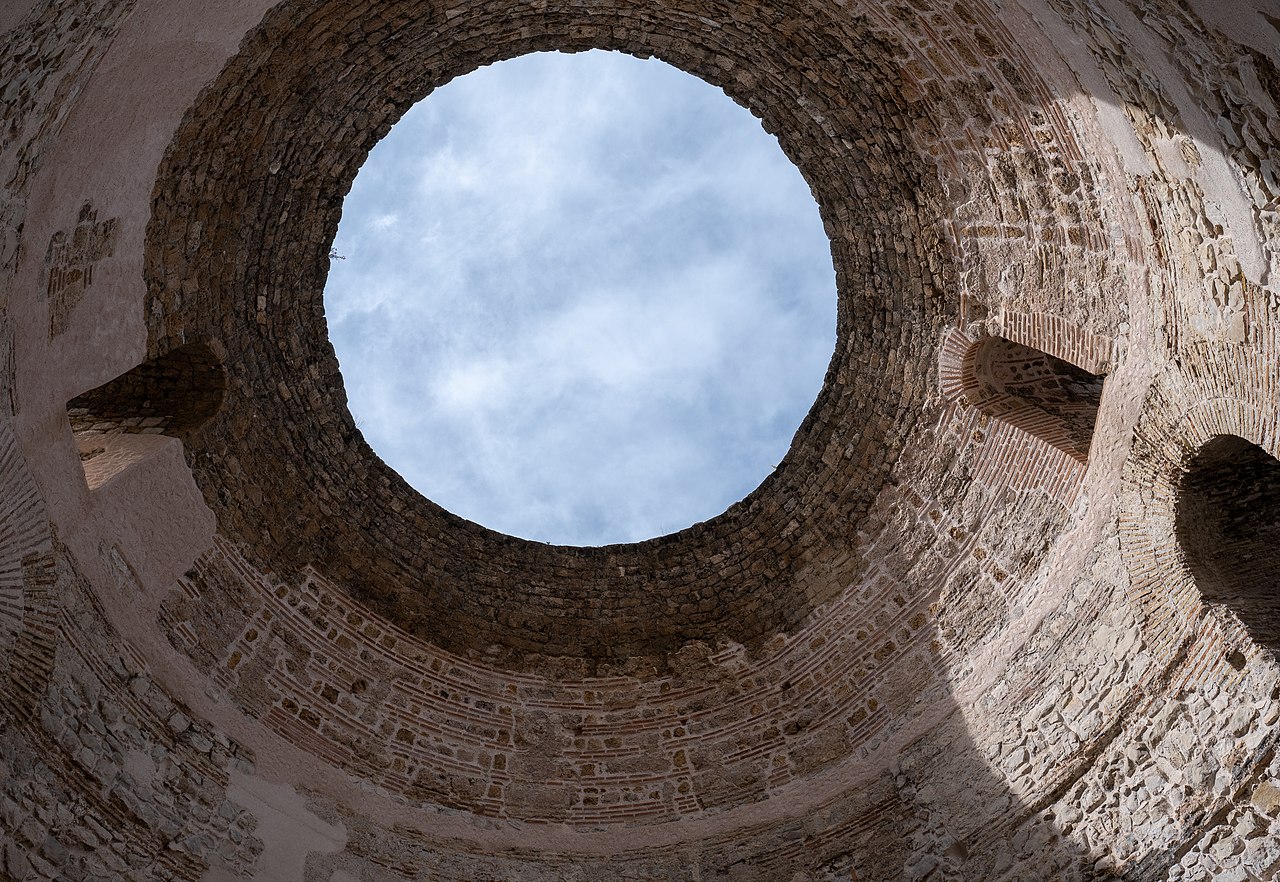
The Vestibule (Vestibul) — a round, domed entrance hall open to the sky, with superb acoustics where klapa a cappella singers often perform.
The Egyptian Sphinx — an around 3,500-year-old black granite sphinx brought from Egypt by Diocletian, still standing beside the Peristyle and the Temple of Jupiter (now the Baptistery).
The four gates — the Golden Gate (with the statue of Bishop Gregory of Nin, whose toe is rubbed for luck), Silver, Bronze (facing the Riva waterfront) and Iron Gate.
Good to know
SafetyThe marble streets and Peristyle floor are polished smooth by centuries of use and become very slippery in rain. Wear non-slip shoes, and hold the handrail on the narrow, steep stairs of the bell tower and the cellars.
SeasonMidday in July–August combines intense heat with heavy cruise-ship crowds, and the Peristyle and Riva get extremely congested. Visit around 8–9 a.m. or at sunset, retreat into the cool substructures during the hottest hours, and carry water and sun protection.
RulesFrom 2026 Split restricts late-night retail alcohol sales (roughly 8 p.m.–6 a.m., tightening from September) in the historic centre and along the Riva; shops and supermarkets are affected while licensed bars are not. Walking through the old town in swimwear or shirtless is also fined, so dress appropriately.
MannersThis is a residential quarter before it is an attraction. Keep noise down at night, do not peer into residents' doorways, windows or laundry, and don't block the narrow lanes while taking photos. Modest dress covering shoulders and knees is required to enter the cathedral.
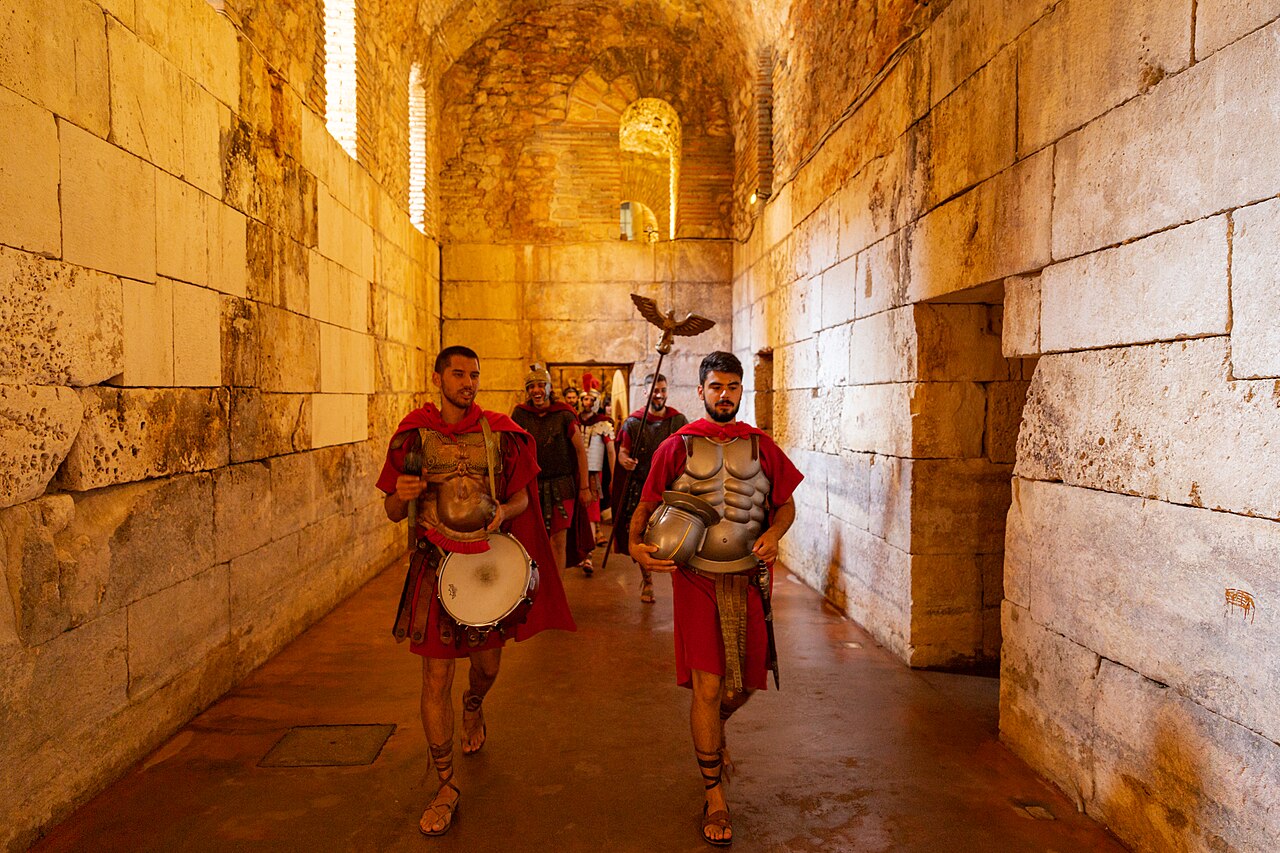
CautionThe café on the Peristyle steps charges premium prices simply to sit on its cushions, and costumed 'Roman soldiers' may offer a 'free' photo and then demand payment — agree on the price first or politely decline.
SafetyWatch for pickpockets in the crowded Peristyle, Riva and tight alleys. Wear bags in front and keep your wallet and phone in an inside pocket.
Practical info
The palace sits in the centre of Split's old town, a short walk from the Riva waterfront and the bus/ferry terminals; the gates, lanes, Peristyle and Vestibule are free and open 24 hours year-round. Ticketed interiors — the cathedral and bell tower, the substructures, and the Temple of Jupiter (Baptistery) — generally run roughly 9 a.m.–7 p.m. in summer (shorter in the off-season and winter), with prices around €5 for the cathedral alone, about €15 for the combined 'purple' ticket (cathedral, bell tower, baptistery, treasury, crypt) and around €10 for the substructures, but always confirm the latest hours and fares before visiting.
On-site reviews📍 Verified on-site
No reviews yet. If you are here, be the first to leave one.