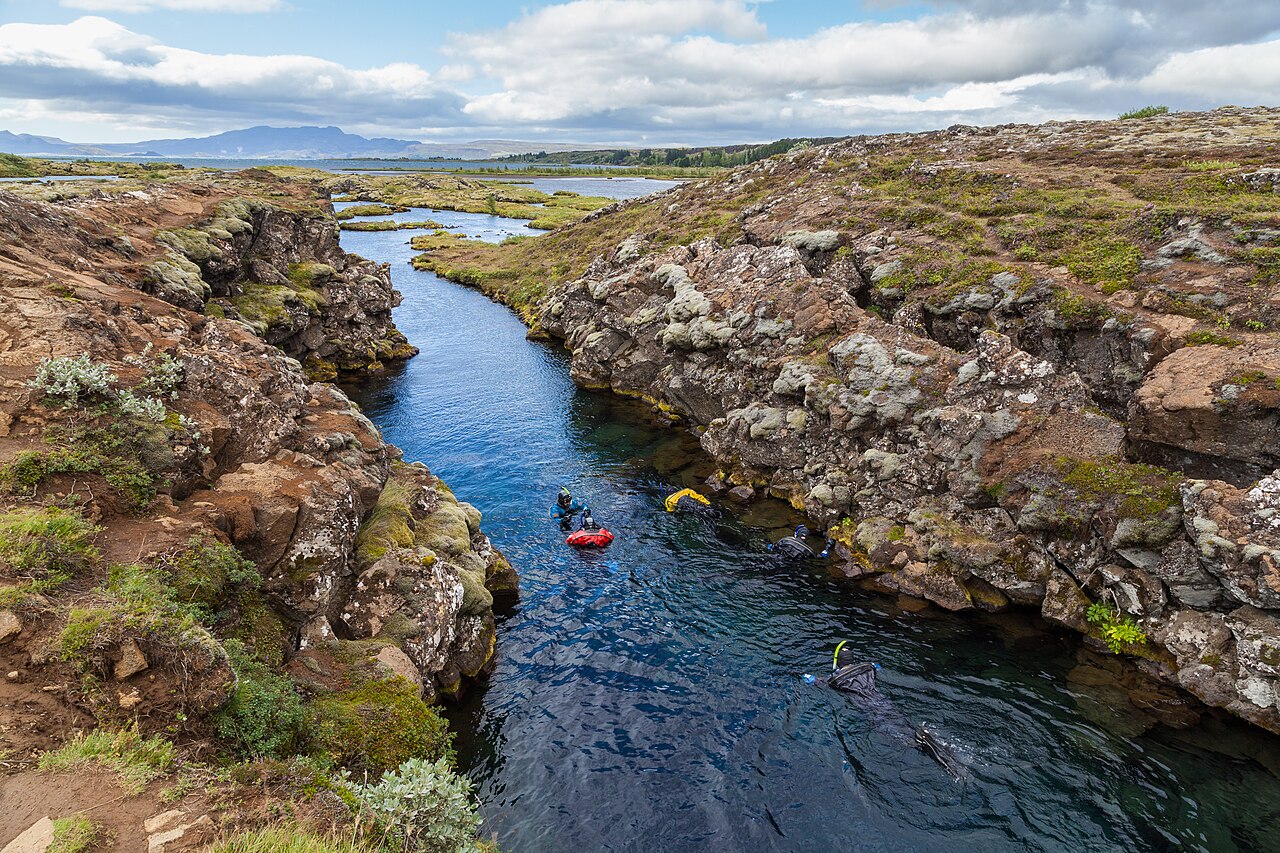
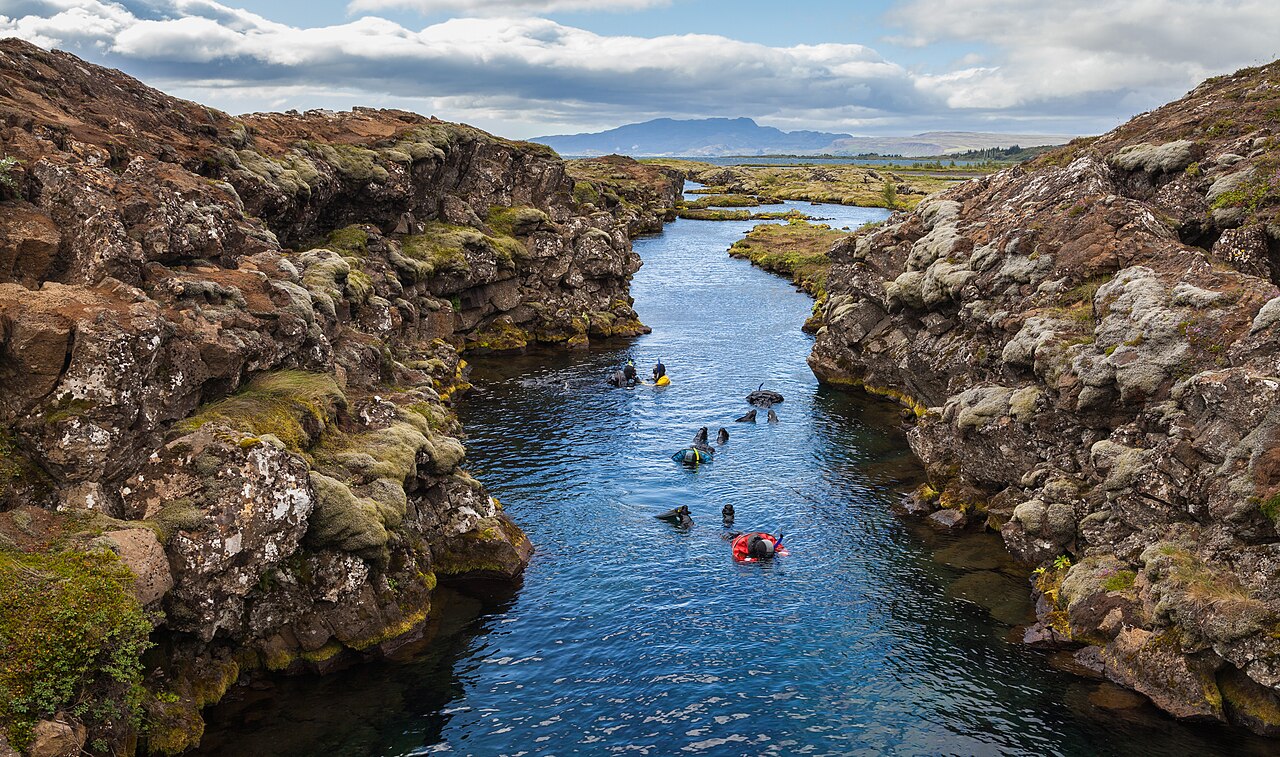
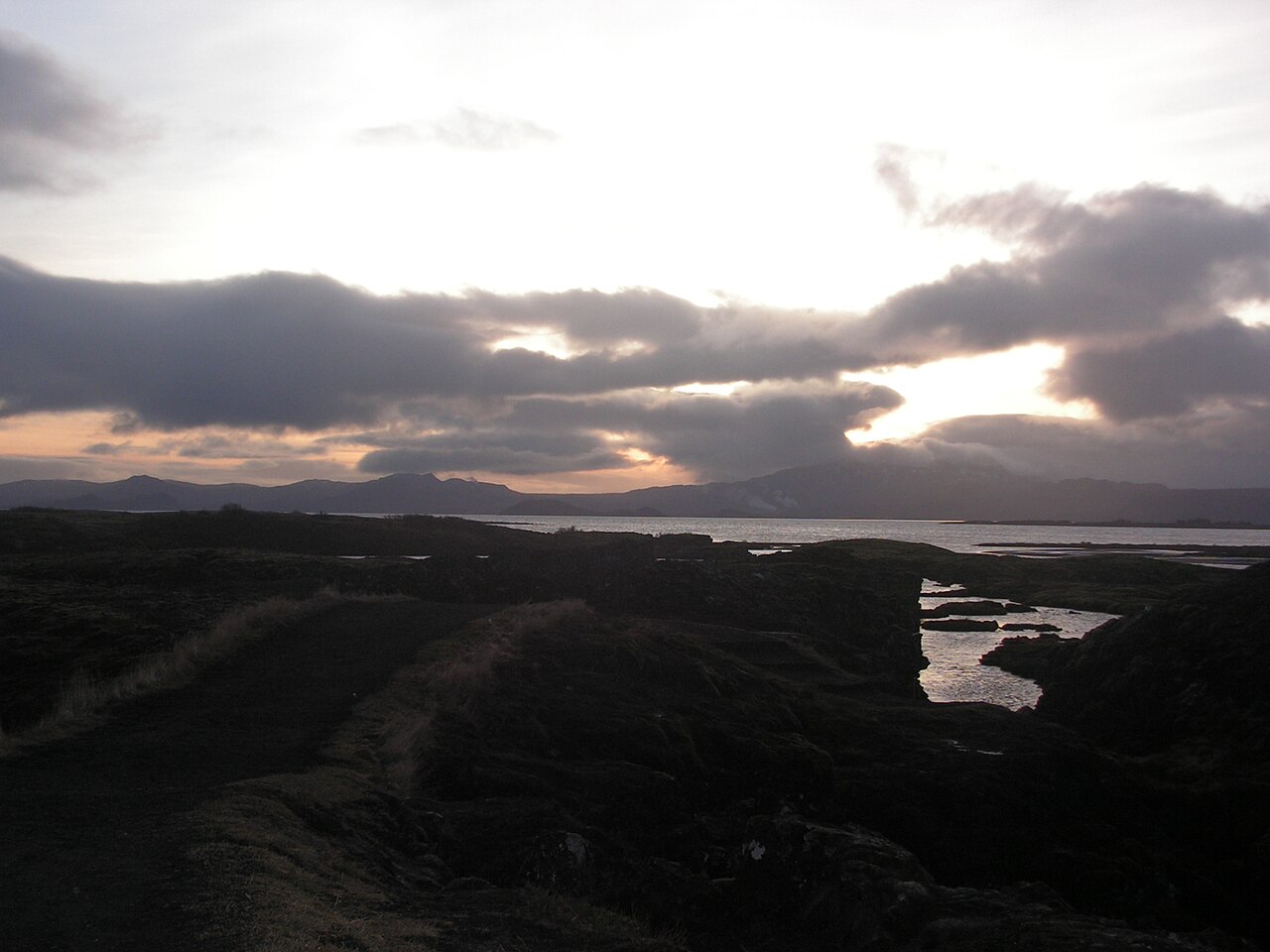
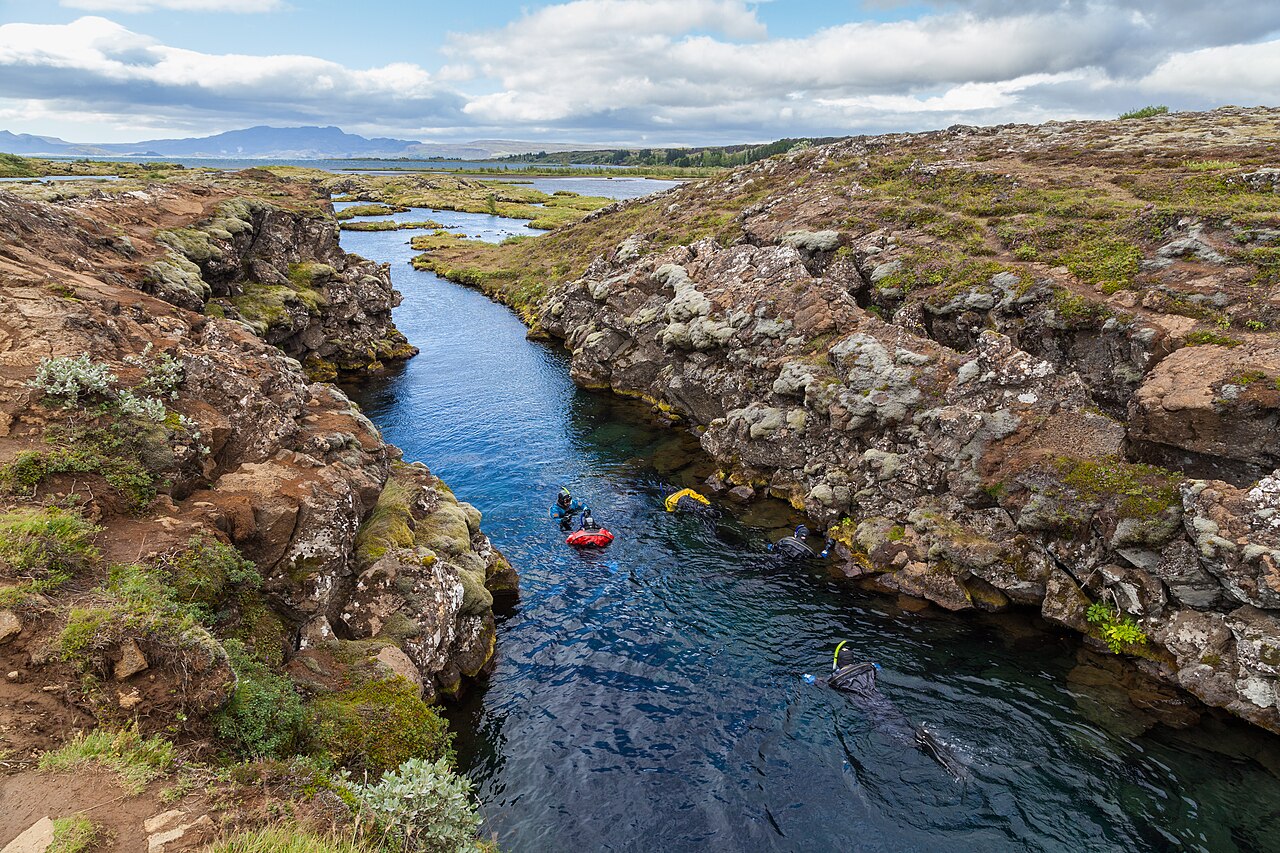
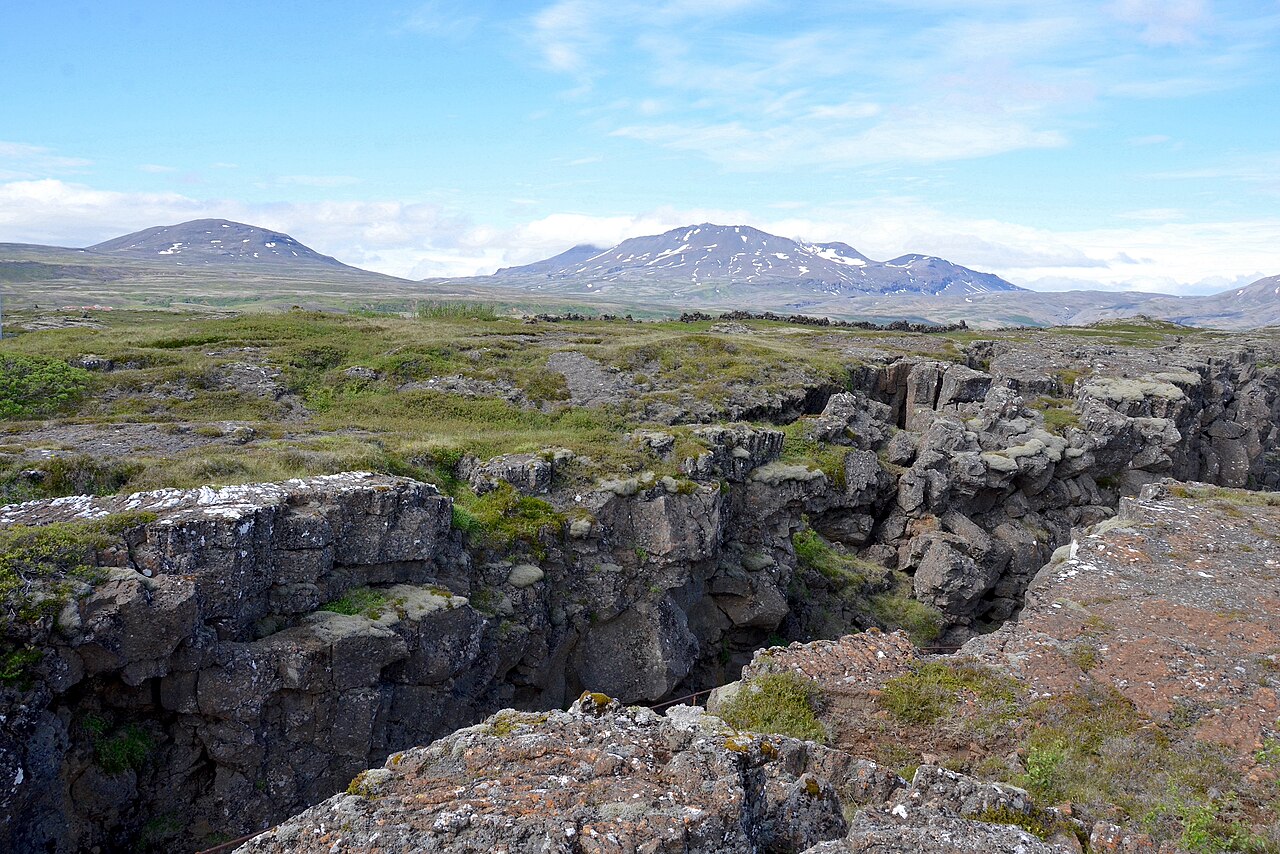
Silfra is a freshwater fissure inside Iceland's Þingvellir National Park, where the North American and Eurasian plates pull apart by roughly 2 cm a year and the crack fills with meltwater from the Langjökull glacier. Because that water spends 30 to 100 years filtering through porous lava before it surfaces, visibility regularly exceeds 100 metres — the reason people describe the sensation as hanging in air rather than floating in water. The temperature sits at 2–4°C year round, park rules cap any descent at 18 metres, and freedive lines typically work the 7–12 metre range plus the shallow algae fields of the Lagoon. The stricter rules imposed after a run of fatalities in 2017 are still in force in 2026, so in practice you enter only on a guided tour with an authorised operator and a signed medical statement.
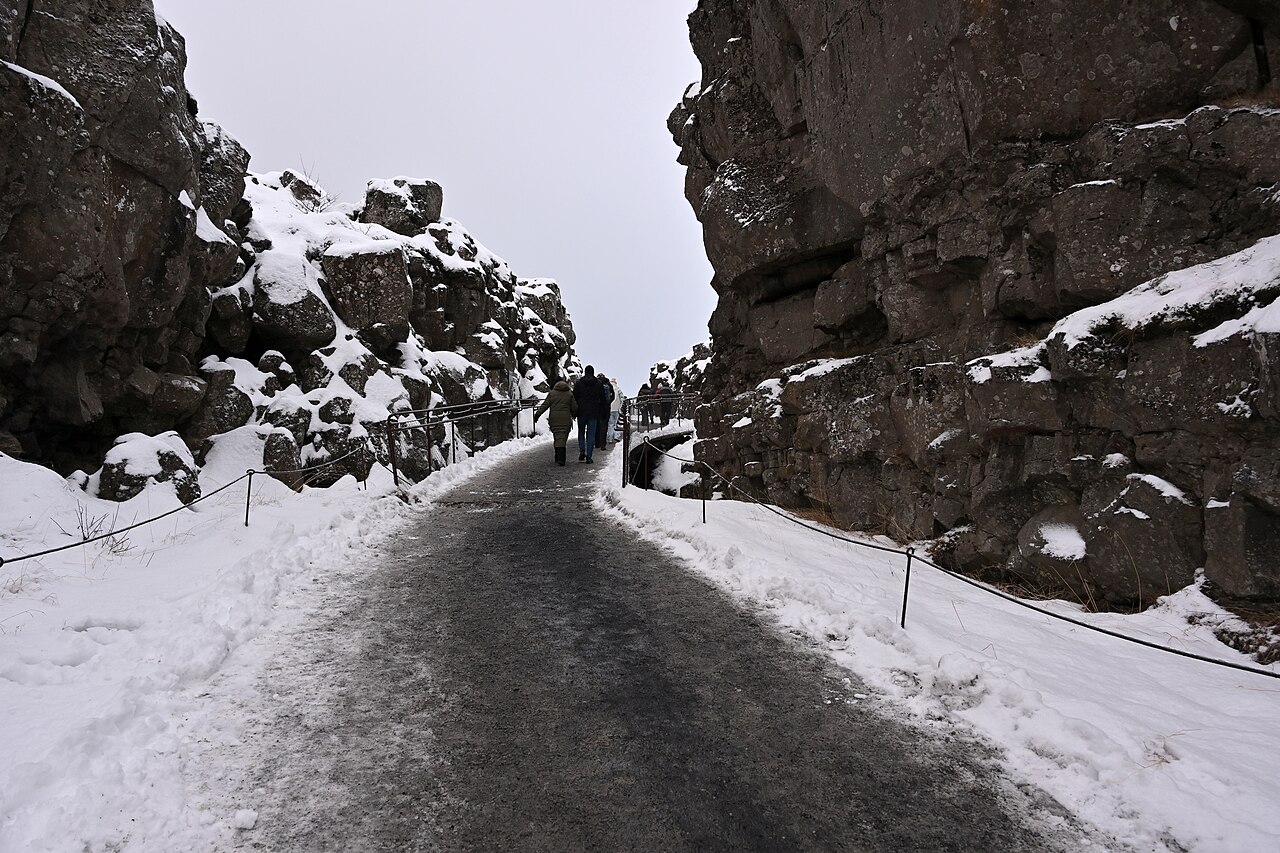
The Big Crack, where the walls close in far enough to touch both continents' rock at once — the spot where the rift geology stops being an abstraction
Silfra Hall and Silfra Cathedral: corridor-like canyons where a single descent shows you the far wall a hundred metres away, unbroken
Silfra Lagoon at the end of the route, carpeted in fluorescent green 'troll hair' algae that reads most vividly in summer light
Fresh water plus a 7 mm freediving wetsuit means your sea-water weighting is simply wrong here — insist on time in the shallows for a proper buoyancy check before anything else
The water is clean enough to drink mid-dive, and light behaviour is worth the trip on its own: midnight-sun summers, or winter night freedives where torchlight runs down the fissure walls
Good to know
SafetyThe 2–4°C water is what actually kills people here. Cold shock triggers an involuntary gasp and hyperventilation on entry, cutting your breath-hold well below what you hold on land, and even with hood and gloves part of your face stays in direct contact with the water. At least five people have died at Silfra since 2010 and the site was briefly closed in February 2017; most of those were cardiac-type events during shallow surface or snorkel activity, not deep dives. Assuming shallow means safe is the single most dangerous mistake at this site.
SafetyShallow water blackout and LMC happen at 3–5 metres, and cold-driven hyperventilation, unfamiliar weighting and adrenaline stack the odds against you. Run strict one-up-one-down buddy supervision with direct surface contact. A guided group runs up to six freedivers per guide, which is not one-to-one supervision, so treat depth or time competition within the group as off the table — and never hyperventilate before a dive.
SafetyUncharted cave systems drop to around 60 metres beneath the Big Crack, Hall and Cathedral. The clarity makes those openings look close and benign, but a freediver enters with no line and no lanyard, so one misjudgement means no way out. Entering caves or any overhead environment is flatly prohibited under park regulations.
SafetyThe dry-land part is demanding too. You walk roughly 150 metres in full gear to the entry point and about 350 metres back from the exit stairs, with 30–50 minutes in the water between. There is a slight current through the Lagoon that you have to swim against at the end. Operators screen for this: if you cannot walk 1.6 km in 12 minutes, you are not cleared to join.
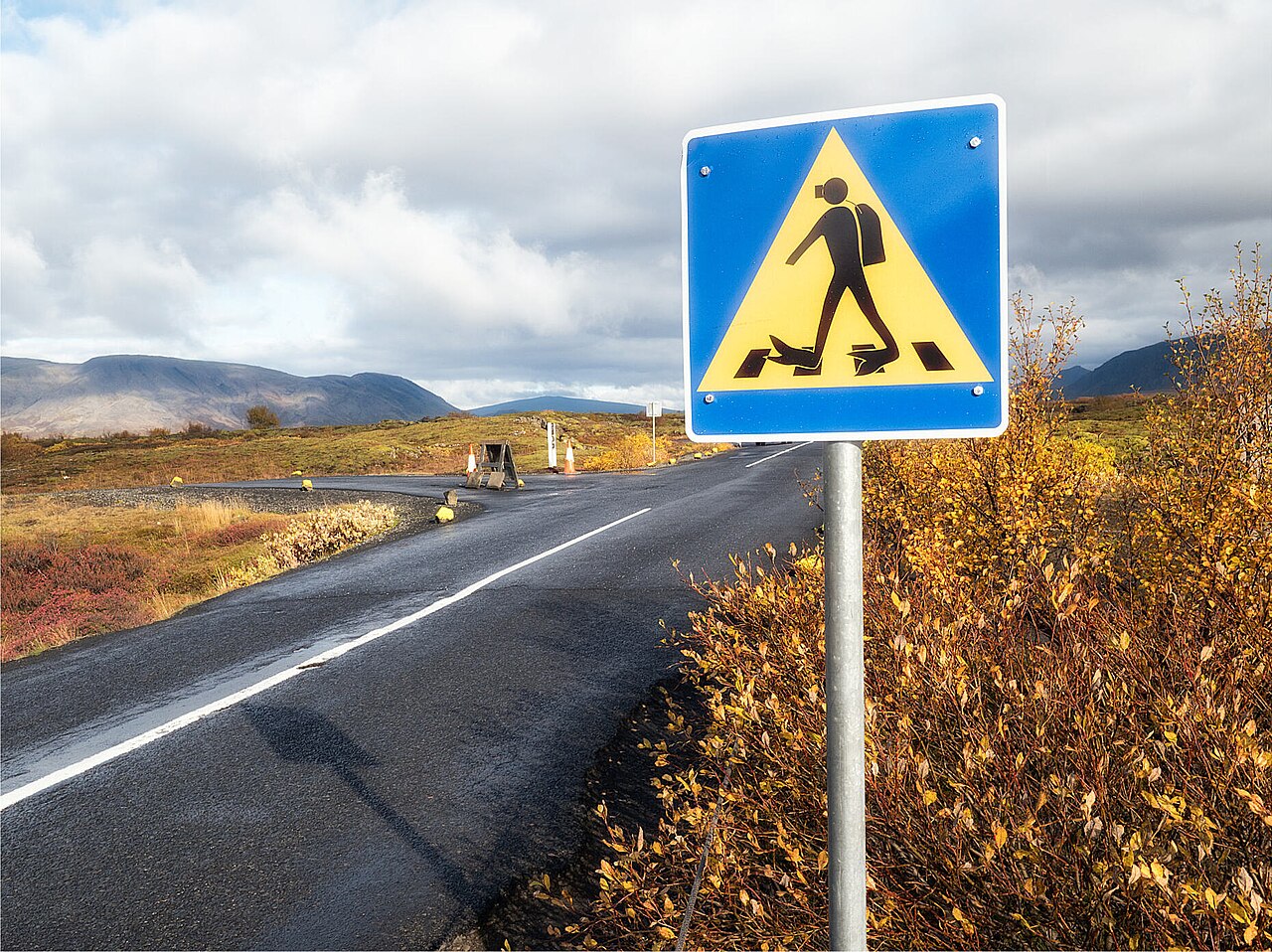
RulesPark rules require a buddy — entering Silfra alone is prohibited — cap depth at 18 metres, ban overhead environments, and require a booked permit. Freediving and snorkelling are the wetsuit track; scuba is a separate one requiring dry suit certification and recent logged dives. You cannot simply turn up with your own kit and get in, so plan around an authorised operator.
RulesThe medical statement is not a formality. Heart disease, cardiac surgery or a previous heart attack, lung disease or pneumothorax, epilepsy and pregnancy are outright exclusions; high blood pressure, diabetes, asthma, vertigo, cancer and regular prescription medication all require a physician's clearance. Anyone 60 or over needs a doctor's sign-off, and some operators set an upper age limit around 65. Minimum age, height and weight thresholds vary by operator (broadly 12–16 and up), so confirm before you book.
MannersÞingvellir is a national park and UNESCO World Heritage site. Stay on marked paths and off the lava moss, and underwater do not grab or stand on the algae beds or fissure walls. Change only in the operator's vans or designated areas, and note that parking is charged separately through an automated camera system (on the order of 1,000 ISK) — check the current rate and payment method at the time of your visit.
Practical info
Silfra is about a 45-minute drive from Reykjavík and roughly an hour from Keflavík (KEF) airport, which makes it easy to fold into a Golden Circle day; the water holds 2–4°C all year, so the season question is really about conditions on land, and June–August avoids the short winter daylight and icy roads. Freedive tours cap out around six guests per guide, so advance booking and a completed medical statement are effectively mandatory — and since prices, operating hours, minimum age and winter availability change, verify the current details with the operator and the national park before you commit.
On-site reviews📍 Verified on-site
No reviews yet. If you are here, be the first to leave one.