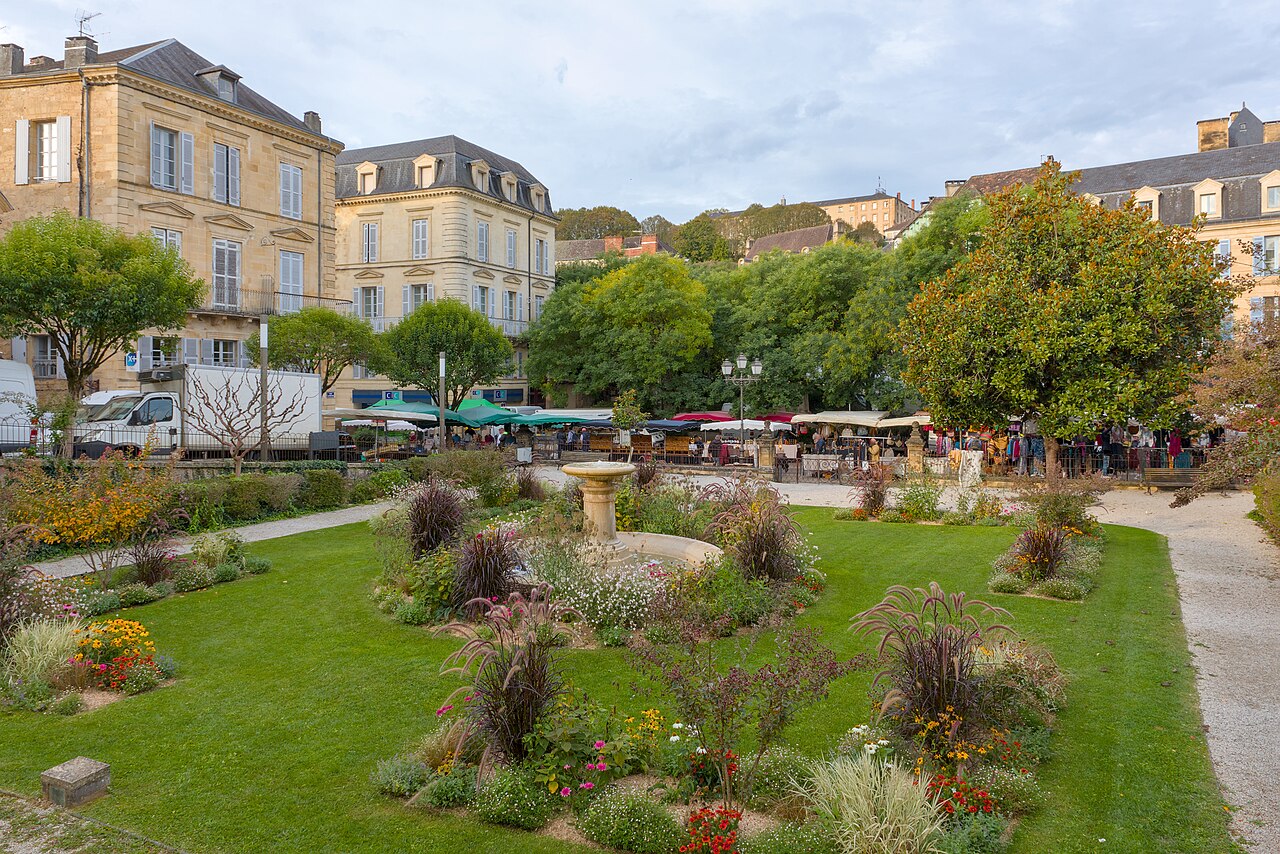
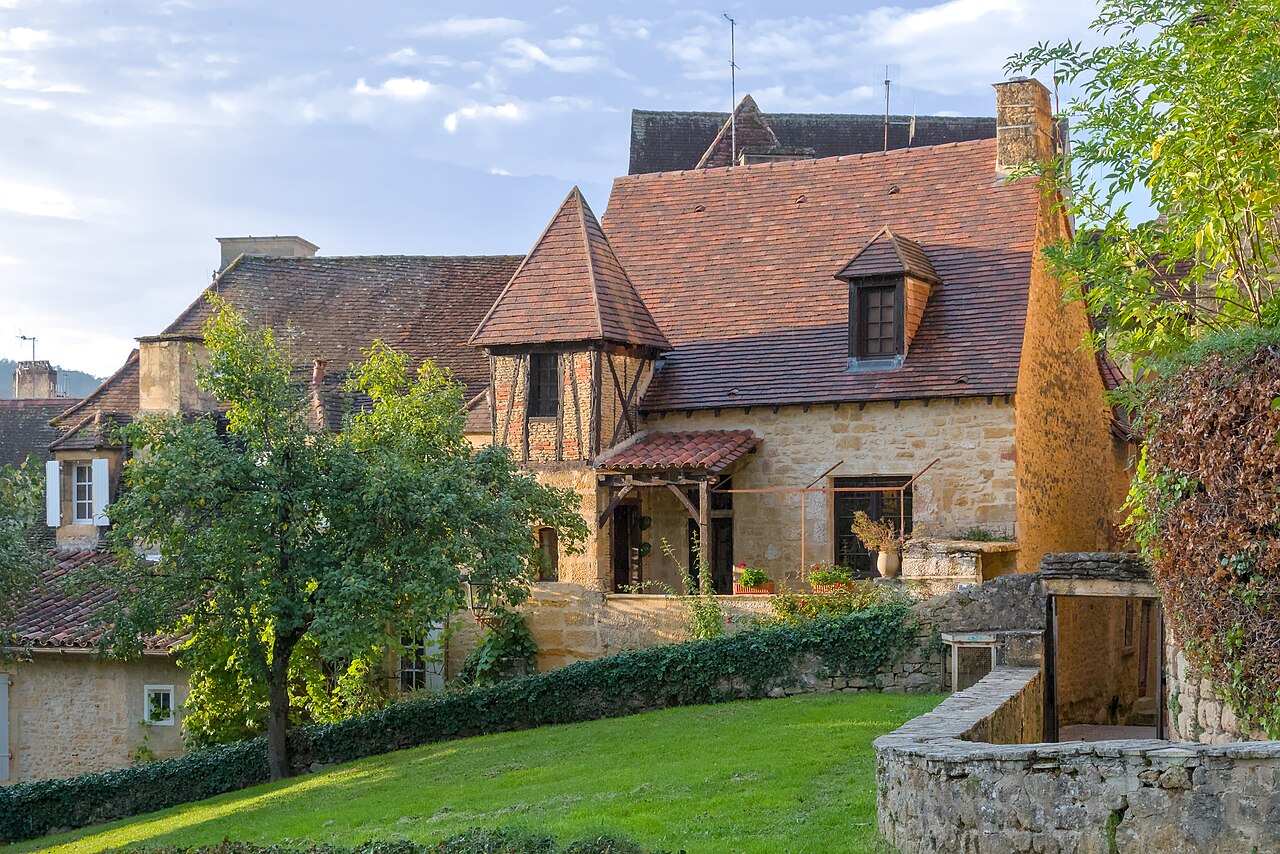
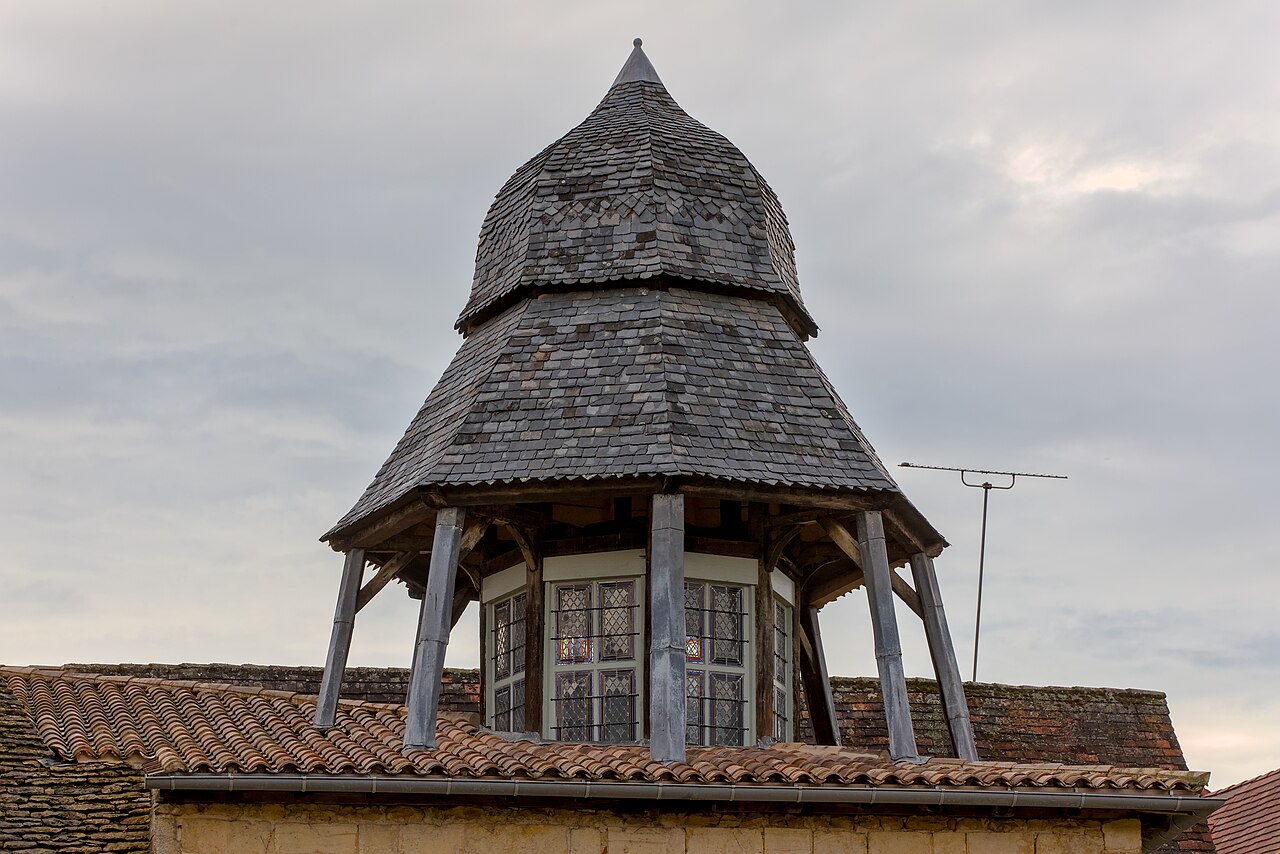
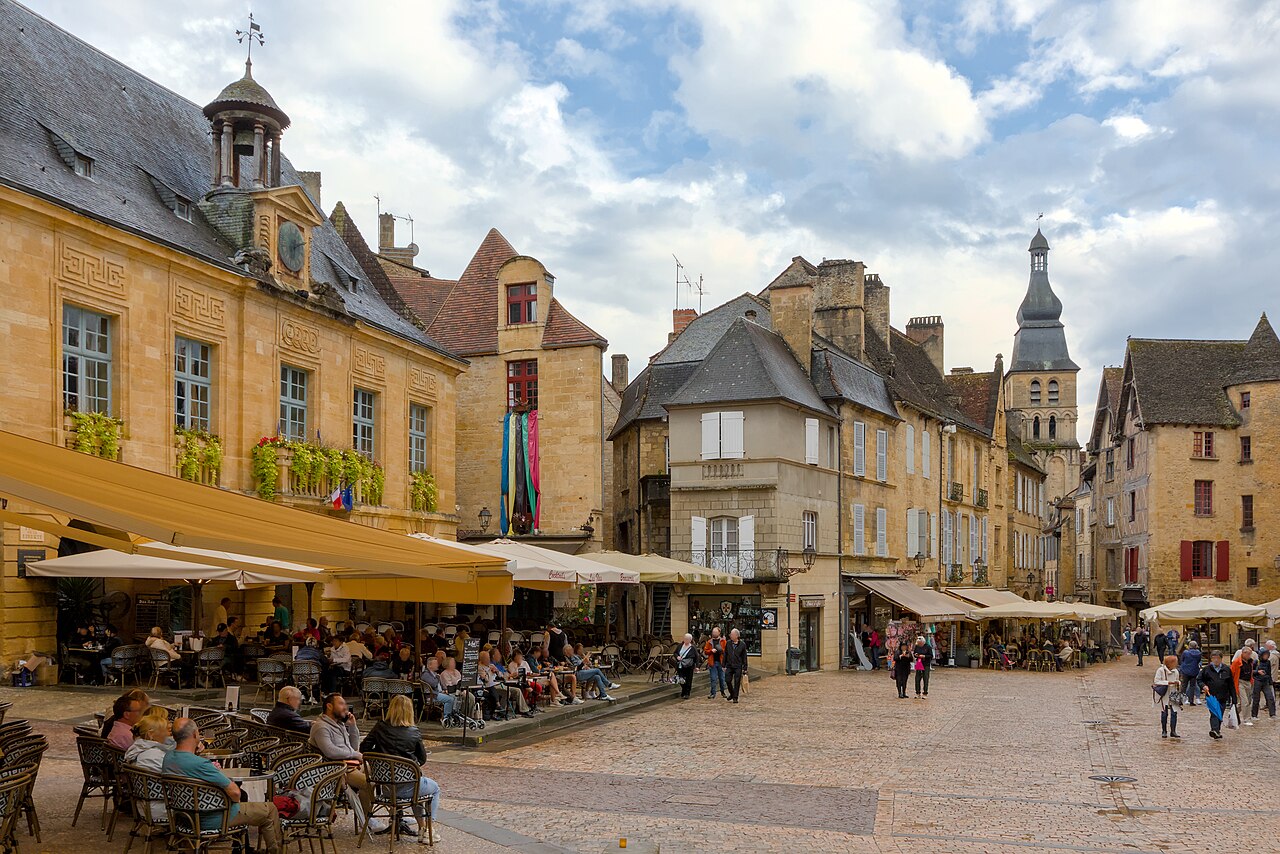
Sarlat (officially Sarlat-la-Canéda) is the capital of the Périgord Noir in the Dordogne, in France's Nouvelle-Aquitaine region, a compact walled town of roughly 8,700 residents. Its dense core of honey-coloured limestone mansions and stone 'lauze' roofs is one of the most complete medieval and Renaissance townscapes in the world, and it was the very first place in France where the 1962 Malraux heritage-protection law was applied (in 1964), leaving the whole centre preserved like a living museum. In 2026 it remains a busy destination famous for its gastronomy (foie gras, black truffle, walnuts), its Saturday market and its summer open-air theatre festival, so it is best enjoyed on foot, wandering the cobbled lanes and squares at an unhurried pace.
Place de la Liberté and the old-town lanes - the heart of Sarlat, lined with honey-stone mansions, medieval arcades and café terraces
Manoir de Gisson - a 13th-17th-century noble townhouse, furnished in period style and open to paid visits
Panoramic lift in the former Sainte-Marie church - a glass elevator installed in the bell tower by architect Jean Nouvel, rising about 35 m for a rooftop view over the lauze roofs
Cathédrale Saint-Sacerdos with the Lanterne des Morts and the Enfeus garden - the former abbey church beside a 12th-century Romanesque tower
Maison de La Boétie - the ornate Renaissance house where the philosopher Étienne de La Boétie was born
The Saturday and Wednesday markets and the covered market inside Sainte-Marie (redesigned by Jean Nouvel) - foie gras, Périgord truffles, walnuts and other local specialities
Good to know
SeasonThe town is crowded and hot in July-August and during the theatre festival (18 July-3 August 2026). To avoid the crowds and midday heat, visit early morning or late afternoon.
SeasonTruffles are in season in winter (December-February), when the truffle market runs; conversely, in the low season some shops, restaurants and sites cut their hours or close, so check opening times before you go.
RulesMost of the old town is a cobbled pedestrian zone, so comfortable shoes are essential. Cars are restricted from the centre; park in a paid lot on the edge and walk in.
MannersGreet shopkeepers and restaurant staff with 'Bonjour' as a matter of courtesy. At market stalls, do not handle produce yourself - ask the vendor. Tipping is not obligatory; a small amount for good service is plenty.
MannersFoie gras and duck confit are the region's signature dishes. If the production method troubles you, feel free to skip them - there are plenty of alternatives such as walnuts, truffles and strawberries.
CautionSome restaurants in the tourist core inflate prices with a 'tourist menu'. Check menu prices before ordering and confirm the amount shown when paying by card near the main squares.
SafetyThe town is generally safe, but watch for pickpockets in crowded markets and squares at peak times. Wear your bag in front and keep your passport and cash separated.
Practical info
You can reach Sarlat by train from Paris or Bordeaux, though it usually involves changes; a rental car is more convenient for exploring the wider Dordogne (nearest airports are Bergerac and Brive). The tourist office at 3 Rue Tourny runs guided walking tours daily from April to October, and the panoramic lift costs around 5 euros for adults - but always confirm the latest prices and opening hours, which vary by season and events, before your visit.
On-site reviews📍 Verified on-site
No reviews yet. If you are here, be the first to leave one.