Akrotiri is a Bronze Age settlement on the southwest coast of Santorini (ancient Thera), a Cycladic town closely tied to Minoan civilization. Buried under volcanic ash by the great Theran eruption around the 17th century BC, it survived so completely — multi-story houses, an advanced drainage and sewage system, streets and frescoes — that it is often called the 'Pompeii of the Aegean.' A bioclimatic protective roof completed in 2012 shelters the excavations, with elevated walkways that let you look down over the entire buried city even in the midday summer heat. Note that the wider Santorini area saw notable earthquake activity in 2025–2026, so check local advisories before visiting.
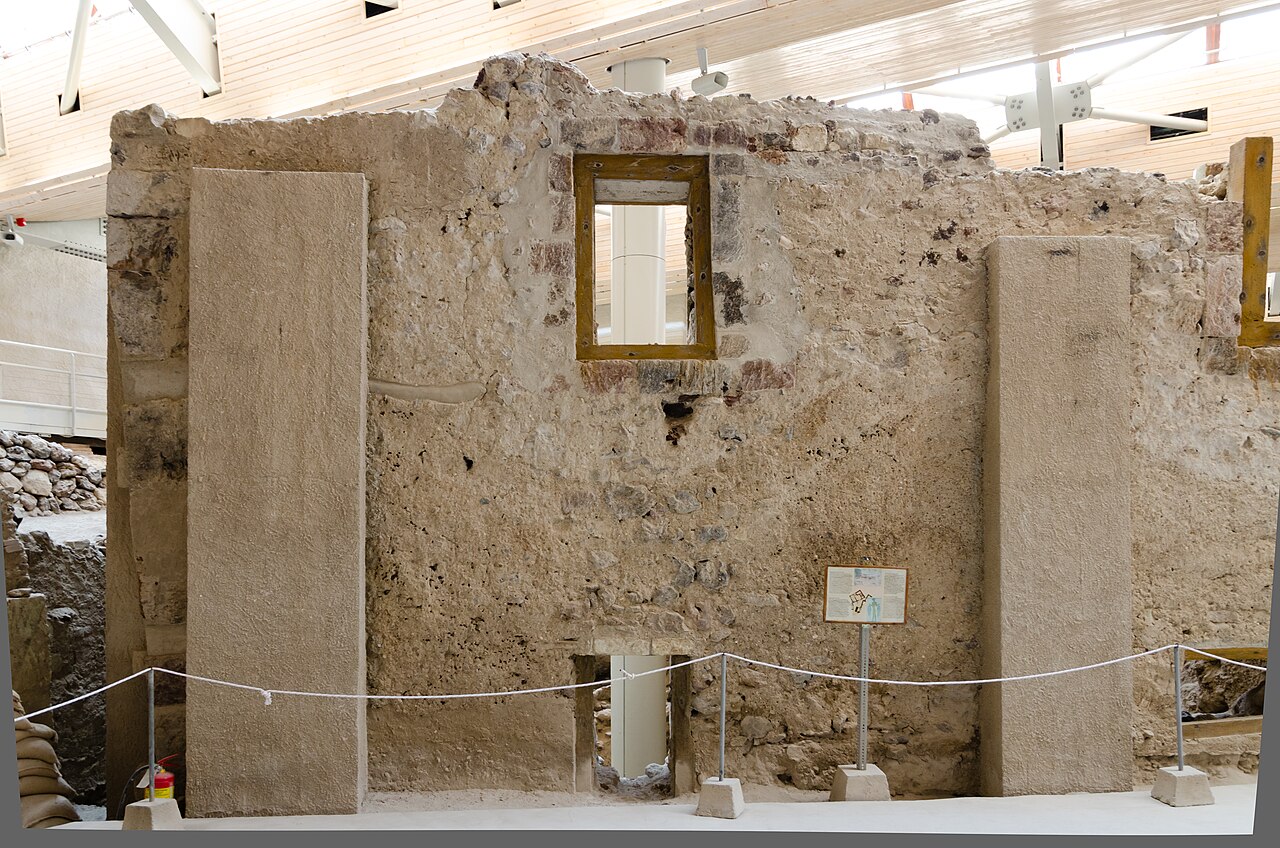
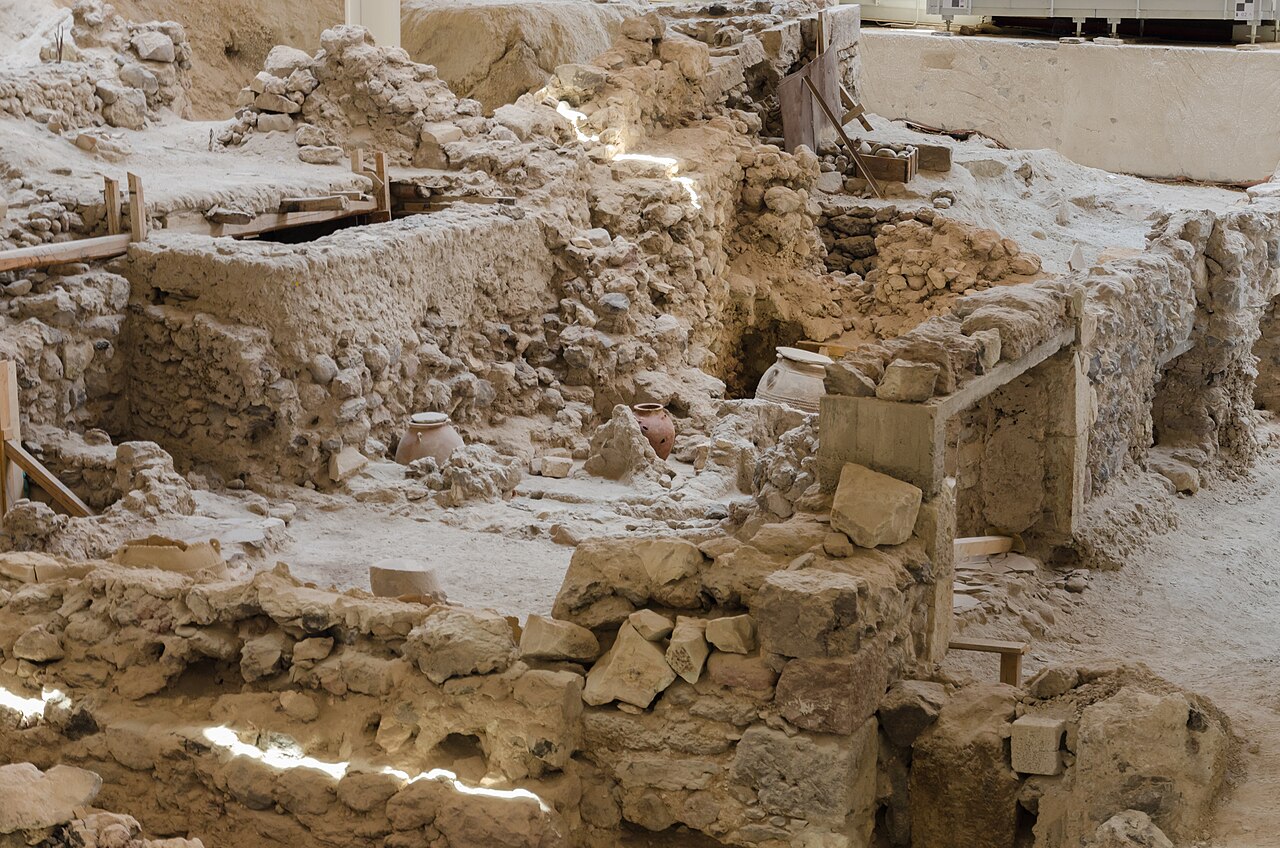
Elaborate two- and three-story stone buildings and narrow lanes viewed from suspended walkways
Key blocks such as the West House and Building Complex Delta, where the Ship Procession and Spring frescoes were found (originals now in museums)
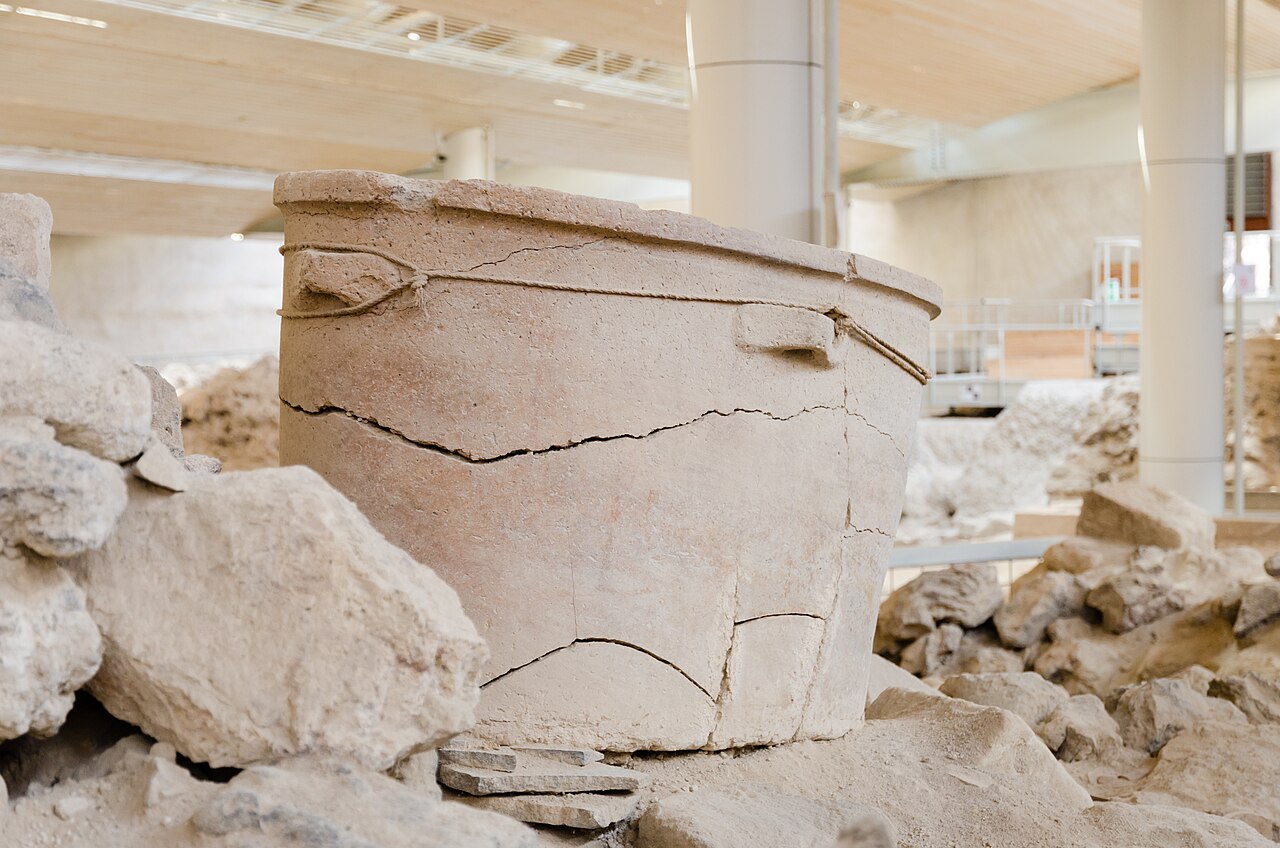
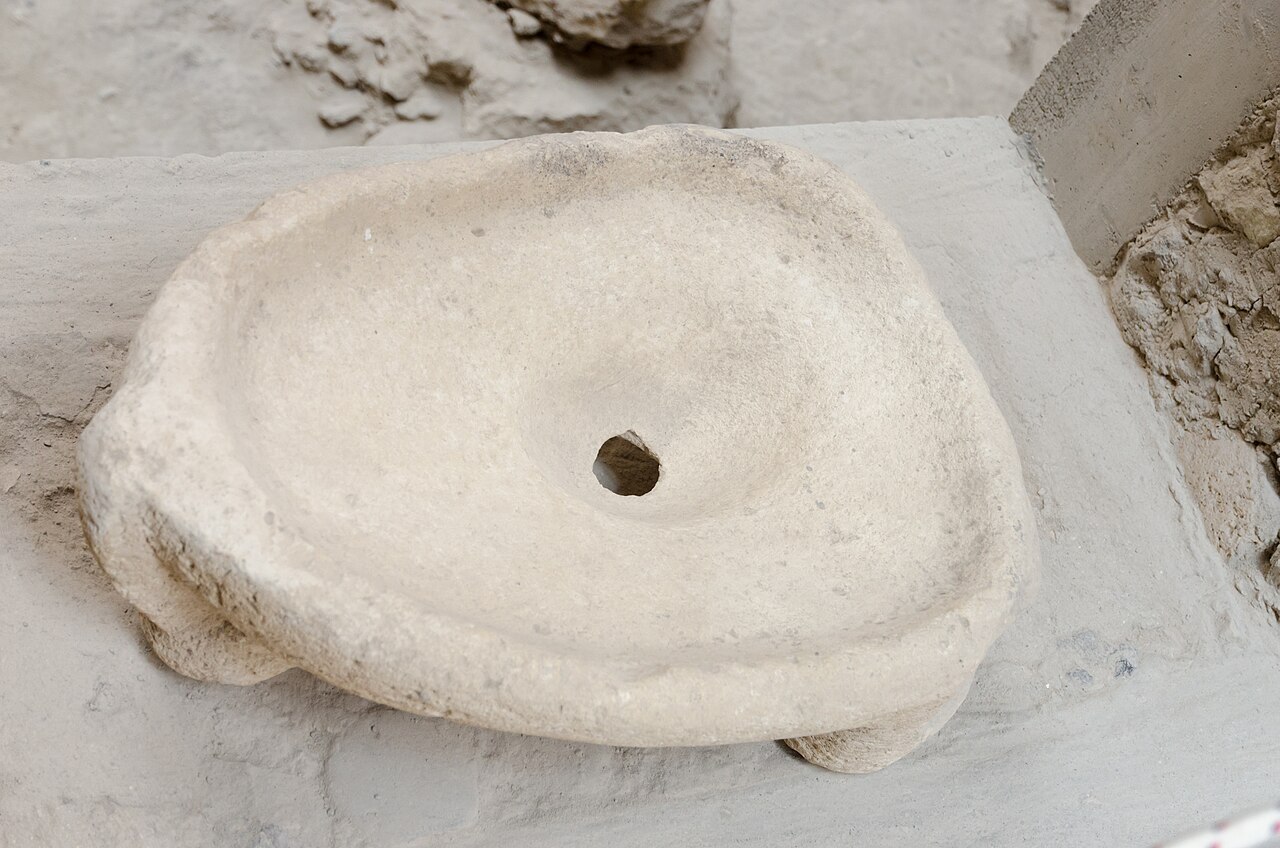
Large storage jars (pithoi) still standing in place, and the town's remarkably advanced 3,600-year-old drainage system
The near-total absence of human remains — evidence that residents evacuated in an orderly way before the eruption
The bioclimatic roof and elevated walkway structure that shelters and frames the whole site
Good to know
SafetySantorini is an active volcanic zone that experienced frequent seismic activity in 2025–2026. The site operates normally, but some trails or areas may be restricted — check current local notices and safety advice before you go.
MannersThe original frescoes are not at the site itself but in the Museum of Prehistoric Thera in Fira and the National Archaeological Museum in Athens; visit a museum too if you want to see the wall paintings.
RulesSince April 2024 entry uses timed slots. Pre-book your slot on the official site (hhticket.gr) and arrive within the permitted window around your time; free-admission days are extremely crowded.
SeasonSantorini summers are very hot, but the roofed site is shaded and good for a midday visit. Afternoons fill with tour and cruise groups, so go early or late; in winter the site is closed on Tuesdays.
MannersWalkways are narrow and can be slippery — wear non-slip shoes, never touch the fragile mud-brick structures, and bring water.
CautionBuy tickets only from the official hhticket.gr and beware of third-party resellers charging a markup. The public bus fare between Fira and Akrotiri (about €2.20 in 2026) is paid in cash euros on board.
Practical info
The site sits on Santorini's southwest coast, about 800 m from the modern village of Akrotiri and roughly 20 minutes by public bus from Fira. Hours are generally 08:00–20:00 in summer (Apr–Oct, shorter on Mon/Thu) and 08:30–15:30 in winter, closed Tuesdays; always confirm the latest admission fee (about €20), hours and timed-slot booking on the official site (hhticket.gr).
On-site reviews📍 Verified on-site
No reviews yet. If you are here, be the first to leave one.