Santa Teresa is a bohemian, artsy hilltop neighborhood above central Rio de Janeiro. Winding cobblestone lanes, colonial-era mansions, artists' studios, galleries and cafés give it a Montmartre-of-Rio feel. Its icon is the canary-yellow 'bonde' streetcar — opened in 1896 and the last surviving tram line in Rio — which closed after a fatal 2011 derailment and reopened in 2015, once again clattering across the Arcos da Lapa aqueduct. As of 2026 the visit centers on daytime strolling and a tram ride, wandering the steep lanes for art, viewpoints and old-world atmosphere.
Riding the yellow 'bonde' tram — Rio's only heritage streetcar, departing downtown near Carioca and crossing the Arcos da Lapa aqueduct as it climbs the hill
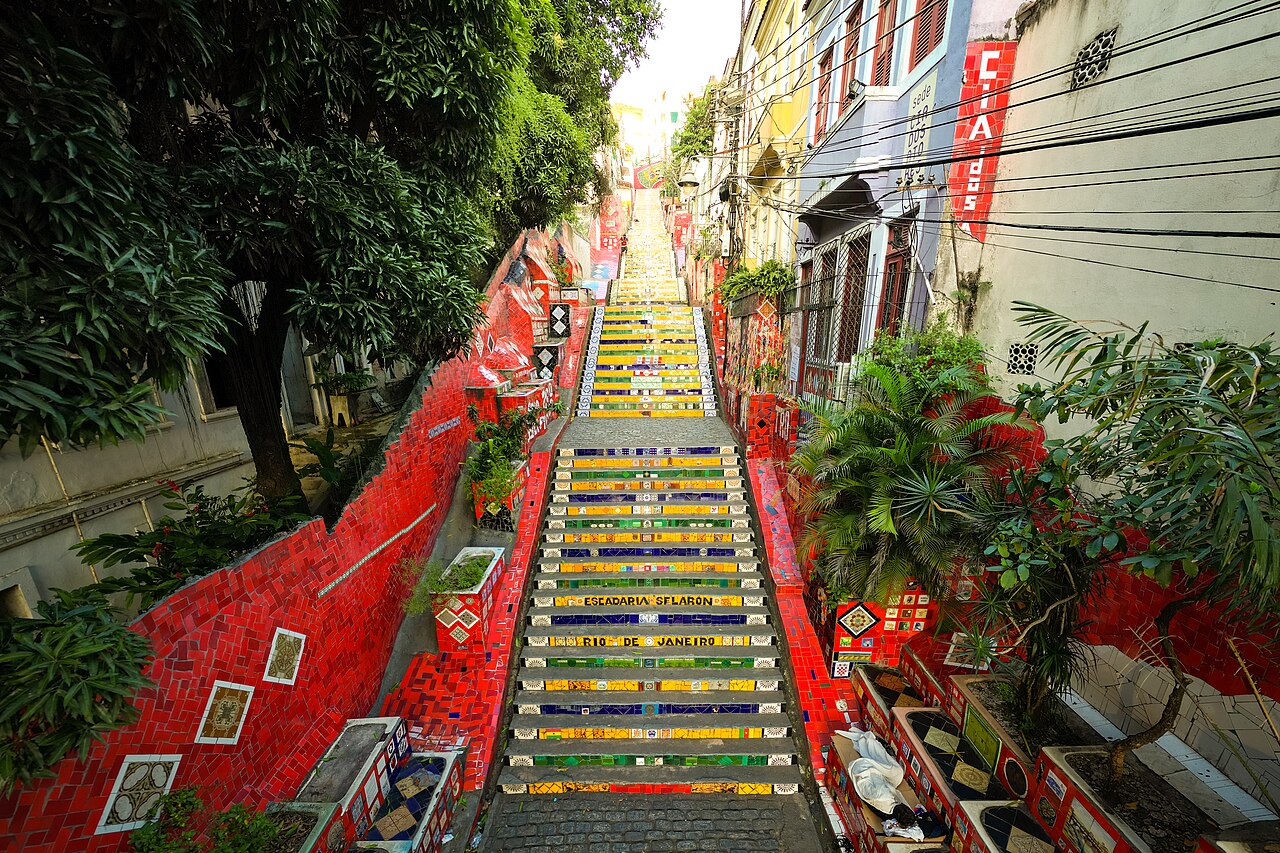
Escadaria Selarón (Selarón Steps) — 215 steps covered in some 2,000 tiles from more than 60 countries, straddling the Lapa–Santa Teresa border and free to visit
Parque das Ruínas — a cultural center built inside a ruined mansion, with a free terrace overlooking downtown and Guanabara Bay
Museu da Chácara do Céu — an art museum with works by Picasso, Dalí and Monet plus Brazilian modernists (Di Cavalcanti, Portinari); free admission on Wednesdays
Largo dos Guimarães and Largo das Neves — the neighborhood's central squares, ringed by bars, restaurants, craft shops and live music
Good to know
SafetyBy day the main areas (tram route, Selarón Steps, central squares) are busy and policed, but crowds draw pickpockets and phone-snatchers. Wear bags in front and keep a firm grip on your phone even while taking photos.
SafetyDo not walk alone after dark. Muggings have been reported at night, so use a ride app (Uber, 99) or a licensed taxi to get around in the evening.
SafetyThe neighborhood is ringed by favelas. Avoid wandering into unfamiliar uphill side streets, and double-check your route — car GPS has been known to misdirect drivers into favelas.
SeasonDecember–March is hot, humid and prone to sudden downpours that make cobblestones and steep hills slippery, so non-slip shoes are essential. Now, in July, it is winter — milder and drier, and pleasant for walking.
RulesThe tram holds only about 32 passengers, so weekend and peak-season queues get long. Arrive early, stand on the running boards only when staff signal it is safe, and stay seated while it moves.
CautionWatch for overcharging. The tram's official round-trip fare is R$20 (same-day re-boarding included); insist that taxis run the meter or book via app, and politely decline tips demanded by unofficial 'guides'.
MannersThe Selarón Steps are a public monument in the middle of a residential area. Don't block the stairs for long photo sessions and be mindful of noise and passage so you don't disturb residents.
Practical info
The tram departs from Estação Carioca (Rua Lélio Gama), next to Carioca metro station in the Centro district, at roughly 15–20 minute intervals. The round trip costs R$20 with same-day re-boarding; the Paula Mattos and Dois Irmãos lines run on different schedules, so check the official site for the latest hours and fares before you go. The Selarón Steps are near Lapa/Glória metro stations.
On-site reviews📍 Verified on-site
No reviews yet. If you are here, be the first to leave one.