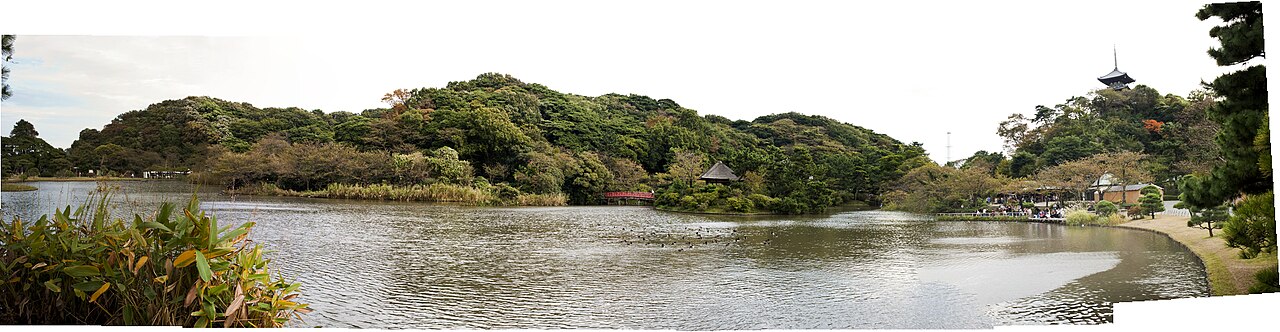
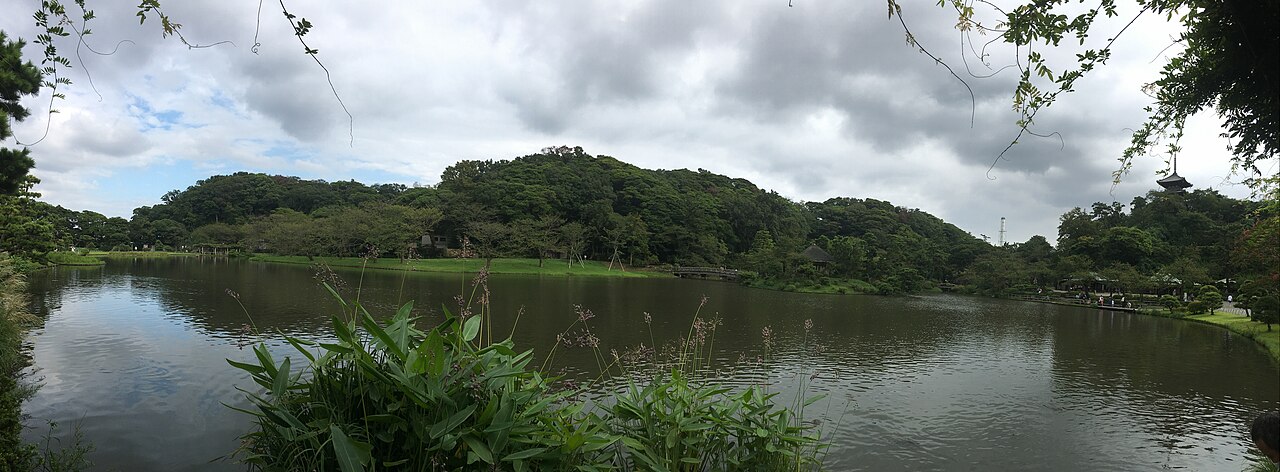
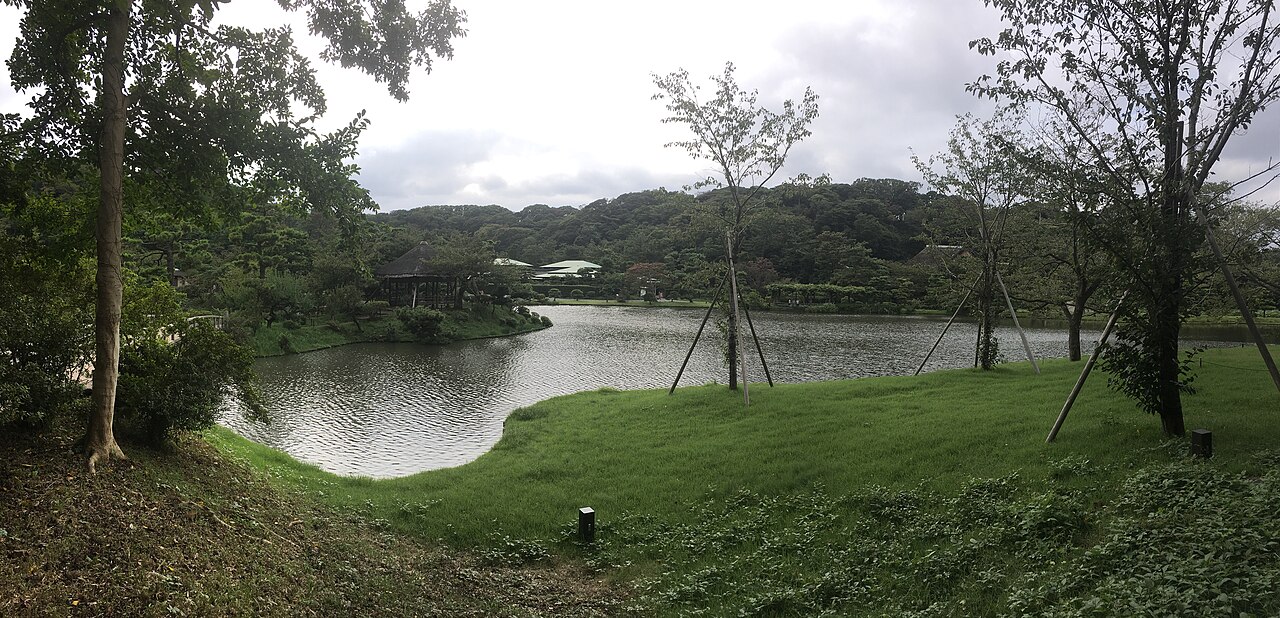
Sankeien (三溪園) is a spacious traditional Japanese garden of about 175,000 square meters in the Honmoku area of Yokohama, opened in 1906 by the businessman and tea master Hara Sankei (原三溪). Its grounds hold 17 historic buildings relocated from Kyoto, Kamakura, Gifu and elsewhere, arranged around ponds and hills; ten of them are designated Important Cultural Properties of Japan. Plum, cherry, lotus and autumn maple follow one another through the seasons, so the garden shows a different face at every visit.
The three-story wooden pagoda from the former Tomyoji Temple — the oldest surviving wooden pagoda in the Kanto region and the garden's signature landmark.
The Inner Garden, where cultural-property buildings such as the daimyo-style Rinshunkaku villa sit in tranquil natural surroundings.
Historic rural architecture, including the gassho-style thatched Yanohara Residence relocated from Gifu Prefecture.
A strolling (kaiyu-shiki) landscape of large ponds, bridges and gently winding paths.
Seasonal events such as evening cherry-blossom viewing (yozakura) in spring and autumn maple illuminations.
Good to know
SeasonAutumn foliage (mid-November to early December) and cherry-blossom season draw large crowds. Arrive right at opening (9:00) for a quieter, more peaceful visit.
SeasonLotus flowers peak on summer mornings (late July to August); on some weekends and holidays the garden opens early at 6:00 for morning lotus viewing — confirm each year.
RulesSome buildings may be closed for preservation or repair work (e.g. roof replacement of the Yanohara Residence in 2026). If a specific structure is your goal, check the official site for current access before you go.
SafetyThe garden is large, with gravel paths, gentle slopes and wooden bridges. Wear comfortable non-slip shoes and watch your footing, especially after rain.
MannersSome historic buildings open to the public require removing your shoes, and interiors of cultural-property structures may restrict entry or photography. Follow the posted signage.
Practical info
Open 9:00–17:00 (last entry 16:30); closed December 26–31 each year. Admission is recently listed at about 900 yen for adults and 200 yen for elementary/junior-high students (verify the latest rates before visiting). Reach it by municipal bus from JR Yokohama, Sakuragicho or Negishi stations, then a 5–10 minute walk. Evening and early-morning openings are seasonal only, so check the schedule.
On-site reviews📍 Verified on-site
No reviews yet. If you are here, be the first to leave one.