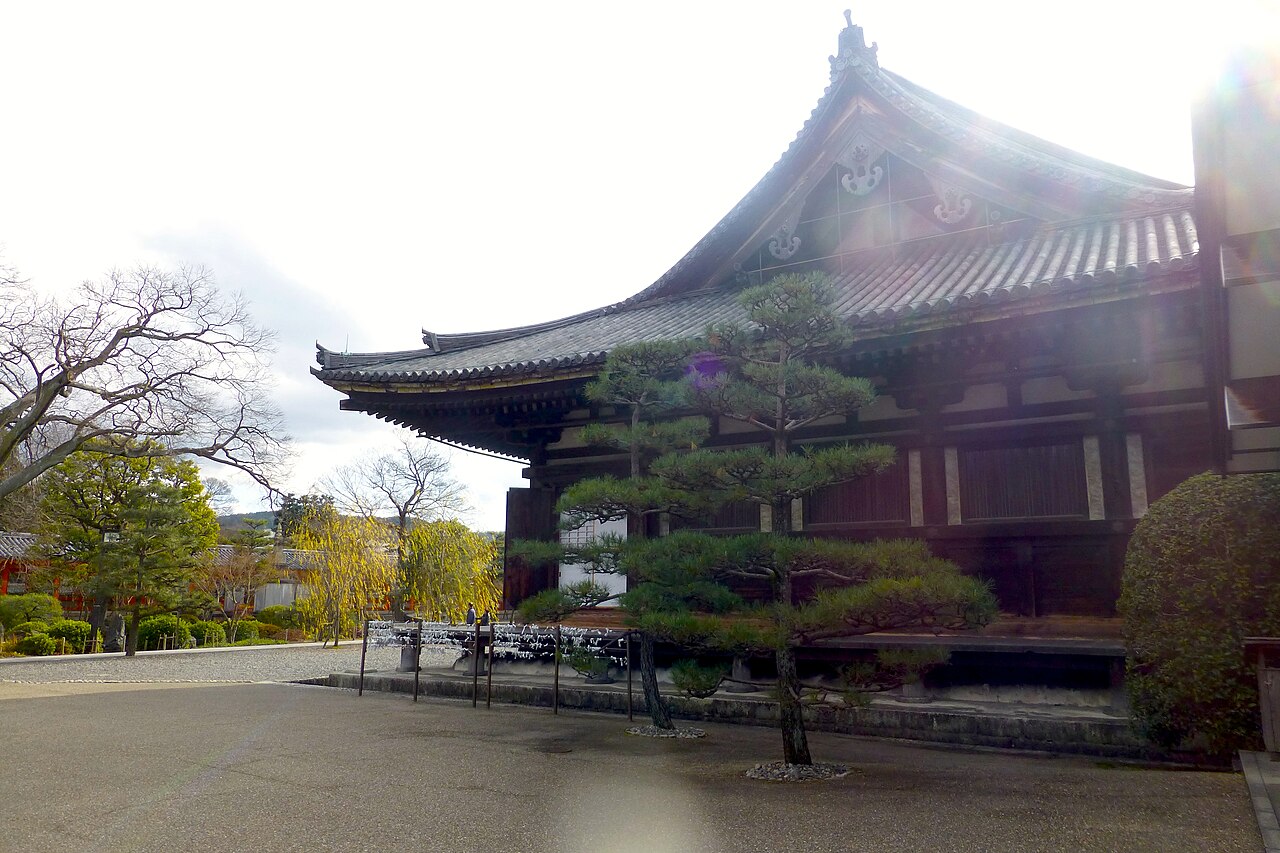
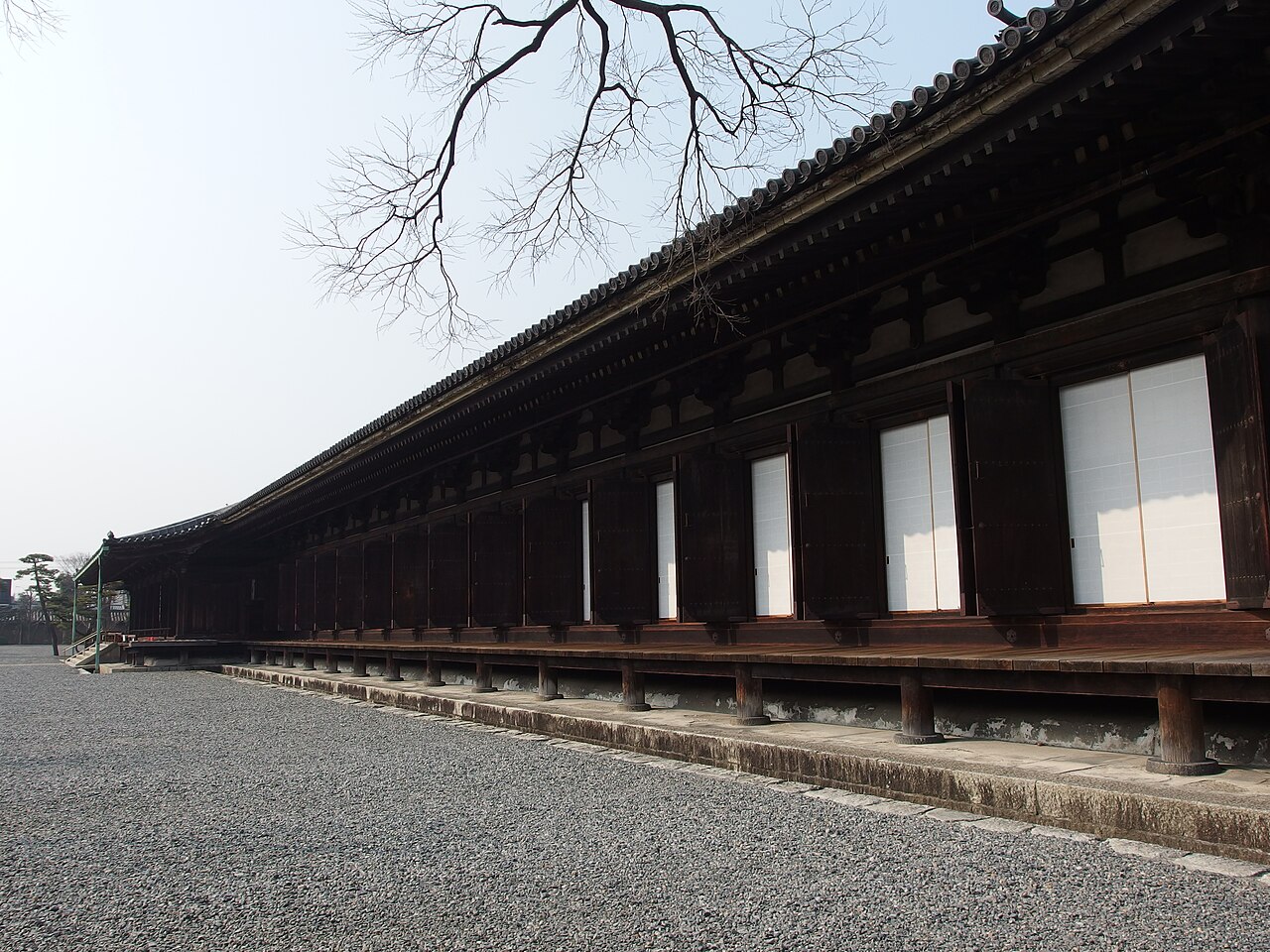
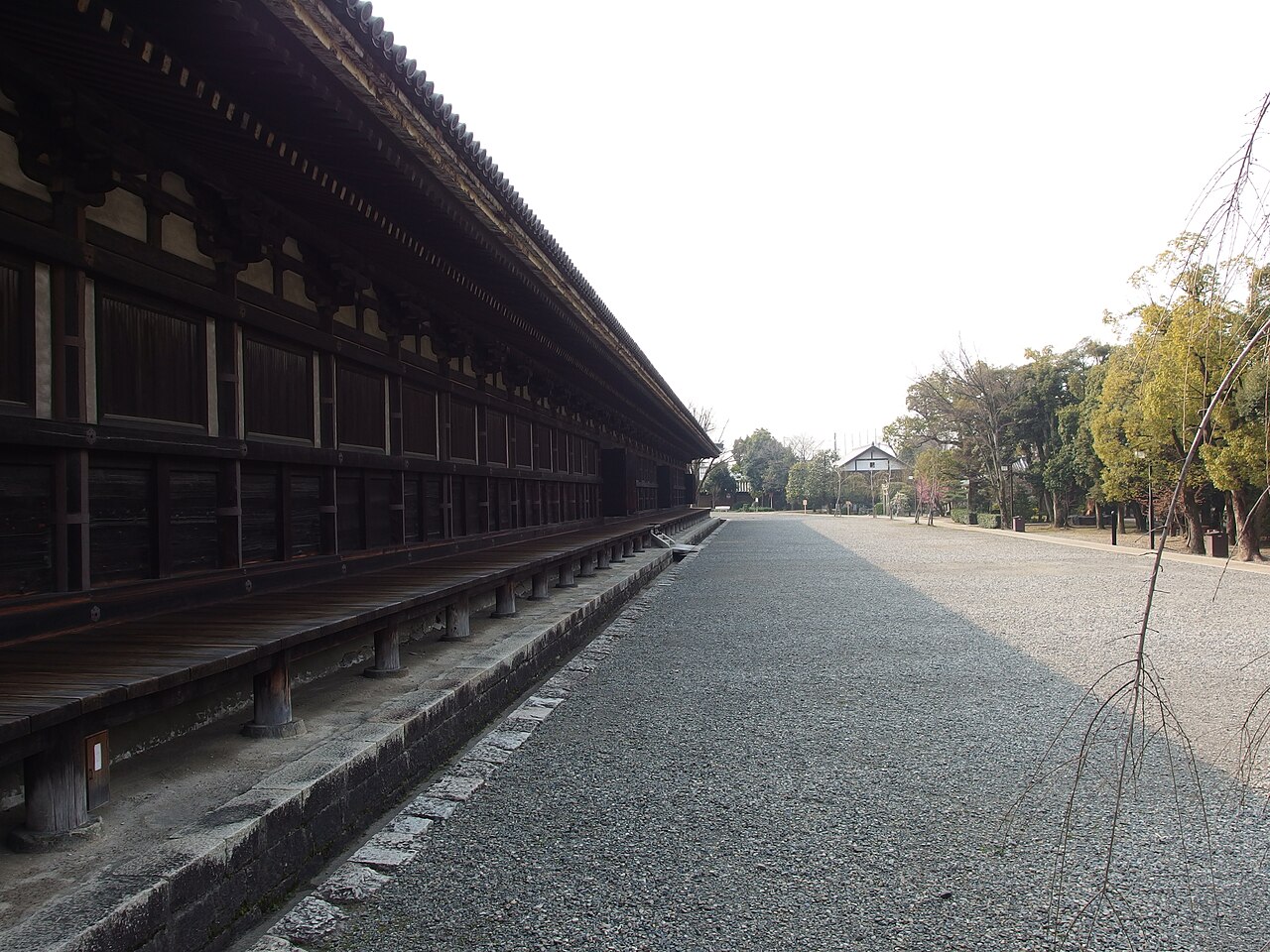
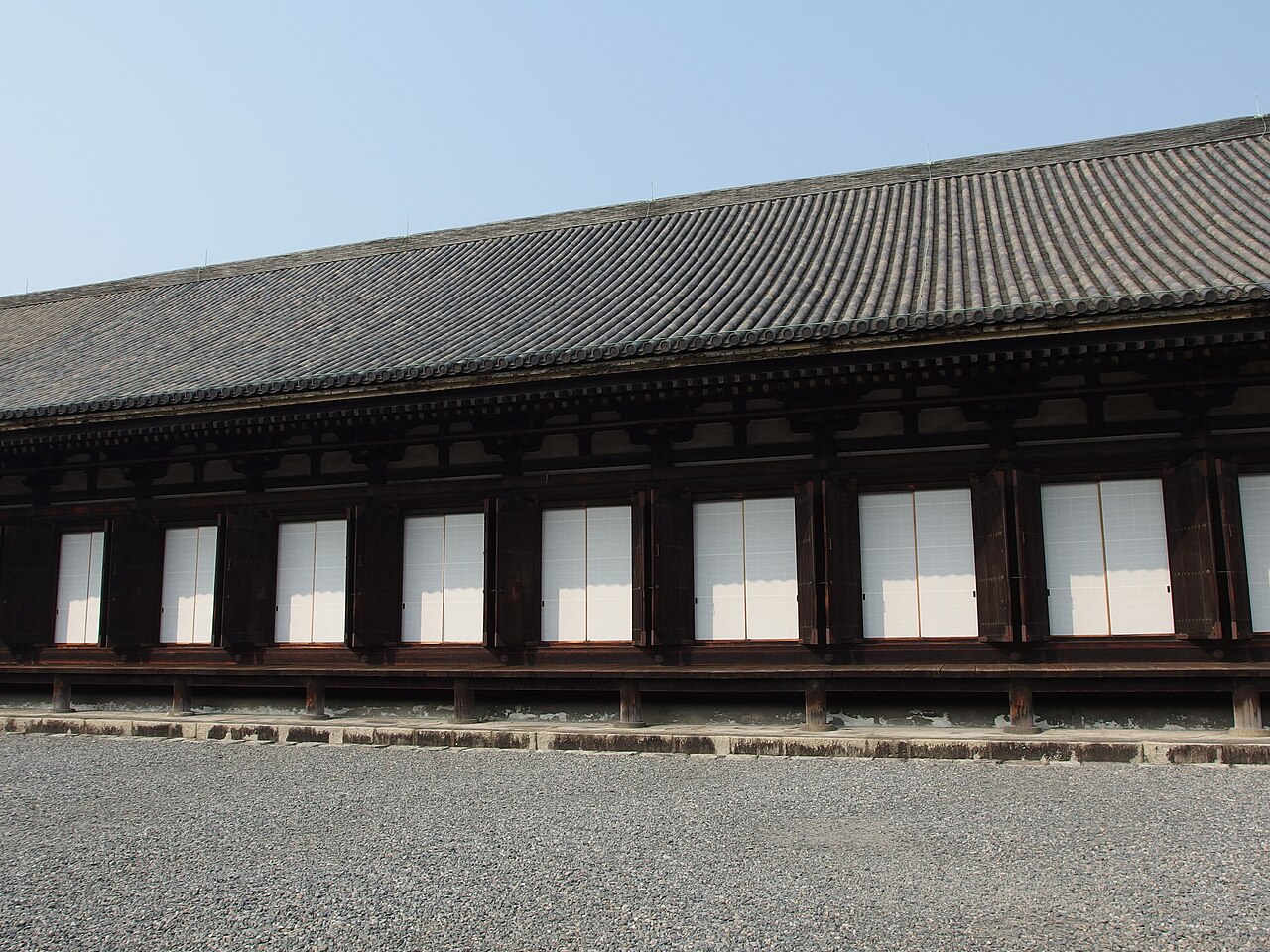
Sanjūsangen-dō (formally the main hall of Rengeō-in temple) was founded in 1164 by the samurai leader Taira no Kiyomori for the retired Emperor Go-Shirakawa; the present hall, rebuilt in 1266, is a National Treasure of Japan. Its name means 'thirty-three bays,' referring to the 33 spaces between the pillars of the roughly 120-meter-long hall—one of the longest wooden buildings in the world. Inside stand 1,001 statues of the Thousand-Armed Kannon, which together with the 28 guardian deities and the Fūjin and Raijin figures are all designated National Treasures.
The awe-inspiring interior: 1,001 standing Thousand-Armed Kannon in rows of 10 by 50 on each side of a massive seated central Kannon
The National Treasure main hall itself—about 120 m long, with the 33 pillar bays that give the temple its name
The 28 guardian deities lining the front of the Kannon, flanked by the Wind God (Fūjin) and Thunder God (Raijin), masterpieces of Kamakura-era sculpture
The layered history: 124 original statues rescued from the 1249 fire stand alongside 876 recarved in the 13th century
Toshiya, the traditional archery contest (Ōmato-taikai) held on the second Sunday of January, together with the Yanagi-no-Okaji willow purification rite
Good to know
RulesPhotography and video are strictly prohibited inside the main hall. You may photograph the exterior and grounds, but put cameras and phones away once inside.
MannersYou must remove your shoes to enter the hall. The wooden floor gets very cold in winter, so thick socks are a good idea.
MannersThis is a working place of worship holding over a thousand National Treasure statues. Keep quiet, do not touch the statues, and move through respectfully.
SeasonOn the second Sunday of January, the Toshiya archery contest and Yanagi-no-Okaji rite draw large crowds and admission is free that day, making it extremely busy. Avoid this date if you want a calm visit.
RulesOpening hours change by season (8:30–17:00 Apr 1–Nov 15; 9:00–16:00 Nov 16–Mar 31), with last entry 30 minutes before closing. Arrive before the cutoff. (Verify current details.)
SafetyDuring school-trip season and peak periods the narrow corridor gets congested. Follow the one-way flow along the rows of statues and avoid stopping in the passage.
Practical info
Admission: adults ¥600, junior/senior high students ¥400, elementary ¥300 (verify current rates). Access: about 10 min from Kyoto Station on city bus 206 or 208 to the 'Hakubutsukan-Sanjusangendo-mae' stop, or a ~7-min walk from Shichijo Station on the Keihan Line. Allow 30–45 minutes. Confirm fees, hours, and event dates on the official site before visiting.
On-site reviews📍 Verified on-site
No reviews yet. If you are here, be the first to leave one.