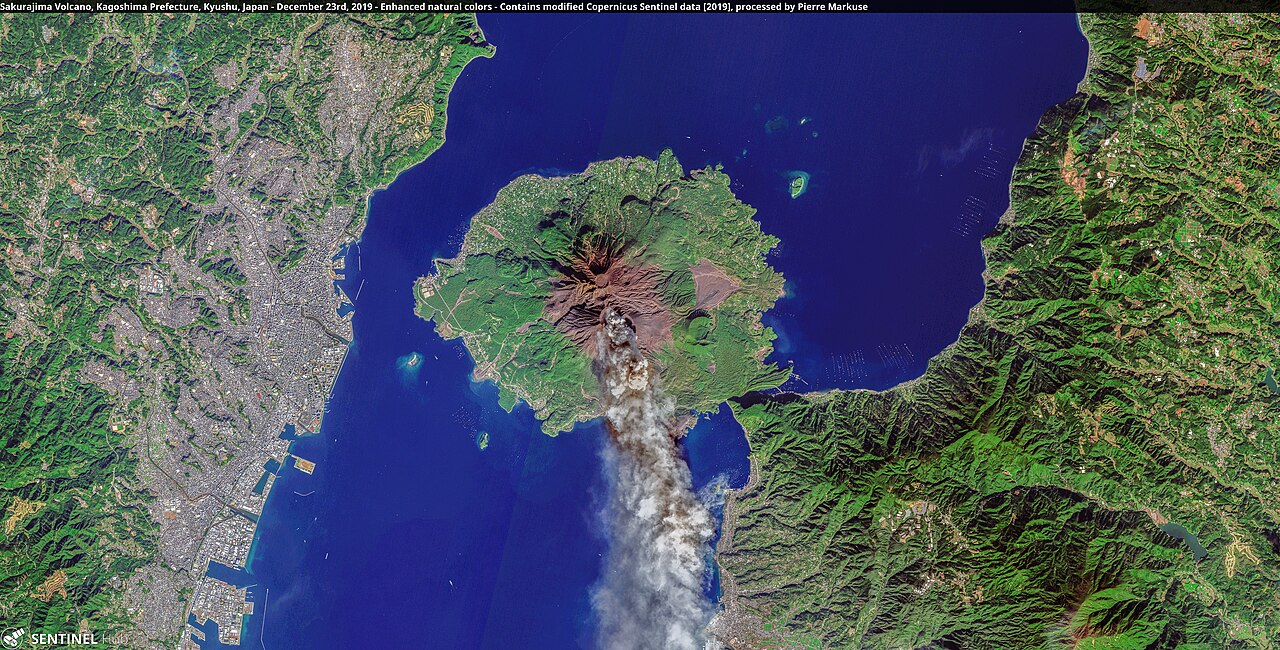
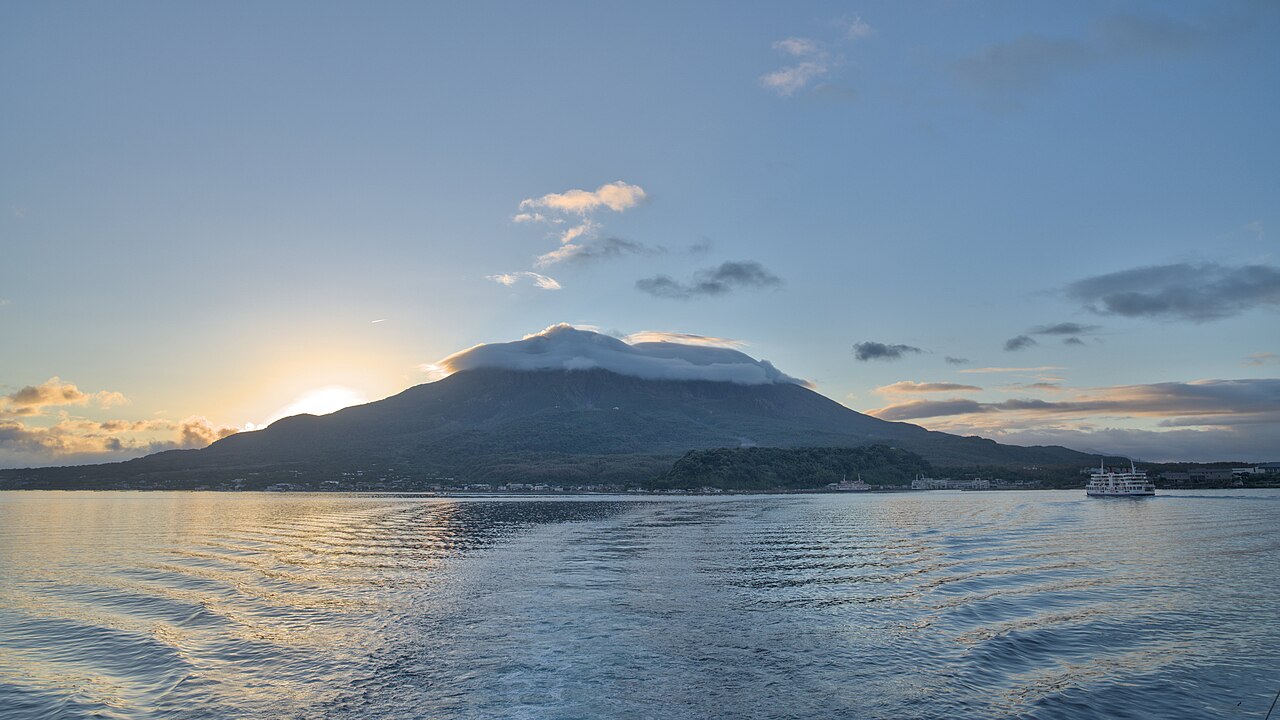
Sakurajima is an active volcano rising about 1,117 m from the middle of Kagoshima Bay in Kyushu, Japan, and the defining symbol of Kagoshima. It is one of the country's most active volcanoes, with hundreds of small eruptions a year, and its smoking crater is a familiar sight from the city. A massive lava flow during the 1914 Taisho eruption filled the strait and permanently joined the former island to the Osumi Peninsula.
Yunohira Observatory (about 373 m): the highest point on Sakurajima open to the public, offering a 360-degree panorama of Kitadake's rugged slopes, the Taisho lava field, and Kagoshima city across the bay
Nagisa Lava Park footbath: a free natural hot-spring footbath about 100 m long, one of Japan's largest, ideal for resting your feet after a walk
Lava walking trail (Yogan Nagisa Park to Karasujima Observatory): a roughly 3 km path built across a lava field, chosen as one of Japan's 100 best walking trails
Kurokami buried torii gate: a 3 m shrine gate buried up to about 2 m in ash by the 1914 Taisho eruption and preserved as a disaster memorial
Volcano views from the ferry: on the 15-minute Kagoshima-to-Sakurajima crossing, locals famously eat udon while watching the volcano and Kinko Bay
Good to know
RulesThe area around the craters is off-limits. The Japan Meteorological Agency has kept Volcanic Alert Level 3 in place (since July 2022), banning entry within about 2 km of the Minamidake and Showa craters; visitors view eruptions from observatories roughly 3 km away.
SafetyDuring eruptions, large volcanic blocks can be thrown out, blast waves can break windows, and rain can remobilize deposited ash into lahars (mudflows). Always follow official hazard guidance and evacuation signs.
SafetyVolcanic ash can scratch the cornea, so wear glasses instead of contact lenses, carry clean water or saline to flush your eyes, and use an N95/KF94-grade mask and an umbrella when ash is falling.
SeasonWhere ash falls depends on the wind. Check the day's eruption activity, wind direction, and restricted zones at the Sakurajima Visitor Center before setting out so you can plan a route that avoids the ash.
MannersIn Kagoshima, ash is disposed of in designated yellow ash-collection bags. Don't dump ash carelessly or sweep it into drains, and follow the local habit of brushing ash off your clothes before going indoors.
SafetyPublic transport on the island is sparse, so getting around is limited. Arrange your transport (rental bike, sightseeing bus, or car) in advance, and allow extra time, since trails may close during rain, strong wind, or heightened activity.
Practical info
The ferry from Kagoshima Port to Sakurajima takes about 15 minutes (running 24 hours, every 15-20 minutes by day; fare should be confirmed for the latest rate - about 250 yen one-way for adults as of March 2025, paid on arrival at the Sakurajima side). Bikes can be rented at the Visitor Center. Confirm fares, timetables, and crater restrictions on official sites just before your visit.
On-site reviews📍 Verified on-site
No reviews yet. If you are here, be the first to leave one.