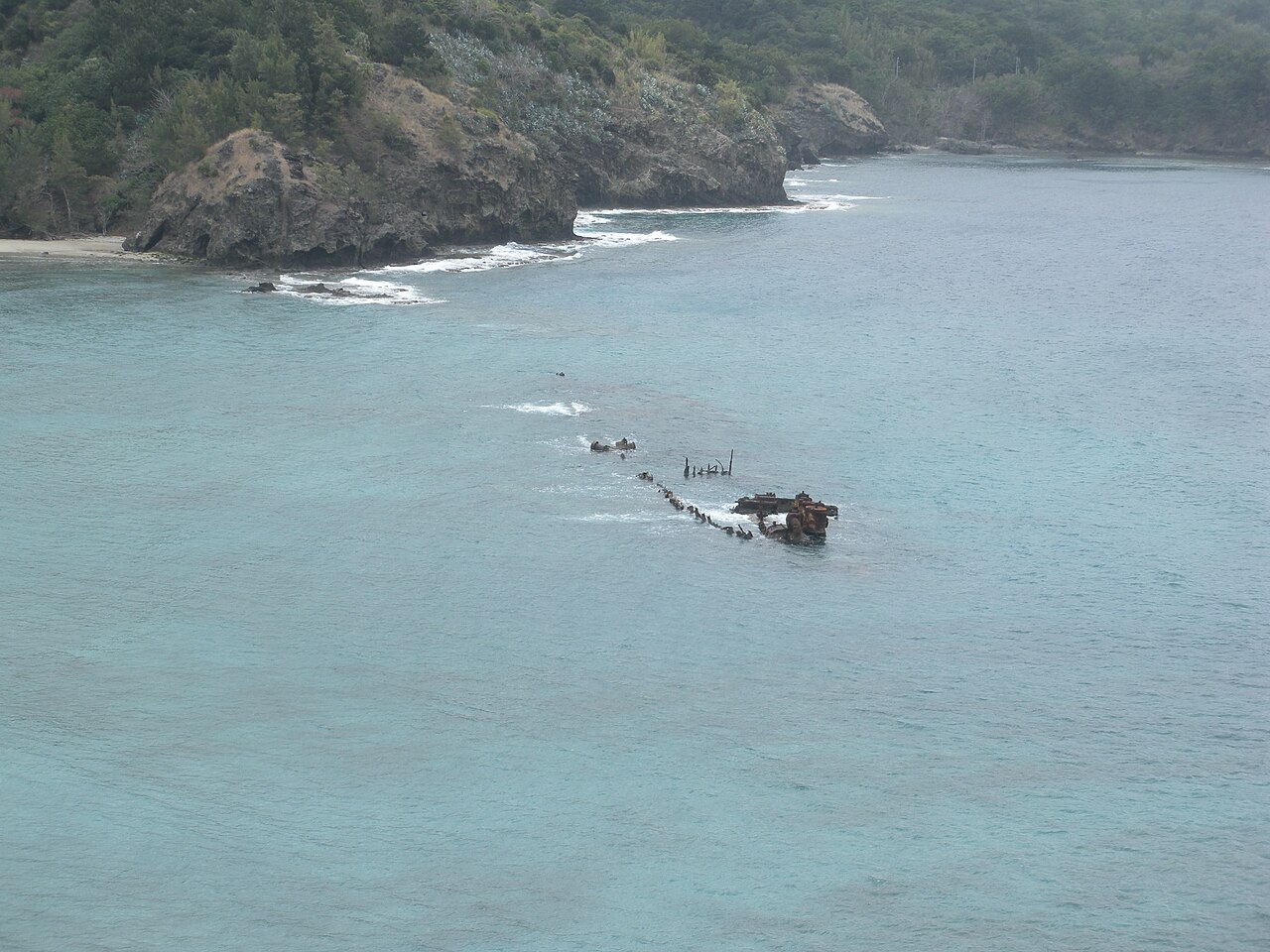
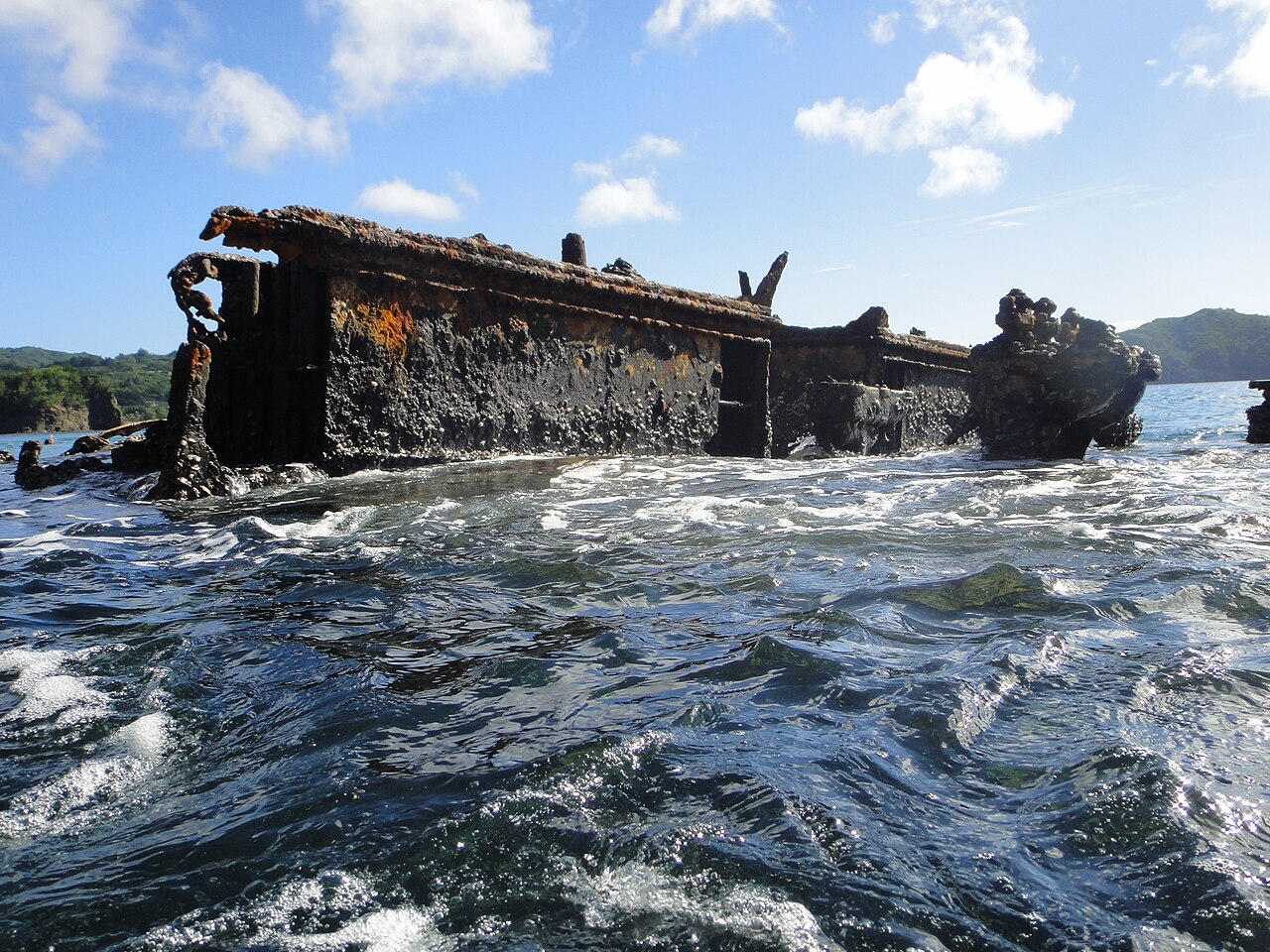
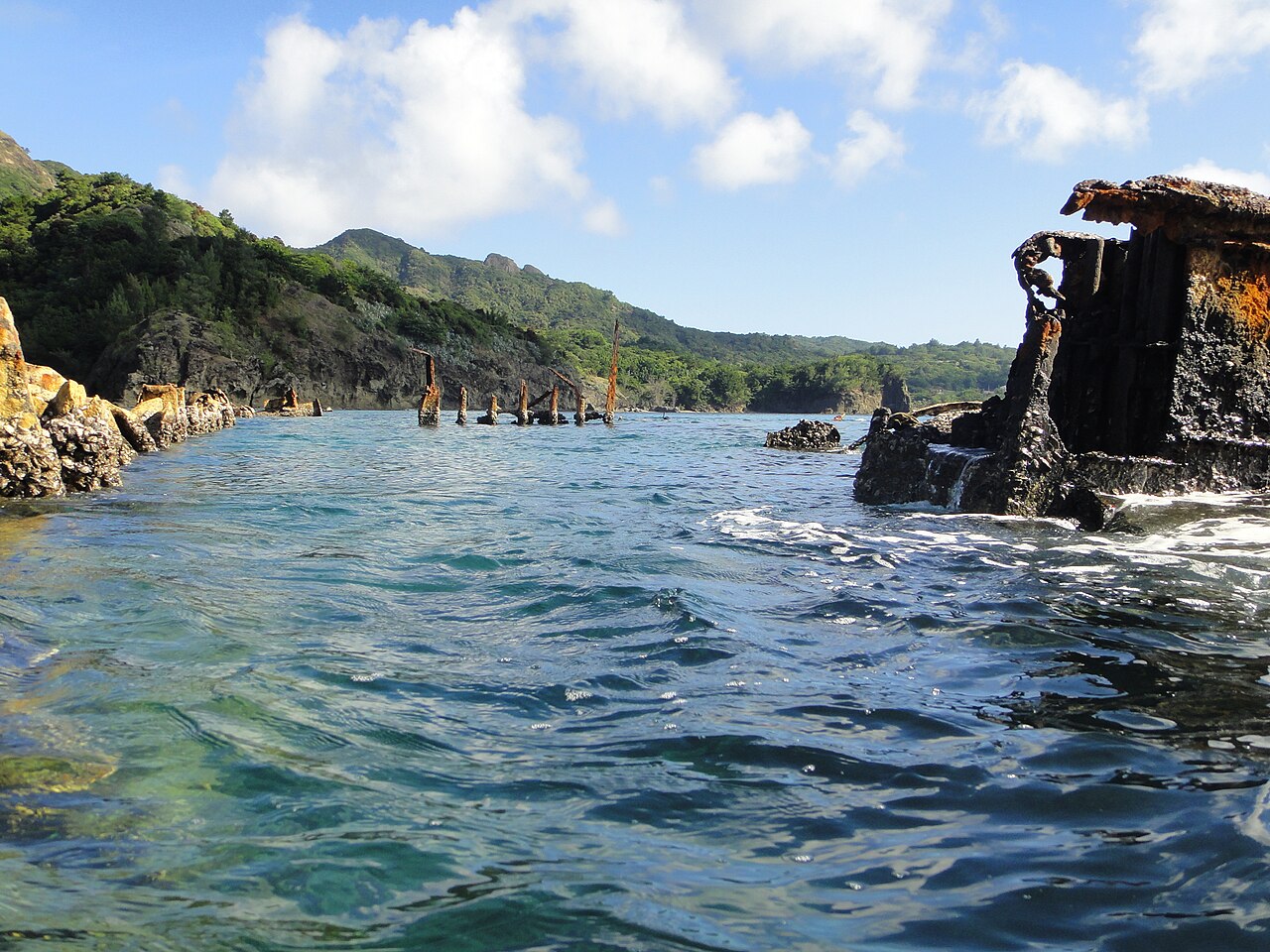
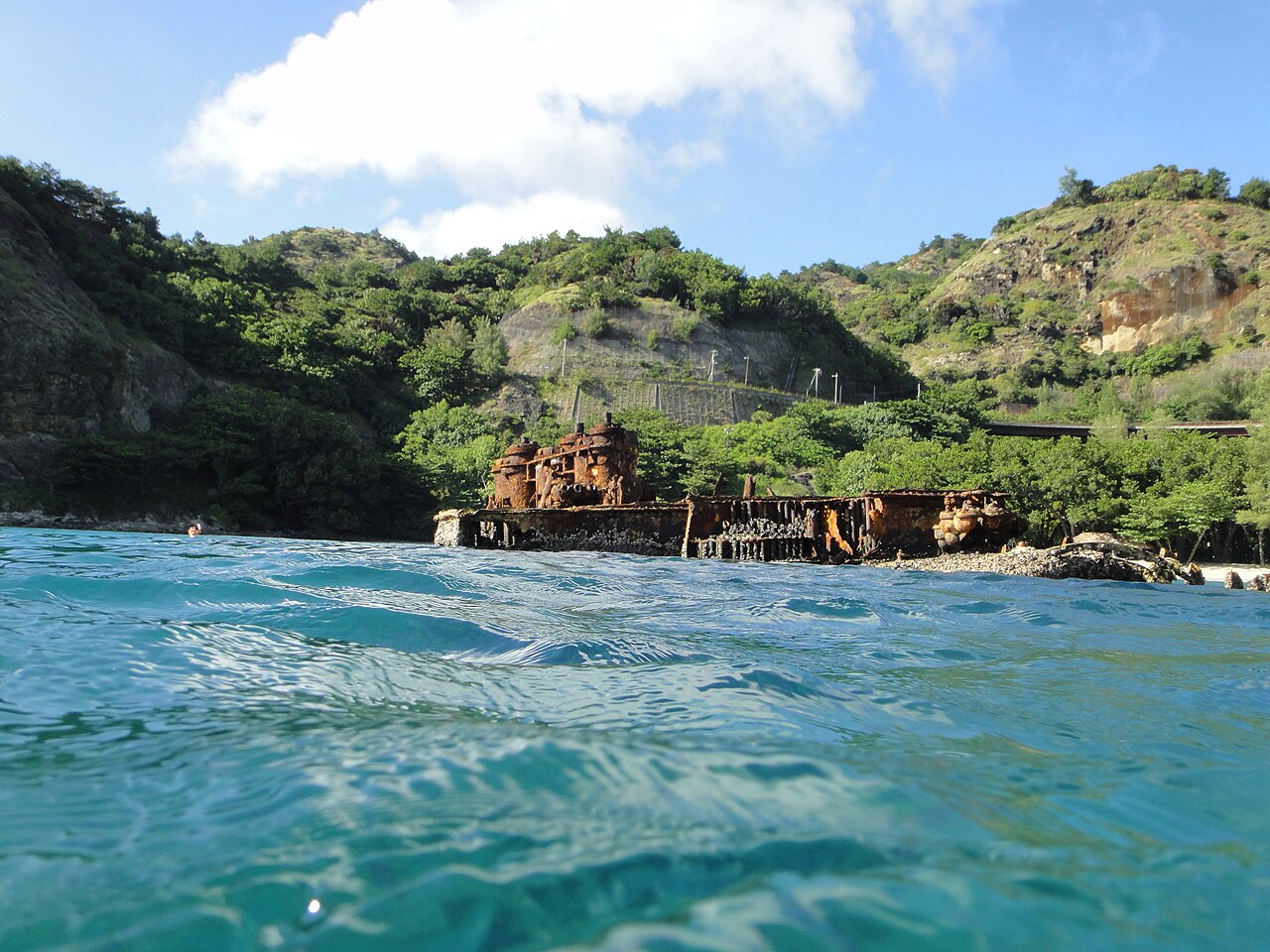
Sakaiura is the signature snorkel spot on Chichijima in the UNESCO-listed Ogasawara (Bonin) Islands: a calm coral bay where the WWII cargo ship Hinkou Maru lies grounded just a few dozen meters off the beach. The rusted, reddish-brown hull now acts as an artificial reef that draws in tropical fish, and with the famous 'Bonin Blue' clarity of 20-40 m you get a genuine wreck-snorkel feel straight from a beach entry. The main depth is a shallow 1-6 m, but because the wreck sits in more open water offshore you do need to be a confident swimmer. Grounded in 1944 and now nearly 80 years old, the ship is badly corroded and, as of 2026, only faintly visible; within another decade or so it may vanish beneath the surface entirely.
The WWII cargo wreck Hinkou Maru, reachable by beach-entry snorkel a few dozen meters out, now an artificial reef swarming with fish
Calm, shallow coral bay (1-6 m) sheltered from swell — though the wreck itself lies in more open water
Exceptional 'Bonin Blue' visibility of 20-40 m, at its best in September-October
Subtropical and endemic fish around the hull, with green sea turtles a lucky sighting
A gateway to Ogasawara's renowned dolphin swims (best June-October) and Feb-April humpback whale season
Easy roadside access: bus stop a 3-minute walk away, with a toilet and shelter on hand
Good to know
SafetyDespite the beach entry, the wreck sits dozens of meters out in open water. You must be able to swim, wear fins and a life jacket or float, and never go alone. Offshore currents can push you out to sea, so check your position relative to the beach constantly.
SafetyThe rusted steel hull is sharp and jagged. Keep your distance and never grab or climb it — a cut from corroded metal carries a high infection risk. A rash guard and gloves are recommended.
SafetyThe subtropical sun is intense, and floating face-down for a long time badly burns your back and calves. Wear a rash guard, use reef-safe sunscreen, and stay hydrated. Watch for chilling on long sessions, especially in winter.
SafetyWatch for sea urchins and fire coral on the bottom and, seasonally, jellyfish; don't put hands or feet down to steady yourself. At low tide the reef is exposed, raising the risk of scrapes and stings.
SeasonSnorkeling is possible year-round, but water is 26-28C in summer and around 22C in winter, so a wetsuit or rash guard helps in cold water or long sessions. Clarity and warmth peak in September-October; dolphin swims are best June-October and humpback whales appear February-April. Check the tide too, as low water exposes the coral.
RulesAll of Ogasawara is a UNESCO World Natural Heritage site and national park. Do not touch or collect coral or marine life, and take nothing from the ship, which is a war relic. Use reef-safe sunscreen and follow the local 'Ogasawara Rules' and marine ecotour guidelines.
MannersNever stand on or kick coral, keep your distance from turtles and dolphins, and do not feed or chase wildlife. The wreck is a war-related relic — treat it with respect and remove nothing.
Practical info
Chichijima is reachable only by the Ogasawara Maru ferry from Tokyo's Takeshiba pier — about 24 hours one way and roughly one sailing a week, which means a minimum trip of about six days. From the town it is roughly a 10-minute village bus ride (get off at Sakaiura, a 3-minute walk from the stop), and gear rental and guided tours are available on the island. Always confirm the latest ferry schedule and fares, tour requirements, tide and sea conditions, and the current state of the heavily corroded wreck before you go.
On-site reviews📍 Verified on-site
No reviews yet. If you are here, be the first to leave one.