Saint-Malo is a granite walled port city in Brittany, France, famous for its ramparts and the intra-muros old town, and for its history as a stronghold of royally sanctioned privateers (corsairs) who grew wealthy from the 16th to 18th centuries. About 80% of the walled town was destroyed by Allied bombardment in August 1944 and then meticulously rebuilt between 1948 and 1960, so most of the alleys, cathedral and ramparts you see today are careful reconstructions. The bay has one of the largest tidal ranges in Europe (up to roughly 13 m), so the scenery changes completely with the tide and sights such as the Grand Bé islet and Fort National can only be reached on foot at low tide. The rampart walkway is free and open at all times, but the château's history museum closed in 2019 and cannot be visited (a new maritime museum, 'L'Hydro', is planned for 2028), and booking accommodation and restaurants in advance is essential in peak summer.
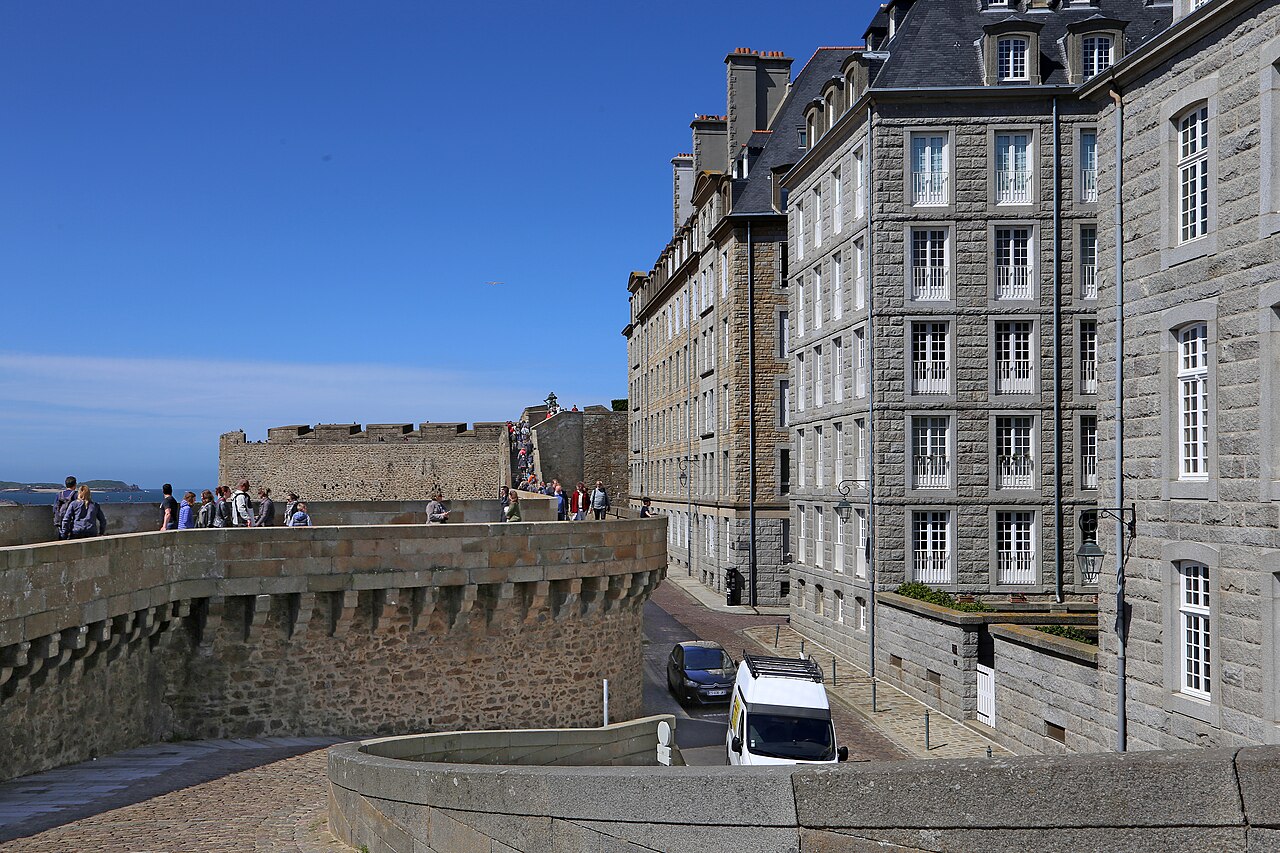
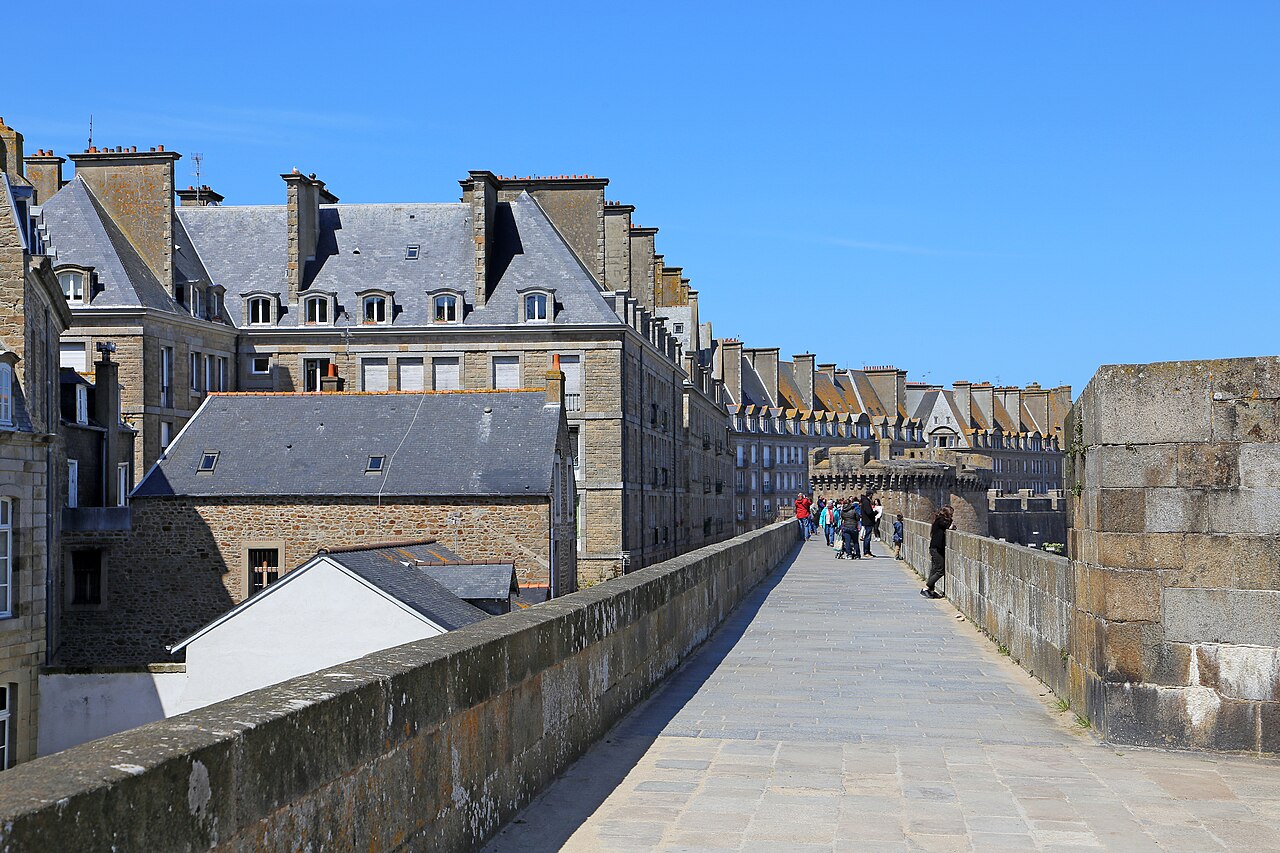
Walking the ramparts (Les Remparts): a roughly 1.75 km loop, about 1 hour, with sweeping views of the sea and the red roofs of the walled town
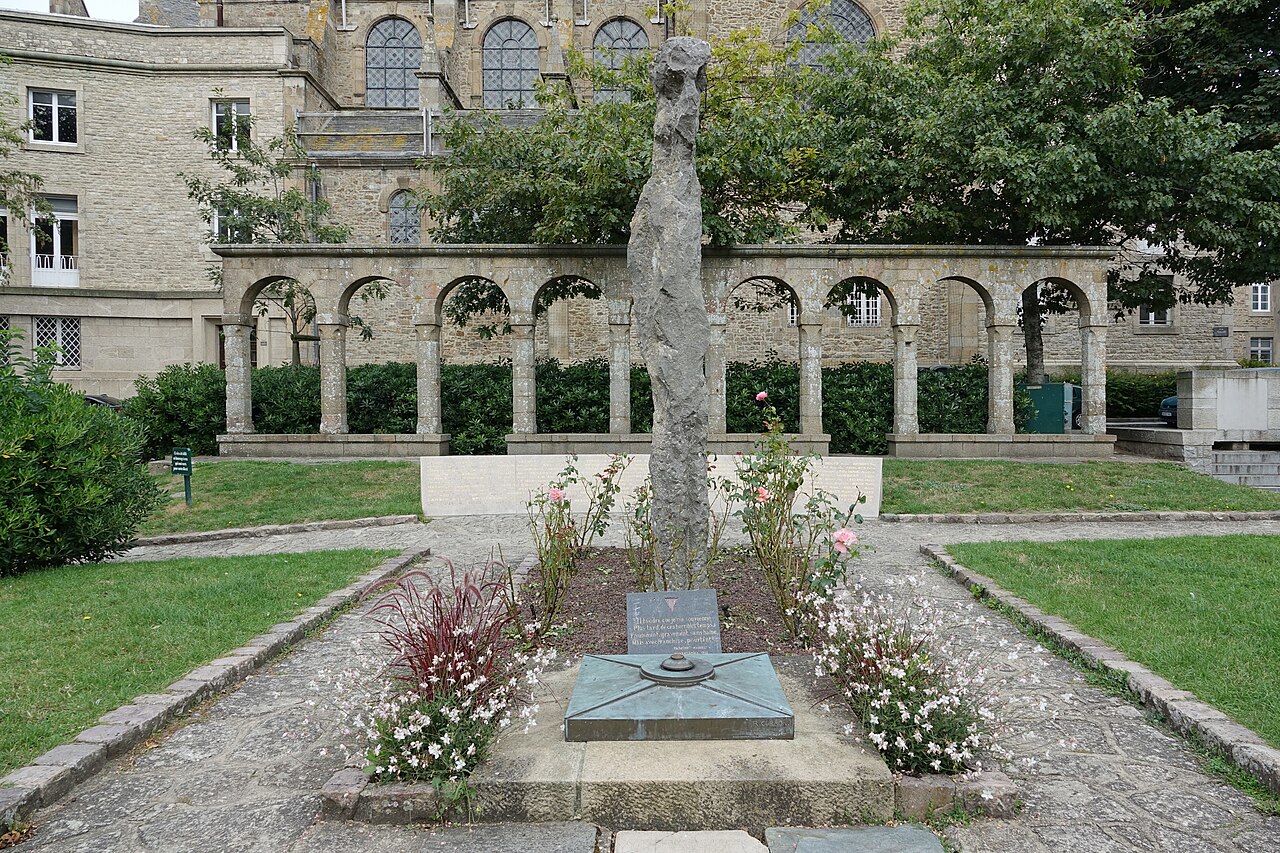
The intra-muros old town's narrow granite lanes and Saint-Vincent Cathedral - a city faithfully rebuilt after its 1944 destruction
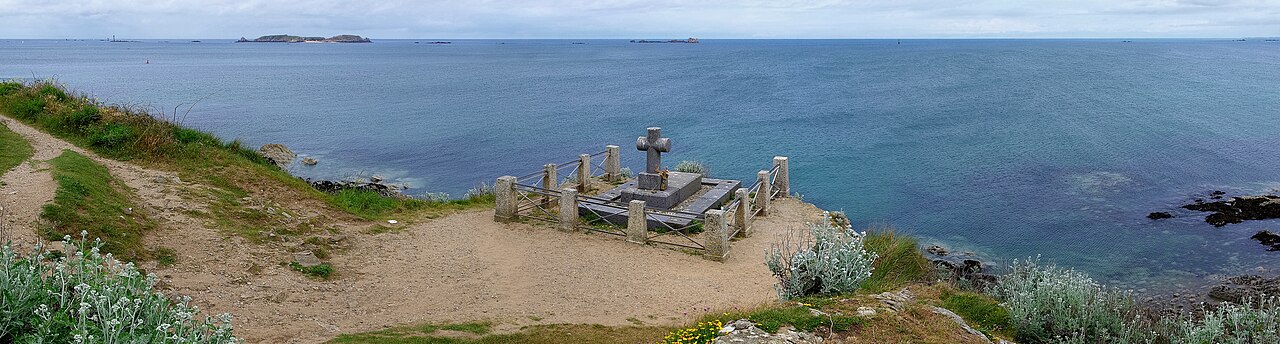
The Grand Bé islet and the simple tomb of the Romantic writer Chateaubriand, reached across Bon-Secours beach at low tide
Fort National, a sea-bound fortress designed by Vauban in 1689, entered on foot from Éventail beach at low tide
The dramatic tidal foreshore, the seawater pool at Bon-Secours, and the huge waves of the great spring tides (grandes marées)
Good to know
SafetyThe Grand Bé, Fort National and the exposed sand and rocks are cut off by a fast-rising tide and strandings happen regularly. Always check the day's tide (roughly 1.5 hours either side of low water, about a 3-hour window) and head back well before the water returns.
SafetyDuring storms and high spring tides, huge waves surge over the seawall and below the ramparts. Do not approach the dike or rocks to photograph the waves; stay behind safety barriers.
SafetyWatch for pickpockets in the crowded intra-muros lanes, on the beaches, and at the station and bus stops in summer; carry your bag and passport in front of you.
SeasonJuly-August, weekends and the great spring tides (e.g. 13-15 Aug and 11-13 Sept 2026) draw large crowds, making lodging, restaurants and parking hard to find. Reserve accommodation and popular restaurants ahead.
RulesThe rampart walk is free and always open, but Fort National opens only at low-tide times during the summer season (around 8 July-20 Sept 2026), and the Grand Bé only at low tide; the château history museum closed in 2019. Confirm opening days and tide times before you go (fares and hours require latest confirmation).
MannersIn Saint-Vincent Cathedral and other religious sites, keep quiet and dress modestly with shoulders covered. Homes line the base of the ramparts, so keep noise down early in the morning and late at night.
CautionSome tourist-facing restaurants near the ramparts have unclear or inflated prices; check menu prices before ordering and review the bill and any service supplement (supplément).
Practical info
Direct TGV trains run from Paris-Montparnasse to Gare de Saint-Malo, from where the intra-muros is about a 20-25 minute walk or a short local bus ride (ferries to England and the Channel Islands and Dinard airport are also nearby). Walking the ramparts is free, but for paid sights such as Fort National, verify current opening hours, fares and tide times on the official tourist office and city websites just before your visit.
On-site reviews📍 Verified on-site
No reviews yet. If you are here, be the first to leave one.