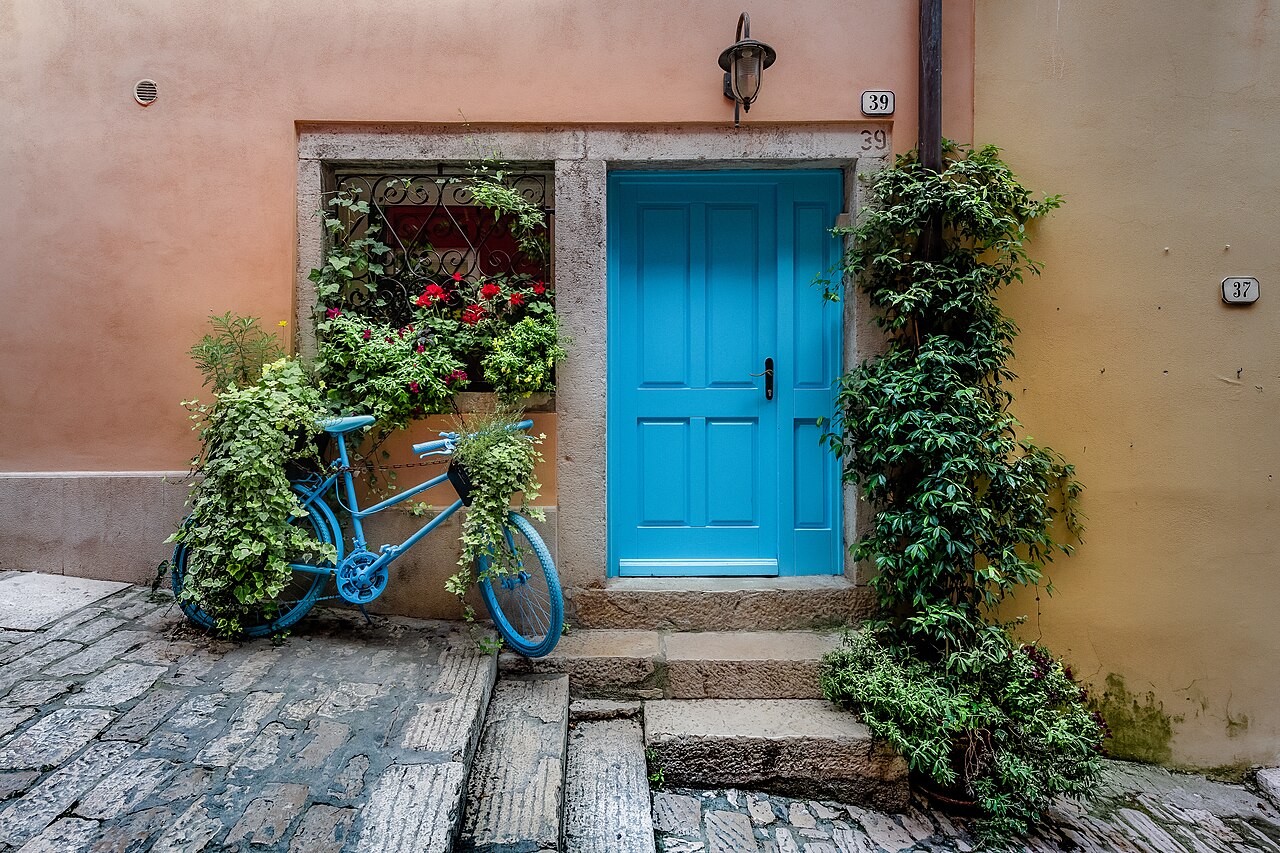
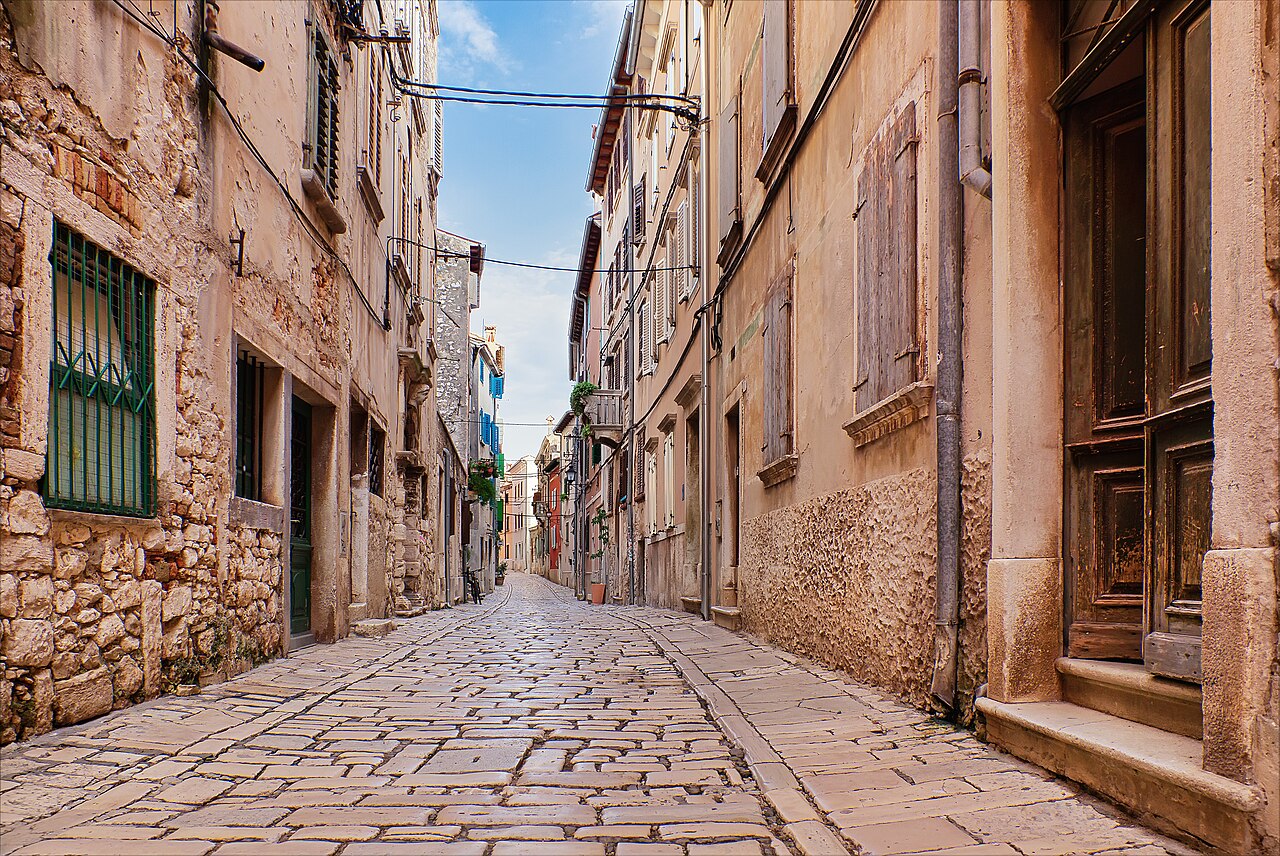
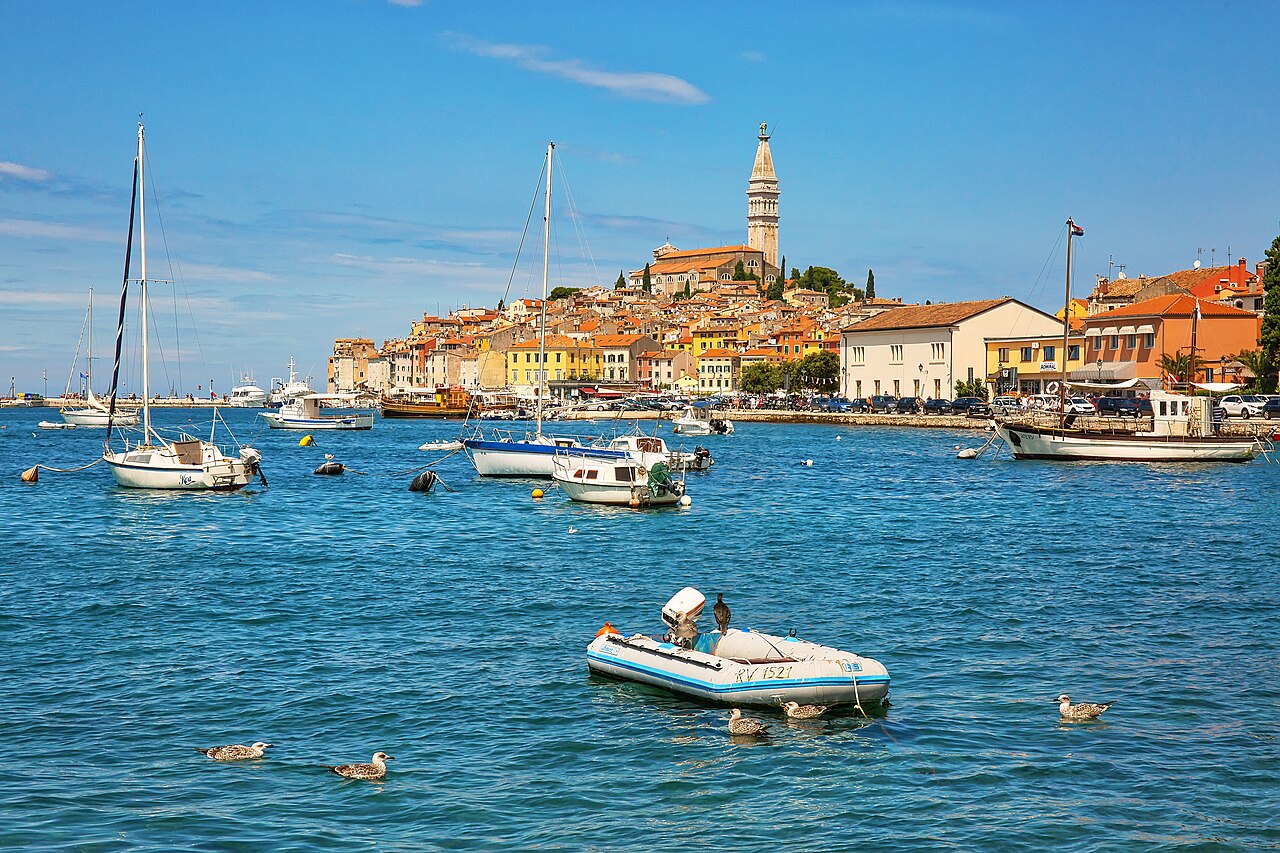
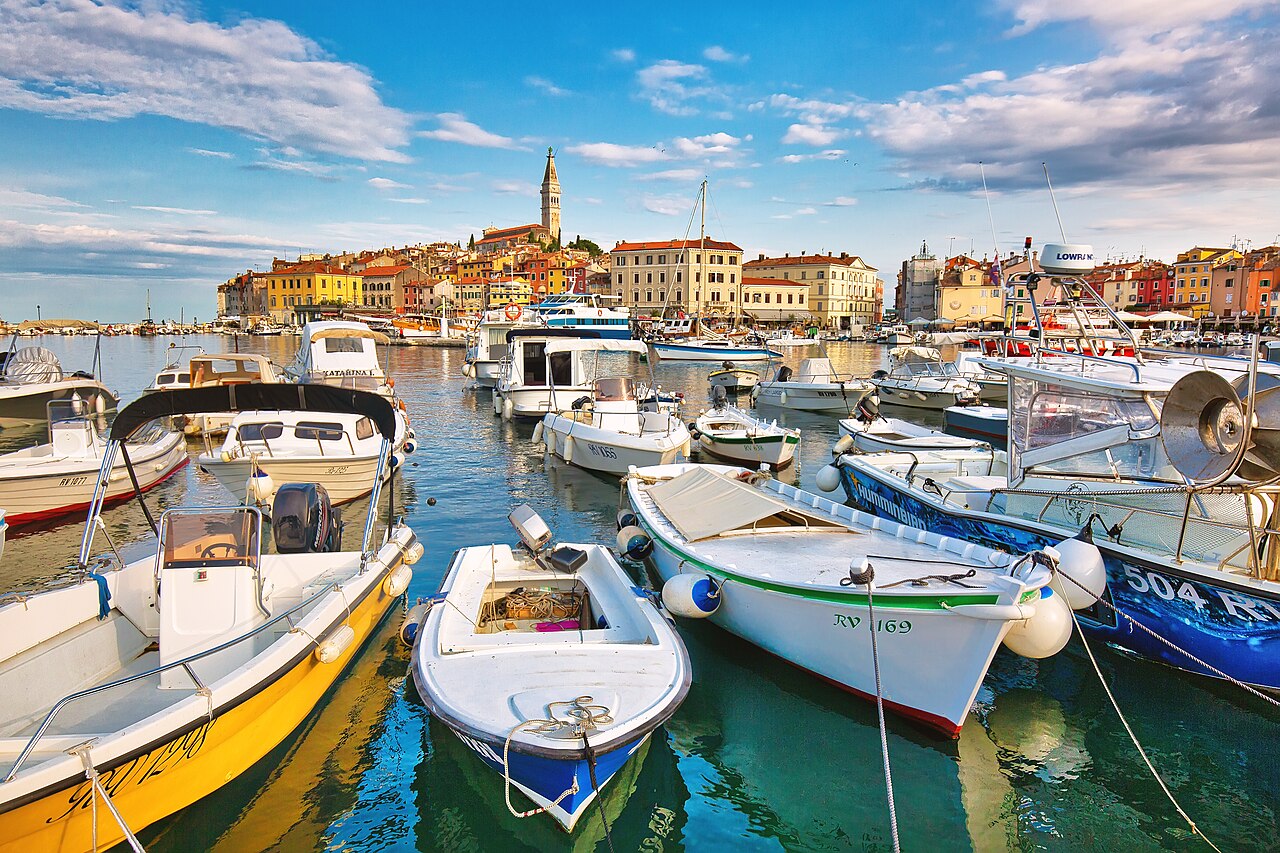
Rovinj Old Town (Starigrad) is the historic core of a former fishing town set on a car-free, hilltop peninsula on the Istrian coast of Croatia; once an island, it was linked to the mainland in the 18th century. Pastel houses spill down to the sea in concentric rings crowned by the bell tower of St. Euphemia's Church, and with its labyrinth of stone alleys, the artists' street of Grisia, and a strong Venetian legacy, this bilingual Croatian-Italian town is nicknamed the 'Pearl of the Adriatic.' As of 2026 Istria is one of Europe's most tourism-pressured regions, so the peninsula grows very crowded in the July–August peak; the town rewards an unhurried early-morning or late-afternoon wander through its maze of lanes and cliff-top sunsets.
The Church of St. Euphemia and its roughly 60 m bell tower — Istria's largest Baroque monument, modelled on the Campanile of St Mark's in Venice, topped by a statue of St. Euphemia that turns as a weather vane, with 360-degree views over terracotta roofs, the harbour and the sea from the top
Inside the church, the 6th-century Roman sarcophagus holding the relics of St. Euphemia, plus 15th-century Gothic statuary and old master paintings
Grisia street — a steep cobbled lane where artists hang original works on the walls and steps, home to a long-running open-air art festival each August
Venetian-era landmarks such as the Balbi Arch and Trg Marafor square, and the seafront promenade around the old town
The Batana Ecomuseum, dedicated to Rovinj's traditional wooden 'batana' boats and fishing culture, listed on UNESCO's Register of Good Safeguarding Practices
Good to know
SeasonJuly and August are the high-season peak, when alleys, the bell tower and restaurants get very crowded. For a calmer visit, May, June and September offer the best mix of weather, crowds and prices; in summer, aim for early morning or late afternoon.
SafetyThe old town's limestone lanes are polished smooth and become slippery when wet or dewy in the early morning, and the terrain is hilly. Non-slip, comfortable shoes are effectively essential, and the bell-tower staircase is narrow and steep.
RulesThe entire old town is a pedestrian-only zone with no cars or scooters. Park at peripheral paid garages such as Valdibora and continue on foot, and note that a tourist (sojourn) tax is charged per night on top of your accommodation.
MannersSt. Euphemia's is an active church: avoid revealing clothing that bares shoulders or knees, and keep quiet inside. The narrow lanes are residents' living space, often with laundry hung out, so be considerate about photographing windows and doorways up close.
CautionAt tourist-area seafood restaurants the 'catch of the day' is often priced by the kilogram, so confirm the quantity and total price before ordering. Check whether Grisia paintings are originals and agree prices in advance, and use fixed, agreed fares for boat tours and taxis.
SafetyParts of the seaward cliff-and-rock promenade (a favourite sunset spot) have no railings and get slippery from spray, so keep back from the edge and take extra care with children and after dark.
Practical info
Reach Rovinj by bus from Pula airport or nearby cities, park in a peripheral garage such as Valdibora, and walk into the pedestrian old town; the church itself is free to enter while the bell tower charges a small fee. Bell-tower fees and opening hours, plus tourist-tax and parking rates, vary by season, so confirm the latest details through official channels before you go.
On-site reviews📍 Verified on-site
No reviews yet. If you are here, be the first to leave one.