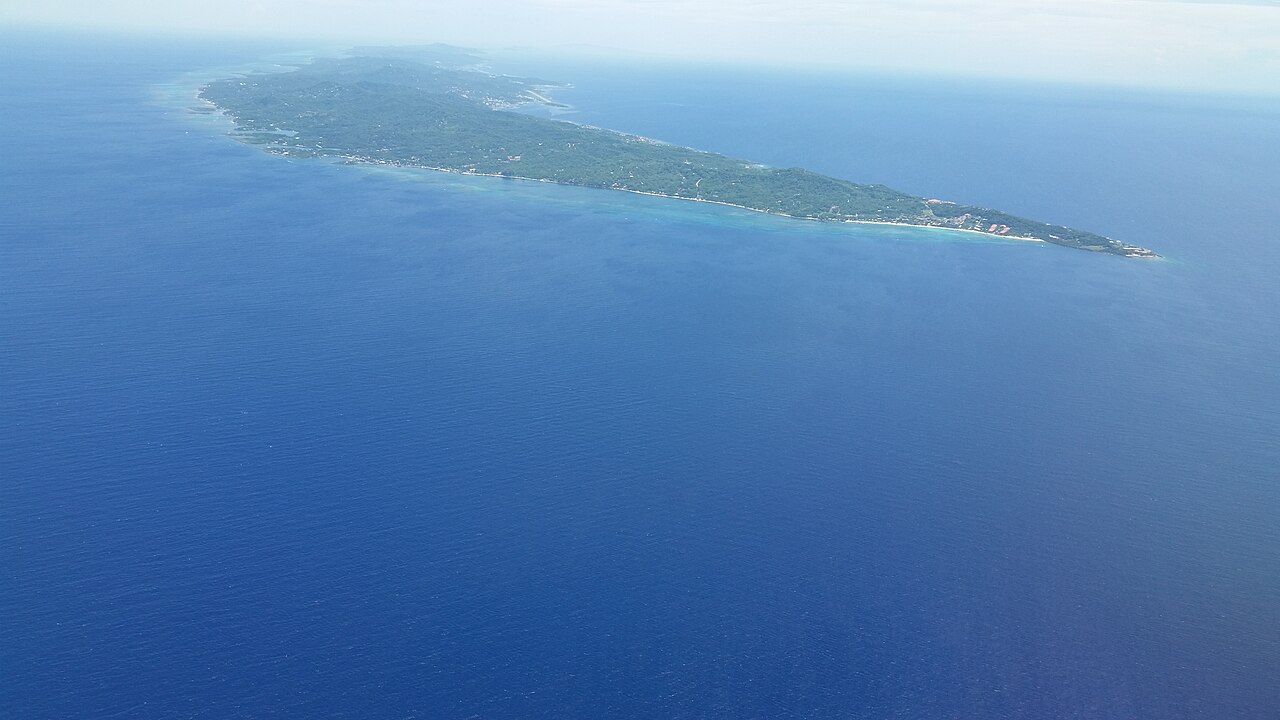
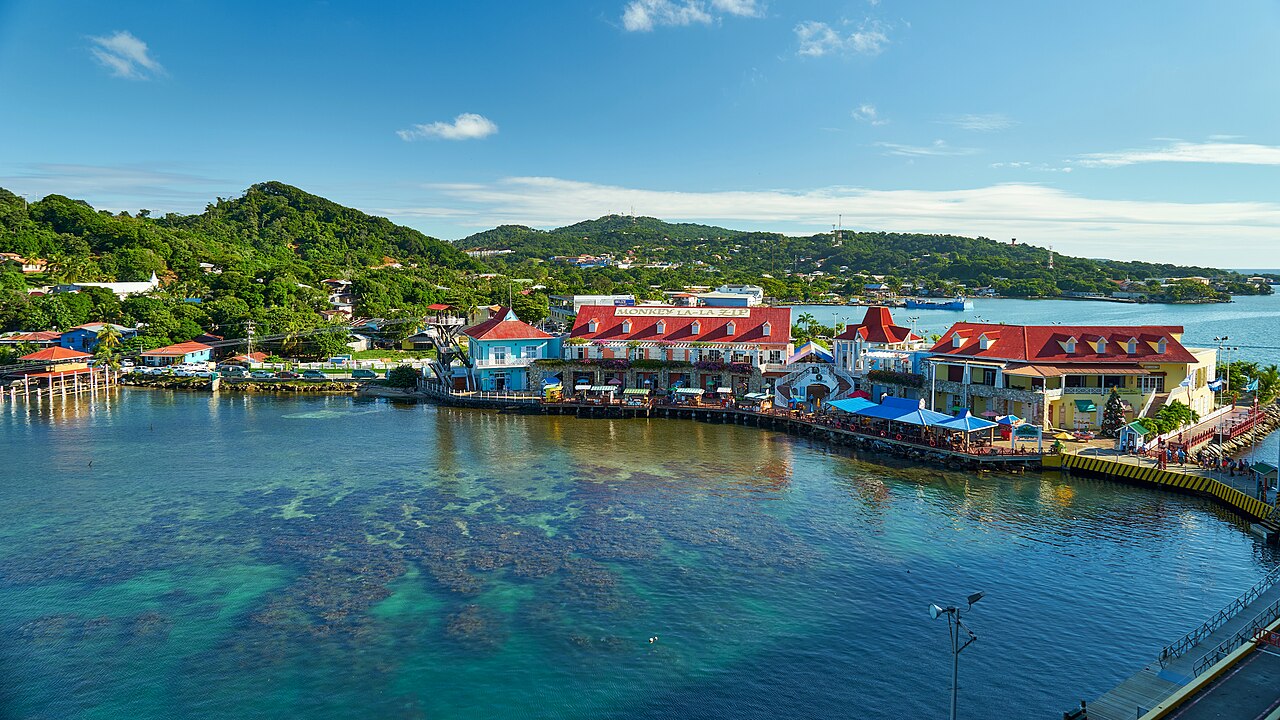
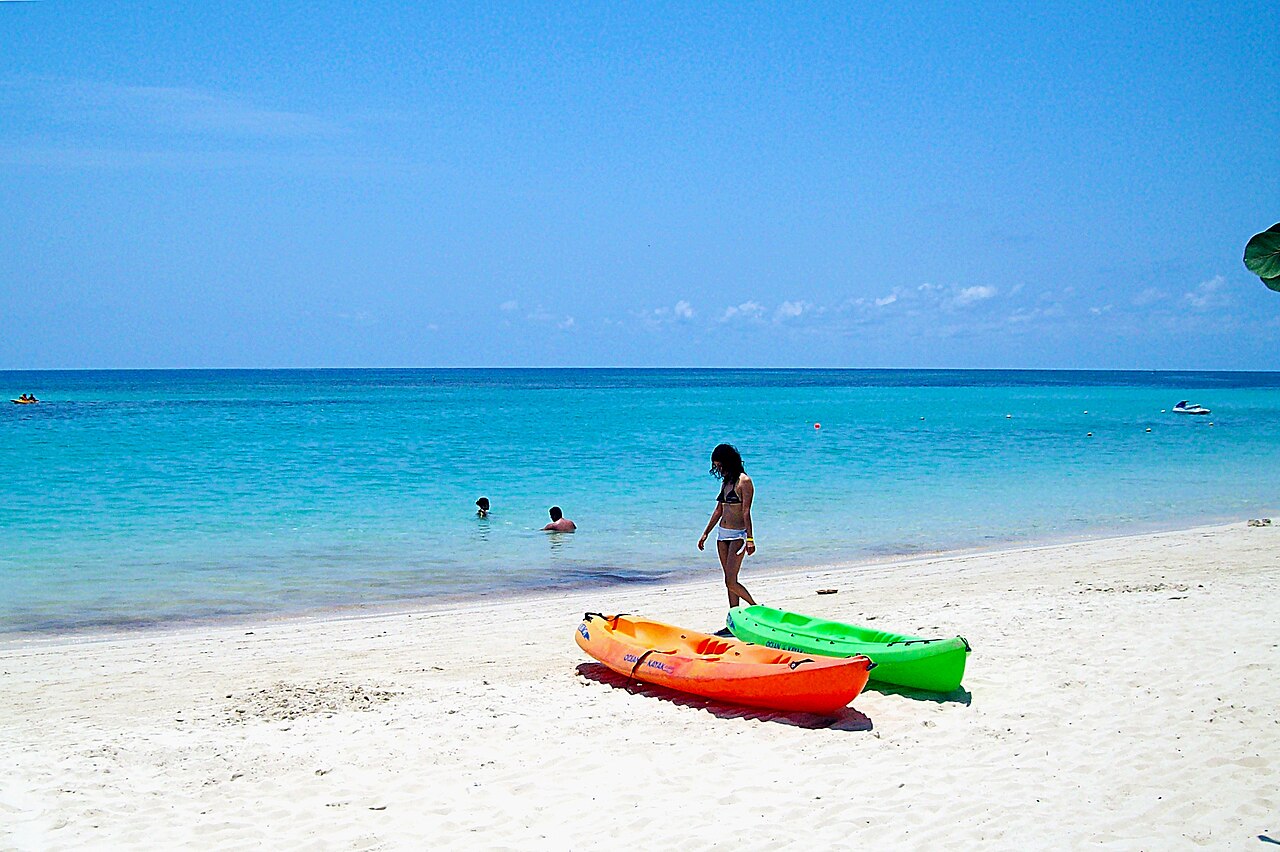
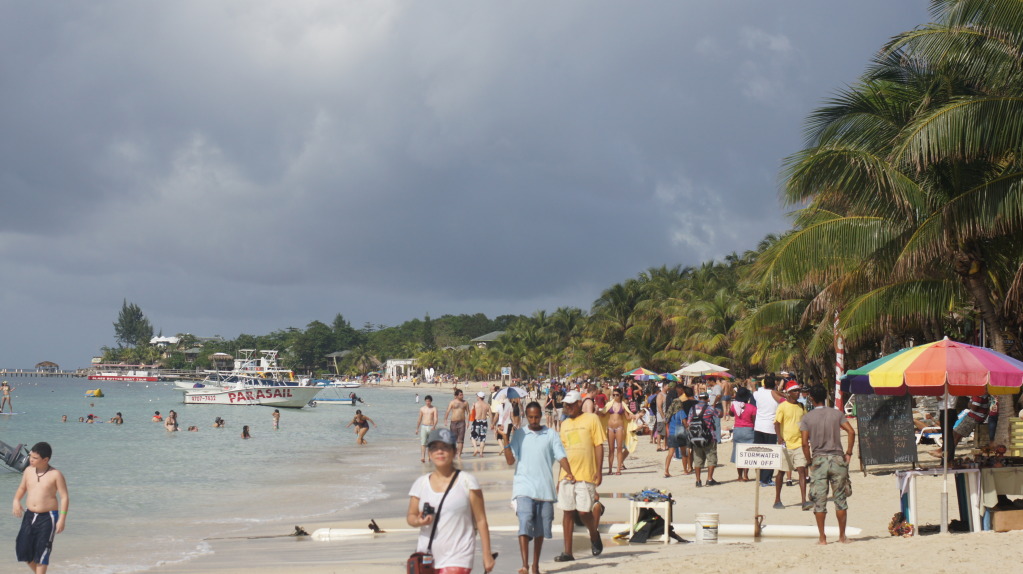
Roatán, the largest of Honduras' Bay Islands, has become the competitive freediving capital of the Americas, and West End and West Bay are where it all happens. The Mesoamerican Barrier Reef wall drops several hundred metres just off the beach, so a school boat reaches the deep lines in five to fifteen minutes, and the east trade winds shelter the island's west side, leaving almost no current and a calm surface. Water sits at roughly 27–30°C year-round with visibility commonly in the 20–30 m range, so a 3 mm suit is plenty. The island has hosted the Caribbean Cup since 2013 plus AIDA World Championships (2017, 2022) and CMAS World Championships (2019, 2023), and from 14–27 August 2026 it hosts the 10th CMAS Freediving Depth Outdoor World Championship out of Luna Beach Resort.
The West End drop-off — a reef wall that falls away hundreds of metres, with permanent deep lines only 5–15 minutes from the dock.
The Mesoamerican Barrier Reef wall — the world's second-largest reef system, starting as shallow coral gardens and rolling over into a vertical face covered in gorgonians and barrel sponges.
Genuinely flat, current-free conditions — the trade winds blow off the far side of the island, so deep sessions are rarely blown out. It is one of the more forgiving places to work on your first real depth.
The shallow reef at West Bay Beach — handy for statics, FIM warm-ups and recovery days, and easy to enjoy on a snorkel as well.
Competition-grade infrastructure — counterballast, sonar, surface and underwater camera coverage and AIDA/CMAS judging are all standing fixtures. During the August 2026 CMAS Worlds you can watch top-level athletes dive in person.
Good to know
SafetyNever dive alone. The overwhelming majority of freediving deaths happen to divers without a buddy. Shallow water blackout and LMC arrive with no warning, and the last 10 m of the ascent plus the first 30 seconds on the surface are the highest-risk window. Only dive under a system where a trained buddy or safety diver meets you at depth, watches the surface protocol and can manage an airway.
SafetyTrain deep on school lines and always wear a lanyard. Coming off the line in front of a several-hundred-metre wall is immediately life-threatening. Attempt maximum depths only on a line with counterballast rigged and a safety diver in position, and do not set your own line or attach to an unattended one. Personal-best attempts belong under a coach's supervision.
SafetySort out insurance and an evacuation plan before you get wet. There is a recompression chamber and medical centre on the island roughly 15 minutes' drive from the championship headquarters, tied into the DAN provider network, but serious cases still get evacuated to the mainland or the United States. Carry cover that names freediving explicitly, and respect scuba-to-freedive and freedive-to-fly surface intervals.
RulesDeep courses and deep-line sessions usually require certification (AIDA 2 / SSI Level 2 or equivalent) or an in-water assessment first, and even entry-level courses set basic prerequisites such as being 18 or over (16–17 with guardian consent) and swimming 100 m non-stop. Prices, schedules and prerequisites change from season to season, so confirm the current terms directly with the school.
SeasonJune to November is hurricane season, and winter 'Norte' northerlies push swell onto the north shore. Separately, from 14–27 August 2026 the CMAS World Championship ties up lines, boats, instructors and accommodation, so ordinary training slots shrink sharply. Book far ahead if you are travelling in that window.
SafetyHonduras carries a U.S. State Department Level 3 'Reconsider Travel' advisory. The Bay Islands are markedly safer than the mainland and better policed, but theft and after-dark beach robberies do occur. Avoid walking deserted beaches alone at night, fly directly into Roatán (RTB) where you can rather than routing through the mainland, and avoid mainland travel after dark.
MannersThe Mesoamerican reef is a protected marine area. Do not kick or grab the coral wall, and do not touch marine life. Use reef-safe sunscreen and follow local guidance on park fees and rules.
Practical info
Roatán (RTB) is reached via U.S. hubs such as Houston, Miami and Atlanta, or by ferry from La Ceiba on the mainland; expect 24–30 hours in transit from East Asia. Training runs year-round with March to September the most reliable stretch. Deep-line sessions and courses effectively require advance booking, and because rates, operating schedules and prerequisites shift, check the latest directly with the school before you commit.
On-site reviews📍 Verified on-site
No reviews yet. If you are here, be the first to leave one.