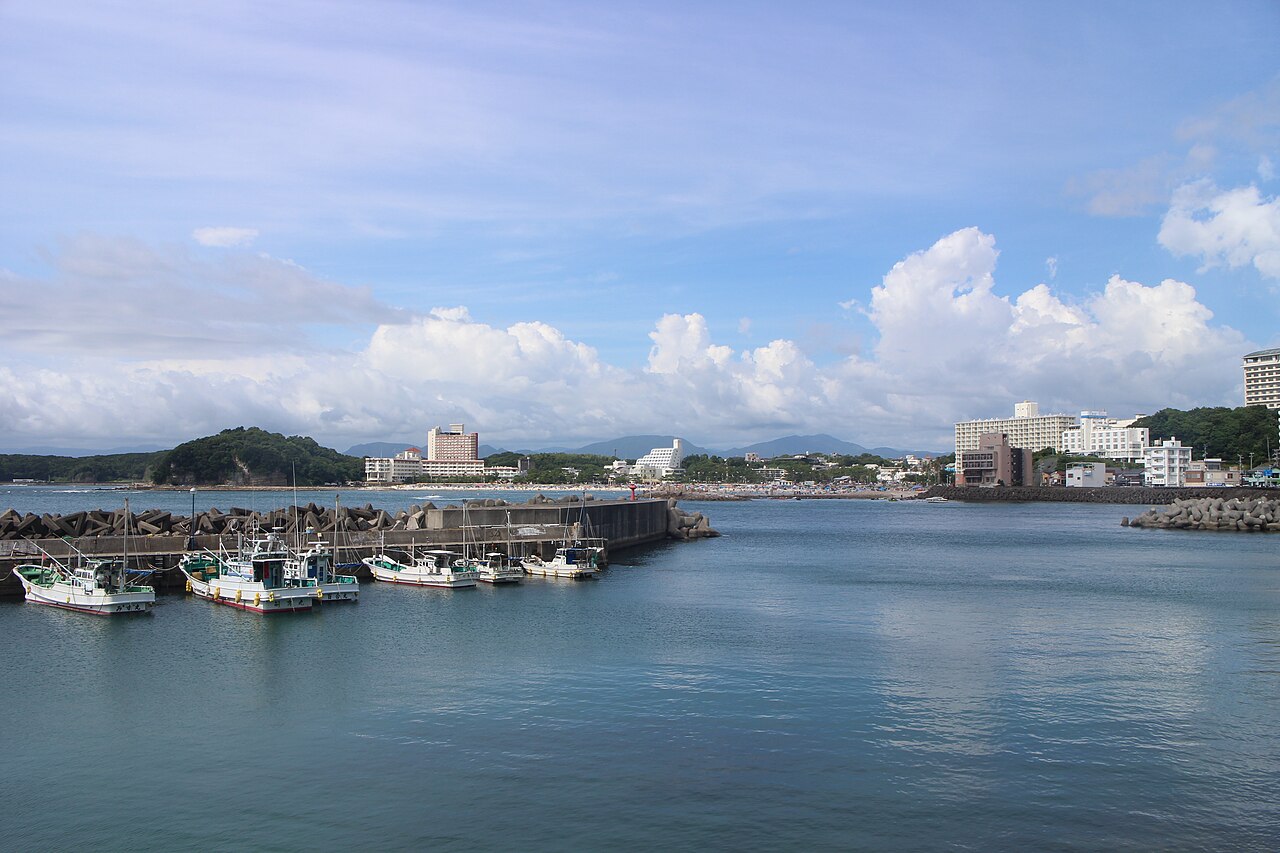
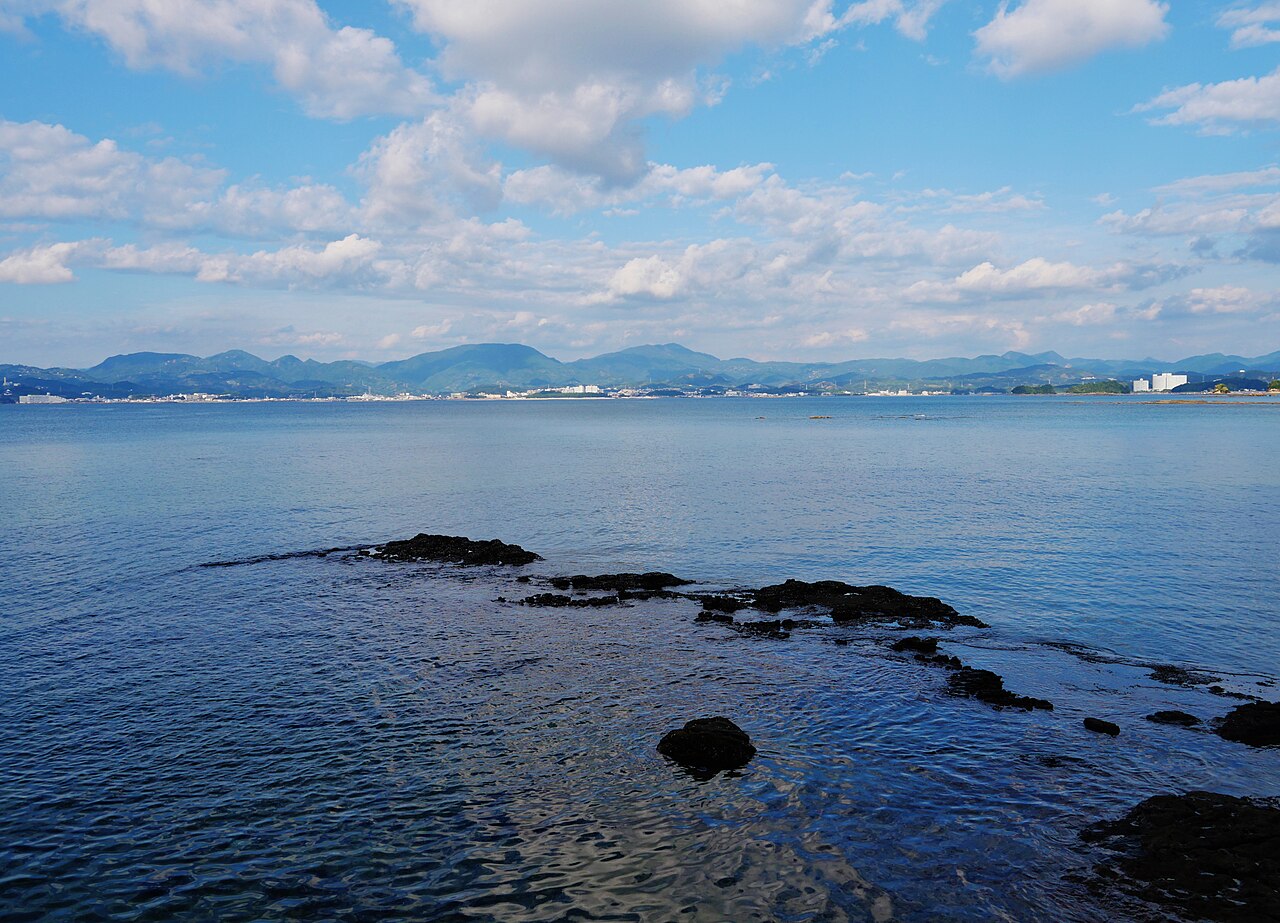
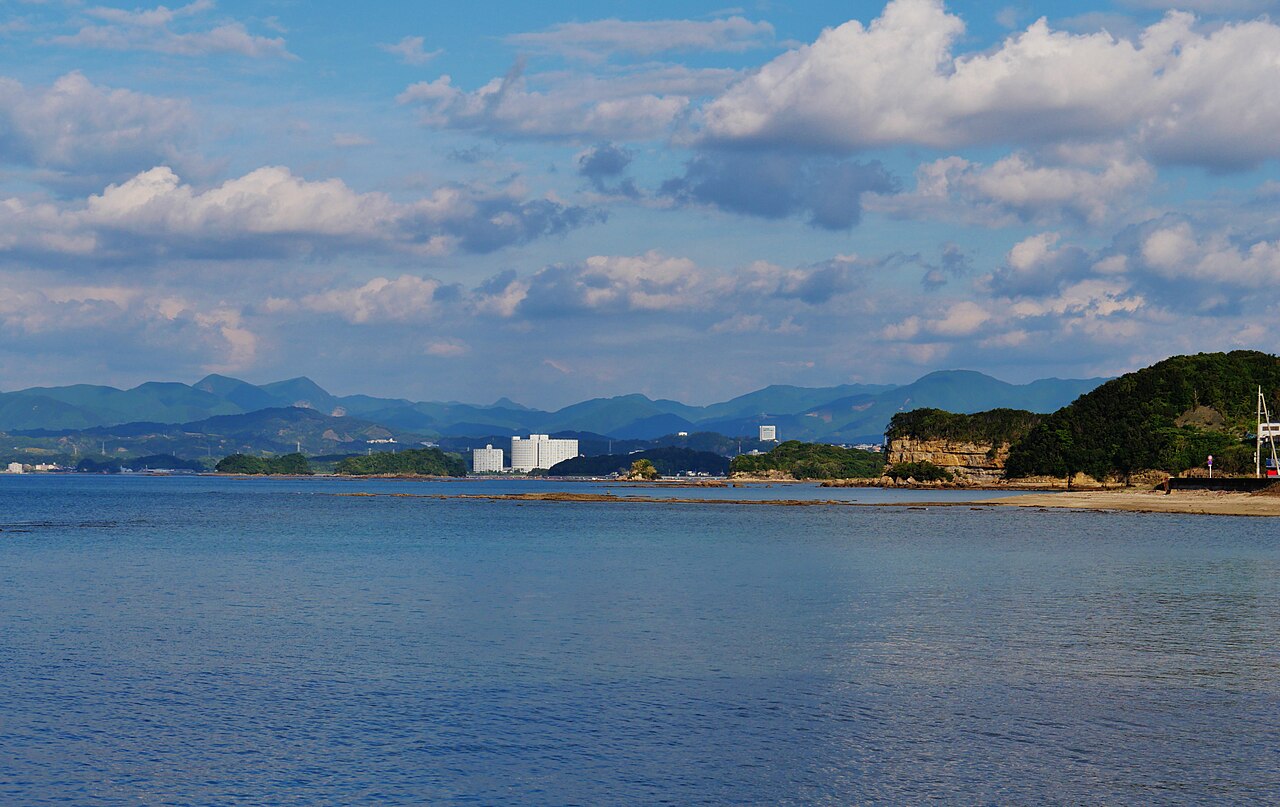
Rinkaiura Beach, a small rocky cove about five minutes by car from Shirahama's famous Shirarahama sand beach in Wakayama Prefecture, is known locally as a spot where snorkeling and iso-asobi (tide-pooling among the rocks) go hand in hand. The surrounding Tanabe Bay sits at the world's northernmost limit of coral communities thanks to the nearby Kuroshio Current, and Rinkaiura's rocky shallows host patches of soft coral and sea anemones that draw in schools of tropical reef fish. Depths stay shallow at roughly 1-4m with visibility around 6-12m, making it approachable for beginners, though the seabed isn't a gently sloping sand shelf — it can drop off suddenly just past the rocks. After the record 7-year-9-month Kuroshio large meander officially ended in spring 2025, the current has resumed flowing closer to the coast, so water temperature and fish activity in summer 2026 are expected to be closer to a typical year.
A rocky, pebbly cove that doubles as a tide-pooling (iso-asobi) spot alongside snorkeling
Just a 5-minute drive from Shirarahama Beach, yet noticeably quieter and less crowded
Patches of soft coral and sea anemones that attract schools of tropical fish
Shallow 1-4m depth and 6-12m visibility make it approachable for beginner snorkelers
Easy to pair with nearby Engetsu Island and Kyoto University's Shirahama Aquarium for a half-day loop
Good to know
SafetyUnlike a gently sloping sand beach, the seabed here can drop off suddenly right past the rocky shoreline, so children and beginners should stay with a companion and wear a life vest or snorkel vest.
SafetyRocks and pebbles make bare feet easy to injure, so water shoes are essential, and there can be currents — don't swim or snorkel out alone toward open water.
SafetyIn the days right after a typhoon passes, strongly venomous jellyfish such as the Portuguese man o' war can wash into coastal waters in this region; never touch an unfamiliar jellyfish, and if stung, rinse gently with seawater (don't rub) and seek medical care.
RulesBarbecuing and open campfires are prohibited on the beach.
RulesThis is habitat for soft coral and anemones — don't stand on or touch the coral and rocks, and only observe tide-pool creatures rather than collecting them.
MannersKeep a respectful distance from anemones, small fish, and other marine life — don't feed them or force contact.
SeasonThe official swimming-beach season dates shift year to year (typically mid-July through late August), and the paid parking lot, restrooms, and cold-water showers only run during that window — check the Nanki-Shirahama Tourist Association's latest notice for opening dates plus current jellyfish and current conditions before you go.
Practical info
It's about a 5-minute drive from Shirarahama Beach (roughly 15-20 minutes from Shirahama Station), with a small paid parking lot (around 20 spaces) and cold-water showers/restrooms that only operate during the official summer beach season — confirm current fees, hours, and opening dates with the Nanki-Shirahama Tourist Association before you go.
On-site reviews📍 Verified on-site
No reviews yet. If you are here, be the first to leave one.