Reynisfjara is a black volcanic-sand beach on Iceland's south coast near the village of Vík í Mýrdal, within the Katla UNESCO Global Geopark. It is famous for its wave-carved hexagonal basalt columns, the Hálsanefshellir sea cave, and the towering Reynisdrangar sea stacks offshore — said in Icelandic legend to be petrified trolls — with the stark contrast of black sand against the crashing Atlantic making it a highlight of any south-coast trip. It is also a genuinely dangerous beach, repeatedly struck by 'sneaker waves' that surge tens of metres inland without warning and have caused several fatalities. Following a fatal accident in August 2025, safety rules were tightened, and after a major landslide and severe coastal erosion in February 2026 the cave area was closed, so the beach is currently open only on a restricted basis focused on the upper viewing areas — always check real-time conditions before visiting and treat it as a place to be watched from a safe distance, not walked up to.
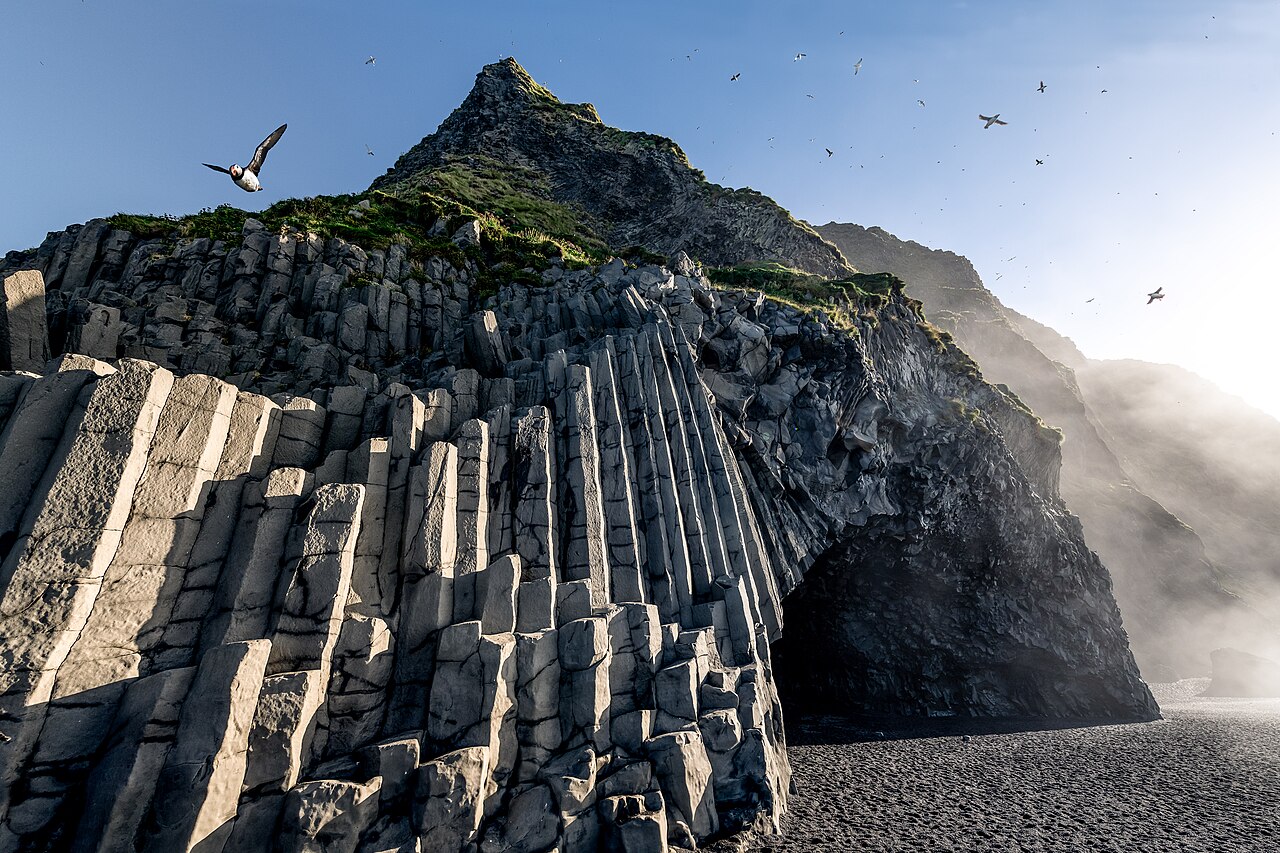
The hexagonal basalt columns — stacked black volcanic pillars forming a natural staircase and the beach's signature photo spot
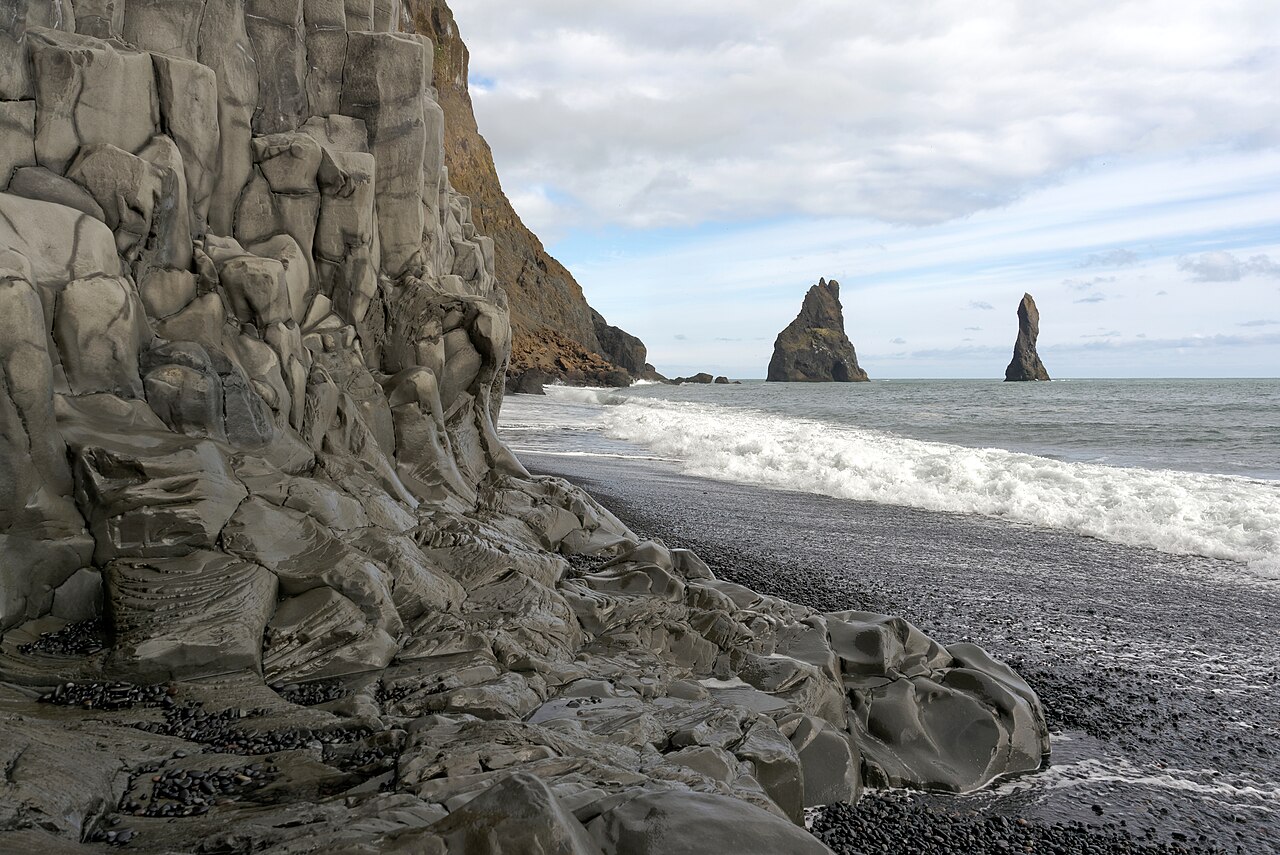
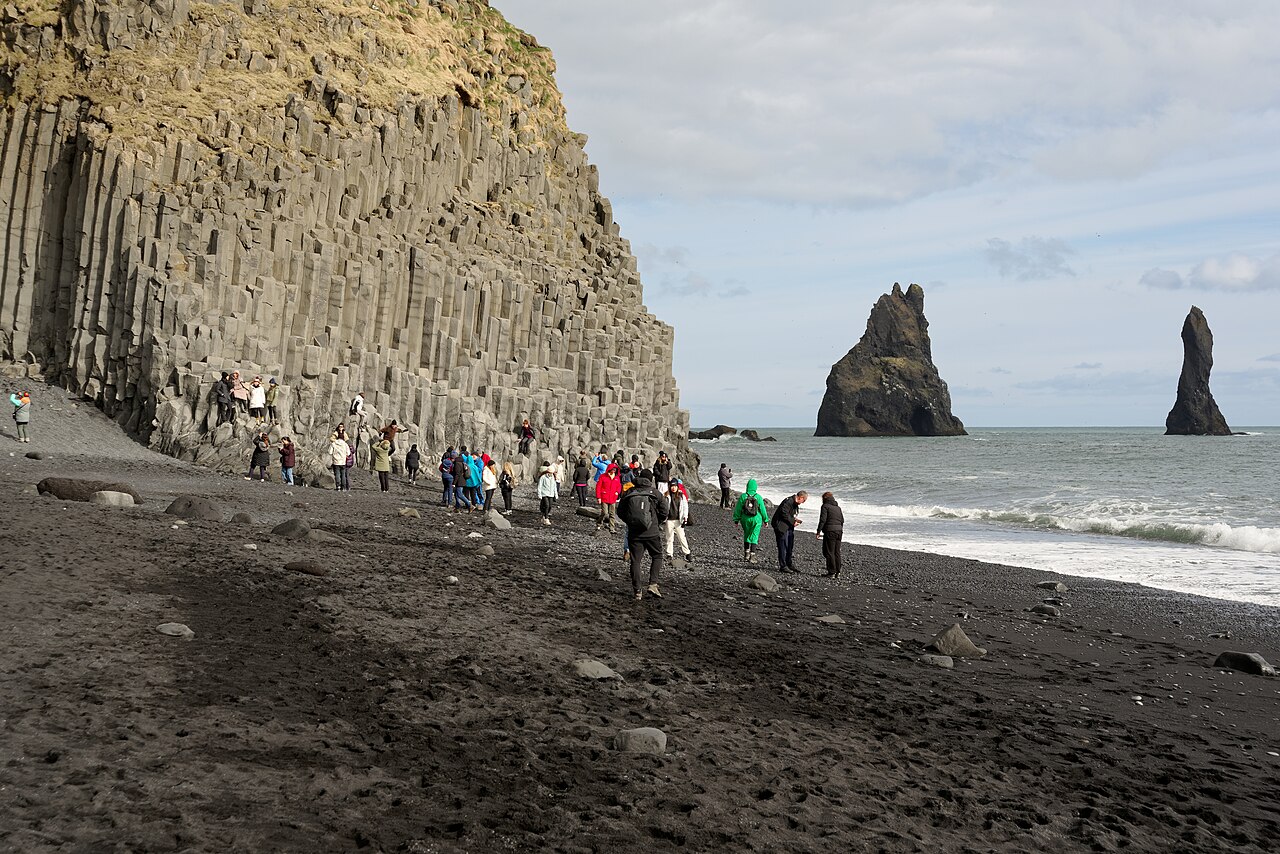
Reynisdrangar sea stacks — the dramatic offshore pinnacles that legend says are trolls turned to stone by the dawn light
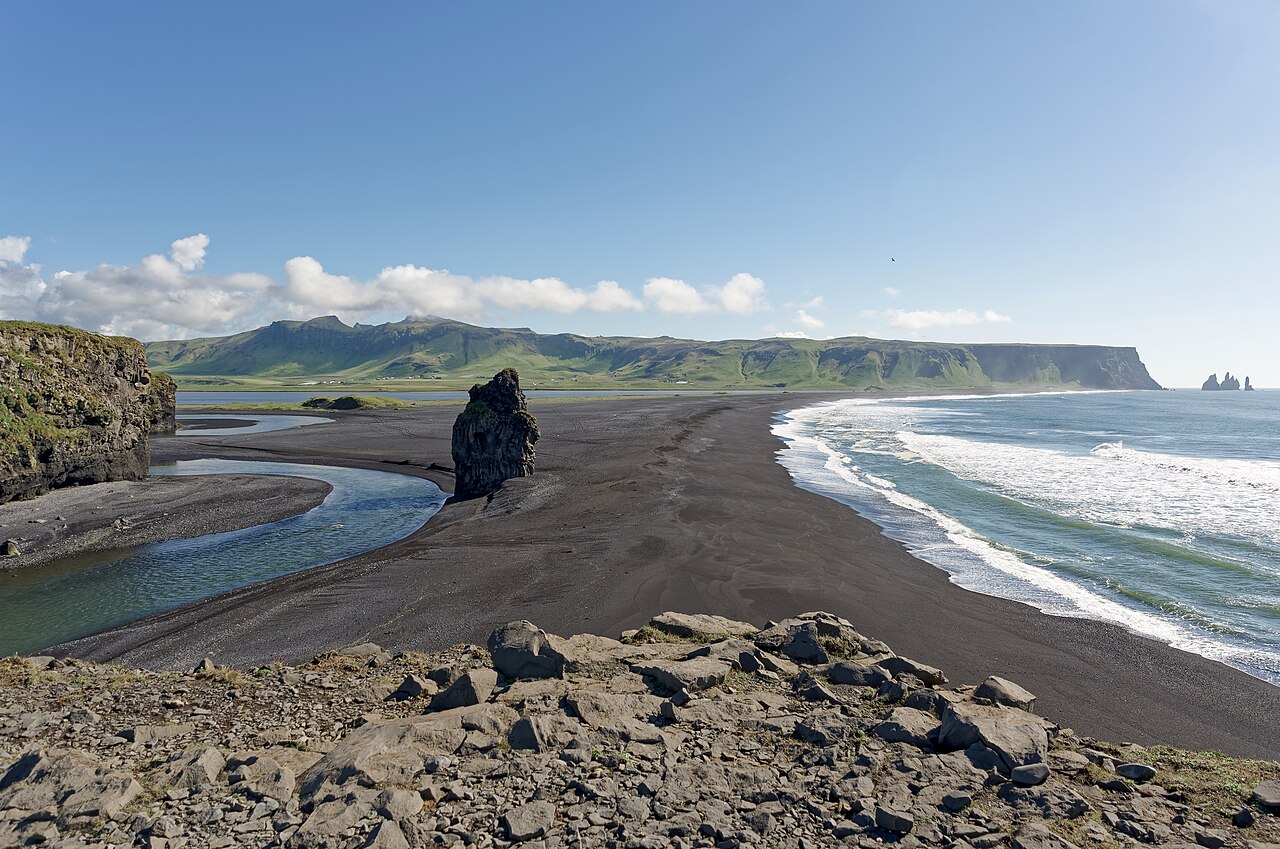
The striking black-and-white contrast of jet-black sand, white surf, and the open North Atlantic
Hálsanefshellir basalt sea cave — currently closed in 2026 due to erosion and safety concerns
Panoramic views toward the Dyrhólaey arch to the west and distant glaciers and volcanoes
Good to know
SafetyThe single most important rule is 'never turn your back on the ocean.' Sneaker waves can surge tens of metres up the beach without warning and drag a full-grown adult out to sea in seconds. Stay at least 30 metres back from the waterline.
SafetyCheck the warning lights at the entrance: green = relatively safe, yellow = moderate hazard, red = closed / do not enter. When the light is red, access to the cave and basalt columns is blocked — ignoring it is extremely dangerous.
RulesA major landslide and coastal erosion in February 2026 closed the Hálsanefshellir cave; visitors are now directed to the upper viewing platforms. The sand buffer that once allowed retreat from waves is gone, so obey all barriers and signage.
SeasonWinter (Nov–Mar) brings rougher waves, stronger wind, ice, and short daylight, raising the risk; summer has the midnight sun and long light, but the wave danger is year-round. Bring a warm, waterproof jacket and non-slip footwear.
MannersThis is private land within a protected geopark. Do not climb on the basalt columns or take rocks and sand as souvenirs, and when using a drone or tripod, avoid blocking other visitors or entering restricted zones.
CautionThe beach itself is free, but the nearby car park charges a fee (verify the current rate). Do not pay anyone demanding an on-the-spot 'safety fee,' and book tours or rental cars only through legitimate operators.
Practical info
Reynisfjara is about a 2.5-hour drive from Reykjavík along Route 1 (the Ring Road) and roughly 10 minutes west of Vík; with almost no public transport, most visitors come by rental car or on a south-coast tour. Entry to the beach is free with no ticket or fixed opening hours, but the adjacent car park is paid; parking fees, tour prices, and which areas are open all change, so confirm the latest details on safetravel.is and with your tour operator before you go.
On-site reviews📍 Verified on-site
No reviews yet. If you are here, be the first to leave one.