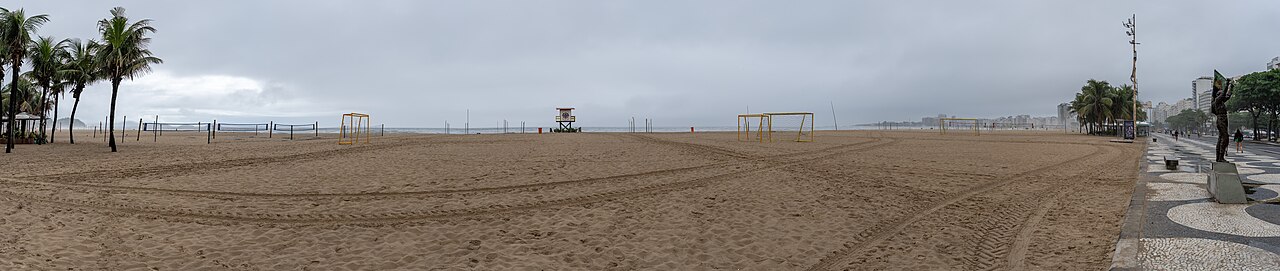
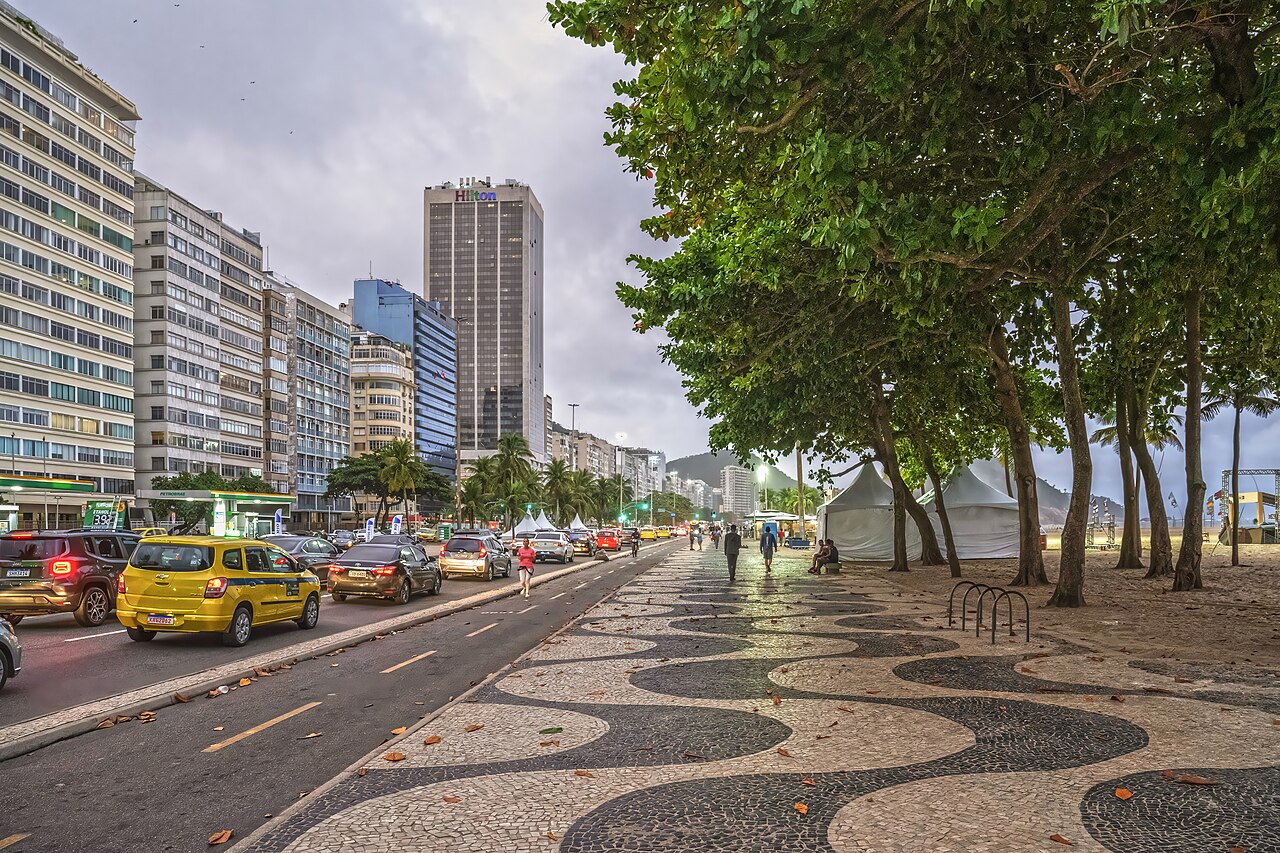
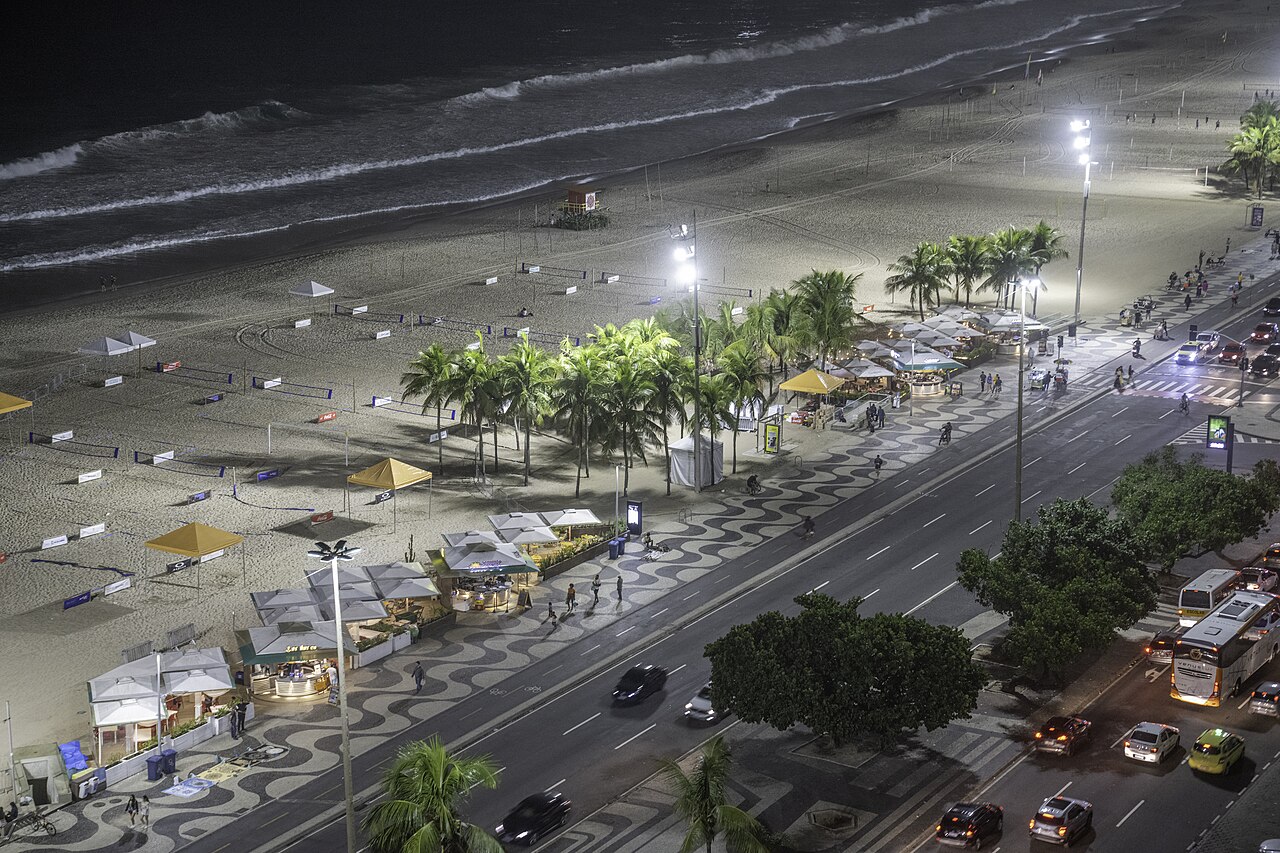
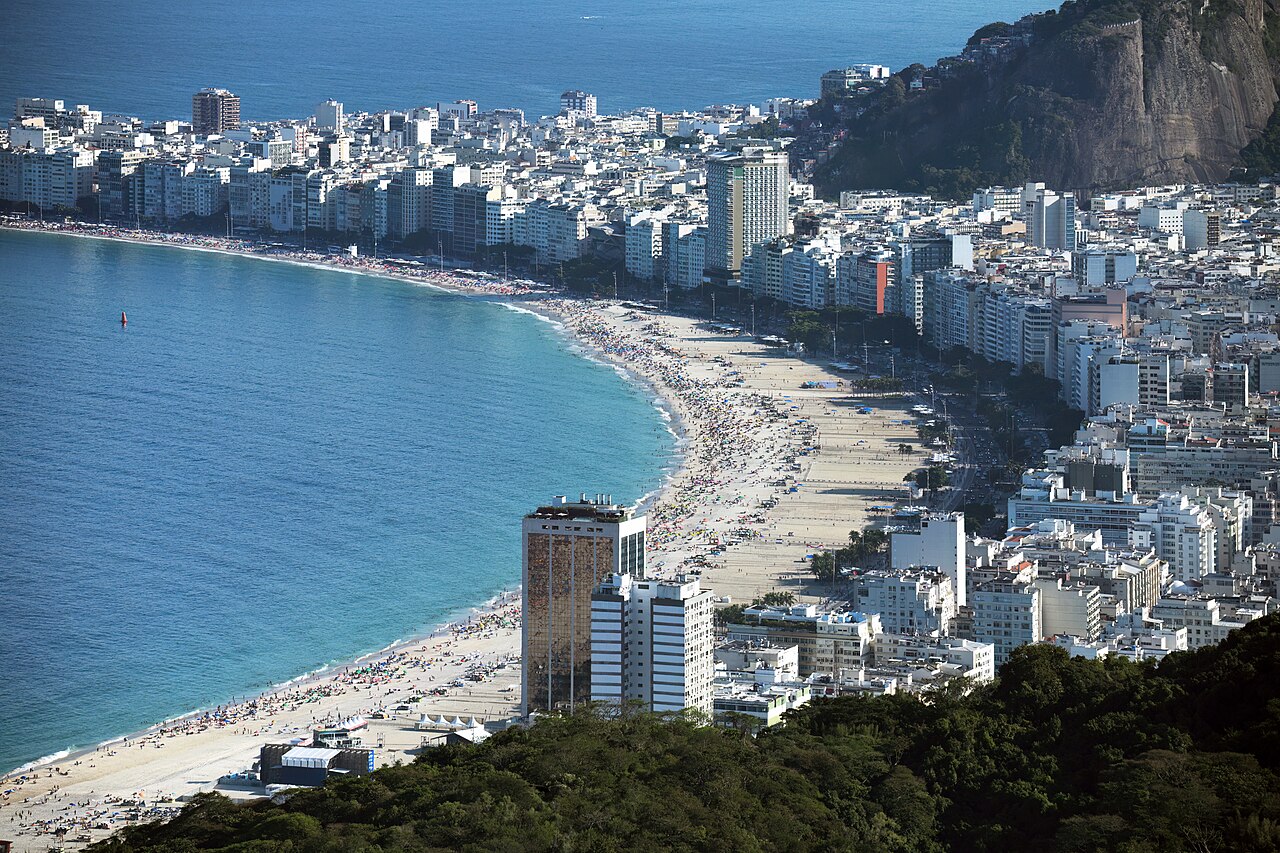
Copacabana is a roughly 4 km crescent beach in Rio de Janeiro's South Zone, world-famous as the 'Princesinha do Mar' (Little Princess of the Sea) and for its black-and-white Portuguese-stone wave-pattern promenade (calçadão). Together with Ipanema it is the very icon of Rio and hosts one of the world's largest New Year's Eve celebrations, drawing about 2 million people (the 2026 countdown added a 1,200-drone show alongside the fireworks). As of 2026 the main tourist strip is well policed and camera-monitored and is generally safe by day, but petty theft and phone-snatching persist, so it is best to plan around daytime beach walks and the landmarks lining the boardwalk.
The black-and-white Portuguese-stone wave-pattern calçadão — an iconic ~4 km promenade begun in 1906 and shaped by landscape architect Roberto Burle Marx
Forte de Copacabana at the south end, home to the Army History Museum, with sweeping beach views and the classic Confeitaria Colombo café
Copacabana Palace, the Art Deco landmark hotel opened in 1923
Boardwalk artworks, including bronze statues of poet Carlos Drummond de Andrade and composer Dorival Caymmi
Forte do Leme and the Museum of Image and Sound at the beach's ends, plus the sunset, jogging and beach-volleyball scenes
Good to know
SafetyKeep phones, cameras and wallets out of sight and avoid openly using your phone in crowds (snatch-and-run is common). Carry only minimal cash and one card, and leave your passport in the hotel safe or carry a copy.
SafetyNever leave bags unattended while you swim — someone in your group should always watch them. Avoid the beach and quiet side streets after dark, and prefer app rides (Uber) over hailing street taxis at night.
CautionConfirm prices up front with beach vendors (umbrella/chair rental, caipirinhas) and decline 'free' bracelets or trinkets pressed into your hand. Change money at banks or official exchanges rather than street dealers, and when paying by card make sure the charge is in local currency (BRL).
SeasonSeasons are reversed in the Southern Hemisphere: December–March is peak summer (hot, strong UV, afternoon showers), while June–August is winter with cooler air and colder water. Rip currents can be strong, so check lifeguard hours (roughly 07:00–19:00 in summer) and safe-swimming zones, and skip swimming right after heavy rain when water quality drops.
RulesDrinking in public is generally tolerated, but glass bottles on the sand are restricted and littering is fined. On New Year's Eve (Réveillon) wearing white is the tradition, and heavy crowd and traffic controls apply, so check in advance. The Forte de Copacabana museum is closed on Mondays.
MannersRestaurant bills usually already include a 10% service charge (taxa de serviço), so extra tipping is optional; a small amount is enough for beach service. Keep swimwear and going topless to the sand — cover up when heading to the promenade or shops — and a simple 'Obrigado/Obrigada' (thank you) in Portuguese goes a long way.
Practical info
Reach the beach on foot from MetrôRio Line 1 (Orange) stations Cardeal Arcoverde, Siqueira Campos or Cantagalo; city buses and Uber are also easy. The beachfront promenade is open 24 hours and free, with lifeguard posts and facilities organized by 'posto' number; for paid sites such as the Forte de Copacabana museum, always check current hours, prices and closing days via official channels before visiting.
On-site reviews📍 Verified on-site
No reviews yet. If you are here, be the first to leave one.