The Pont du Gard is a three-tiered Roman aqueduct bridge built around the 1st century AD to carry water across the Gardon River as part of the roughly 50 km aqueduct feeding Nîmes. Standing about 49 m high with a top tier of some 275 m, it is a masterpiece of ancient engineering and a UNESCO World Heritage Site since 1985, famous for its precisely fitted mortarless limestone arches set against the river landscape of Provence. It operates normally in 2026, with summer highlights including nightly sunset illuminations (15 May–20 Sep) and an evening sound-and-light show (4 Jul–30 Aug, around 22:30). Crossing the bridge and walking the riverbanks is free, but parking, the museum, and the guided top-tier walk are separate, so online booking is recommended in the busy summer season.
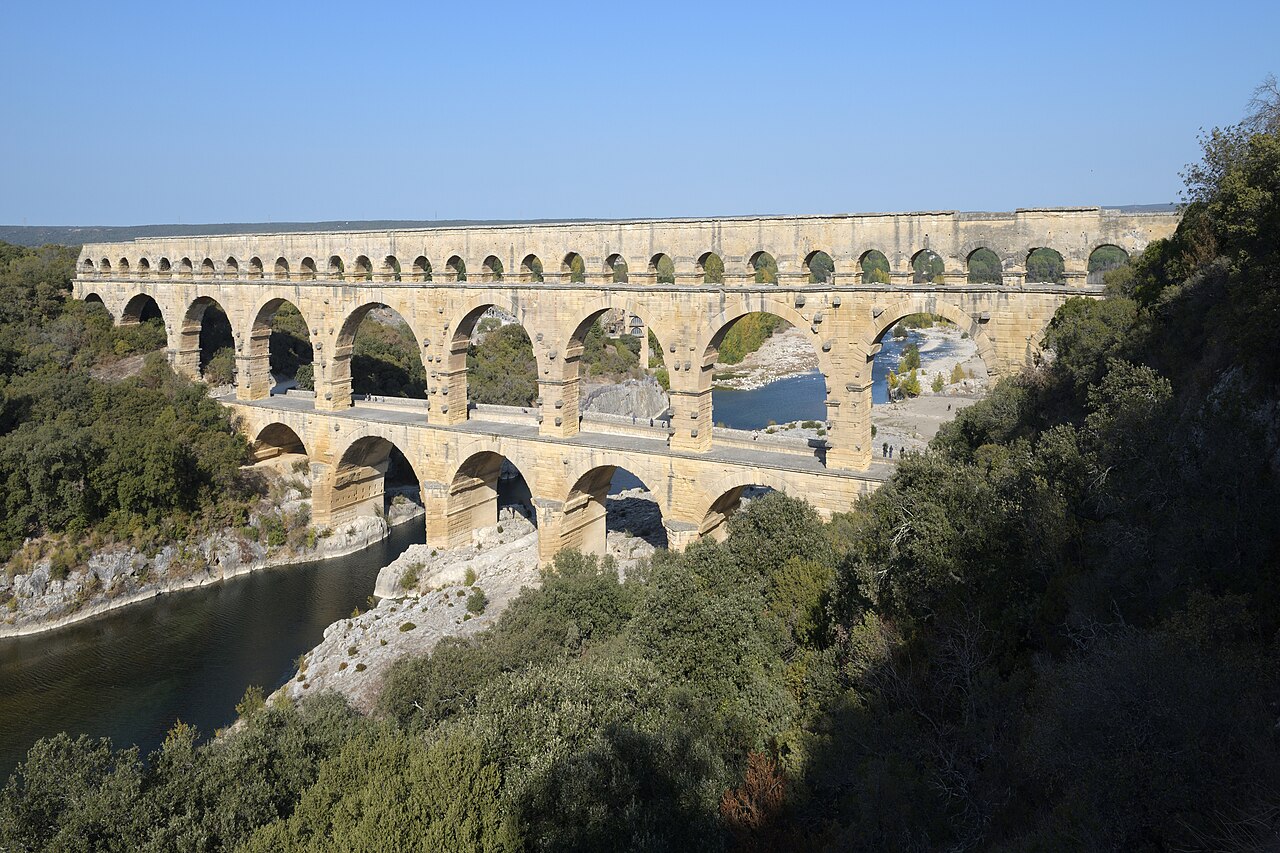
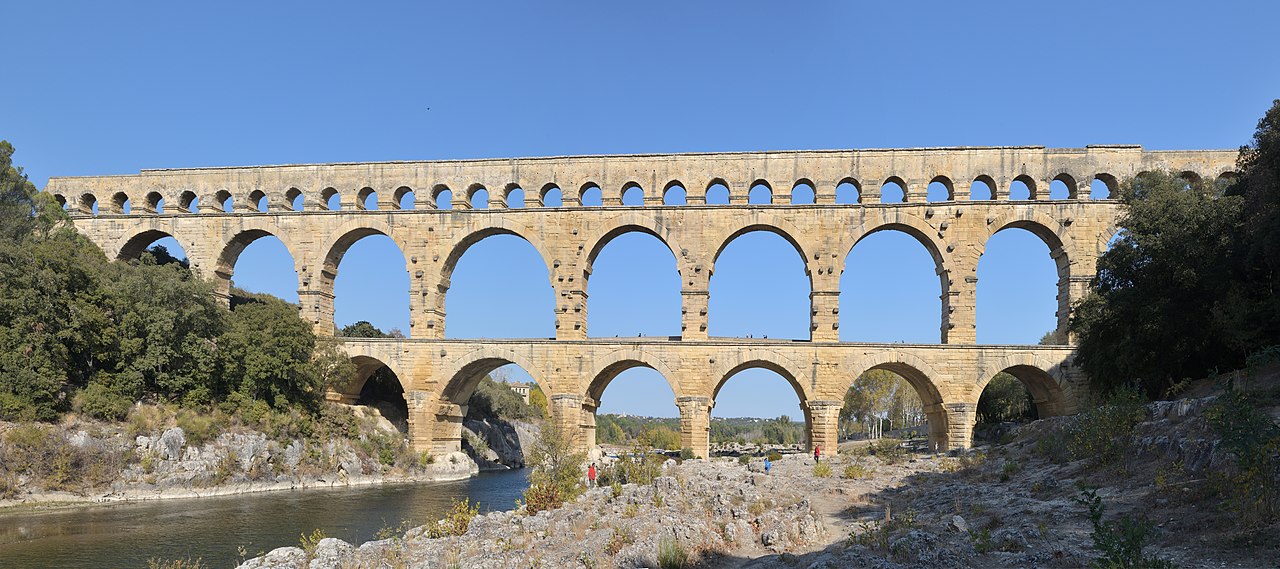
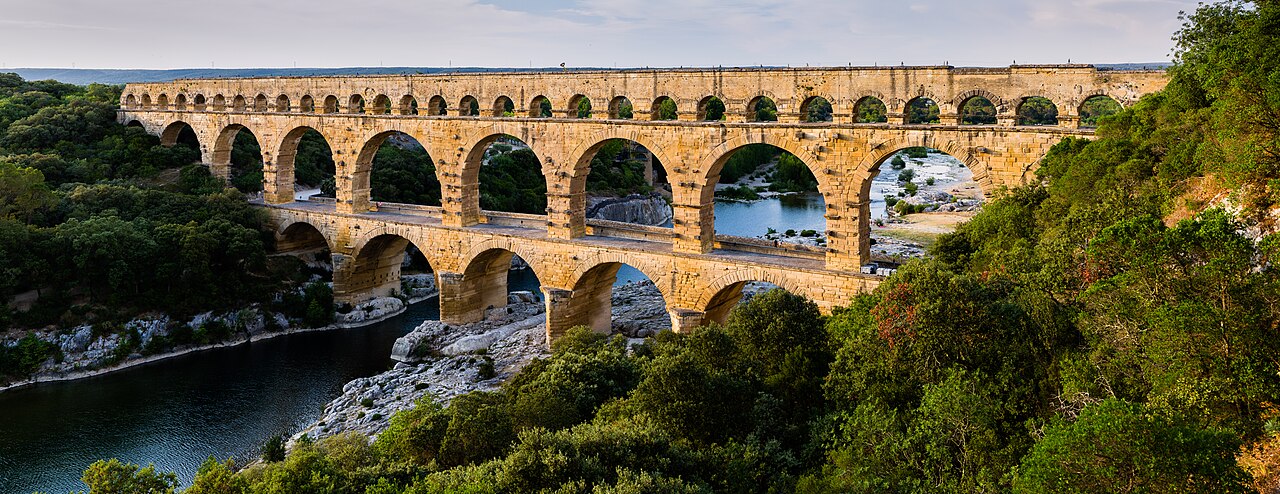
The full three-tiered arcade - 6 arches on the lower level, 11 on the middle, and 35 on the upper - and its symmetry seen from the riverbank
Massive limestone blocks assembled without mortar, still bearing the Roman masons' setting and lifting marks on the stone
The upper-level water channel (specus), accessible only by guided tour - walking inside the actual conduit that once carried the water (80 steps, reservation required)
The museum, cinema (Ciné) and hands-on space (Ludo) explaining the 50 km Nîmes aqueduct and Roman hydraulic engineering
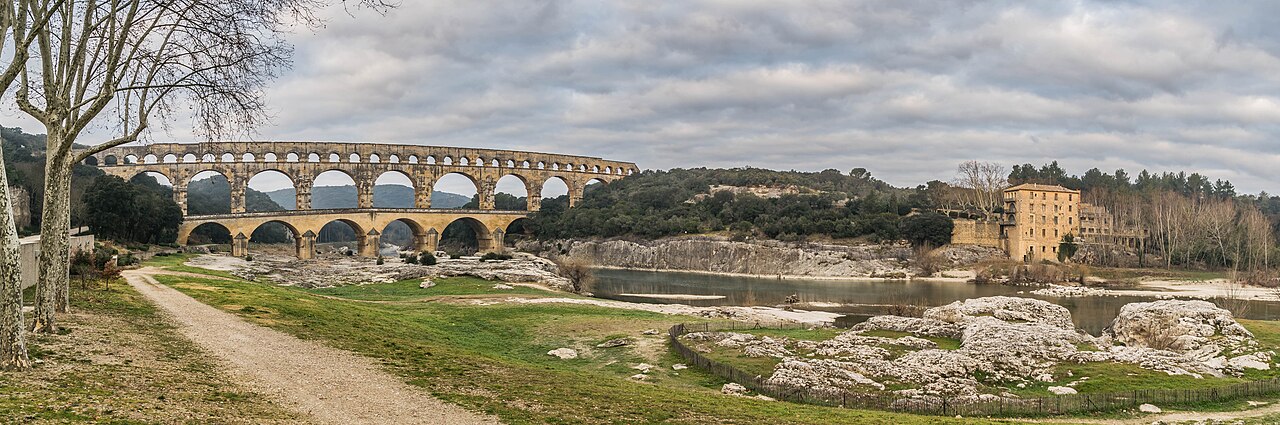
Panoramic views of the bridge from the Gardon riverside paths and the surrounding Mediterranean garrigue scrubland
Good to know
RulesCrossing the bridge and riverside access are free, but in practice entry is charged as parking per vehicle (on-site or online). The museum and cultural spaces and the guided top-tier walk are separately ticketed, and prices and hours can change - always confirm the latest details on the official site (pontdugard.fr).
RulesThe monument is open year-round, but the museum and cultural venues close from November to February and on Monday mornings for maintenance. The top-tier water channel can only be reached via a guided tour (80 steps, reservation required) and is not wheelchair accessible.
SeasonJuly and August in Provence bring intense heat and strong sun with little shade. Bring water, a hat, sunscreen and shade, and avoid the midday peak. Peak-season weekends and the sound-and-light show get crowded, so book illumination and evening events online in advance.
SafetySwimming, wading and canoeing in the Gardon are possible but there are no lifeguards and currents and depth vary. Flash-flood currents can occur after upstream rain, so do not take risks and watch for slippery rocks and falls at the water's edge.
SafetyProvence has high wildfire risk in summer; when a red alert is declared, access to surrounding natural areas and gorge trails may be restricted. Check the local fire-risk level and official notices before visiting.
MannersThis is a UNESCO World Heritage Site and a protected natural area. Do not climb on the bridge outside marked areas, no graffiti or littering, respect the riverside ecosystem, and note that drone photography may require prior authorization.
CautionBuy tickets and parking on the official site (pontdugard.fr / billetterie.pontdugard.fr). Beware of third-party resellers charging markups or on-site touts, and pay parking through official channels.
Practical info
By car, take A9 motorway exit 23 (Remoulins); it is about 27 km from Nîmes and 21 km from Avignon. By public transport, use shuttle buses from Nîmes or Avignon, or regional Lio bus lines 121 (from Nîmes) and 115 (from Avignon/Alès); parking is available on both the left and right banks. Opening hours, parking/ticket prices and event schedules vary by season, so confirm the latest details on the official site and reserve ahead in peak season.
On-site reviews📍 Verified on-site
No reviews yet. If you are here, be the first to leave one.