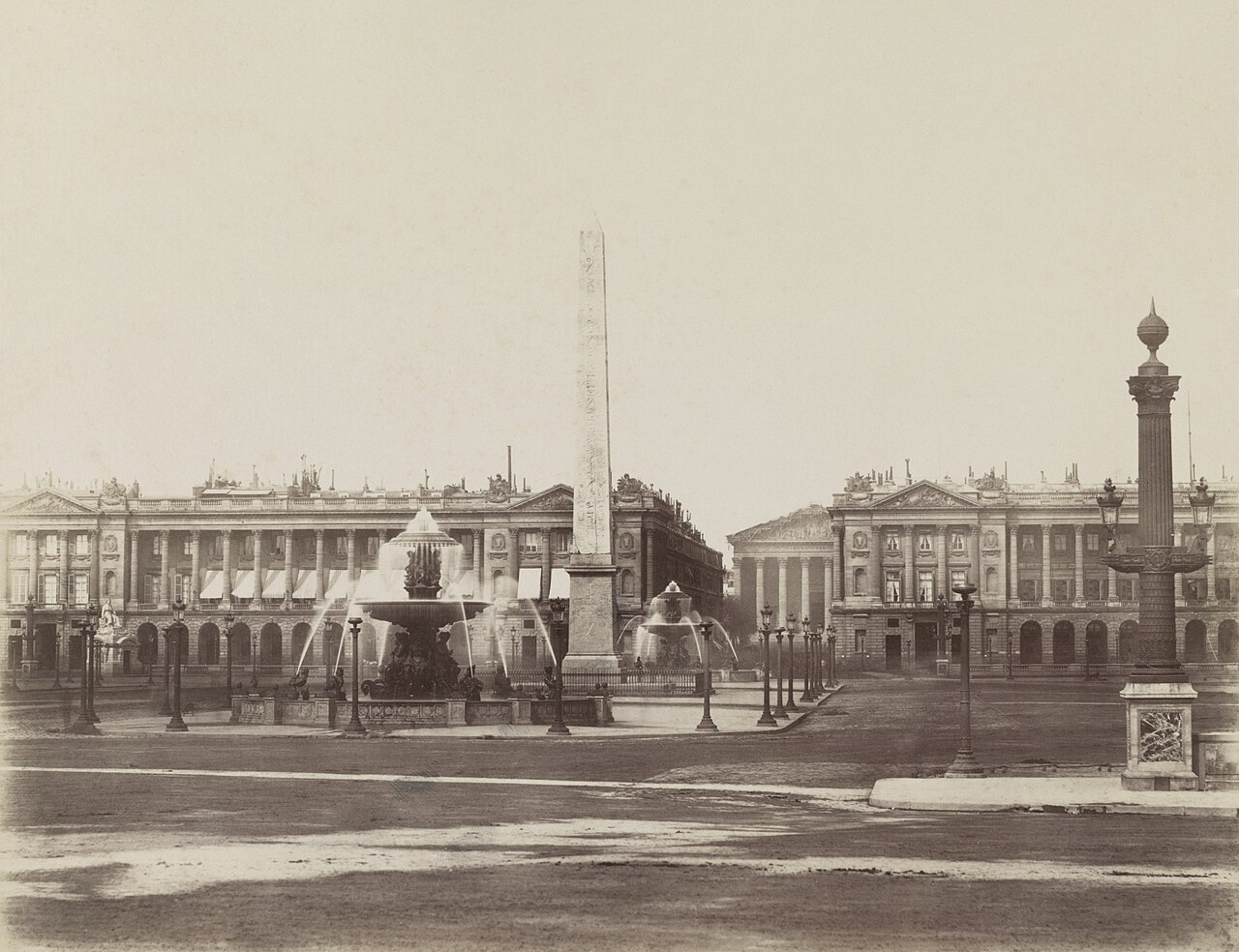
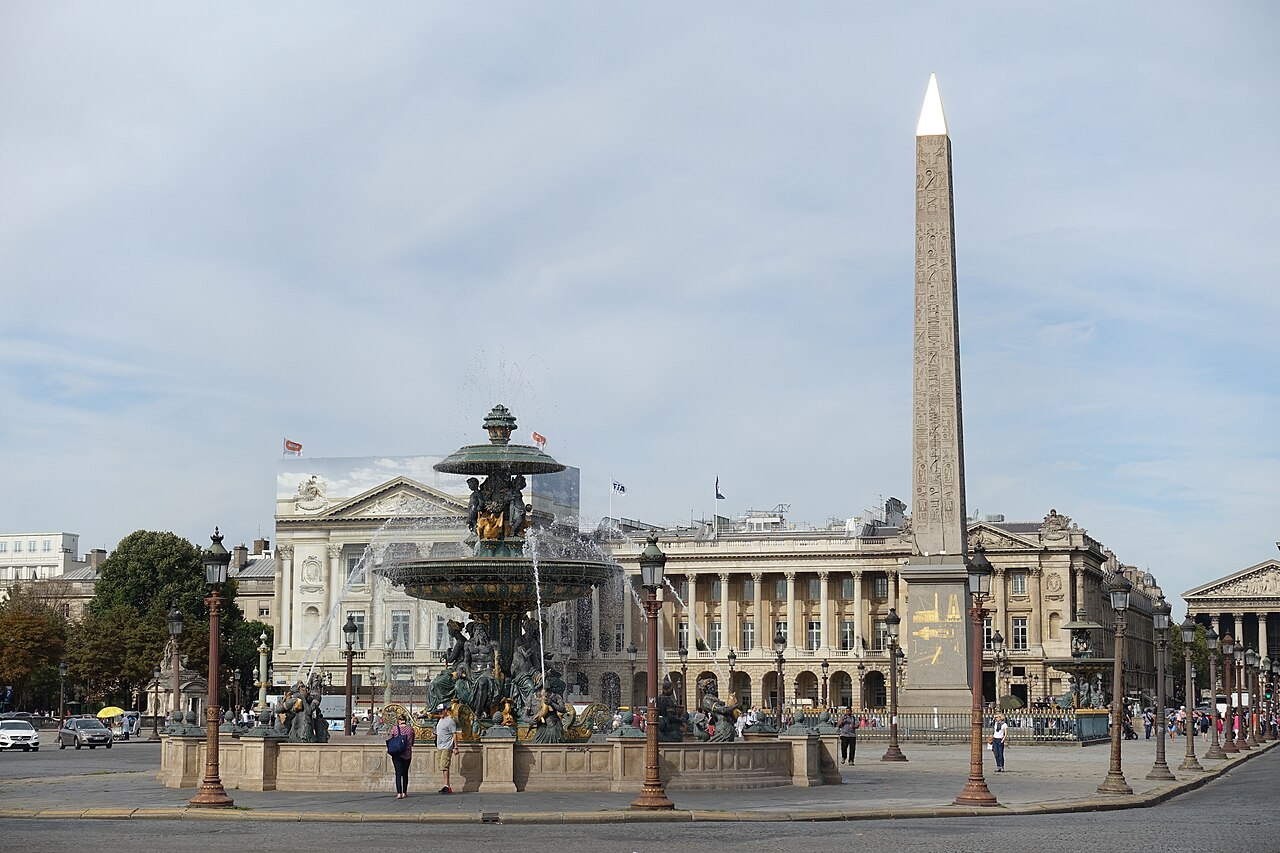
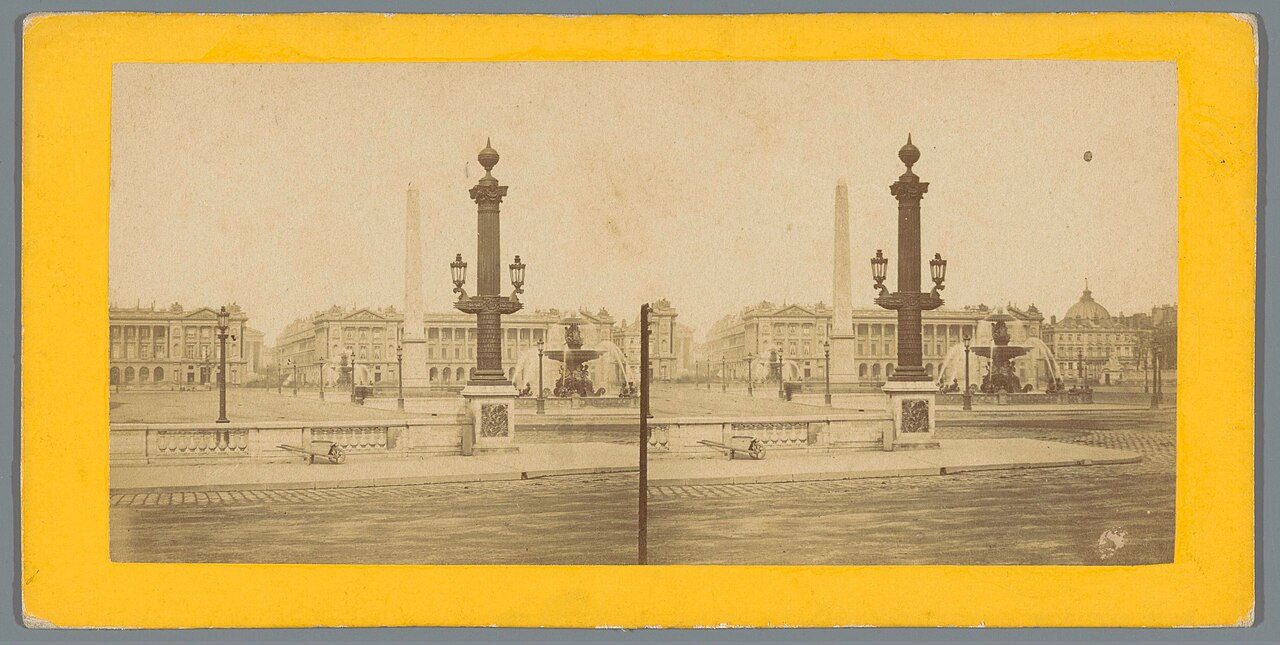
Place de la Concorde is the largest square in Paris, set between the Champs-Élysées and the Tuileries Garden, and it carries a dark history: as the Revolution-era 'Place de la Révolution' it was where Louis XVI and Marie-Antoinette were guillotined. At its center stands a 3,300-year-old Egyptian obelisk from Luxor Temple, flanked by two monumental fountains designed by Hittorff, and in 2024 the square served as the Olympic 'Urban Park' for skateboarding, BMX and breaking. As of 2026 the square is entering a major redesign that will turn it into a 'garden-square' with 131 new trees and lawns; exploratory surveys run through 2026 with major works launching around year-end, so expect some fencing and restricted views. The square itself is a free, open public space needing no reservation, but it is wise to check the current construction status before you go.
The Luxor Obelisk — a 23 m, roughly 3,300-year-old Egyptian obelisk whose gilded pyramid cap catches the sun; since 1999 it also functions as the world's largest sundial, so look for the hour lines marked on the ground.
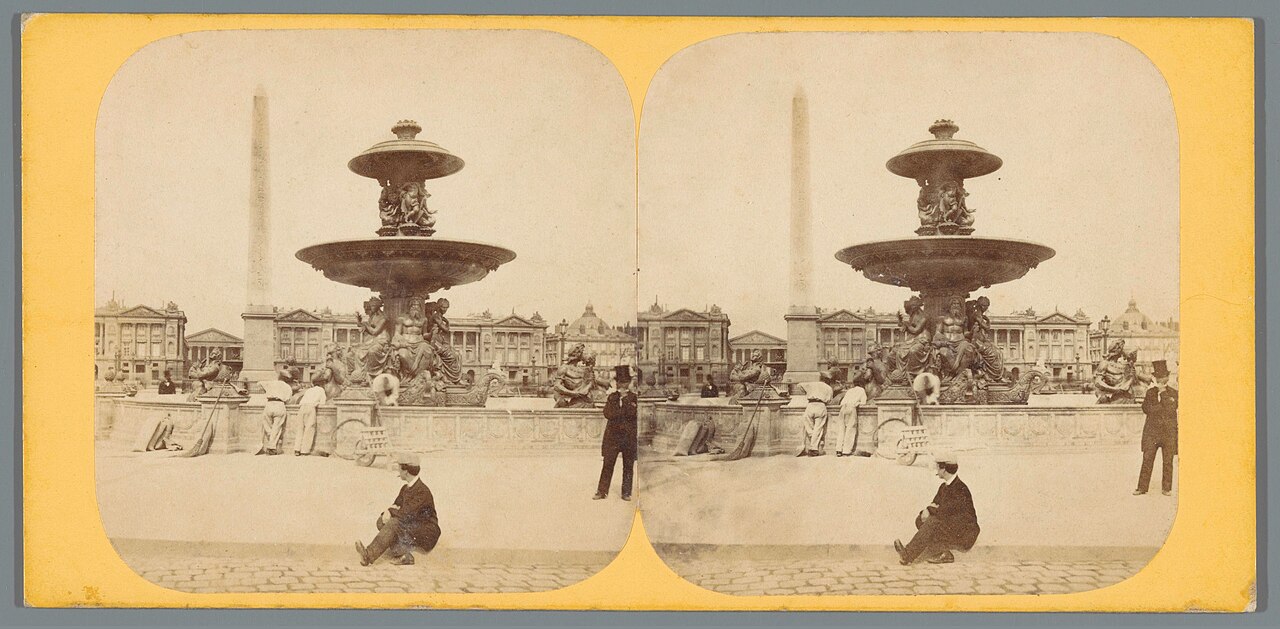
Two monumental fountains — the Fontaine des Fleuves (north, rivers) and Fontaine des Mers (south, seas), with gilded allegorical figures for navigation, agriculture and industry.
Eight city statues — allegorical figures crowning the square's edges represent major French cities such as Lille, Strasbourg, Marseille and Lyon.
Grand axial views — west up the Champs-Élysées to the Arc de Triomphe, east to the Tuileries and the Louvre, plus the Assemblée Nationale across the Seine and the Madeleine church aligned to the north.
Hôtel de la Marine & Hôtel de Crillon — matching 18th-century neoclassical palaces by Ange-Jacques Gabriel on the north side; the Hôtel de la Marine is a visitable museum with lavish salons and a loggia overlooking the square.
Night view — the illuminated obelisk, fountains and the sweep toward the Champs-Élysées make for a striking evening scene.
Good to know
SafetyConcorde metro station (lines 1, 8, 12) and the square are prime pickpocket territory. Keep bags zipped and in front, and mind your phone and wallet in crowds.
SafetyThe square is a large, fast roundabout for traffic. Reaching the central obelisk means crossing several lanes, so use marked crossings and lights, and watch for scooters and motorcycles.
CautionPetition, friendship-bracelet, gold-ring and shell-game scams are common near the Champs-Élysées and Tuileries. If a stranger approaches or asks you to sign something, don't engage and keep walking.
SeasonThe open stone plaza offers little shade, so it gets very hot and crowded in high summer. Carry water and sun protection, and consider visiting early morning or at dusk.
RulesFrom late 2026, redesign works may fence off parts of the square or limit access. Check the City of Paris's official updates for the current opening status before visiting.
MannersEvery 14 July (Bastille Day), the Champs-Élysées military parade runs down to Concorde, closing surrounding roads and the square. If visiting in mid-July, check schedules and road closures in advance.
Practical info
The square is reached directly from Concorde station on metro lines 1, 8 and 12, and as a 24/7 free public space it needs no ticket. The Hôtel de la Marine museum facing the square is ticketed (verify current prices and hours on its official website before visiting) and is also accepted on the Paris Museum Pass.
On-site reviews📍 Verified on-site
No reviews yet. If you are here, be the first to leave one.