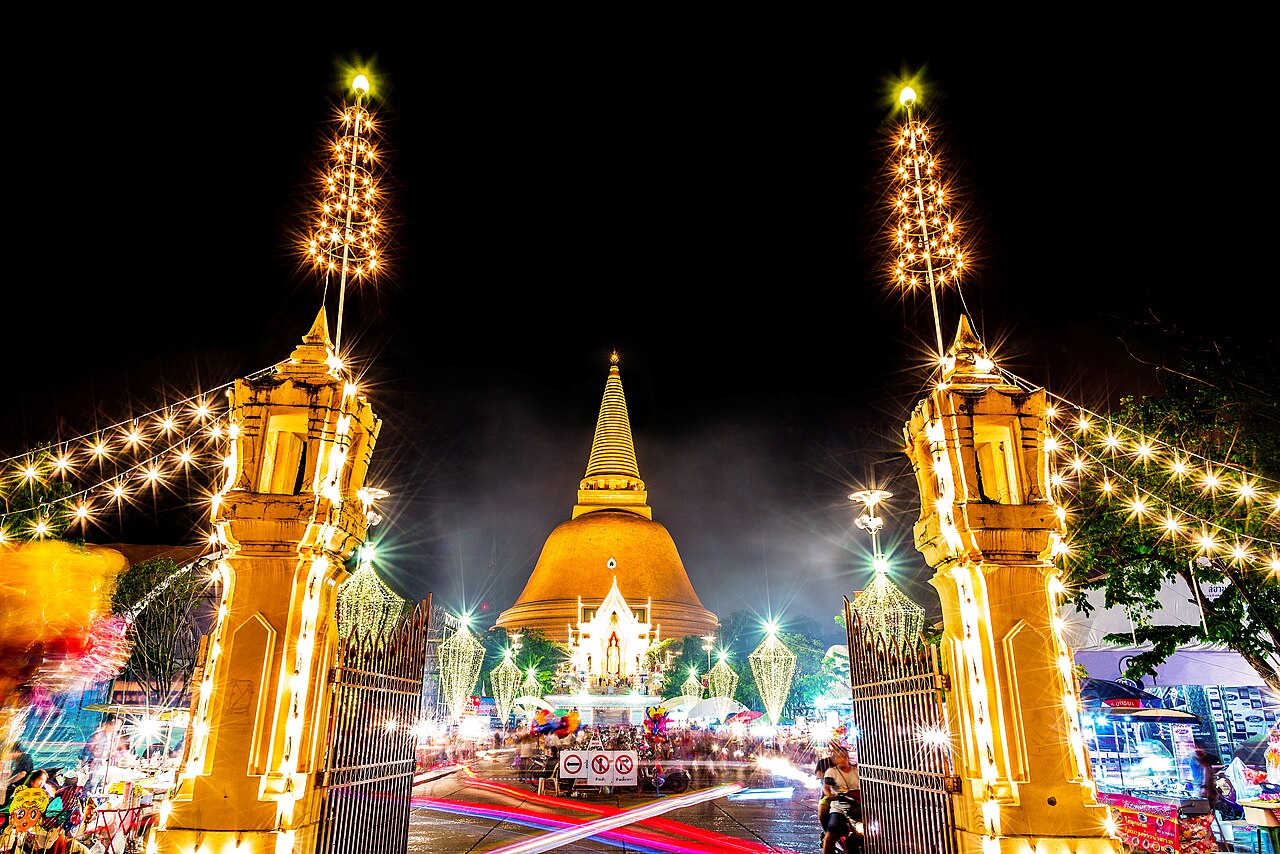
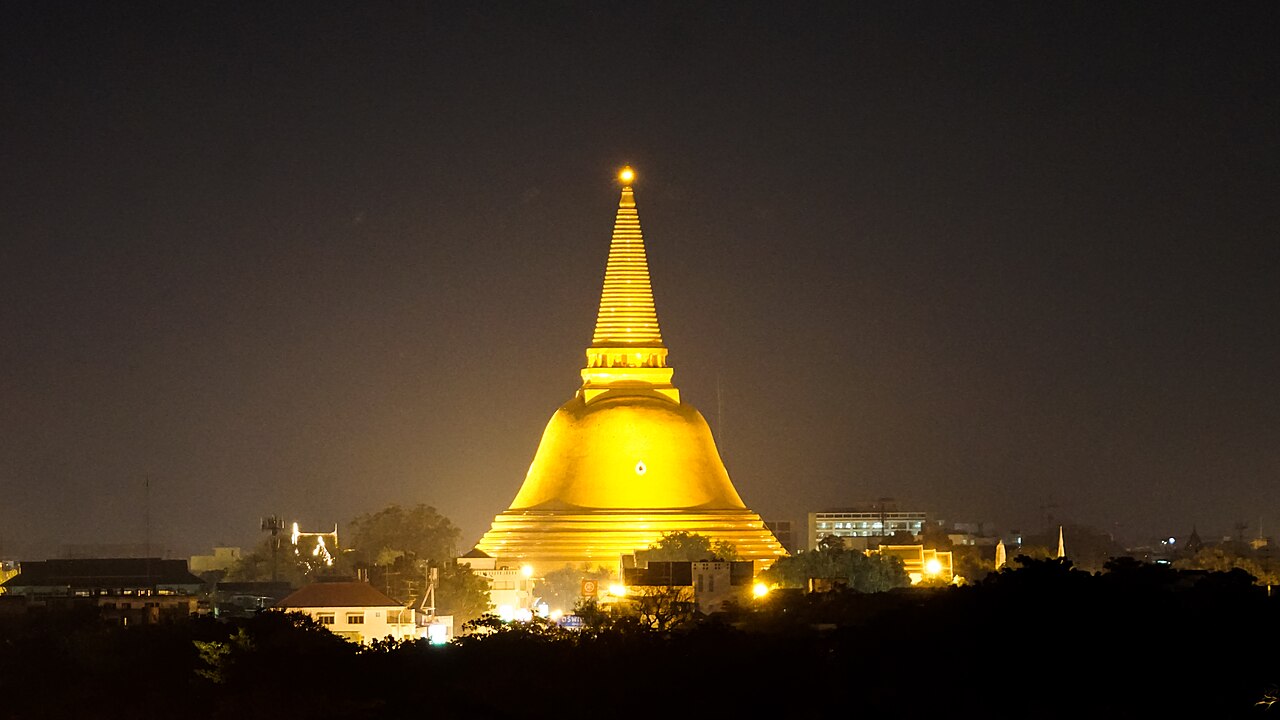
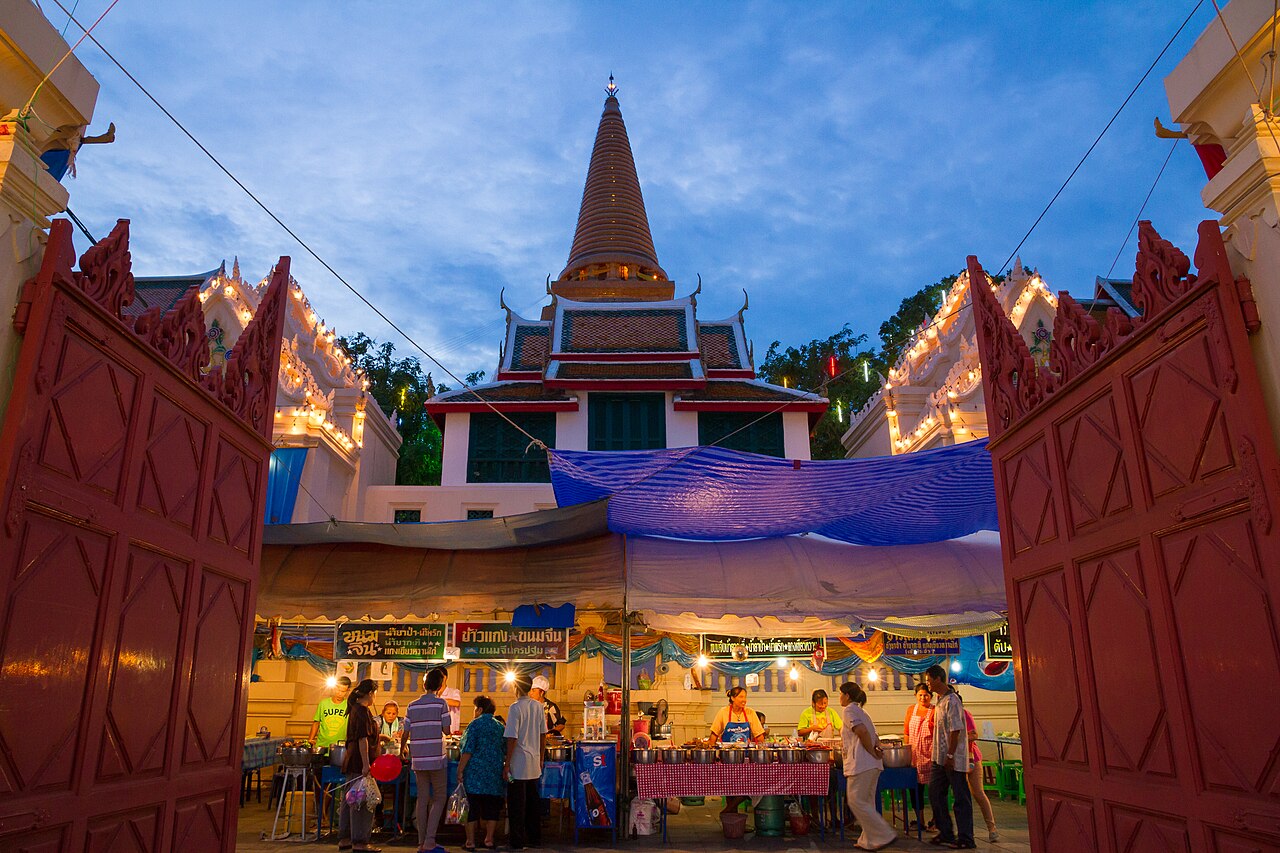
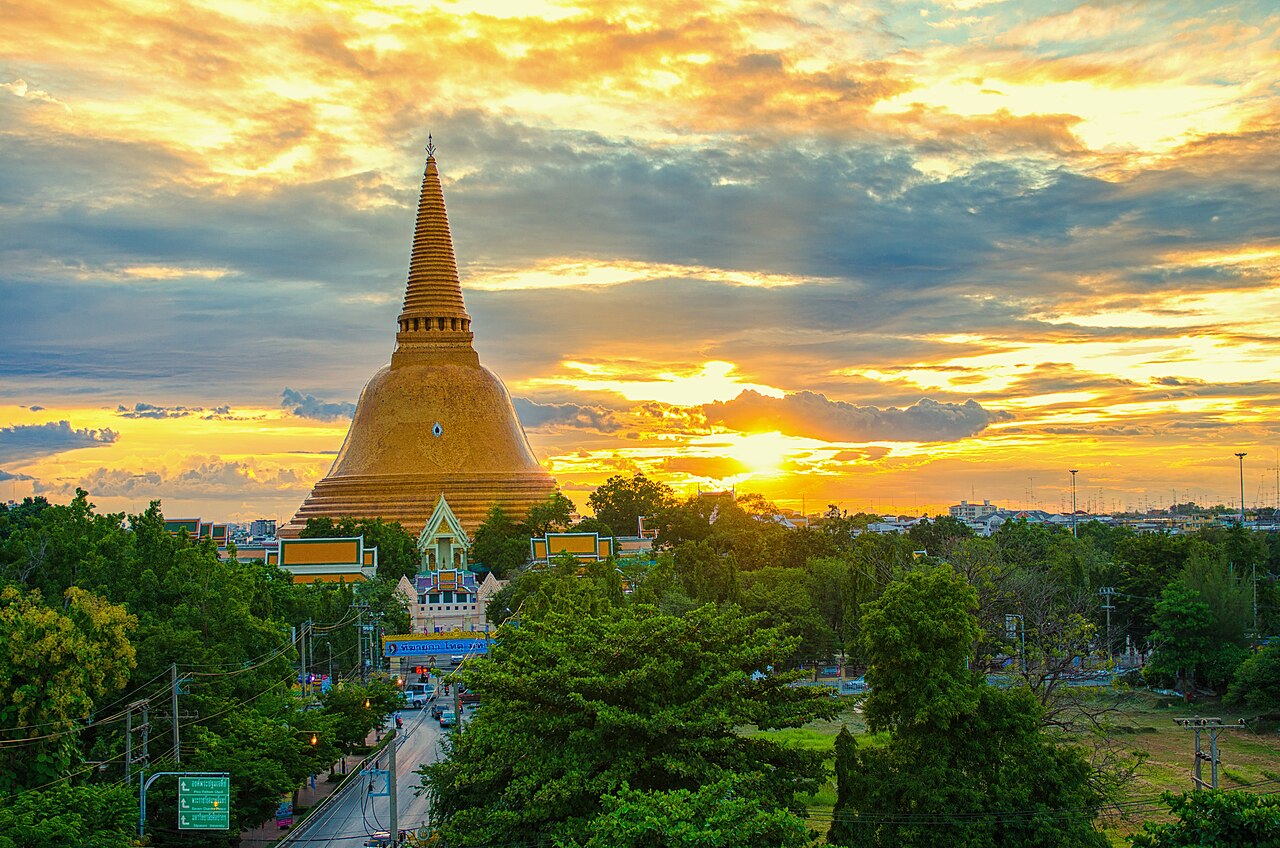
Phra Pathom Chedi, rising in the town center of Nakhon Pathom about an hour west of Bangkok, is the tallest stupa in Thailand (roughly 120 m to the tip of its spire) and a golden, bell-shaped landmark visible across the city. Marking the introduction of Buddhism to the region in the Dvaravati era, the original stupa was encased and rebuilt in the current Sri Lankan style by King Mongkut (Rama IV) starting in 1853. Its walled complex holds four directional viharns (halls) and the revered 7.2 m standing Buddha 'Phra Ruang Rochanarit,' installed by Rama VI, drawing steady streams of local worshippers.
Thailand's tallest golden stupa - a colossal bell-shaped chedi roughly 120 m tall with a base circumference of about 235 m, best appreciated from the stepped terraces.
Four viharns (worship halls) facing the cardinal directions, with the 7.2 m standing Buddha 'Phra Ruang Rochanarit' in the northern hall as the main object of veneration.
Circumambulation of the great stupa clockwise (pradakshina) and the row of bells around the base offer a window into living Thai devotional culture.
The adjacent Phra Pathom Chedi National Museum displays Dvaravati-era artifacts from the region (separate hours and fee - check latest).
A large nine-day temple fair held each year around Loy Krathong (typically mid-to-late November), with night markets, street food, and performances.
Good to know
MannersThis is an active, sacred temple: cover shoulders and knees. Avoid sleeveless tops, short shorts, and short skirts, and bring a scarf or long trousers as a cover-up.
MannersRemove shoes and hats before entering the viharns, and never point the soles of your feet toward a Buddha image. It is customary to walk clockwise around the stupa and sacred objects.
MannersBe respectful around monks - women in particular should avoid physical contact or handing items directly to a monk. Keep your voice low and avoid disrespectful poses; selfies turning your back to the main Buddha can be seen as impolite.
CautionIgnore tuk-tuk or taxi drivers near the station and stupa who claim the chedi is 'closed today' or push you toward 'better temples' and gem/tailor shops. Meter refusal and flat-rate overcharging are common - insist on the meter or use the Grab app and agree the fare first.
CautionWatch for people pressing 'free' bracelets, incense, or amulets on you at the entrance and then demanding money. Make offerings only at official temple counters and politely decline aggressive roadside donation requests.
SafetyCentral Thailand is very hot from March to May and rainy from about May to October. The broad open terraces offer little shade, so bring water, a hat, and sunscreen, and guard your belongings against pickpockets in festival crowds.
Practical info
It's about an hour from Bangkok by train (Hua Lamphong or Thonburi station) or car, and the stupa is visible right as you leave the station. The grounds (stupa and halls) are generally open around 7 a.m. to 8 p.m. and worship is free, while the National Museum has separate hours and an entry fee. Confirm fees, opening hours, and dress rules with up-to-date sources before you go.
On-site reviews📍 Verified on-site
No reviews yet. If you are here, be the first to leave one.